Adimu
 75
75

Adimu
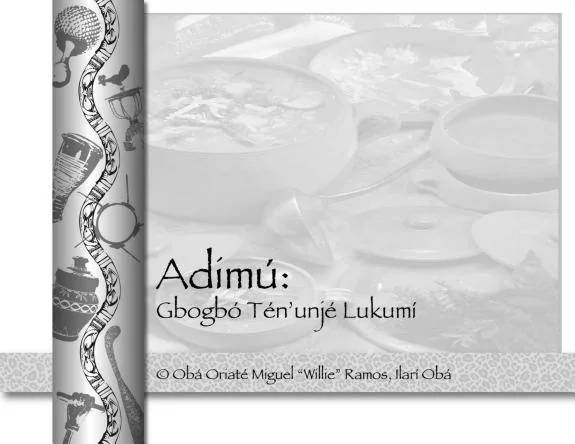
Miguel Willie Ramos's Adimu offers a focused, practical guide to the devotional offerings within the Lukumi tradition. Its strength lies in its bilingual presentation and the inclusion of recipes, directly addressing a need for accessible, actionable knowledge for practitioners. The directness with which it lists offerings for specific Orishas, such as the importance of certain fruits or grains, provides a clear operational framework. However, the work could benefit from deeper theoretical grounding. While it details *what* to offer and *how* to prepare it, a more extensive exploration of the *why* behind specific offerings, beyond general appeasement, would enhance its scholarly value. The section detailing recipes for dishes like 'Eko' offers a concrete example of its practical utility, but leaves one wishing for more discussion on the symbolic resonance of these ingredients within the broader Yoruba cosmology. Adimu serves as a valuable, if narrowly focused, resource for those engaged with Orisha worship.
📝 Description
75
Miguel Willie Ramos's Adimu details offerings to Orishas and ancestors in the Lukumi tradition.
Adimu meticulously details the offerings made to the Orishas and ancestors within the Lukumi (Yoruba) tradition, particularly as practiced in the African diaspora. The book lists and describes specific items presented as libations and sacrifices. Beyond simple listing, it includes practical recipes for many of these sacred food offerings, making the spiritual practice accessible to adherents and scholars.
This volume is a reference for practitioners of Ifá and the Orisha tradition, guiding them on authentic offerings and their preparation. It also serves scholars of religious studies, anthropology, and African diaspora cultures by providing primary source material on ritual practice. Those interested in comparative religion, ethnomusicology, or the culinary aspects of sacred traditions will find its contents illuminating.
The Lukumi religion, a significant branch of the Yoruba spiritual system, was carried to the Americas through the transatlantic slave trade. Over centuries, it interacted with Catholicism and other belief systems, evolving into distinct traditions like Santería in Cuba and Candomblé in Brazil. Adimu documents this evolution by focusing on the diaspora's unique expressions of Yoruba religious practice, including its distinct offering protocols and culinary traditions.
This book focuses on the Lukumi tradition, a vibrant expression of Yoruba spirituality in the African diaspora. The practice centers on 'ebó,' the concept of sacrifice or offering, as a means of communicating with and honoring Orishas and ancestral spirits. The careful selection and preparation of these offerings are presented not as arbitrary acts, but as a devotional practice integral to maintaining spiritual connection and petitioning specific deities. It highlights how this system, transplanted and transformed through the transatlantic slave trade, developed unique culinary and ritual protocols in traditions like Santería and Candomblé.
💡 Why Read This Book?
• Learn specific, culturally accurate offerings for various Orishas, as detailed in the Lukumi tradition, moving beyond generic spiritual practices. • Gain practical knowledge of preparing sacred foods through included recipes, a vital aspect of devotional practice not found in many theoretical texts. • Understand the historical context of Yoruba religious expression in the diaspora, a key element for appreciating the evolution of spiritual traditions since the transatlantic slave trade.
⭐ Reader Reviews
Honest opinions from readers who have explored this book.
❓ Frequently Asked Questions
What is the primary focus of the book Adimu by Miguel Willie Ramos?
Adimu focuses on the offerings (ebó) given to the Orishas and ancestors within the Lukumi (Yoruba) tradition as practiced in the diaspora. It lists these offerings and includes recipes for their preparation.
Is Adimu a historical text or a practical guide?
It functions as both. It provides historical context for diaspora practices while offering practical, actionable information for devotees, including specific recipes for sacred foods.
What does 'Lukumi' refer to in the context of this book?
Lukumi is a term used to identify the Yoruba people and their religious traditions as they developed in the diaspora, particularly in the Americas, often blending with other cultural influences.
Who would benefit most from reading Adimu?
Practitioners of the Orisha tradition, scholars of African diaspora religions, and individuals interested in comparative religious studies or the culinary aspects of sacred rituals would find it highly beneficial.
Does the book explain the spiritual meaning behind each offering?
While it details the specific offerings and their preparation, the primary emphasis is on the listing and practical application rather than extensive theological exegesis for each item.
When was Adimu first published?
The book Adimu was first published in 2003 by Miguel Willie Ramos.
🔮 Key Themes & Symbolism
Orisha Devotion and Offerings
Adimu centers on the practice of 'ebó', or offerings, as a direct means of communion with the Orishas and ancestral spirits within the Lukumi tradition. The book meticulously categorizes these offerings, detailing specific items—from fruits and grains to prepared foods—designated for particular deities. This emphasis highlights the reciprocal relationship central to Yoruba-based religions, where specific acts of veneration are believed to foster spiritual connection, guidance, and blessings. The work underscores that these are not generic gifts but carefully selected items aligning with the Orisha's attributes and preferences, reflecting a deep understanding of divine personalities.
Culinary Ritual and Ancestral Veneration
A significant component of Adimu is its exploration of food as a sacred medium. The inclusion of recipes for traditional offerings transforms the book from a mere catalog into a practical manual for devotional cuisine. This aspect connects the physical act of cooking with spiritual intent, emphasizing that the preparation itself is an act of worship and respect. By detailing how to create these sacred meals, Ramos provides adherents with the tools to honor their Orishas and ancestors through tangible, edible expressions of faith, reinforcing the holistic nature of spiritual practice in the diaspora.
Yoruba Diaspora and Cultural Preservation
Adimu serves as a crucial document of religious and cultural continuity within the Yoruba diaspora. The Lukumi tradition, transplanted to the Americas via the transatlantic slave trade, evolved through syncretism and adaptation. This book captures a facet of that evolution by presenting practices maintained and modified in new environments. It illustrates how core Yoruba spiritual principles, including ancestor veneration and Orisha worship, persist and find expression through specific rituals and culinary traditions, thereby contributing to the preservation of this rich heritage.
The Language of Sacrifice
The concept of 'ebó' in Adimu transcends simple gift-giving; it represents a form of divine communication and spiritual exchange. The book implicitly teaches the 'language' of sacrifice by detailing the appropriate offerings for different situations and deities. Understanding which items are offered, why, and how they are prepared allows practitioners to engage more effectively with the spiritual realm. This nuanced approach highlights the intricate system of correspondences and symbolic meanings that underpin ritualistic practices in the Lukumi tradition.
💬 Memorable Quotes
Direct passages from the work, attributed to the author.
“Offerings are meticulously listed and described for specific Orishas and ancestors.”
— This statement emphasizes the book's core function: providing a structured catalog of devotional items. It suggests a systematic approach to worship, where each deity or ancestral spirit has prescribed offerings, ensuring respectful and appropriate veneration.
“Recipes for many food offerings are included.”
— This highlights the practical, hands-on aspect of Adimu. It positions the book not just as a reference but as a guide for actively participating in ritual, empowering readers to prepare sacred meals themselves.
“The work focuses on practices within the Lukumi tradition in the diaspora.”
— This contextualizes the book's content within a specific cultural and geographical framework. It signals that the practices detailed are those that have evolved and been maintained by Yoruba descendants outside of their ancestral homeland.
“Adimu details the components of traditional Yoruba-based spiritual offerings.”
— This interpretation underscores the book's role in elucidating the material elements of spiritual practice. It suggests that understanding these components is key to grasping the practical application of faith within this tradition.
💡 Key Ideas
Editorial paraphrase of the work's core concepts — not direct quotes.
The Orishas and ancestors receive specific items as tokens of devotion.
This paraphrase captures the essence of the book's subject matter, framing offerings as deliberate acts of showing reverence and maintaining a connection with the spiritual hierarchy recognized in the Lukumi faith.
🌙 Esoteric Significance
Tradition
Adimu is firmly rooted in the Lukumi (Yoruba) tradition, a major expression of African indigenous religion that developed significantly in the diaspora. While not strictly fitting into Western esoteric lineages like Hermeticism or Kabbalah, its practices of divination, spirit invocation (Orisha possession), and the use of symbolic offerings (ebó) share functional parallels with broader esoteric principles of sympathetic magic and spiritual intercourse. It represents a vital, living tradition distinct from, yet sometimes intersecting with, more academically studied Western occult systems.
Symbolism
The symbolism in Adimu is deeply tied to the natural world and culinary arts. For instance, specific fruits like the coconut (representing purity and wisdom, often associated with Obatala) or specific grains and herbs are offered not just for sustenance but for their energetic properties and symbolic resonance with particular Orishas. The preparation of dishes like Eko (a corn-based porridge) itself symbolizes the nurturing and life-sustaining aspects that practitioners seek from the deities, making the offering a concrete manifestation of abstract spiritual desires.
Modern Relevance
Contemporary practitioners of Ifá and the Orisha tradition, whether in established communities or as solitary practitioners, continue to rely on resources like Adimu for accurate ritual guidance. Furthermore, scholars of religious studies, anthropology, and African diaspora culture utilize such works to understand the lived realities of these faiths. The book's focus on culinary ritual also finds relevance in broader discussions of sacred gastronomy and the intersection of food, culture, and spirituality in the modern world.
👥 Who Should Read This Book
• Practitioners of Ifá and the Orisha tradition seeking authentic, detailed guidance on devotional offerings and their preparation. • Scholars and students of African diaspora religions, anthropology, and comparative religious studies needing primary source material on Lukumi ritual. • Individuals interested in the intersection of spirituality, culture, and cuisine, particularly those exploring the practical aspects of ancestral veneration and deity worship.
📜 Historical Context
Miguel Willie Ramos's Adimu, first published in 2003, emerged during a period of increasing global interest in African diaspora religions. The Lukumi tradition, a significant branch of Yoruba spirituality, faced centuries of suppression and syncretism following its transplantation to the Americas during the transatlantic slave trade. By the late 20th and early 21st centuries, scholars like Maya Deren (whose important work 'Divine Horsemen: The Living Gods of Haiti' explored Haitian Vodou, a related diaspora religion) and religious practitioners were actively working to document and revitalize these traditions. Adimu contributed to this effort by providing a bilingual, practical guide to offerings, a crucial aspect of Orisha worship often less documented than mythology or divination systems. Its publication offered a direct resource for practitioners and scholars engaging with the evolving forms of Yoruba religion outside of Africa, contrasting with earlier, more anthropological or purely mythological texts.
📔 Journal Prompts
Reflection on the specific offerings listed for Eleggua.
Consideration of the symbolism behind preparing a specific food offering.
Exploration of the historical transmission of Yoruba practices to the diaspora.
Personal meaning derived from the bilingual presentation of offerings.
Analysis of the reciprocal relationship between devotee and Orisha through offerings.
🗂️ Glossary
Orisha
A deity or spirit in the Yoruba religion and its diaspora derivatives, such as Lukumi. Each Orisha governs specific aspects of life and nature.
Lukumi
A term referring to the Yoruba people and their religious and cultural traditions as they developed in the African diaspora, particularly in Cuba and the United States.
Ebó
In the Yoruba and Lukumi traditions, this refers to sacrifice or offering made to deities or ancestors, often as a means of appeasement, petition, or spiritual communion.
Diaspora
The dispersion or spread of people from their original homeland, in this context referring to the forced migration of Africans and the subsequent development of their religious traditions in the Americas.
Olorisha
A devotee who has been initiated and is dedicated to a particular Orisha, often serving as a priest or priestess.
Eko
A type of corn-based porridge or pudding, often prepared as a sacred food offering to certain Orishas in the Lukumi tradition.
Ancestor Veneration
The practice of honoring and showing respect to deceased family members or spiritual elders, a significant component of many indigenous and diaspora religions.
This book appears in 1 collection
🔮 Readers Also Liked
Browse all →







From the “Santeria” Collection
View all →









More Free Sacred Texts & Gnosticism Books
View all →