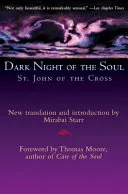
Dark Night of the Soul
 82
82

Dark Night of the Soul
John of the Cross presents the spiritual journey not as a gentle ascent but as a violent, necessary shedding of the self. His description of the 'night of the senses' as a period where even prayer feels barren and God seems absent is remarkably unflinching. He writes, "And thus the soul, in this state, is in darkness and desolation, and feels itself abandoned by God." This directness is the work's greatest strength, offering solace to those in similar spiritual deserts. However, the intensely theological and often repetitive nature of the commentary can be a hurdle for modern readers unfamiliar with 16th-century Spanish mysticism. The allegorical interpretation of his own poetry, while insightful, sometimes feels overly didactic, detracting from the raw emotion of the original verse. Nevertheless, *Dark Night of the Soul* remains an essential, albeit challenging, guide for anyone seeking a profound encounter with the divine.
📝 Description
82
John of the Cross wrote *Dark Night of the Soul* around 1578.
This spiritual treatise by John of the Cross describes the soul's difficult movement toward union with God. Composed in the late 16th century, it explains a necessary, though painful, purification process. The book uses stark imagery to portray the spiritual journey as a descent into darkness, a shedding of all sensory and spiritual comforts. This 'night' is not abandonment, but a divine action that readies the soul for a more genuine connection with God.
The text is for serious spiritual seekers, especially those involved in contemplative prayer or mystical paths. It speaks to individuals facing times of spiritual dryness, doubt, or perceived divine absence, helping them see these phases as opportunities for growth. Readers aiming to move past simple devotional acts toward a more profound, unified experience of the divine will find this relevant. It is also of interest to students of Christian mysticism and the history of religious thought.
Written by a Carmelite friar during Spain's Counter-Reformation, *Dark Night of the Soul* emerged from a period of intense theological discussion and mystical writing. John of the Cross, imprisoned by rivals, penned the work based on poems written during his confinement. The book's emphasis on direct, unmediated divine experience contrasted with more institutionalized religious practices of the time. It aligns with traditions valuing interiority and direct apprehension of the divine, placing it within the broader currents of Christian mysticism.
💡 Why Read This Book?
• Understand the 'night of the senses' as a distinct spiritual phase, as detailed in John of the Cross's commentary on his own poem, offering a framework for interpreting periods of spiritual dryness beyond mere doubt. • Grasp the concept of 'detachment from all things' as a necessary precursor to divine union, a core tenet of Carmelite mysticism that John of the Cross expounds upon extensively. • Appreciate the historical context of the Counter-Reformation and its impact on mystical writing, recognizing how John of the Cross's work emerged amidst religious reform and personal persecution.
⭐ Reader Reviews
Honest opinions from readers who have explored this book.
❓ Frequently Asked Questions
What is the 'dark night' as described by John of the Cross?
The 'dark night' is a spiritual purification process where the soul experiences a profound sense of divine absence. It's a necessary stage, often divided into the night of the senses and the night of the spirit, leading to deeper union with God.
When was *Dark Night of the Soul* written?
While the first publication date is listed as 2003-02-04, the original composition by John of the Cross occurred in the latter half of the 16th century, likely during his imprisonment in Toledo.
Is *Dark Night of the Soul* based on a poem?
Yes, *Dark Night of the Soul* is John of the Cross's extensive commentary on his own poem of the same name, detailing the soul's journey through spiritual darkness.
What was John of the Cross's background?
John of the Cross (Juan de la Cruz) was a 16th-century Spanish Carmelite friar, mystic, and poet, known for his role in reforming the Carmelite Order and his profound spiritual writings.
What is the primary goal of the 'dark night' experience?
The primary goal is to divest the soul of all imperfections and attachments, both sensory and spiritual, to prepare it for a direct, unitive, and transformative union with God.
How does *Dark Night of the Soul* relate to Teresa of Ávila?
John of the Cross was a spiritual collaborator and friend of Teresa of Ávila, and they worked together on the reform of the Carmelite Order. Their writings share a common mystical and ascetical heritage.
🔮 Key Themes & Symbolism
The Dark Night as Divine Action
The text posits the 'dark night' not as a punishment or failure, but as a deliberate, active work of God. This purification strips away sensory pleasures and spiritual consolations, which, while seemingly good, can become obstacles to a pure, unitive love. John of the Cross asserts that this painful process is essential for the soul to be emptied of self and made ready for the profound, direct embrace of the divine, transforming the soul passively through God's own hand.
Detachment and Nothingness
Central to the journey is radical detachment from all created things, including spiritual experiences and consolations. This 'nothingness' is not nihilistic but a state of profound receptivity. By relinquishing all that is not God, the soul makes space for God's absolute presence. The commentary elaborates on how the intellect, memory, and will must be purified, leading the soul to a state where it desires nothing but God alone, finding fulfillment in His absolute being.
Union with the Divine
The ultimate aim of the dark night is the soul's transformation into God through spiritual union. This is described as a marriage between the soul and the divine, where the soul loses its own limited identity to participate in the infinite life of God. It is an ecstatic state of blissful communion, achieved not through the soul's own efforts but through passive surrender to God's transformative love during the purification process.
The Role of Faith and Hope
During the dark night, the theological virtues of faith and hope become paramount, as sensory and intellectual consolations vanish. Faith becomes the sole guide, a blind trust in God's unseen presence and promises. Hope sustains the soul through the desolation, anticipating the future union. John of the Cross emphasizes that these virtues, when exercised in darkness, possess a greater purity and merit, drawing the soul closer to God.
💬 Memorable Quotes
Direct passages from the work, attributed to the author.
“Upon a dark night, / With sighs of love I longed for thee,”
— This opening stanza expresses the core theme: the soul's ardent desire for God, experienced amidst profound spiritual darkness and emotional longing, setting the stage for the entire treatise.
“What is this thy face, / which thou dost show me?”
— This question reflects the soul's bewildered state during the dark night, seeking recognition of the divine presence that feels both hidden and yet powerfully transformative, even in its obscurity.
“to be annihilated in all things”
— This phrase signifies the ultimate goal of detachment in the dark night: the complete self-emptying and dissolution of the ego's attachments to prepare for total absorption into the divine.
“the dark night... is a privation of the senses and the spirit.”
— This defines the core experience of the spiritual purification. It highlights that the 'night' involves a loss not just of worldly pleasures but also of spiritual consolations, leading to profound desolation.
💡 Key Ideas
Editorial paraphrase of the work's core concepts — not direct quotes.
I am lost, and I am in the power of the enemy.
This statement, paraphrased from the text's descriptions of spiritual desolation, captures the feeling of abandonment and vulnerability the soul experiences when stripped of all divine consolations.
🌙 Esoteric Significance
Tradition
John of the Cross's work is deeply rooted in Christian contemplative mysticism, yet it speaks to broader esoteric traditions through its emphasis on interior transformation and direct divine experience. While not overtly Hermetic or Kabbalistic, the concept of passing through a purgative darkness to achieve union aligns with alchemical principles of dissolution and purification. It offers a Christian framework for the universal esoteric quest for transcendence and the annihilation of the ego, fitting within a lineage of mystics seeking Gnosis through inner work.
Symbolism
The 'dark night' itself is the primary symbol, representing the soul's purification and detachment. 'Darkness' signifies the absence of sensory and spiritual consolations, forcing reliance on faith. The 'mountain' symbolizes the arduous ascent towards God, requiring immense effort and perseverance. 'Love' is depicted as a powerful, burning force that consumes the soul, driving it toward union. These symbols collectively chart the soul's passage from estrangement to divine integration.
Modern Relevance
Contemporary spiritual seekers, particularly those in Christian contemplative circles, continue to draw heavily on *Dark Night of the Soul*. Its principles of detachment and facing spiritual dryness are relevant to modern mindfulness practices, existential psychology, and even some forms of secular spirituality that emphasize inner work and confronting the 'shadow self.' Thinkers in comparative mysticism and those exploring the phenomenology of religious experience often cite John of the Cross as a key figure in understanding radical spiritual transformation.
👥 Who Should Read This Book
• Advanced practitioners of Christian contemplative prayer seeking to understand and navigate periods of spiritual dryness and desolation, using John of the Cross's 16th-century framework. • Scholars of Western mysticism and the Counter-Reformation interested in primary source material detailing Spanish Carmelite reform and ascetic theology. • Individuals engaged in deep self-inquiry and spiritual disciplines who are prepared for challenging texts exploring the relinquishing of ego and the pursuit of direct divine union.
📜 Historical Context
Saint John of the Cross penned *Dark Night of the Soul* in the turbulent religious climate of 16th-century Spain, a period dominated by the Counter-Reformation. As a leader in the Carmelite reform movement alongside Teresa of Ávila, John faced significant opposition from within his order. His controversial efforts led to his imprisonment in Toledo in 1577, where he composed the poetry that would later form the basis of this treatise. This era saw a flourishing of Spanish mystical literature, with figures like Francisco de Osuna influencing John's thought. His work emphasized direct, experiential knowledge of God, a stark contrast to the more scholastic approaches prevalent in some theological circles. The Spanish Inquisition was active, making the expression of intense personal spirituality a potentially perilous undertaking. The work's focus on the soul's unmediated encounter with the divine, achieved through rigorous asceticism and purification, positioned it as a significant contribution to Christian contemplative traditions, albeit one that challenged established norms.
📔 Journal Prompts
The soul's experience of 'nothingness' during the dark night.
The nature of divine action in spiritual purification.
The role of faith when sensory consolations cease.
The concept of the 'night of the senses' versus the 'night of the spirit'.
The ultimate goal of union with the divine.
🗂️ Glossary
Dark Night
A spiritual state of purification where the soul experiences the absence of God's sensible presence and spiritual consolations, leading to detachment and deeper union.
Night of the Senses
The initial phase of the dark night, characterized by detachment from sensory pleasures and the purification of the lower faculties of the soul.
Night of the Spirit
A deeper, more profound stage of the dark night, involving the purification of the higher faculties (intellect, will, memory) and a more intense spiritual desolation.
Detachment
The voluntary renunciation of attachment to all created things, including spiritual consolations, as a means to achieve perfect love and union with God.
Spiritual Union
The ultimate goal of the spiritual journey, a profound and transformative communion where the soul becomes one with God through His grace.
Privation
The lack or absence of something, in this context referring to the absence of God's sensible presence and spiritual consolations during the dark night.
Contemplation
A form of prayer involving a direct, loving gaze upon God, often characterized by quietude and receptivity, which the dark night ultimately facilitates.