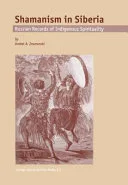
Shamanism in Siberia
 80
80

Shamanism in Siberia
Znamenski's compilation, Shamanism in Siberia, is an indispensable resource, finally granting accessible English entry to a vast corpus of Russian ethnographic material. It succeeds admirably in presenting the breadth of Siberian shamanic expression, from the ideological underpinnings to the tangible aspects of ritual. A particular strength lies in its systematic organization of over a hundred sources, offering a unified view of a complex subject. However, the sheer volume of translated material, while a strength, can occasionally feel dense, requiring dedicated attention from the reader. The section detailing shamanic paraphernalia, for instance, provides concrete examples of how objects like the shaman's drum function not merely as instruments but as symbolic vehicles for spiritual travel. This is an essential text for serious students of comparative religion and indigenous spiritualities.
📝 Description
80
A.A. Znamenski's 2003 work compiles over one hundred Russian sources on Siberian shamanism.
This volume offers a comprehensive English translation of over one hundred Russian-language texts detailing the spiritual practices of Siberian peoples. It provides an extensive overview of the ideology, rituals, mythology, spirit pantheon, and essential paraphernalia associated with this region, often seen as the origin point for shamanic traditions worldwide. The book meticulously gathers foundational research, serving as an accessible introduction to a complex subject.
Anthropologists and historians of religion will find this work particularly valuable for its primary source material, now available in readable English. Psychologists interested in altered states of consciousness and the human psyche will discover useful case studies within its pages. Furthermore, practitioners of shamanism, whether studying historical or contemporary forms, can achieve a deeper understanding of their practice's roots. The book addresses a varied audience, encompassing both academic and applied interests.
Siberia has long been recognized as a central area for shamanistic development, with its practices influencing spiritual traditions across Eurasia and beyond. The late 19th and early 20th centuries witnessed extensive ethnographic fieldwork, much of which remained inaccessible to Western scholars until this translation. Znamenski's effort bridges this gap, presenting a unified view of a field previously dispersed across numerous Russian publications dating back to the mid-1800s. This work frames Siberia not merely as a geographic location but as a primary center for shamanic study.
This book situates Siberian shamanism within a broad context, identifying the region as a significant wellspring of shamanic traditions that influenced spiritual practices across Eurasia. It highlights the importance of ethnographic research from the late 19th and early 20th centuries, much of which was previously unavailable to Western scholars. By translating and consolidating these diverse Russian sources, the work establishes Siberia as a key area for understanding the development and classical forms of shamanism, connecting historical practices to contemporary expressions.
💡 Why Read This Book?
• Gain specific insights into the "classical academy of shamanism" by examining over one hundred translated Russian texts, revealing the foundational practices that shaped global shamanic traditions. • Understand the intricate details of Siberian shamanic ideology, ritual, and mythology, including the specific roles of the spiritual pantheon and the symbolic significance of paraphernalia, as documented in Znamenski's extensive compilation. • Appreciate the historical context of shamanic studies, tracing the development of research in Siberia from the mid-19th century and understanding why this region is crucial for comprehending shamanic expressions worldwide.
⭐ Reader Reviews
Honest opinions from readers who have explored this book.
❓ Frequently Asked Questions
What makes Siberian shamanism considered the 'classical academy'?
Siberia is often termed the 'classical academy of shamanism' because it represents a region where shamanic practices were highly developed, diverse, and extensively documented by early ethnographers. The term highlights its foundational role in the study and understanding of shamanism globally.
How does Shamanism in Siberia make Russian sources accessible?
The book translates over one hundred books and articles originally published in Russian, many dating from the 19th and early 20th centuries. This makes previously inaccessible ethnographic data on Siberian shamanism available to an English-speaking audience for the first time.
Who benefits most from reading A.A. Znamenski's work?
The book is valuable for anthropologists, historians of religion, psychologists, and practitioners of shamanism. It provides a comprehensive overview of ideology, ritual, mythology, spiritual pantheon, and paraphernalia.
What aspects of Siberian spirituality are covered?
The book covers all major aspects, including the underlying ideology, the practical execution of rituals, the rich mythological narratives, the structure of the spiritual pantheon, and the essential paraphernalia used by shamans.
When was Shamanism in Siberia first published in English?
The English edition of Shamanism in Siberia by A.A. Znamenski was first published on March 14, 2013, bringing decades of Russian scholarship to a wider audience.
What is the significance of shamanic paraphernalia discussed in the book?
The book details the specific roles and symbolic meanings of shamanic paraphernalia, such as drums, costumes, and amulets. These items are presented not just as tools but as integral components for facilitating spiritual journeys and communication with the spirit world.
🔮 Key Themes & Symbolism
The Siberian Shamanic Pantheon
This work meticulously details the diverse array of spirits and deities that populate the Siberian worldview. It goes beyond simple categorization to explore their relationships, functions, and the methods by which shamans interact with them. Understanding this spiritual hierarchy is crucial for grasping the cosmology that underpins Siberian shamanic practice, revealing a complex ecosystem of spiritual forces that influence both the natural and human realms. The book presents this pantheon as a living entity, central to ritual efficacy and the shaman's role as mediator.
Ritual and Paraphernalia
Central to the book's exploration is the practical application of shamanism through ritual. It provides extensive descriptions of ceremonies, their timing, and their purpose, often linked to healing, divination, or ensuring community well-being. Equally important is the detailed examination of shamanic paraphernalia, such as the iconic drum, the ritual costume, and various amulets. These objects are presented not as mere accessories but as vital conduits for spiritual power and vehicles for the shaman's journey into the spirit world, enabling communication and influence.
Mythology as Cosmology
The book looks at the wide range of Siberian creation myths, epic tales, and origin stories. These narratives are not merely folklore but function as the cosmological frameworks that explain the world's structure, the origins of humanity, and the relationship between the physical and spiritual dimensions. Znamenski's compilation highlights how these myths inform shamanic beliefs, guide rituals, and provide a symbolic language for understanding spiritual phenomena and the shaman's unique role within the community.
Ideological Foundations
Beyond the outward forms of ritual and myth, Shamanism in Siberia examines the underlying belief systems and philosophical underpinnings of these practices. This includes concepts of the soul, the nature of spiritual power, the causes of illness, and the ethical considerations for shamans. The work presents a coherent, albeit diverse, set of ideological principles that unify the varied expressions of shamanism across different Siberian groups, emphasizing the shaman's function as a spiritual technician and healer.
💬 Memorable Quotes
Direct passages from the work, attributed to the author.
“Siberia as the 'classical academy of shamanism.'”
— This phrase captures the book's central thesis: that Siberian shamanic traditions represent a highly developed, foundational model from which many other shamanic expressions globally can be understood or traced.
“The shaman's drum as a vehicle for spiritual travel.”
— This highlights the functional and symbolic importance of key shamanic tools. The drum is not just an instrument but a means by which the shaman navigates the spirit world, connecting the physical and metaphysical realms.
“The spiritual pantheon dictates ritual necessity.”
— This interpretation points to the integral relationship between the belief in specific spirits or deities and the performance of rituals. The actions of the pantheon directly inform why and how shamans must act.
“Paraphernalia as essential to shamanic efficacy.”
— This emphasizes that the objects used by shamans are not decorative but are critical components for their ability to perform spiritual work, access altered states, and interact with the spirit world effectively.
“Mythology serving as the bedrock of Siberian cosmology.”
— This suggests that the stories and legends collected are more than tales; they form the fundamental understanding of the universe and humanity's place within it for Siberian peoples.
🌙 Esoteric Significance
Tradition
While not directly tied to a single Western esoteric lineage like Hermeticism or Kabbalah, Shamanism in Siberia contributes significantly to the broader field of comparative mysticism and indigenous spiritual traditions. It offers foundational material for those studying animistic belief systems, ecstatic trance practices, and the role of the shaman as a psychopomp or mediator. The work provides empirical data that informs esoteric discussions on the nature of consciousness, the spirit world, and humanity's connection to the cosmos, often validating concepts explored in more abstract esoteric texts.
Symbolism
Key symbols explored include the shaman's drum, which represents a cosmic vehicle for journeying between worlds, and the spirit helper, often depicted as an animal or ancestral figure, serving as a guide and source of power. The world tree, a common motif in many Siberian cosmologies, symbolizes the connection between the upper, middle, and lower worlds, with the shaman traversing its branches or roots. These symbols are not mere decorations but active elements within the shamanic cosmology, facilitating spiritual communication and transformation.
Modern Relevance
Contemporary neo-shamanic movements, particularly those influenced by figures like Michael Harner, draw heavily on the documented practices of indigenous shamans. This book provides direct access to the 'classical' forms that inspired such modern adaptations. Thinkers and practitioners in fields like depth psychology, consciousness studies, and transpersonal psychology find value in the detailed accounts of altered states of consciousness and soul retrieval practices described. The work remains a vital reference for anyone seeking to understand the historical and cultural roots of shamanic practices that continue to influence spiritual seekers today.
👥 Who Should Read This Book
• Anthropologists and historians of religion seeking comprehensive, translated primary source material on Siberian tribal spirituality and shamanic practices. • Psychologists and researchers interested in the study of altered states of consciousness, cross-cultural healing modalities, and the human psyche's engagement with the spiritual realm. • Practitioners and students of shamanism, both historical and contemporary, looking to deepen their understanding of the origins and diverse expressions of shamanic traditions globally.
📜 Historical Context
The study of Siberian shamanism gained significant momentum in the late 19th and early 20th centuries, a period of burgeoning ethnographic interest in indigenous cultures worldwide. Scholars like Vladimir Bogoraz and Waldemar Jochelson conducted extensive fieldwork among Siberian peoples, documenting their spiritual practices. However, much of this foundational research was published in Russian, creating a significant barrier for Western scholars. Competing schools of thought, such as early anthropological functionalism, sought to explain shamanism through social utility, sometimes overlooking its deeply spiritual dimensions. Znamenski's 2013 compilation, translating over one hundred Russian sources, was important in breaking down these linguistic and archival barriers, making a vast repository of information on ideology, ritual, and mythology accessible. Its publication provided a crucial counterpoint to Western-centric views and enriched comparative religious studies.
📔 Journal Prompts
The role of the shaman's drum in navigating spirit worlds.
The symbolic significance of the spiritual pantheon in Siberian ritual.
How Siberian mythology shapes the understanding of cosmology.
The function of shamanic paraphernalia in mediating realities.
The ideological underpinnings of Siberian shamanic practices.
🗂️ Glossary
Shaman
An individual believed to have the ability to communicate with the spirit world and mediate between the human and supernatural realms, often through trance states. The term originates from the Tungusic word 'šamán'.
Paraphernalia
The specific objects, such as drums, rattles, costumes, and amulets, used by shamans during rituals to facilitate their spiritual work and connect with the spirit world.
Spirit World
The metaphysical realm inhabited by spirits, deities, ancestors, and other non-physical entities with which shamans interact. It is often conceived as existing parallel to or beyond the physical world.
Ritual
A set of actions, ceremonies, and practices performed in a prescribed order, typically for religious or sacred purposes, such as healing, divination, or appeasing spirits.
Ideology
The system of beliefs, doctrines, and values that underpin shamanic practices, explaining the nature of reality, the spirit world, and the role of the shaman.
Mythology
A collection of myths and legends that explain the origins of the world, humanity, and natural phenomena, often forming the cosmological framework for a culture's spiritual beliefs.
Spiritual Pantheon
The collective group of gods, spirits, and supernatural beings recognized and venerated within a particular religious or belief system, such as that of Siberian shamanism.