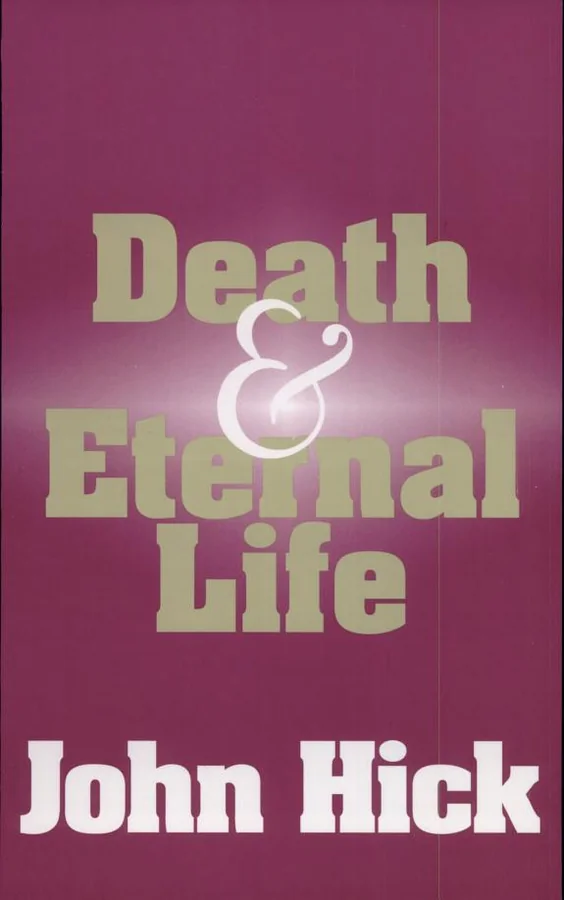
Death and Eternal Life
 76
76

Death and Eternal Life
John Hick's "Death and Eternal Life" attempts to reconcile the human yearning for continued existence with the stark pronouncements of scientific reductionism. The book's strength lies in its encyclopedic scope, weaving together theological arguments, psychological observations, and biological considerations. Hick's treatment of the argument from human inadequacy—the idea that our current suffering points towards a future resolution—is particularly compelling, framing mortality not as an endpoint but as a transitional phase within a larger, purposeful existence. However, the sheer breadth of material sometimes leads to a diffusion of focus. While Hick effectively challenges mechanistic objections to survival, the section on parapsychology, though extensive, can feel less rigorous than its philosophical counterparts. Despite these minor reservations, the work offers a robust defense of religious hope against contemporary skepticism, making a strong case for the rational basis of belief in eternal life.
📝 Description
76
John Hick published "Death and Eternal Life" in 1994, challenging scientific materialism's view of mortality.
John Hick's 1994 book, "Death and Eternal Life," examines human mortality and the possibility of existence after death. It draws from theology, philosophy, and science to address objections to afterlife beliefs, particularly those from empirical science and logic. Hick aims to demonstrate the plausibility of survival after death.
The work is for readers contemplating consciousness, existence, and reality. It suits those studying comparative religion, philosophy of mind, and the intersection of science and spirituality. Individuals grappling with existential questions or seeking a rational basis for faith in an afterlife will find its arguments useful. The book also speaks to scholars and laypersons interested in different cultural views on death and immortality.
Published when scientific materialism often dominated discussions on consciousness and death, Hick's book countered prevailing atheistic viewpoints. It engaged with parapsychology and cognitive science, attempting to connect spiritual claims with empirical investigation and question the era's skepticism.
Hick's work engages with perennial philosophical questions about consciousness and its relationship to the material world, a theme present in various spiritual and philosophical traditions throughout history. His approach, which seeks to reconcile empirical inquiry with metaphysical possibilities, echoes earlier attempts to bridge the physical and the spiritual. The book places itself in dialogue with both classical philosophical arguments for the soul's persistence and modern scientific challenges to such notions.
💡 Why Read This Book?
• Gain a robust understanding of the "argument from human inadequacy" as presented by John Hick, showing how our present suffering can imply a future state of rectification and eternal life, as discussed in his analysis of religious claims. • Explore the scientific and philosophical objections to survival after death, and learn how Hick counters them using evidence from biology, psychology, and parapsychology, as detailed in the book's cross-cultural study. • Appreciate the historical context of post-1994 discussions on consciousness and immortality, understanding how Hick's work engaged with prevailing scientific materialism and contributed to the discourse on the afterlife.
⭐ Reader Reviews
Honest opinions from readers who have explored this book.
❓ Frequently Asked Questions
When was John Hick's "Death and Eternal Life" first published?
John Hick's "Death and Eternal Life" was first published in 1994. This initial publication date is significant as it places the work within a specific intellectual climate concerning science, philosophy, and religion.
What academic disciplines does John Hick draw upon in "Death and Eternal Life"?
Hick draws upon a wide array of disciplines, including major world religions, biology, psychology, parapsychology, anthropology, and philosophy, to build his case for survival after death.
What is the 'argument from human inadequacy' as discussed by Hick?
The argument from human inadequacy, central to Hick's thesis, posits that our present limitations and suffering are best explained as temporary conditions pointing towards a future, eternal life where these inadequacies are resolved.
Does "Death and Eternal Life" present scientific proof of an afterlife?
No, the book does not claim scientific proof. Instead, it argues that scientific and philosophical objections to survival can be challenged and that religious belief in immortality is rationally defensible.
Who would benefit most from reading "Death and Eternal Life"?
Students of comparative religion, philosophy of mind, and those interested in the intersection of science and spirituality, particularly those grappling with existential questions, will find the book beneficial.
What is the primary goal of John Hick's "Death and Eternal Life"?
The primary goal is to explore the mystery of death and argue for the plausibility of survival after death, challenging contemporary scientific and philosophical skepticism through an interdisciplinary lens.
🔮 Key Themes & Symbolism
Survival Beyond Death
Hick meticulously examines the concept of survival after death, a core part of many religious traditions. He systematically dissects the arguments that equate consciousness solely with biological processes, particularly brain function. By integrating insights from psychology and parapsychology, he posits that consciousness might possess a degree of independence from the physical body, thus making post-mortem existence a plausible, rather than impossible, scenario.
The Argument from Human Inadequacy
A significant portion of the book is dedicated to what Hick terms the 'argument from human inadequacy.' This concept suggests that the pervasive suffering, injustice, and limitations experienced in human life are not random occurrences but are indicative of an incomplete existence. This incompleteness, he argues, logically implies a future, eternal state where these inadequacies are rectified and ultimate meaning is fulfilled.
Cross-Cultural Religious Perspectives
Hick's work is deeply rooted in a comparative religious framework. He surveys how major world religions—including Christianity, Islam, Hinduism, and Buddhism—address death and the afterlife. This broad perspective allows him to identify common threads and unique interpretations, demonstrating that the belief in eternal life is a near-universal human aspiration, supported by diverse cultural narratives and theological reasoning.
Science and Spirituality Reconciliation
The book actively seeks to bridge the perceived chasm between scientific understanding and spiritual belief. Hick challenges the strict materialism often prevalent in scientific discourse, arguing that science itself has limitations in explaining phenomena like consciousness and subjective experience. He proposes that a holistic view, incorporating both scientific findings and spiritual insights, offers a more complete picture of reality, including the possibility of an afterlife.
💬 Memorable Quotes
Direct passages from the work, attributed to the author.
“The idea of life after death is not, as is often supposed, a superstitious wish to escape from the grim reality of our finite existence.”
— This statement challenges the common dismissal of afterlife beliefs as mere wishful thinking. Hick suggests that the concept of eternal life can be supported by rational arguments, rather than being solely an emotional coping mechanism for the fear of death.
“Human existence is characterized by a pervasive inadequacy and imperfection.”
— This captures the essence of Hick's 'argument from human inadequacy.' It posits that our current state of suffering and limitation is not the final word, but rather a signpost pointing towards a more complete, eternal existence.
“Scientific objections to survival are based on inadequate assumptions about the nature of consciousness.”
— Hick contends that science's current models, often tied to a materialistic view of the brain, are insufficient to definitively rule out the possibility of consciousness persisting after bodily death.
“The vast majority of the human race throughout history has believed in some form of life after death.”
— This observation highlights the cross-cultural universality of the belief in an afterlife, suggesting it stems from deep-seated human intuitions or experiences rather than isolated cultural phenomena.
“Suffering is not an end in itself but a means to growth and transformation.”
— This interpretation frames suffering within a teleological perspective, common in many religious philosophies. It suggests that hardship serves a purpose in the larger arc of existence, leading towards a perfected, eternal state.
🌙 Esoteric Significance
Tradition
While not strictly belonging to a single esoteric lineage like Hermeticism or Gnosticism, John Hick's "Death and Eternal Life" engages with perennial philosophical questions about consciousness and immortality that are central to many esoteric traditions. His interdisciplinary approach, seeking to harmonize scientific observations with spiritual insights, carries the synthesis found in movements like Theosophy, which aimed to integrate ancient wisdom with modern scientific discovery. The work departs from purely mystical revelation by grounding its arguments in philosophical reasoning and empirical data, making it accessible to a broader audience interested in the spiritual dimensions of existence.
Symbolism
The book implicitly engages with the symbolism of the threshold, where death represents a transition rather than an end. This is a potent motif across many spiritual traditions, often symbolized by doorways, bridges, or veils separating the known from the unknown. The concept of transformation, inherent in the idea of eternal life, also carries symbolic weight, suggesting a metamorphosis of the soul or consciousness from a limited, earthly state to a perfected, unbounded existence, akin to the alchemical symbolism of transmutation.
Modern Relevance
Hick's work remains relevant for contemporary thinkers grappling with the implications of neuroscience for consciousness and the persistent human search for meaning beyond mortality. Modern proponents of panpsychism or integrated information theory, while perhaps not directly citing Hick, explore similar territories regarding the fundamental nature of consciousness that could allow for non-biological persistence. His arguments also continue to inform discussions within philosophical theology and comparative religion departments, offering a reasoned defense of religious belief in an afterlife that appeals to those seeking to reconcile faith with an increasingly secularized and scientifically-minded world.
👥 Who Should Read This Book
• Students of comparative religion and philosophy of mind seeking to understand arguments for the plausibility of an afterlife across diverse belief systems. • Individuals wrestling with existential questions and the fear of death, who are looking for a rational framework to explore concepts of immortality and spiritual continuation. • Scholars and researchers interested in the intersection of science, psychology, and religious belief, particularly those examining how empirical data can inform or challenge metaphysical claims.
📜 Historical Context
When "Death and Eternal Life" was published in 1994, the intellectual landscape was still largely dominated by scientific materialism, with figures like Richard Dawkins actively promoting atheistic viewpoints. John Hick's work stood in contrast to this trend, offering a robust philosophical and theological defense of belief in an afterlife. It engaged with the burgeoning field of parapsychology, seeking to find empirical grounding for spiritual claims, an approach that differed from more purely philosophical or theological treatises of the time. While not a direct response to a single event, the book can be seen as part of a broader, ongoing dialogue about consciousness and mortality, a dialogue that included thinkers like Daniel Dennett, who championed physicalist accounts of mind. Hick's work provided a counterpoint to reductionist explanations, arguing for the rational possibility of continued existence.
📔 Journal Prompts
The concept of the 'argument from human inadequacy' and its implications for personal meaning.
Reflecting on the parapsychological evidence presented and its challenge to purely materialistic views of consciousness.
Comparing Hick's defense of eternal life with other philosophical or religious perspectives encountered.
The role of suffering in the human experience, as interpreted through the lens of teleological existence.
Evaluating the scientific and philosophical objections to survival after death discussed in the book.
🗂️ Glossary
Survival After Death
The belief or possibility that consciousness, selfhood, or a soul continues to exist in some form subsequent to the physical death of the body.
Argument from Human Inadequacy
A philosophical argument suggesting that the inherent limitations, suffering, and imperfections of human existence point towards a future, eternal state where these issues are resolved.
Teleological Argument
An argument for the existence of God or a purposeful universe based on the observation of design, purpose, or intention in nature and human life.
Materialism
The philosophical view that matter is the fundamental substance in nature, and that all phenomena, including mental states and consciousness, are results of material interactions.
Parapsychology
A field of study that investigates purported psychic phenomena and other paranormal claims, such as telepathy, precognition, and survival after death.
Interdisciplinary Study
An approach that integrates information, data, techniques, tools, concepts, and/or theories from two or more disciplines or bodies of knowledge.
Dualism
In philosophy of mind, the view that the mind and body are distinct and separable entities; often contrasted with materialism or physicalism.
This book appears in 1 collection
🔮 Readers Also Liked
Browse all →






From the “Eternal Life” Collection
View all →



More Free Sacred Texts & Gnosticism Books
View all →