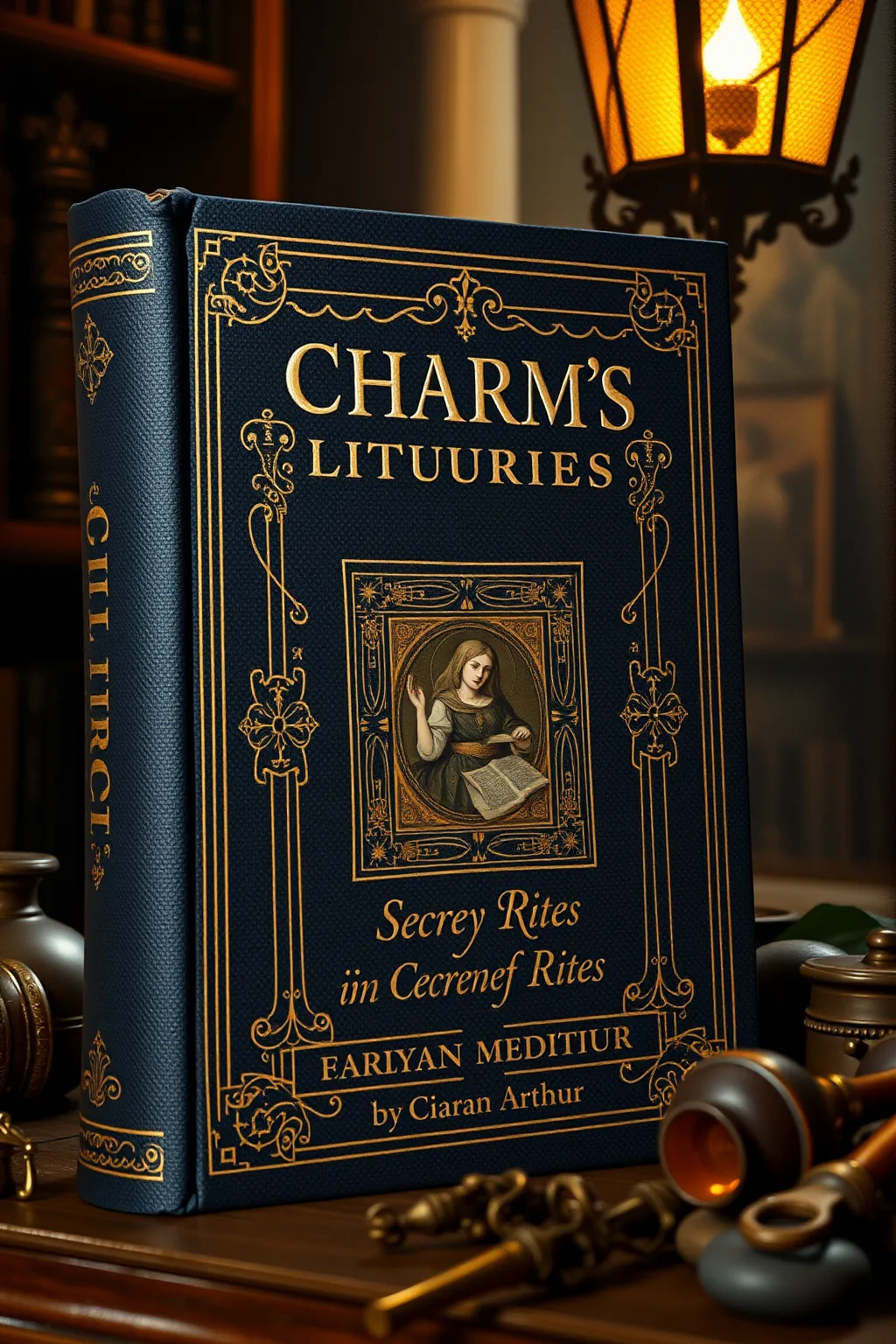
`Charms', Liturgies, and Secret Rites in Early Medieval England
 61
61

`Charms', Liturgies, and Secret Rites in Early Medieval England


By Balthazar Finch (Senior Critic, Occult Philosophy) — Ciaran Arthur's 'Charms, Liturgies, and Secret Rites' is a revelatory work for anyone seeking to understand the deep currents of esoteric thought in early medieval Britain. Arthur masterfully navigates the complex interplay between burgeoning Christianity and enduring pagan magical traditions, revealing how ritual and incantation served as vital conduits for spiritual and practical engagement with the unseen world. His meticulous examination of manuscript evidence offers profound insights into Anglo-Saxon cosmology and their sophisticated understanding of symbolic power. An essential read for serious practitioners and scholars of Western esotericism.
📝 Description
61
Ciaran Arthur's study examines charms and secret rites in Anglo-Saxon England.
This book reconstructs the spiritual practices of early medieval England, focusing on the intersection of Christian liturgy and older beliefs. Ciaran Arthur examines how Anglo-Saxon people used charms, incantations, and secret rites in their daily lives. The work draws on analysis of ancient manuscripts to reveal a worldview where magic and faith were closely connected.
It details the symbolic systems that informed their understanding of existence and the rituals that shaped their perspectives. The book investigates the mystical elements present in Anglo-Saxon society and the philosophical ideas underpinning their culture. It is intended for those interested in the historical expressions of power and meaning.
This work situates early medieval English spiritual practices within a broader context of European folk magic and religious syncretism. It examines how Christianization did not erase older animistic or magical traditions but often incorporated or coexisted with them. The book highlights the use of specific verbal formulas and ritual actions to influence events, a common feature in many historical esoteric systems.
💡 Why Read This Book?
Uncover the hidden spiritual technology of the Anglo-Saxons, revealing how they invoked divine and elemental forces through potent charms and secret rites. This book offers a rare glimpse into the authentic practice of early medieval magic, bridging the gap between faith and folklore. Ideal for seekers of ancient wisdom, scholars of arcane history, and practitioners interested in the roots of Western magical traditions.
⭐ Reader Reviews
Honest opinions from readers who have explored this book.
❓ Frequently Asked Questions
What is the primary focus of this book?
The book focuses on the intricate relationship between Christian liturgy and magical practices in early medieval England, exploring charms, incantations, and secret rites as preserved in historical manuscripts.
Who were the Anglo-Saxons in this context?
The Anglo-Saxons refer to the Germanic tribes who settled in Great Britain from the 5th century onwards, laying the foundations for English society and culture, including their unique blend of pagan and Christian beliefs.
Are these rituals still practiced today?
While direct replication might be challenging due to lost contexts, the principles and symbolic language explored in the book offer profound inspiration and understanding for modern practitioners of esoteric arts and spiritual traditions.
What kind of manuscripts are discussed?
The book analyzes various early medieval manuscripts, including liturgical texts, medical treatises, and collections of charms, providing direct evidence of the magical and spiritual practices of the era.
Is this book suitable for beginners in esoteric studies?
Yes, while scholarly, the book is written with clarity and provides ample context, making it accessible to newcomers eager to explore the historical foundations of Western esotericism.
🔮 Key Themes & Symbolism
The Syncretic Veil: Christianity and Indigenous Magic
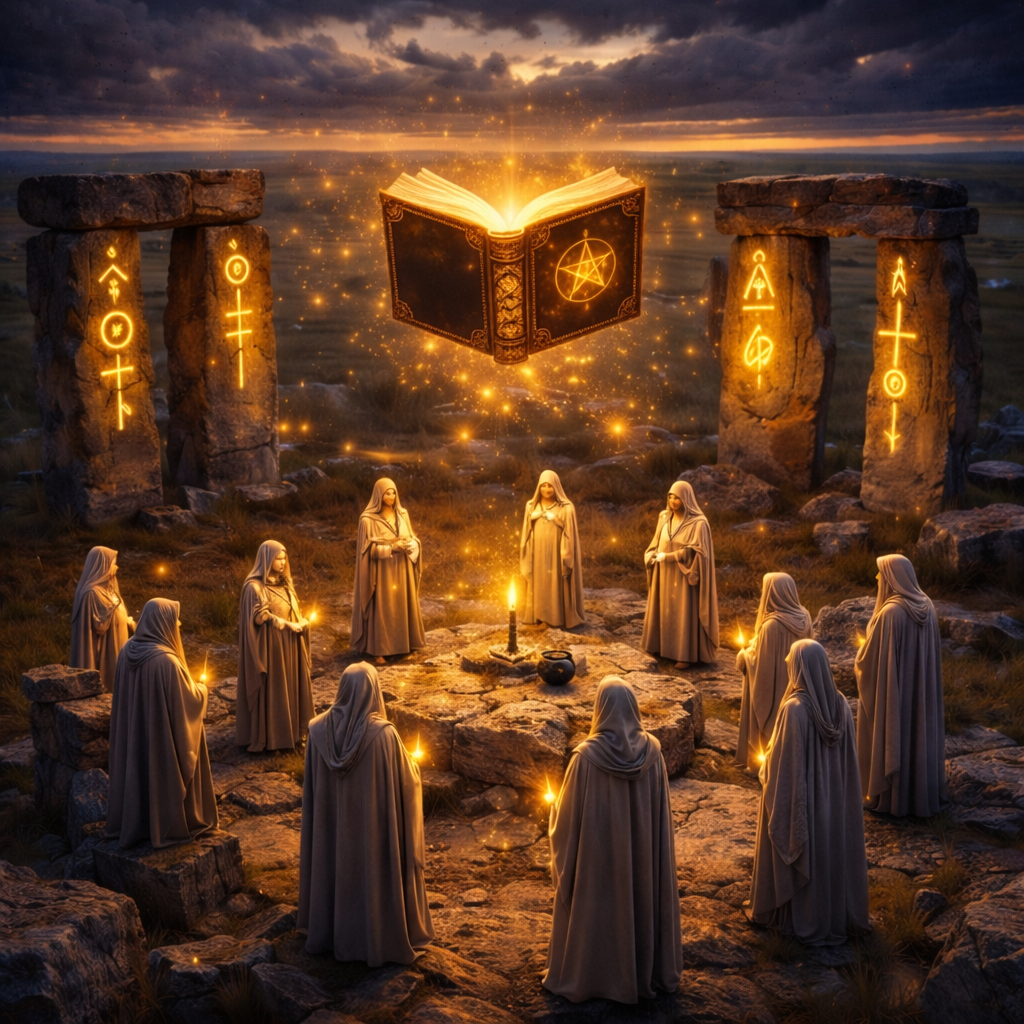
This theme examines the fascinating phenomenon of religious syncretism in early medieval England, where the newly adopted Christian faith did not entirely supplant older animistic and magical beliefs. Arthur demonstrates how pagan practices were often reinterpreted, absorbed, or coexisted with Christian doctrines, creating a unique spiritual landscape. Discover how ancient charms for healing, protection, and prosperity were integrated into Christian liturgical frameworks, blurring the lines between the sacred and the magical, and revealing a profound human desire to actively influence the unseen forces of the world.
Manuscript as Grimoire: The Hidden Wisdom of Texts
Explore the power of the written word as a conduit for esoteric knowledge. This theme focuses on the early medieval manuscripts themselves, not just as historical artifacts, but as active repositories of magical formulae, liturgical secrets, and ritualistic instructions. Arthur illuminates how these texts were perceived and utilized, revealing them as early forms of grimoires, holding potent spells, prayers, and symbolic keys to understanding the cosmos. The careful transcription and interpretation of these often-obscure writings unlock a direct connection to the minds and practices of our ancestors.
The Language of Power: Incantation and Symbolic Efficacy
This theme unpacks the profound belief in the efficacy of language and symbolism within early medieval magical practices. Arthur examines the structure, cadence, and specific word choices in charms and liturgies, highlighting how they were believed to possess inherent power to shape reality. Discover the intricate web of symbolic associations, from the invocation of saints and angels to the appropriation of pagan deities and natural forces. The book reveals a worldview where spoken words, carefully chosen symbols, and ritualistic actions were potent tools for working through the spiritual and material realms.
💬 Memorable Quotes
Direct passages from the work, attributed to the author.
“Sacred rites and whispered charms danced in the same sacred space.”
— Highlights the syncretic nature of the period, where Christian rituals and folk magic were not always separate but often intertwined in the lived spiritual experience of the people.
“Inscribed prayers were potent talismans against unseen foes.”
— Emphasizes the belief in the protective and empowering nature of written religious and magical texts, seen as active agents against adversity.
“The Anglo-Saxon heart sought divine favor through earthly means.”
— Reflects the pragmatic approach to spirituality, where individuals actively sought to influence their circumstances through both prayer and magical intercession.
“Each syllable a spark, each symbol a guiding star.”
— Illustrates the meticulous craftsmanship and deep symbolic understanding involved in the creation and use of charms and liturgical texts.
💡 Key Ideas
Editorial paraphrase of the work's core concepts — not direct quotes.
The veil between worlds was thin, and words were keys.
This quote captures the essence of early medieval belief, where the spiritual and material realms were perceived as closely interconnected, and language held potent power to bridge these dimensions.
🌙 Esoteric Significance
Tradition
This work is deeply rooted in the Western Esoteric Tradition, specifically its early Christian and pre-Christian magical expressions. It illuminates a period where Gnosticism's influence, hermeticism, and folk magic converged with orthodox Christian practices. The book reveals an 'esotericism from below' – the lived, practical spiritual experiences of ordinary people – alongside the more structured liturgical forms. It showcases a worldview where spiritual power was not solely confined to the clergy but was accessible through direct engagement with symbolic language and ritual, forming a bridge to later mystical and magical developments.
Symbolism
The symbolism within early medieval charms and liturgies is rich and many-sided. It encompasses Christian iconography (saints, angels, the Trinity) interwoven with pagan motifs (nature spirits, animal symbolism, elemental forces). Rituals often employed symbolic actions, gestures, and the use of specific materials (herbs, stones, water) believed to possess inherent magical properties. The very act of inscribing a charm or reciting a liturgy was a symbolic engagement with the divine and cosmic order, aimed at channeling specific energies for healing, protection, or prosperity. Understanding this symbolic language is key to unlocking the esoteric intent.
Modern Relevance
The study of early medieval charms and liturgies offers profound relevance for modern esoteric practitioners and scholars. It provides a historical grounding for understanding the evolution of Western magical practices, demonstrating the enduring human impulse to connect with the divine and influence one's environment. The book's insights into symbolic language, ritual efficacy, and the psychology of belief offer valuable perspectives for contemporary spellcraft, contemplative practices, and the re-evaluation of faith in a secular age. It reminds us that the quest for meaning and power through spiritual means is an ancient and continuous human endeavor.
👥 Who Should Read This Book
This meticulously researched volume is essential for a diverse audience. **Occult Historians and Scholars** will find invaluable primary source analysis and a nuanced understanding of early medieval spiritual landscapes. **Esoteric Practitioners** seeking the roots of Western magic will discover potent archetypes, symbolic frameworks, and historical precedents for their craft. **Spiritual Seekers** interested in the intersection of faith and magic, and the evolution of religious thought, will find useful insights. **Students of Folklore and Anthropology** will appreciate the deep dive into cultural beliefs and ritualistic practices. Finally, **Curious Minds** drawn to the mysteries of the past will be captivated by this exploration of a vibrant, often-hidden, spiritual world.
📜 Historical Context
Early medieval England, roughly spanning the 5th to the 11th centuries, was a period of profound transformation. Following the decline of Roman influence, various Germanic tribes, collectively known as the Anglo-Saxons, established kingdoms across Britain. This era witnessed the gradual Christianization of the land, a process that was not always straightforward. As Christianity took root, it often blended with or subsumed existing pagan beliefs and practices. This dynamic created a wide range of spiritual and magical traditions, where liturgical texts and the burgeoning church hierarchy coexisted with ancient charms, incantations, and folk remedies. The manuscripts from this period offer a unique window into this complex cultural and religious milieu, revealing a society grappling with the divine, the earthly, and the mysterious forces that shaped their lives.
📔 Journal Prompts
Reflect on a modern-day 'charm' or ritual you use to navigate challenges. How does it compare to the Anglo-Saxon practices described?
Consider the symbolic language of nature. What elements or creatures hold personal symbolic power for you, and why?
How might the belief in the power of spoken words influence your own communication and intentions?
Imagine you are an Anglo-Saxon scribe. What kind of text would you create to protect your community, and what symbols would you use?
Explore the concept of syncretism in your own life. Where do different belief systems or practices converge for you?
🗂️ Glossary
Liturgies
Formal public worship or religious rites, often prescribed by a religious tradition, involving a set order of prayers, readings, and ceremonies.
Charms
Short incantations, spells, or verses believed to possess magical power to protect, heal, or bring good fortune when recited or written.
Anglo-Saxon
Refers to the Germanic peoples who inhabited England from the 5th century to the Norman Conquest in 1066, and their culture and language.
Syncretism
The merging or blending of different religious or cultural beliefs and practices, often seen when a dominant religion is introduced to an area with existing traditions.
Manuscript
A document written by hand, especially one from ancient or medieval times, often preserved for its historical or literary value.
This book appears in 3 collections
🔮 Readers Also Liked
Browse all →



From the “Ritual Magic” Collection
View all →





More Free Magic & Ritual Books
View all →