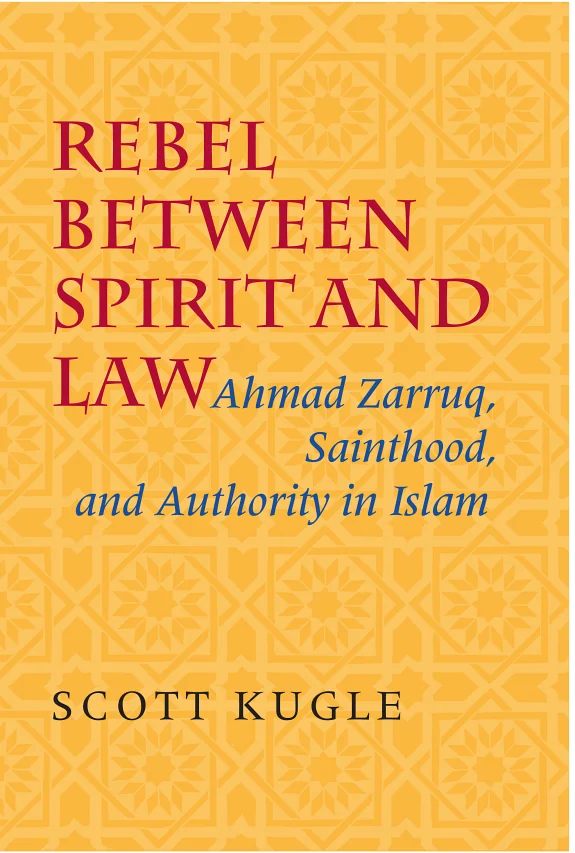
Rebel Between Spirit and Law
 82
82

Rebel Between Spirit and Law
Kugle’s analysis of saintly authority in late medieval North Africa offers a vital counterpoint to simplistic understandings of Sufism as solely mystical withdrawal. He compellingly argues that the cult of saints was a potent force for community building and resistance, particularly during the turbulent decades surrounding the turn of the 16th century. The detailed examination of juridical sainthood and its implications for urban communities in Fes is a standout achievement. A limitation, however, lies in the dense academic prose, which may challenge readers unaccustomed to specialized historical analysis. The book’s strength is its intricate unpacking of how religious devotion became a political and social currency, demonstrating that "the authority of saints was not merely spiritual but also a source of social and political power." This is a significant contribution for specialists seeking nuanced historical interpretations of Islamic religious movements.
📝 Description
82
Scott Alan Kugle's 2006 book analyzes how Islamic saints shaped authority and community in North Africa.
Scott Alan Kugle's "Rebel Between Spirit and Law" investigates the role of Islamic saints, known as *awliya*, in forging community and establishing authority, especially in North Africa. The book focuses on the late 15th and 16th centuries, a time of considerable political and religious instability. Kugle traces how devotion to these spiritual figures created a distinct form of power, often linked to Sufism, and how this challenged prevailing structures.
The study examines the concept of 'juridical sainthood,' detailing how saintly authority was debated and defined within Islamic legal and social systems. It looks at the power dynamics surrounding loyalty to these leaders and how such allegiance built communal ties and offered resistance to dominant political or religious views. Kugle highlights the specific advocacy for certain models of sainthood by Sufi groups in urban centers like Fes during this turbulent period.
This work situates itself within the study of Islamic mysticism and its social manifestations. It examines how Sufi traditions, centered on the veneration of saints, developed their own frameworks of authority and community outside or alongside formal legal and political institutions. The book sheds light on the historical development of these spiritual hierarchies and their impact on both individual devotion and collective identity in a specific historical moment.
💡 Why Read This Book?
• Understand the concept of 'juridical sainthood' as presented in the context of 15th and 16th-century North Africa, moving beyond purely spiritual interpretations of sainthood. • Gain insight into the specific historical circumstances of Fes during a period of crisis, revealing how Sufi communities mobilized spiritual authority for social and political ends. • Explore the complex relationship between religious allegiance and community power, analyzing how devotion to *awliya* functioned as a cohesive force in a volatile era.
⭐ Reader Reviews
Honest opinions from readers who have explored this book.
❓ Frequently Asked Questions
What period does "Rebel Between Spirit and Law" primarily cover?
The book focuses predominantly on the late 15th and 16th centuries, a dynamic era of political and religious flux in North Africa, particularly examining urban centers like Fes, Morocco.
What is 'juridical sainthood' as discussed in the book?
Juridical sainthood refers to the articulation and contestation of saintly authority within Islamic legal and social frameworks, exploring how saints' spiritual status translated into tangible social and political influence.
Which region is the primary focus of Scott Alan Kugle's study?
The primary geographical focus is North Africa, with specific attention paid to urban centers such as Fes (Morocco), where Sufi communities played a significant role.
How does the book relate sainthood to Sufism?
The work analyzes the power generated through allegiance to saints, identifying this phenomenon as closely linked to the practices and communities often described under the umbrella term 'Sufism'.
What kind of crisis does the book address in the late 15th and 16th centuries?
The book examines a period of intense political and religious crisis, where established norms and authorities were challenged, prompting communities to reassert their identities and power through various means, including devotion to saints.
Who are the 'rebels' in the title?
The 'rebels' likely refer to the Sufi communities and their advocates who challenged prevailing religious and political orthodoxies by promoting a specific paradigm of sainthood and community allegiance during a time of crisis.
🔮 Key Themes & Symbolism
Sainthood as Social Power
The work posits that the veneration of saints (*awliya*) in North Africa was not merely a spiritual phenomenon but a potent engine for social and political power. Kugle details how allegiance to these figures fostered robust community structures capable of asserting influence and resistance during periods of instability. This challenges interpretations that confine Sufism to private devotion, highlighting its public and communal dimensions.
Community Formation Under Crisis
Focusing on the late 15th and 16th centuries, the book illustrates how Sufi communities in urban centers like Fes utilized the paradigm of sainthood to solidify their identities and operationalize collective strength amidst intense political and religious challenges. This approach to community building provided a framework for resilience and continuity when existing structures faltered.
Spirit vs. Law
The title 'Rebel Between Spirit and Law' captures the dynamic tension explored. The book examines how the spiritual authority derived from saints sometimes operated in a manner that could be perceived as 'rebellious' against established juridical and political norms. It analyzes the intricate ways these communities navigated the boundaries between divine inspiration and human legislation.
The Sufi Paradigm
The work interrogates the specific manifestation of Sufism present in North Africa during the studied period. It analyzes how the allegiance to saints, a key element often associated with Sufi practice, generated a distinct form of collective power and identity formation, differentiating it from other religious or political movements of the era.
💬 Memorable Quotes
Direct passages from the work, attributed to the author.
“The authority of saints was not merely spiritual but also a source of social and political power.”
— This highlights the book's central argument: that saintly devotion translated into tangible influence within communities, affecting social structures and political dynamics, especially during times of upheaval.
“Communities in Fes advocated this paradigm of sainthood during a time of intense political and religious crisis.”
— This points to the active role of Sufi followers in promoting their understanding of sainthood as a means of navigating and potentially resisting the pressures of a turbulent historical period.
“Power generated in religious communities through their allegiance to saints.”
— This concisely defines the core subject matter: the practical, often overlooked, force that collective devotion to spiritual leaders could wield in organizing and empowering groups.
“Sufism as a term for the power generated by allegiance to saints.”
— This indicates the book's approach to defining Sufism not just as a mystical path, but as a framework for understanding community power dynamics rooted in devotion to holy figures.
💡 Key Ideas
Editorial paraphrase of the work's core concepts — not direct quotes.
Juridical sainthood, a concept explored in relation to community building.
This paraphrases a key analytical concept, suggesting the book goes beyond hagiography to examine how saintly status was legally and socially constructed and utilized.
🌙 Esoteric Significance
Tradition
While not strictly adhering to a single Western esoteric lineage, this work deeply intersects with Sufi traditions, which themselves are a rich vein within esoteric Islam. It explores how the veneration of saints (*awliya*) functions within a framework that emphasizes spiritual hierarchy, divine intercession, and the manifestation of divine power through human intermediaries. This aligns with broader esoteric principles of correspondence and the existence of hidden spiritual authorities influencing the material world.
Symbolism
The central 'symbol' is the saint (*wali*) themselves, representing a conduit of divine grace and authority. The act of community formation around these figures symbolizes the manifestation of spiritual order in the face of temporal chaos. The 'law' mentioned in the title can be seen as representing established, often rigid, human or state-sanctioned structures, while 'spirit' embodies the dynamic, charismatic, and divinely-inspired power flowing through the saints and their followers.
Modern Relevance
Contemporary scholars and practitioners interested in the socio-political dimensions of religion, the historical development of Sufism beyond devotional literature, and the role of charismatic authority in community building find significant relevance here. Thinkers exploring the intersection of spirituality, identity, and resistance in post-colonial contexts or within global Islam may draw upon Kugle's analysis of how spiritual movements can mobilize collective action.
👥 Who Should Read This Book
• Scholars of Islamic history and Sufism: Gain a nuanced understanding of the political and social functions of saint veneration in North Africa during a critical period. • Researchers of comparative religion: Explore how religious authority and community bonds are forged through devotion to spiritual figures across different traditions. • Students of social movements: Analyze the historical precedents for using spiritual capital and collective allegiance to build resilient communities in the face of political and religious upheaval.
📜 Historical Context
Scott Alan Kugle's "Rebel Between Spirit and Law" situates its analysis within the tumultuous North African field of the late 15th and 16th centuries. This era was marked by the decline of certain dynasties, the rise of others (like the Saadi dynasty in Morocco), and significant theological debates within Islam, including responses to Shi'a influence and internal reform movements. The Ottoman expansion into North Africa also created a complex geopolitical environment. Within this context, communities associated with Sufism, particularly in urban centers such as Fes, actively promoted a specific model of sainthood. This model emphasized the *awliya*'s role in fostering community cohesion and providing a source of authority that could both complement and challenge established legal and political structures. The work implicitly engages with contemporary scholarship on Islamic mysticism and legalism, offering a nuanced view of how spiritual authority was negotiated, contrasting with potentially more state-aligned religious scholars or competing theological interpretations prevalent at the time.
📔 Journal Prompts
The paradigm of sainthood advocated by Sufis in Fes during crisis.
Juridical sainthood as a source of social and political power.
The relationship between allegiance to saints and community strength.
North African urban centers navigating political and religious upheaval.
The concept of 'rebel' in the context of spiritual authority versus established law.
🗂️ Glossary
Awliya
Plural of 'wali,' meaning 'friend' or 'saint' in Islamic tradition. These individuals are believed to have a close relationship with God and are venerated for their piety, spiritual authority, and perceived ability to intercede.
Sufism
The mystical or esoteric dimension of Islam, often focused on the pursuit of direct experience of God through practices such as meditation, chanting, and asceticism. In this context, it also refers to the communities and power dynamics associated with saint veneration.
Juridical Sainthood
A concept explored in the book, referring to the way saintly status was articulated, recognized, and utilized within the legal and social frameworks of Islamic society, granting them a form of recognized authority.
Fes (Fez)
A major imperial city in Morocco, historically a center of Islamic scholarship, culture, and religious life. It served as a key location for the Sufi communities studied in the book.
North Africa
The region encompassing the northernmost part of the African continent, including countries like Morocco, Algeria, Tunisia, Libya, and Egypt. The book focuses on the historical and religious dynamics within this area.
Paradigm of Sainthood
A specific model or framework for understanding and venerating saints, including their roles, powers, and the nature of the community that forms around them, as advocated by certain groups during the historical period studied.
Community Building
The process by which groups of people form social bonds, shared identities, and collective structures. In this book, it is analyzed through the lens of religious devotion and allegiance to spiritual leaders.
This book appears in 1 collection
🔮 Readers Also Liked
Browse all →








From the “Sufism” Collection
View all →








More Free Esoteric History & Biography Books
View all →