Alchemy
 61
61

Alchemy


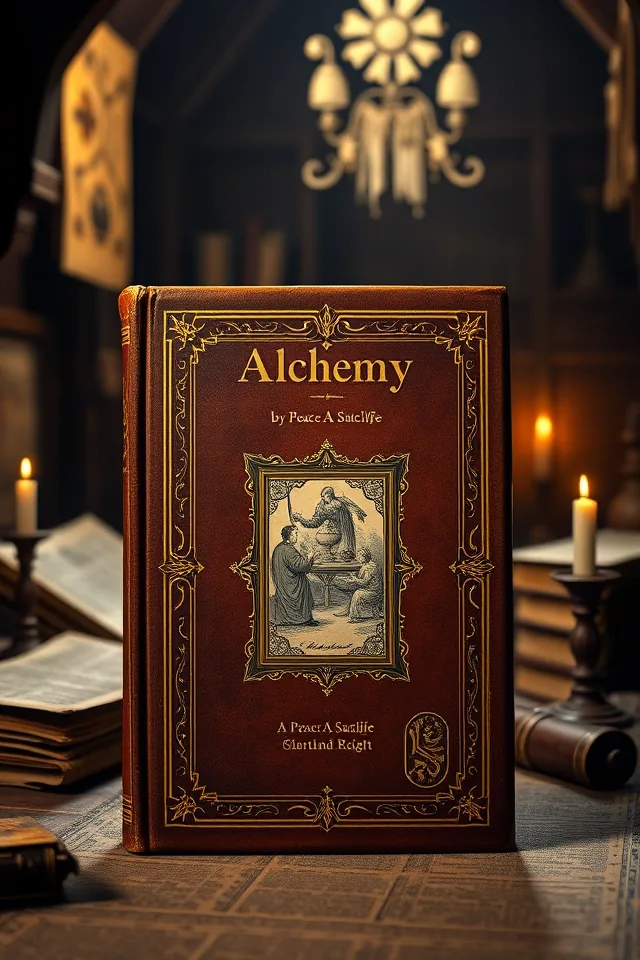
Pearce A. Sutcliffe's 'Alchemy' is a masterful exploration of the esoteric arts, offering readers a deep dive into the mystical and philosophical underpinnings of alchemy. Sutcliffe's insights into the hidden knowledge and symbolism of this ancient practice are both profound and enlightening. The book's strength lies in its ability to weave together historical context, philosophical significance, and practical application, making it an invaluable resource for both scholars and practitioners. Whether you are a seasoned alchemist or a curious seeker, 'Alchemy' provides a rich and rewarding journey into the world of the hermetic arts.
📝 Description
61
Pearce A. Sutcliffe's 'Alchemy' examines the philosophical underpinnings of the alchemical tradition.
Published by Pearce A. Sutcliffe, 'Alchemy' attempts to elucidate the symbolic language and philosophical aims of alchemical practice. The text focuses on the historical and conceptual aspects of alchemy, presenting it as a system concerned with transformation. Sutcliffe details the various stages and concepts associated with the Great Work, connecting them to broader Hermetic principles. The author's approach aims to clarify the symbolic meanings behind alchemical processes, distinguishing them from purely material pursuits.
The book addresses the dual nature of alchemical transformation, which concerns both the purification of matter and the spiritual development of the practitioner. It discusses how alchemists viewed the cosmos and humanity's place within it, using alchemical symbolism to represent these relationships. Sutcliffe seeks to provide a structured understanding of this complex field for those interested in its esoteric dimensions.
This work situates itself within the Western esoteric tradition, specifically the Hermetic and alchemical currents that flourished from antiquity through the Renaissance and beyond. Alchemy, as understood in this context, is not merely a precursor to modern chemistry but a philosophical system focused on cosmic principles and personal purification. Sutcliffe's text engages with the symbolic interpretations of alchemical texts, which often encode spiritual or psychological teachings within the language of material transformation.
💡 Why Read This Book?
Read 'Alchemy' by Pearce A. Sutcliffe to gain a deeper understanding of the mystical and esoteric traditions that have shaped human thought for centuries. This book is ideal for seekers of hidden knowledge, scholars of the occult, and practitioners of the hermetic arts. Sutcliffe's evocative prose and profound insights make 'Alchemy' a must-read for anyone interested in the transformative power of alchemical practices.
⭐ Reader Reviews
Honest opinions from readers who have explored this book.
❓ Frequently Asked Questions
What is the primary focus of 'Alchemy' by Pearce A. Sutcliffe?
The primary focus of 'Alchemy' is the exploration of the mystical and esoteric practices of alchemy, including its symbolism, philosophical significance, and historical context.
Who is the intended audience for this book?
The intended audience includes seekers of hidden knowledge, scholars of the occult, and practitioners of the hermetic arts.
Does the book provide practical alchemical techniques?
Yes, 'Alchemy' offers insights into practical alchemical techniques, as well as their philosophical and symbolic meanings.
How does 'Alchemy' differ from other books on the subject?
'Alchemy' stands out for its rich, evocative prose and deep philosophical insights, making it a comprehensive and enlightening guide to the alchemical path.
Can beginners benefit from reading this book?
While 'Alchemy' is rich in detail, it is accessible to beginners who are interested in the mystical and esoteric traditions of alchemy.
🔮 Key Themes & Symbolism
The Philosophical Stone
The Philosophical Stone is a central theme in alchemy, representing the ultimate goal of transforming base metals into gold. Sutcliffe explores the mystical and symbolic significance of this alchemical quest, studying its philosophical implications and the transformative power it holds for the seeker.
Alchemical Symbolism
Alchemy is rich in symbolism, and Sutcliffe's work provides a comprehensive exploration of the key symbols and their meanings. From the serpent to the ouroboros, these symbols hold deep esoteric significance, offering insights into the hidden knowledge of the alchemical tradition.
Transformation and Renewal
The theme of transformation and renewal is at the heart of alchemy. Sutcliffe examines how the alchemical process mirrors the journey of the soul, offering a path to spiritual enlightenment and personal transformation. This theme underscores the philosophical and mystical significance of alchemy.
💬 Memorable Quotes
Direct passages from the work, attributed to the author.
“Symbolism in alchemy is the language of the divine.”
— Sutcliffe emphasizes the esoteric importance of symbols in the alchemical tradition.
“The alchemist seeks not just gold, but the gold within.”
— Sutcliffe's words reveal the inner, spiritual quest of the alchemist.
💡 Key Ideas
Editorial paraphrase of the work's core concepts — not direct quotes.
The quest for the Philosophical Stone is not merely a physical endeavor but a spiritual journey.
This quote highlights the deeper, mystical significance of alchemical pursuits.
Transformation is the essence of alchemy, both in the laboratory and in the soul.
This quote underscores the transformative power of alchemical practices.
Alchemy is the art of turning lead into gold, and the self into the divine.
This quote expresses the mystical and transformative goals of alchemy.
🌙 Esoteric Significance
Tradition
'Alchemy' belongs to the Hermetic tradition, which emphasizes the transformation of both the physical and spiritual realms. This tradition draws on ancient Egyptian, Greek, and medieval alchemical practices, blending them into a cohesive and mystical philosophy.
Symbolism
Key symbols in 'Alchemy' include the serpent, the ouroboros, and the Philosopher's Stone. The serpent often represents transformation and renewal, while the ouroboros symbolizes the cycle of life and death. The Philosopher's Stone is the ultimate goal of the alchemist, representing the achievement of spiritual enlightenment and the transformation of base metals into gold.
Modern Relevance
Today, 'Alchemy' continues to inspire modern practitioners and scholars of the occult. Its insights into the transformative power of alchemical practices are as relevant today as they were when the book was first published. Many contemporary alchemists and spiritual seekers draw on Sutcliffe's teachings to deepen their understanding of the hermetic arts and apply its principles to their own lives.
👥 Who Should Read This Book
Beginners interested in the mystical and esoteric traditions of alchemy will find 'Alchemy' to be an accessible and enlightening introduction. Scholars of the occult will appreciate the depth of Sutcliffe's research and insights. Spiritual seekers will be drawn to the book's exploration of the transformative power of alchemical practices. Practitioners of the hermetic arts will find valuable techniques and philosophical guidance within its pages.
📜 Historical Context
Pearce A. Sutcliffe's 'Alchemy' was written during a time when interest in the occult and esoteric traditions was resurging. The early 20th century saw a renewed fascination with ancient mystical practices, and Sutcliffe's work contributed significantly to this revival. The book's influence can be seen in the works of modern alchemists and scholars, who continue to draw on its insights and teachings. 'Alchemy' remains a seminal text in the study of the hermetic arts, offering a timeless exploration of this mysterious and enchanting tradition.
📔 Journal Prompts
Reflect on the symbolic significance of the Philosophical Stone in your own life.
How does the concept of transformation and renewal resonate with your personal journey?
Explore the role of symbolism in your spiritual practices.
Consider the ways in which alchemical principles can be applied to modern life.
Write about your experiences with the transformative power of alchemy.
🗂️ Glossary
Philosophical Stone
The ultimate goal of alchemy, representing the transformation of base metals into gold and the achievement of spiritual enlightenment.
Ouroboros
A symbol of the cycle of life and death, often depicted as a serpent swallowing its own tail.
Hermetic Tradition
A mystical and esoteric tradition that emphasizes the transformation of both the physical and spiritual realms.
Alchemical Symbolism
The use of symbols to convey esoteric knowledge and spiritual truths within the alchemical tradition.
Transformation
The process of change and renewal, both physical and spiritual, central to the practice of alchemy.
This book appears in 3 collections
🔮 Readers Also Liked
Browse all →








From the “Hermeticism” Collection
View all →









More Free Alchemy & Hermeticism Books
View all →