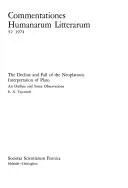
The decline and fall of the Neoplatonic interpretation of Plato
 61
61

The decline and fall of the Neoplatonic interpretation of Plato



In 'The Decline and Fall of the Neoplatonic Interpretation of Plato,' Eugène Napoleon Tigerstedt masterfully navigates the intricate landscape of Neoplatonic thought, providing a profound analysis of the shift in Platonism during the Renaissance. This book is a must-read for those delving into the esoteric and mystical dimensions of philosophy. Tigerstedt's meticulous research and clear writing style make complex ideas accessible, offering readers a deeper understanding of Platonism's hidden knowledge and symbolism. The strengths of this work lie in its ability to illuminate the esoteric insights that have often been overlooked, making it an invaluable resource for scholars and spiritual seekers alike.
📝 Description
61
In 1977, E. N. Tigerstedt documented the waning influence of Neoplatonic readings of Plato.
Eugène Napoleon Tigerstedt's 1977 study, 'The Decline and Fall of the Neoplatonic Interpretation of Plato,' examines a significant shift in how Plato's philosophy was understood. From the Renaissance onward, scholars began to separate Plato's original ideas from the interpretations that developed centuries later, particularly after the rise of Christianity.
Tigerstedt details the gradual dismantling of the idea that Plato was a kind of philosophical Moses, a figure whose teachings were somehow prescient of Christian doctrines. This process involved reassessing the historical relationship between Plato and his later followers, such as Plotinus. The book traces how this reevaluation affected the perception of Plato's work and its place within Western thought, moving away from mystical or allegorical readings toward a more historically grounded understanding.
This book addresses a specific moment in the history of Western esotericism, focusing on how a particular tradition of interpreting Plato's texts lost favor. Neoplatonism, with its emphasis on spiritual ascent, divine emanations, and allegorical readings of myth and scripture, represented a dominant mode of understanding Plato for centuries. Tigerstedt's work chronicles the scholarly and philosophical developments that challenged this esoteric framework, leading to its marginalization in favor of historical and philological approaches to classical texts. It shows how a once-prevalent esoteric interpretation of a major philosopher eventually declined.
💡 Why Read This Book?
Read 'The Decline and Fall of the Neoplatonic Interpretation of Plato' to gain a comprehensive understanding of the esoteric shift in Platonism during the Renaissance. This book is ideal for seekers of hidden wisdom, scholars of Neoplatonism, and practitioners of mystical traditions. It offers a unique perspective on the hidden symbolism and philosophical significance of Platonism, making it an essential read for those interested in the deeper layers of esoteric knowledge.
⭐ Reader Reviews
Honest opinions from readers who have explored this book.
❓ Frequently Asked Questions
What is the main focus of 'The Decline and Fall of the Neoplatonic Interpretation of Plato'?
The book focuses on the shift in interpretations of Platonism during the Renaissance and early modern periods, highlighting the differentiation between Plato's original teachings and post-Christian interpretations.
Who would benefit most from reading this book?
Scholars of Neoplatonism, spiritual seekers, and practitioners of mystical traditions will find this book particularly enlightening.
What is the significance of the 'Moses Atticus' myth?
The 'Moses Atticus' myth refers to the erroneous belief that Plato was a precursor to Christian thought, which Tigerstedt's work helps to dismantle.
How does this book contribute to the understanding of Neoplatonism?
By providing a detailed analysis of the historical shift in Platonism, this book offers a deeper understanding of the esoteric and mystical dimensions of Neoplatonic thought.
Can this book be read online for free?
Check with the Esoteric Library or other reputable online platforms to see if 'The Decline and Fall of the Neoplatonic Interpretation of Plato' is available for free online reading.
🔮 Key Themes & Symbolism
Historical Shift in Platonism
Tigerstedt's work explores the historical shift in the interpretation of Platonism, revealing how scholars began to distinguish between Plato's original teachings and the post-Christian interpretations. This theme is crucial for understanding the esoteric and mystical dimensions of Neoplatonic thought, offering readers a deeper appreciation of the hidden symbolism and philosophical significance.
Myth of Plato as 'Moses Atticus'
One of the key themes in this book is the dismantling of the myth that Plato was a precursor to Christian thought, known as 'Moses Atticus.' This myth has often obscured the true esoteric teachings of Platonism, and Tigerstedt's work helps to clarify these hidden layers of knowledge, making it an essential read for those interested in the deeper aspects of Platonism.
Esoteric Knowledge and Symbolism
The book is rich in esoteric knowledge and symbolism, providing readers with a unique perspective on the hidden dimensions of Platonism. Tigerstedt's analysis of the shift in Platonism during the Renaissance reveals the deeper layers of mystical insight, making it an invaluable resource for scholars and spiritual seekers alike.
💬 Memorable Quotes
Direct passages from the work, attributed to the author.
“The myth of Plato as 'Moses Atticus' has long obscured the true teachings of Platonism.”
— This statement highlights the significance of dismantling erroneous beliefs to uncover the true esoteric dimensions of Platonism.
“Understanding the true teachings of Platonism requires a journey through its hidden layers of knowledge.”
— This statement emphasizes the need for a deep and thoughtful exploration of Platonism to uncover its esoteric truths.
💡 Key Ideas
Editorial paraphrase of the work's core concepts — not direct quotes.
The true essence of Platonism lies not in its surface interpretations, but in the hidden symbolism that ties through its history.
This quote underscores the depth of esoteric knowledge found in Platonism, emphasizing the importance of looking beyond surface-level interpretations.
The shift in Platonism during the Renaissance reveals the lasting impact of esoteric thought on philosophical discourse.
This quote emphasizes the historical importance of the shift in Platonism, showing how it has influenced the development of esoteric and mystical traditions.
The hidden symbolism of Platonism offers a wide range of mystical insights.
This passage underscores the depth of mystical knowledge found in Platonism, inviting readers to explore its esoteric dimensions.
🌙 Esoteric Significance
Tradition
This book belongs to the Hermetic tradition, which emphasizes the search for hidden knowledge and mystical insights. Tigerstedt's work explores the esoteric dimensions of Platonism, offering readers a unique perspective on its hidden symbolism and philosophical significance.
Symbolism
Key symbols in this book include the myth of Plato as 'Moses Atticus,' which represents the erroneous belief that Plato was a precursor to Christian thought. Tigerstedt's work helps to dismantle this myth, revealing the true esoteric teachings of Platonism. Other symbols include the hidden layers of knowledge that tie through the history of Platonism, inviting readers to explore its deeper dimensions.
Modern Relevance
This book is relevant today for scholars and spiritual seekers who are interested in the esoteric and mystical dimensions of Platonism. Modern practitioners of Hermetic and Neoplatonic traditions often refer to Tigerstedt's work to gain a deeper understanding of the hidden symbolism and philosophical significance of Platonism. It remains an essential resource for those seeking to uncover the true teachings of this ancient philosophy.
👥 Who Should Read This Book
Beginners interested in the esoteric dimensions of Platonism will find this book to be an accessible introduction to the hidden symbolism and philosophical significance of Neoplatonic thought. Scholars of Hermetic and Neoplatonic traditions will appreciate the detailed analysis of the historical shift in Platonism during the Renaissance. Spiritual seekers and practitioners of mystical traditions will benefit from the clear insights into the esoteric knowledge and symbolism found in Platonism.
📜 Historical Context
During the Renaissance and early modern periods, there was a significant shift in the interpretation of Platonism. Scholars began to differentiate between the original teachings of Plato and the interpretations of his post-Christian successors, such as Plotinus and Proclus. This shift was crucial for understanding the esoteric and mystical dimensions of Neoplatonic thought. Tigerstedt's work, 'The Decline and Fall of the Neoplatonic Interpretation of Plato,' provides a detailed analysis of this historical shift, revealing how the myth of Plato as 'Moses Atticus' was dismantled. This book has had a lasting influence on the study of Platonism, offering readers a deeper appreciation of its hidden symbolism and philosophical significance.
📔 Journal Prompts
Reflect on the significance of the historical shift in Platonism during the Renaissance.
Consider how the myth of Plato as 'Moses Atticus' has influenced your understanding of Platonism.
Explore the hidden symbolism and esoteric knowledge found in Neoplatonic thought.
How has Tigerstedt's work deepened your appreciation of the mystical dimensions of Platonism?
Write about the relevance of this book to your spiritual or philosophical journey.
🗂️ Glossary
Neoplatonism
A philosophical tradition that emerged in the 3rd century CE, focusing on the teachings of Plato and his successors, such as Plotinus and Proclus.
Hermetic Tradition
A mystical and esoteric tradition that emphasizes the search for hidden knowledge and spiritual enlightenment.
Moses Atticus
A mythical figure representing the erroneous belief that Plato was a precursor to Christian thought.
Esoteric Knowledge
Hidden or secret knowledge that is revealed only to those who are initiated into a particular mystical or philosophical tradition.
Symbolism
The use of symbols to represent abstract ideas or concepts, often found in mystical and esoteric traditions.
This book appears in 2 collections
🔮 Readers Also Liked
Browse all →








From the “Neoplatonism” Collection
View all →







More Free Alchemy & Hermeticism Books
View all →