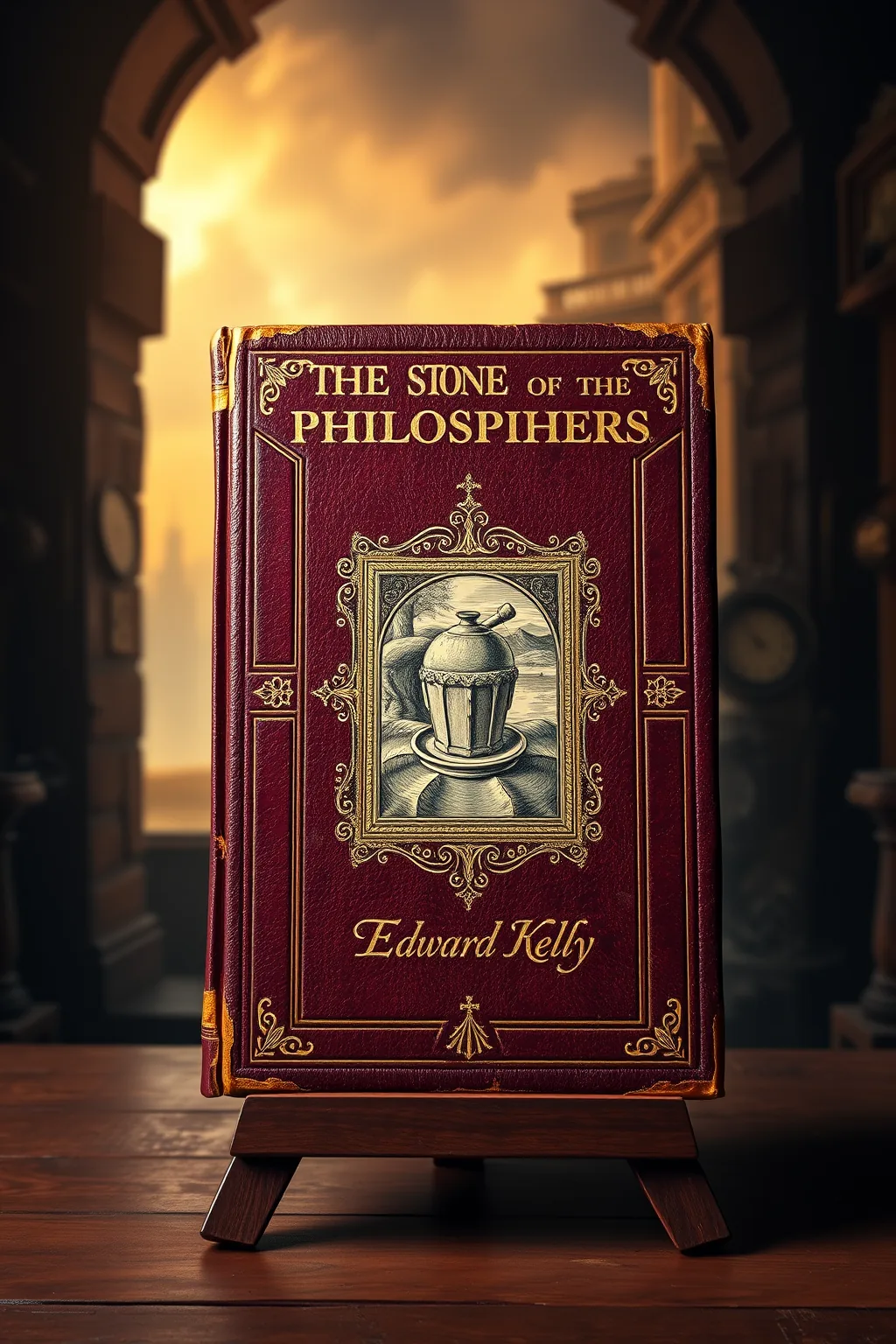
The Stone of the Philosophers by Edward Kelly
 73
73

The Stone of the Philosophers by Edward Kelly


Sophia Crane (Associate Editor) — 'The Stone of the Philosophers' is an indispensable cornerstone for any serious student of alchemy and Hermetic philosophy. Edward Kelly's purported channeling offers a rare glimpse into the practical and spiritual dimensions of the Great Work. The text’s strength lies in its dense symbolic language, which, while challenging, rewards patient contemplation with profound insights into purification, union, and the nature of divine consciousness. This is not a casual read; it's a spiritual discipline. Recommended for advanced practitioners and dedicated scholars of esoteric traditions who are ready to delve into the foundational texts of Western mysticism.
📝 Description
73
Edward Kelly's The Stone of the Philosophers details alchemical processes for spiritual transformation.
Edward Kelly's text, The Stone of the Philosophers, describes alchemical practices aimed at spiritual growth. Attributed to Kelly, a figure from 16th-century England known for his association with John Dee, the book presents allegories and symbols related to the Great Work. It outlines stages of purification, illumination, and perfection, concepts central to esoteric traditions.
The work is not simply about transmuting metals but about achieving a higher state of consciousness and divine connection. The language and symbolism are intended for the dedicated practitioner, guiding them through complex symbolic processes. It speaks to the aspiration for understanding cosmic principles and achieving inner perfection, a goal shared by various mystical paths.
This text belongs to the Western esoteric tradition, specifically Hermeticism and alchemy. It follows a lineage of alchemical literature that uses laboratory processes as metaphors for spiritual development. Unlike purely materialist interpretations of alchemy, Kelly's work aligns with the view that the 'Great Work' is an internal transformation leading to enlightenment and union with the divine. It echoes concepts found in texts attributed to Hermes Trismegistus and later alchemical writers who sought to reconcile material science with spiritual philosophy.
💡 Why Read This Book?
Delve into the foundational secrets of Western alchemy, explore profound spiritual symbolism, and understand the true nature of transformation beyond the material. 'The Stone of the Philosophers' is essential for seekers of hidden knowledge, scholars of Hermeticism, and practitioners aiming for inner illumination and spiritual mastery. Unlock ancient wisdom for personal evolution.
⭐ Reader Reviews
Honest opinions from readers who have explored this book.
❓ Frequently Asked Questions
Who was Edward Kelly?
Edward Kelly was an English occultist and spirit medium who claimed to have received alchemical knowledge from spirits, most famously in collaboration with John Dee. His historical accounts are often intertwined with legend.
What is the Philosopher's Stone?
In alchemy, the Philosopher's Stone is a mythical substance said to be capable of transmuting base metals into gold or silver, and also to grant immortality. Esoterically, it represents spiritual perfection and enlightenment.
Is this book a literal guide to making gold?
While the text uses alchemical language, its primary focus is on spiritual and psychological transformation, often referred to as the 'Great Work' or the 'Spiritual Alchemy.'
What is Hermeticism?
Hermeticism is a philosophical and religious tradition based on writings attributed to Hermes Trismegistus. It emphasizes wisdom, divine knowledge, and the interconnectedness of all things, often expressed through symbolic language.
What is the 'Great Work'?
The 'Great Work' (Magnum Opus) in alchemy refers to the process of creating the Philosopher's Stone. Esoterically, it signifies the spiritual journey of self-perfection, purification, and union with the divine.
🔮 Key Themes & Symbolism
The Great Work of Transformation
This theme explores the alchemical process not just as a physical transmutation of metals, but as a profound spiritual journey of the soul. It studies the stages of purification, coagulation, and sublimation, mirroring the human quest for self-realization and divine union. The text reveals how the alchemical laboratory becomes a metaphor for the inner landscape, where base desires and ignorance are transmuted into wisdom and spiritual purity, leading to the attainment of the 'Philosopher's Stone'—a symbol of perfected consciousness.
Sacred Symbolism and Allegory
The work is rich with enigmatic symbols drawn from nature, mythology, and arcane traditions. Each image—from the serpent and the lion to the sun and moon—is imbued with layered meanings, representing cosmic principles, psychological states, and stages of the alchemical process. Readers are invited to decode these visual languages, understanding how they serve as keys to unlocking hidden knowledge and the profound interconnectedness of the macrocosm and microcosm.
Gnosis and Divine Union
Fundamentally, , 'The Stone of the Philosophers' is a quest for Gnosis—direct, intuitive knowledge of the divine. The text suggests that the ultimate goal of alchemy is not material wealth but spiritual enlightenment and a direct communion with the divine source. It outlines a path towards transcending the limitations of the ego and the material world, leading to a state of integrated consciousness and ecstatic union with the eternal. This pursuit is presented as the true 'Great Work' for the soul.
💬 Memorable Quotes
Direct passages from the work, attributed to the author.
“The Art is hidden in the darkness of the night.”
— This suggests that true alchemical understanding and spiritual insight are often found through introspection and confronting the unknown aspects of oneself.
“Observe the Sun and the Moon, for they are the parents of the Stone.”
— This highlights the duality and union of opposing forces—masculine/feminine, spirit/matter—as essential elements in the creation of the Philosopher's Stone.
“The Dragon devours its own tail, signifying the cycle of death and rebirth.”
— This Ouroboros symbol represents the eternal return, the cyclical nature of existence, and the process of dissolution and renewal inherent in transformation.
“From One comes All, and in All, the One is found.”
— This captures the Hermetic principle of 'As above, so below,' emphasizing the unity of the cosmos and the divine spark present in all things.
“Seek not gold, but the Gold of the Spirit.”
— This clearly distinguishes the esoteric goal of spiritual perfection from the literal pursuit of material wealth, defining the true aim of alchemy.
🌙 Esoteric Significance
Tradition
This text is deeply rooted in the Hermetic tradition, a lineage tracing back to Hermes Trismegistus. It draws heavily from the principles of alchemy, which served as both a practical art and a symbolic language for spiritual development. Within Hermeticism, the pursuit of the 'Great Work' is synonymous with self-realization and the attainment of divine knowledge (Gnosis), making this book a key artifact for understanding Western esoteric paths.
Symbolism
The work is replete with potent alchemical symbols, each carrying multiple layers of meaning. The 'Philosopher's Stone' itself is the ultimate symbol of perfected consciousness, spiritual gold, and divine union. Other recurring symbols like the dragon, the lion, the sun, and the moon represent fundamental cosmic forces, stages of transformation, and the integration of dualities necessary for spiritual completion.
Modern Relevance
In the modern era, 'The Stone of the Philosophers' continues to resonate with seekers interested in consciousness, psychology, and spiritual growth. Its allegorical nature provides a framework for understanding personal transformation, the integration of shadow aspects, and the pursuit of meaning beyond material existence. The alchemical journey serves as a powerful metaphor for navigating life's challenges and achieving inner harmony.
👥 Who Should Read This Book
This seminal text is a must-read for dedicated students of Hermeticism and Western Esotericism, offering foundational insights into alchemical symbolism and spiritual philosophy. Scholars of occult history will find it an invaluable primary source for understanding the alchemical worldview. For spiritual seekers and practitioners, it provides a profound allegory for personal transformation, self-mastery, and the quest for ultimate truth. Beginners may find it challenging but rewarding with diligent study and contemplation, while advanced practitioners will discover a collection of wisdom to deepen their practice.
📜 Historical Context
Emerging from the crucible of the late Renaissance, a period of intense intellectual ferment and renewed interest in ancient wisdom, 'The Stone of the Philosophers' is attributed to Edward Kelly, a notorious figure in the annals of occultism. Operating in the shadow of Queen Elizabeth I's court, alongside the renowned astrologer John Dee, Kelly claimed to possess alchemical secrets whispered to him by angelic beings. This era saw a burgeoning fascination with Hermeticism, Neoplatonism, and Kabbalah, as scholars sought to reconcile Christian theology with rediscovered classical philosophies and mystical traditions. The alchemical pursuit, while often cloaked in secrecy and pseudo-scientific endeavors, was deeply intertwined with spiritual aspirations, the quest for immortality, and a desire to understand the fundamental principles governing the universe. Kelly's work, whether authentic or a product of his elaborate charade, tapped into this potent undercurrent of esoteric longing, offering a glimpse into the alchemical worldview of the time.
📔 Journal Prompts
Reflect on the meaning of 'transmutation' in your own life. What aspects of yourself do you wish to transform?
Analyze a specific symbol from the text that speaks to you. What personal meaning does it hold?
Consider the concept of the 'Great Work.' How does this concept relate to your personal goals and spiritual path?
How does the text's emphasis on duality (e.g., Sun/Moon) apply to the challenges and integrations you face in your relationships?
Imagine the alchemical laboratory as your inner mind. What 'elements' are you currently working with, and what 'gold' are you seeking to create?
🗂️ Glossary
Philosopher's Stone
A mythical alchemical substance believed to transmute base metals into gold and to grant immortality. Esoterically, it represents spiritual perfection and enlightenment.
Great Work (Major work)
The alchemical process of creating the Philosopher's Stone, symbolically representing the spiritual journey of purification, perfection, and union with the divine.
Hermeticism
A philosophical and religious tradition based on writings attributed to Hermes Trismegistus, emphasizing divine knowledge, wisdom, and the interconnectedness of the universe.
Gnosis
Direct, intuitive knowledge of spiritual truths, often achieved through mystical experience or inner revelation.
Transmutation
In alchemy, the process of changing one substance into another. Esoterically, it refers to the spiritual transformation of the individual.
This book appears in 2 collections
🔮 Readers Also Liked
Browse all →









From the “Hermeticism” Collection
View all →








More Free Alchemy & Hermeticism Books
View all →