Giordano Bruno and the Hermetic Tradition
 76
76

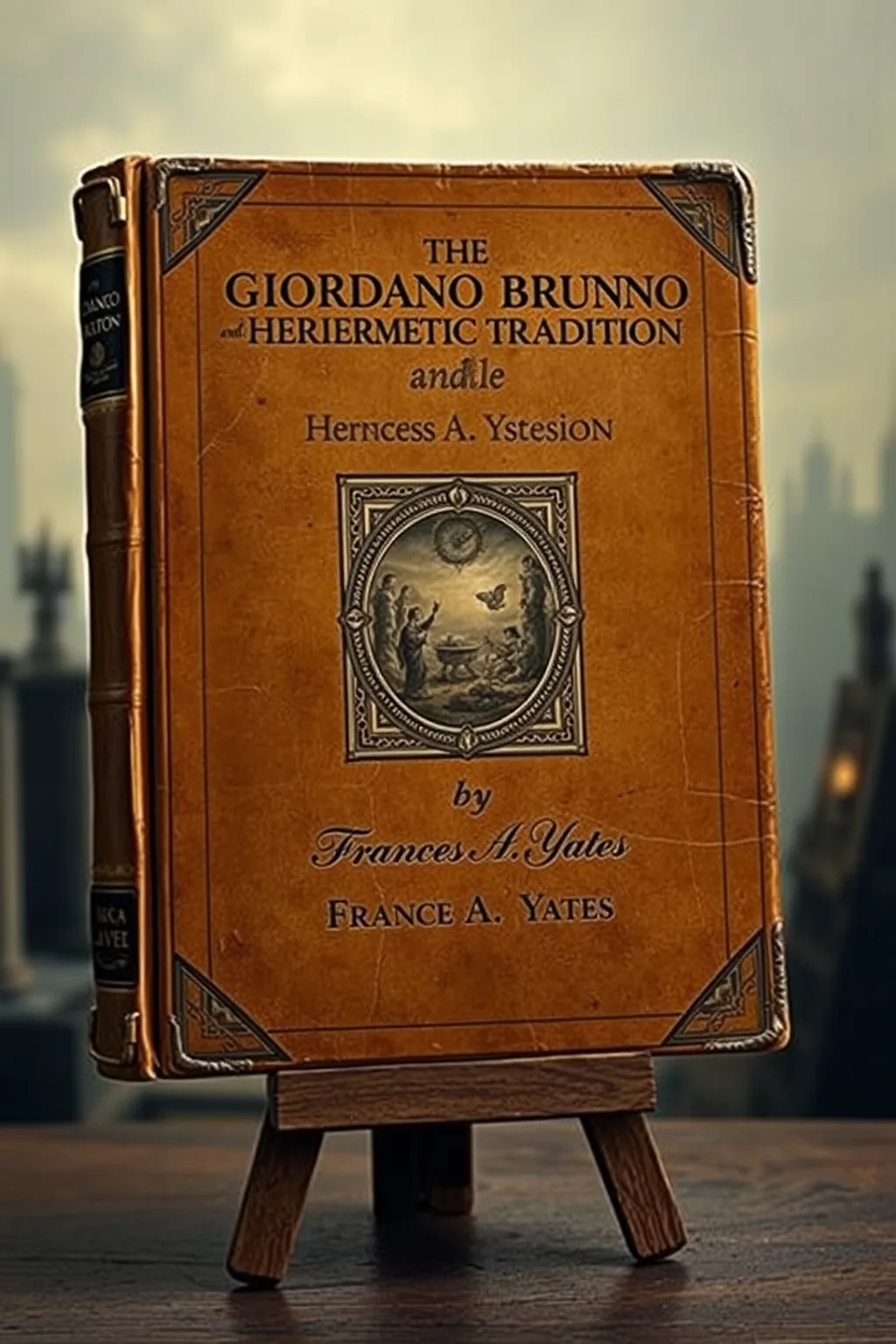
Giordano Bruno and the Hermetic Tradition


Giordano Bruno and the Hermetic Tradition is a must-read for anyone interested in the esoteric and occult. Frances A. Yates' scholarly approach makes complex ideas accessible, providing a deep dive into Bruno's philosophical and mystical contributions. The book is particularly valuable for modern esoteric seekers, offering insights into the historical roots of Hermeticism and alchemy. Yates' meticulous research and engaging writing style make this text a cornerstone of esoteric literature. The exploration of Bruno's life and works is both enlightening and inspiring, making it a valuable resource for anyone exploring the mystical dimensions of the universe.
📝 Description
76
Frances Yates' 1964 book traces Giordano Bruno's philosophy to the Hermetic texts.
Frances Yates’s 1964 study examines the influence of the Hermetic tradition on Renaissance thought, particularly through the figure of Giordano Bruno. Yates argues that Bruno’s complex philosophical system was deeply informed by the rediscovered Hermetic writings, especially the Corpus Hermeticum. She details how these ancient texts, believed by Renaissance humanists to contain primeval wisdom, provided a framework for understanding the cosmos, magic, and the divine. The book meticulously reconstructs the intellectual environment that allowed these esoteric ideas to flourish and impact thinkers beyond Bruno.
Yates’s work connects Hermeticism not only to magic and natural philosophy but also to the development of early modern science and religious thought. She shows how figures like Ficino and Pico della Mirandola engaged with Hermeticism, setting the stage for Bruno’s own syncretic endeavors. The book highlights the symbolic language and cosmology embedded within the Hermetic tradition, demonstrating its pervasive role in shaping the Renaissance worldview. It is a comprehensive account of how a rediscovered ancient tradition profoundly affected a pivotal period in Western intellectual history.
This book situates the Renaissance intellectual landscape within the revival of ancient esoteric traditions. It focuses on Hermeticism, a body of Gnostic and Neoplatonic writings attributed to the legendary Hermes Trismegistus. The rediscovery and translation of the Corpus Hermeticum in the 15th century, largely through the work of Marsilio Ficino, profoundly shaped humanist philosophy. These texts offered a vision of a divinely ordered cosmos accessible through mystical ascent and the study of symbolic correspondences, influencing magic, alchemy, astrology, and early scientific inquiry. Yates demonstrates how this Hermetic current provided a vital alternative to Aristotelianism and scholasticism.
💡 Why Read This Book?
Reading Giordano Bruno and the Hermetic Tradition today offers readers a profound understanding of the esoteric traditions that have influenced Western thought. This book provides a unique perspective on the mystical and spiritual dimensions of alchemy and Hermeticism, making it an invaluable resource for modern seekers. By exploring Giordano Bruno's life and works, readers gain insights into the historical roots of these traditions and their enduring relevance. This book is essential for anyone interested in the occult, alchemy, and Hermeticism, offering a deep dive into the philosophical and mystical contributions of one of the Renaissance's most enigmatic figures.
⭐ Reader Reviews
Honest opinions from readers who have explored this book.
❓ Frequently Asked Questions
Who was Giordano Bruno?
Giordano Bruno was an Italian philosopher, mathematician, poet, and astrologer. He is known for his contributions to the Hermetic Tradition and his mystical interpretations of the cosmos.
What is the Hermetic Tradition?
The Hermetic Tradition is a philosophical and spiritual movement that emphasizes the mystical and spiritual dimensions of alchemy and Hermeticism. It draws on the writings of Hermes Trismegistus and other esoteric texts.
Why is this book important for esoteric studies?
Giordano Bruno and the Hermetic Tradition is important for esoteric studies because it provides a comprehensive examination of Bruno's life and contributions to the Hermetic Tradition. It offers insights into the historical roots of these traditions and their enduring relevance.
🔮 Key Themes & Symbolism
Hermetic Symbolism
Yates explores the detailed symbolism of the Hermetic Tradition, revealing the hidden meanings behind ancient symbols and their significance in the mystical quest for knowledge. She explores how these symbols were used by Bruno and his contemporaries to convey esoteric truths and guide spiritual seekers on their journey.
Renaissance Mysticism
The book offers a comprehensive look at the mystical underpinnings of the Renaissance, highlighting the esoteric influences that shaped the era's art, philosophy, and science. Yates shows how the Hermetic Tradition played a central role in the development of Western thought, inspiring seekers of hidden knowledge and spiritual truth.
Philosophical Significance
Yates' work underscores the philosophical significance of the Hermetic Tradition, demonstrating how its teachings have influenced generations of thinkers and mystics. She explores the deep contemplation and spiritual discovery that characterize the Hermetic quest, offering readers a profound understanding of its enduring relevance.
💡 Key Ideas
Editorial paraphrase of the work's core concepts — not direct quotes.
The Hermetic Tradition is a body of mystical and esoteric teachings
This quote highlights the core of the Hermetic Tradition, emphasizing its mystical and esoteric nature.
Giordano Bruno was a 16th-century philosopher, mathematician, and astronomer
This quote introduces Bruno's many-sided contributions to Renaissance thought and his role in the Hermetic Tradition.
The book sheds light on the esoteric influences that shaped the Renaissance
This quote underscores the book's importance in revealing the hidden knowledge that guided the Renaissance.
Yates' meticulous research and evocative prose illuminate the hidden knowledge
This quote praises Yates' scholarly rigor and her ability to make complex esoteric concepts accessible.
This book is a valuable collection for those interested in alchemy, Hermeticism, and the occult
This quote emphasizes the book's value for seekers of hidden wisdom and practitioners of Hermetic arts.
🌙 Esoteric Significance
Tradition
This book belongs to the Hermetic Tradition, a body of mystical and esoteric teachings attributed to the legendary figure Hermes Trismegistus. It encompasses alchemy, astrology, and the pursuit of hidden knowledge, all of which are explored in Yates' work.
Symbolism
Key symbols in the Hermetic Tradition include the ouroboros, the caduceus, and the Hermetic seal. These symbols represent the cyclical nature of life, the union of opposites, and the pursuit of spiritual enlightenment, respectively. Yates' book explores the meanings behind these symbols and their significance in the mystical quest for knowledge.
Modern Relevance
The Hermetic Tradition continues to influence modern practitioners of alchemy, astrology, and the occult. Yates' work is relevant today because it provides a comprehensive understanding of the symbolic language and philosophical significance of the Hermetic Tradition, guiding seekers of hidden wisdom on their spiritual journey.
👥 Who Should Read This Book
Beginners may find some of the esoteric concepts challenging, but the book's depth of research and evocative prose make it a valuable resource for anyone interested in the Hermetic Tradition. Scholars of occult studies will appreciate Yates' meticulous research and her ability to connect historical figures and events to broader mystical themes. Spiritual seekers and practitioners of Hermetic arts will find the book's exploration of symbolism and philosophical significance particularly enlightening.
📜 Historical Context
Giordano Bruno and the Hermetic Tradition was written in an era when the Renaissance was in full swing, and the search for hidden knowledge was a driving force behind artistic, philosophical, and scientific pursuits. Yates' work is important because it reveals the esoteric influences that shaped the Renaissance, providing a deeper understanding of the mystical and symbolic language that has captivated mystics for centuries. The book's influence can be seen in the continued interest in Hermeticism, alchemy, and the occult, as well as in the enduring fascination with Giordano Bruno's life and teachings.
📔 Journal Prompts
How do the teachings of the Hermetic Tradition influence your understanding of symbolism?
In what ways has Giordano Bruno's life and work shaped your spiritual journey?
Reflect on a key symbol from the Hermetic Tradition and its personal significance.
How does the pursuit of hidden knowledge resonate with your own quest for spiritual enlightenment?
What insights from Yates' work can you apply to your practice of Hermetic arts?
🗂️ Glossary
Hermetic Tradition
A body of mystical and esoteric teachings attributed to the legendary figure Hermes Trismegistus, encompassing alchemy, astrology, and the pursuit of hidden knowledge.
Giordano Bruno
A 16th-century philosopher, mathematician, and astronomer known for his advocacy of Copernican heliocentrism and his mystical and Hermetic views.
Ouroboros
A symbol representing the cyclical nature of life and the union of opposites, often associated with the Hermetic Tradition.
Caduceus
A symbol featuring two serpents intertwined around a winged staff, representing the union of opposites and the pursuit of spiritual enlightenment.
Hermetic Seal
A symbol associated with the Hermetic Tradition, representing the pursuit of hidden knowledge and spiritual enlightenment.
This book appears in 3 collections
🔮 Readers Also Liked
Browse all →








More by Frances A. Yates
All books →
From the “Hermeticism” Collection
View all →








More Free Alchemy & Hermeticism Books
View all →