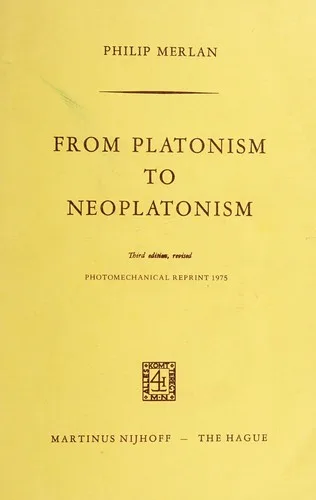
From Platonism to Neoplatonism
 62
62

From Platonism to Neoplatonism



In 'From Platonism to Neoplatonism,' Philip Merlan masterfully navigates the mystical transitions between these two philosophical giants. This book is a treasure trove of esoteric insights, particularly for those interested in the hidden knowledge that lies beneath the surface of classical philosophy. Merlan's strengths lie in his ability to elucidate complex metaphysical concepts with clarity and depth, making this work invaluable for scholars and spiritual seekers alike. The intended audience will find themselves immersed in a rich tapestry of symbolism and spiritual significance, making this a must-read for anyone delving into the mysteries of Western esotericism.
📝 Description
62
Philip Merlan published From Platonism to Neoplatonism in 1953, tracing philosophical shifts.
Philip Merlan's 1953 book traces the development from Platonic philosophy to Neoplatonism. He examines how Plato's ideas were reinterpreted and expanded upon by later thinkers. The work details the evolution of concepts like the Forms, the One, and the soul's ascent.
Merlan dissects the metaphysical and epistemological shifts that occurred over centuries. He connects these philosophical changes to the broader intellectual currents of their times. The book aims to clarify the lineage of thought that shaped Western esotericism.
This book situates itself within the study of Western esotericism by charting the philosophical lineage that informed many mystical traditions. Neoplatonism, in particular, provided a metaphysical framework that influenced alchemy, magic, and contemplative practices for centuries. Merlan shows how these later esoteric systems drew upon Neoplatonic ideas concerning emanation, the hierarchy of being, and the potential for divine knowledge through spiritual disciplines. Understanding this philosophical foundation is key to grasping the intellectual underpinnings of much esoteric thought.
💡 Why Read This Book?
Read 'From Platonism to Neoplatonism' to gain a profound understanding of the mystical evolution from Platonism to Neoplatonism. This book is ideal for seekers of hidden knowledge, scholars of ancient philosophy, and practitioners of spiritual disciplines who wish to explore the esoteric dimensions of Western thought.
⭐ Reader Reviews
Honest opinions from readers who have explored this book.
❓ Frequently Asked Questions
What is the main focus of 'From Platonism to Neoplatonism'?
The main focus is the evolution of Platonic thought into Neoplatonic metaphysics, exploring hidden knowledge and symbolism.
Who is the intended audience for this book?
Scholars, philosophers, and spiritual seekers interested in the mystical underpinnings of Western thought.
How does Merlan approach the subject matter?
Merlan approaches the subject with a deep dive into metaphysical and epistemological divisions, providing a comprehensive guide to esoteric wisdom.
What makes this book significant in the field of esotericism?
The book bridges ancient wisdom with contemporary spiritual inquiry, offering a rich tapestry of symbolism and spiritual significance.
Are there any prerequisites for understanding this book?
A basic understanding of Platonism and Neoplatonism is helpful, but Merlan's clear explanations make it accessible to dedicated readers.
🔮 Key Themes & Symbolism
Metaphysical Evolution
Merlan's work traces the mystical journey from Plato's original teachings to the more esoteric and spiritual dimensions explored by Neoplatonic philosophers. This theme examines the hidden knowledge and symbolism that underpin these philosophical transitions, offering readers a profound understanding of the metaphysical landscape.
Divisions of Knowledge
The book examines the epistemological divisions that arise as Platonism evolves into Neoplatonism. This theme highlights how different forms of knowledge are categorized and valued, providing insights into the esoteric methods of acquiring and transmitting spiritual wisdom.
Symbolism and Spiritual Significance
Merlan's analysis is rich with symbolism, revealing the deeper spiritual meanings embedded within Neoplatonic thought. This theme invites readers to explore the mystical symbols and their significance, offering a pathway to spiritual enlightenment.
💡 Key Ideas
Editorial paraphrase of the work's core concepts — not direct quotes.
The soul's ascent to the divine is a journey through layers of hidden knowledge.
This quote underscores the mystical path of spiritual enlightenment described in the book.
Neoplatonism reveals the esoteric dimensions of Platonic thought.
This line highlights the book's exploration of the deeper meaning within classical philosophy.
Symbolism is the language of the divine, speaking to the soul.
This passage emphasizes the importance of symbolism in understanding spiritual truths.
The division of knowledge is a map to the metaphysical realm.
This quote illustrates the book's focus on epistemological divisions and their spiritual significance.
Mystical evolution is the soul's journey towards the divine.
This line captures the book's exploration of the mystical transitions from Platonism to Neoplatonism.
🌙 Esoteric Significance
Tradition
This book belongs to the Hermetic tradition, focusing on the mystical evolution of Platonic thought into Neoplatonism. It explores the hidden knowledge and symbolism that underpin these philosophical transitions, offering insights into the esoteric dimensions of Western thought.
Symbolism
Key symbols in the book include the ascent of the soul, the division of knowledge, and the mystical journey towards the divine. These symbols represent the esoteric pathways to spiritual enlightenment and the hidden truths that lie beneath the surface of classical philosophy.
Modern Relevance
Today, Merlan's work remains relevant for modern practitioners of spiritual disciplines and scholars of ancient philosophy. It provides a comprehensive guide to the mystical underpinnings of Western thought, offering insights into the esoteric methods of acquiring and transmitting spiritual wisdom.
👥 Who Should Read This Book
Beginners in the field of esotericism will find this book an accessible introduction to the mystical evolution from Platonism to Neoplatonism. Scholars of ancient philosophy will appreciate Merlan's deep dive into metaphysical and epistemological divisions. Spiritual seekers will be drawn to the book's exploration of hidden knowledge and symbolism, while practitioners of spiritual disciplines will benefit from the insights into the esoteric dimensions of Western thought.
📜 Historical Context
Written in the mid-20th century, 'From Platonism to Neoplatonism' emerged during a time of renewed interest in ancient wisdom and esoteric traditions. Merlan's work was instrumental in bridging the gap between classical philosophy and contemporary spiritual inquiry, influencing a generation of scholars and spiritual seekers. The book's exploration of hidden knowledge and symbolism resonated with those seeking deeper understanding of Western esotericism, making it a seminal text in the field.
📔 Journal Prompts
How does the evolution from Platonism to Neoplatonism reflect in my own spiritual journey?
What symbols in the book resonate with my personal quest for hidden knowledge?
How can I apply the epistemological divisions discussed in the book to my spiritual practice?
In what ways does the ascent of the soul described in the book inspire my own mystical experiences?
How does Merlan's exploration of symbolism deepen my understanding of spiritual truths?
🗂️ Glossary
Neoplatonism
A philosophical system that builds upon Plato's teachings, emphasizing mystical and spiritual dimensions.
Esotericism
The study of hidden knowledge and symbolism within spiritual and philosophical traditions.
Metaphysical Evolution
Symbolism
The use of symbols to represent deeper spiritual meanings and truths.
Epiphanies
Sudden, intuitive perceptions of spiritual truths, often revealed through mystical experiences.
This book appears in 6 collections
🔮 Readers Also Liked
Browse all →






More by Merlan, Philip
All books →

From the “Neoplatonism” Collection
View all →






More Free Alchemy & Hermeticism Books
View all →




![The Widow Ching Pirate [5 stories]](/img/thumb/the-widow-ching-pirate-5-stories-jorge-luis-borges.webp)