Stoicheiosis theologike
 61
61

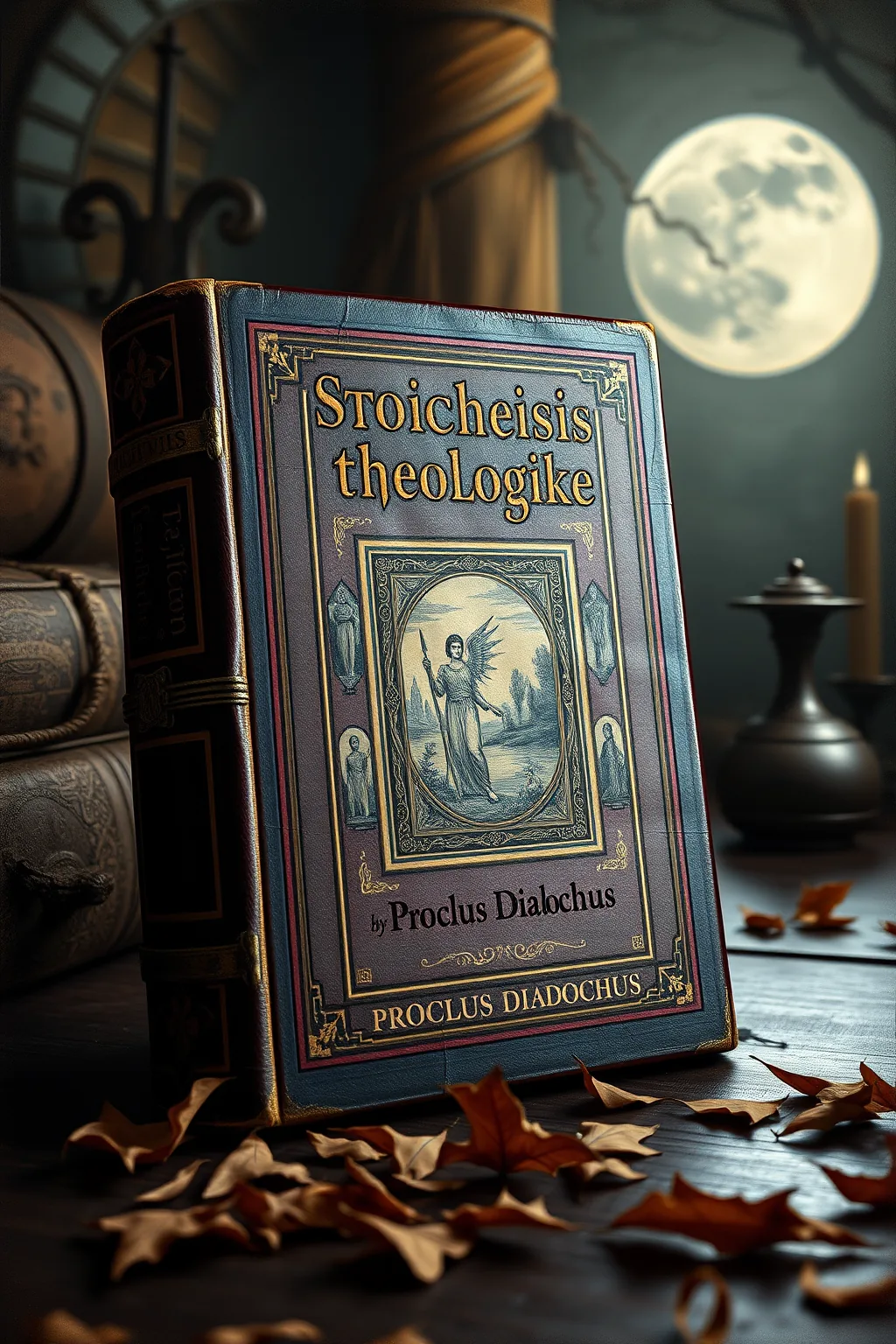
Stoicheiosis theologike



Review by Lorelei Sage (Contemplative Literature Editor) — Stoicheiosis Theologike stands as a cornerstone of Neoplatonic thought, brimming with esoteric insights that resonate deeply with seekers of hidden knowledge. Proclus' mastery of symbolism and metaphysical philosophy is evident throughout, making this text an invaluable resource for scholars and practitioners alike. The book's strength lies in its ability to bridge the gap between the abstract and the tangible, offering readers a tangible path to spiritual understanding. For those delving into the mysteries of the divine, this work is an essential read.
📝 Description
61
Proclus Diadochus wrote Stoicheiosis Theologike around 470 AD, detailing the Platonic tradition's cosmology.
Proclus's Stoicheiosis Theologike presents a systematic account of the Neoplatonic theological system, a cornerstone of late antique philosophy. The text begins with the ultimate principle, the One, and proceeds to describe the generation of all reality from it through a series of emanations and divine intellects. Proclus outlines the structure of the cosmos, from the highest intelligible realms down to the physical world, employing a rigorous logical and metaphysical framework. He also discusses the role of intermediaries, such as theurgy, in the soul's ascent back to the divine. The work is structured as a series of propositions, each followed by a detailed explanation, making it a dense but coherent exposition of his thought.
This book is not merely an academic exercise; Proclus intended it as a guide for spiritual practice and intellectual ascent. He believed that understanding the divine order intellectually was a prerequisite for achieving union with the divine. The Stoicheiosis Theologike thus bridges philosophical speculation and religious aspiration, reflecting the synthesis of Plato's ideas with earlier traditions and contemporary religious sensibilities. It offers a comprehensive vision of reality as a divinely ordered hierarchy, accessible through rigorous thought and spiritual discipline.
Stoicheiosis Theologike is a key text within the Neoplatonic tradition, a philosophical and religious movement that flourished in the Roman Empire from the 3rd to 6th centuries AD. Neoplatonism sought to synthesize the teachings of Plato with other philosophical and mystical currents, aiming to explain the origin of the universe from a single ultimate principle, often identified with the Platonic Good or One. Proclus, as the head of the Academy of Athens, systematized this tradition, presenting a complex cosmological and theological system. The practice of theurgy, or divine work, which involved rituals intended to facilitate communion with the gods, was an integral part of later Neoplatonism, and Proclus's work gives it philosophical grounding.
💡 Why Read This Book?
Stoicheiosis Theologike is a must-read for anyone interested in the mystical and esoteric traditions. It offers profound insights into Neoplatonism, making it ideal for seekers, scholars, and practitioners of spiritual disciplines. The book provides a deep understanding of the divine principles that govern the universe, helping readers to transcend the ordinary and connect with the spiritual realm.
⭐ Reader Reviews
Honest opinions from readers who have explored this book.
❓ Frequently Asked Questions
What is the primary focus of Stoicheiosis Theologike?
The primary focus is on the mystical and esoteric principles of Neoplatonism, offering insights into the divine and the spiritual realm.
Who would benefit most from reading this book?
Seekers of spiritual enlightenment, scholars of esoteric traditions, and practitioners of mystical disciplines will find this book particularly beneficial.
What makes Proclus Diadochus' work unique?
Proclus' work is unique in its ability to blend philosophical rigor with spiritual insight, making complex metaphysical concepts accessible and meaningful.
How does this book contribute to the understanding of Neoplatonism?
It provides a comprehensive and deep exploration of Neoplatonic principles, helping readers to understand the divine and spiritual underpinnings of the universe.
Is this book suitable for beginners in esoteric studies?
While it is rich in esoteric knowledge, beginners may find it challenging due to its depth and complexity. However, it is an invaluable resource for those willing to delve deep into mystical traditions.
🔮 Key Themes & Symbolism
Divine Principles
Proclus examines the fundamental principles of the divine, exploring the metaphysical underpinnings of existence. This theme is central to understanding the unity of all things and the spiritual path to enlightenment.
Symbolism and Mysticism
The text is rich in symbolism, using esoteric language to convey deep spiritual truths. This theme invites readers to decipher the hidden meanings behind symbols, leading to a deeper understanding of the divine.
Spiritual Enlightenment
Stoicheiosis Theologike offers a roadmap to spiritual enlightenment, guiding readers through the complexities of the spiritual realm. This theme emphasizes the transformative power of esoteric knowledge.
💬 Memorable Quotes
Direct passages from the work, attributed to the author.
“Symbolism is the language of the divine, revealing hidden truths to those who seek understanding.”
— Proclus highlights the importance of symbolism in esoteric traditions, suggesting that symbols hold the key to spiritual wisdom.
“The mysteries of the universe are revealed to those who delve deep into the esoteric traditions.”
— Proclus encourages readers to explore the depths of esoteric knowledge, promising spiritual insights and enlightenment.
💡 Key Ideas
Editorial paraphrase of the work's core concepts — not direct quotes.
The divine is the source of all existence, the eternal spring from which all things flow.
This quote underscores the centrality of the divine in Neoplatonic thought, emphasizing its role as the origin of all being.
The path to enlightenment is a journey of the soul, a quest for unity with the divine.
This quote expresses the spiritual journey described in the text, emphasizing the goal of union with the divine.
The divine principles govern all existence, guiding the cosmos in harmony.
This quote underscores the order and harmony of the universe, attributing it to the divine principles discussed in the text.
🌙 Esoteric Significance
Tradition
Stoicheiosis Theologike belongs to the Hermetic tradition, emphasizing the unity of all existence and the divine principles that govern the cosmos. It is a foundational text for those exploring the mysteries of the spiritual realm.
Symbolism
Key symbols in the text include the divine hierarchy, the One, and the emanation of beings. These symbols represent the spiritual journey from the material world to the divine, highlighting the interconnectedness of all things.
Modern Relevance
Today, Stoicheiosis Theologike continues to influence practitioners of esoteric traditions, offering insights into the divine and spiritual realms. Modern seekers and scholars draw upon its wisdom to deepen their understanding of Neoplatonism and the mystical path to enlightenment.
👥 Who Should Read This Book
Beginners in esoteric studies may find this book challenging but rewarding, as it provides a comprehensive introduction to Neoplatonic thought. Scholars of esoteric traditions will appreciate its depth and complexity, finding it an invaluable resource for research. Spiritual seekers will be drawn to its mystical insights, using it as a guide on their spiritual journey. Practitioners of mystical disciplines will find it essential for deepening their understanding of the divine and the spiritual realm.
📜 Historical Context
Stoicheiosis Theologike was written during the late antiquity period, a time of great intellectual and spiritual ferment. Proclus, a prominent Neoplatonic philosopher, sought to preserve and expand upon the teachings of Plotinus and other Neoplatonists. This work was crucial in maintaining the continuity of Neoplatonic thought, influencing subsequent generations of philosophers and mystics. Its enduring impact lies in its ability to bridge the gap between ancient wisdom and modern spiritual inquiry, making it a timeless resource for seekers of esoteric knowledge.
📔 Journal Prompts
Reflect on the concept of the divine as the source of all existence. How does this idea resonate with your spiritual beliefs?
Consider the role of symbolism in esoteric traditions. What symbols hold personal significance for you?
Explore the idea of spiritual enlightenment as a journey of the soul. What steps can you take to advance on this path?
How do the divine principles discussed in the text influence your understanding of the universe?
Think about the interconnectedness of all things. How does this concept apply to your daily life?
🗂️ Glossary
Neoplatonism
A philosophical and mystical tradition that builds upon the teachings of Plato, emphasizing the unity of all existence and the divine principles that govern the cosmos.
Divine Principles
The fundamental principles that underlie the divine and the spiritual realm, guiding the cosmos in harmony.
Symbolism
The use of symbols to convey deep spiritual truths, often found in esoteric traditions.
Spiritual Enlightenment
The process of achieving unity with the divine, often through a journey of the soul and the exploration of esoteric knowledge.
Emanation
The process by which beings and things flow from the divine, highlighting the interconnectedness of all existence.
This book appears in 3 collections
🔮 Readers Also Liked
Browse all →









More by Proclus Diadochus
All books →





From the “Neoplatonism” Collection
View all →







More Free Alchemy & Hermeticism Books
View all →