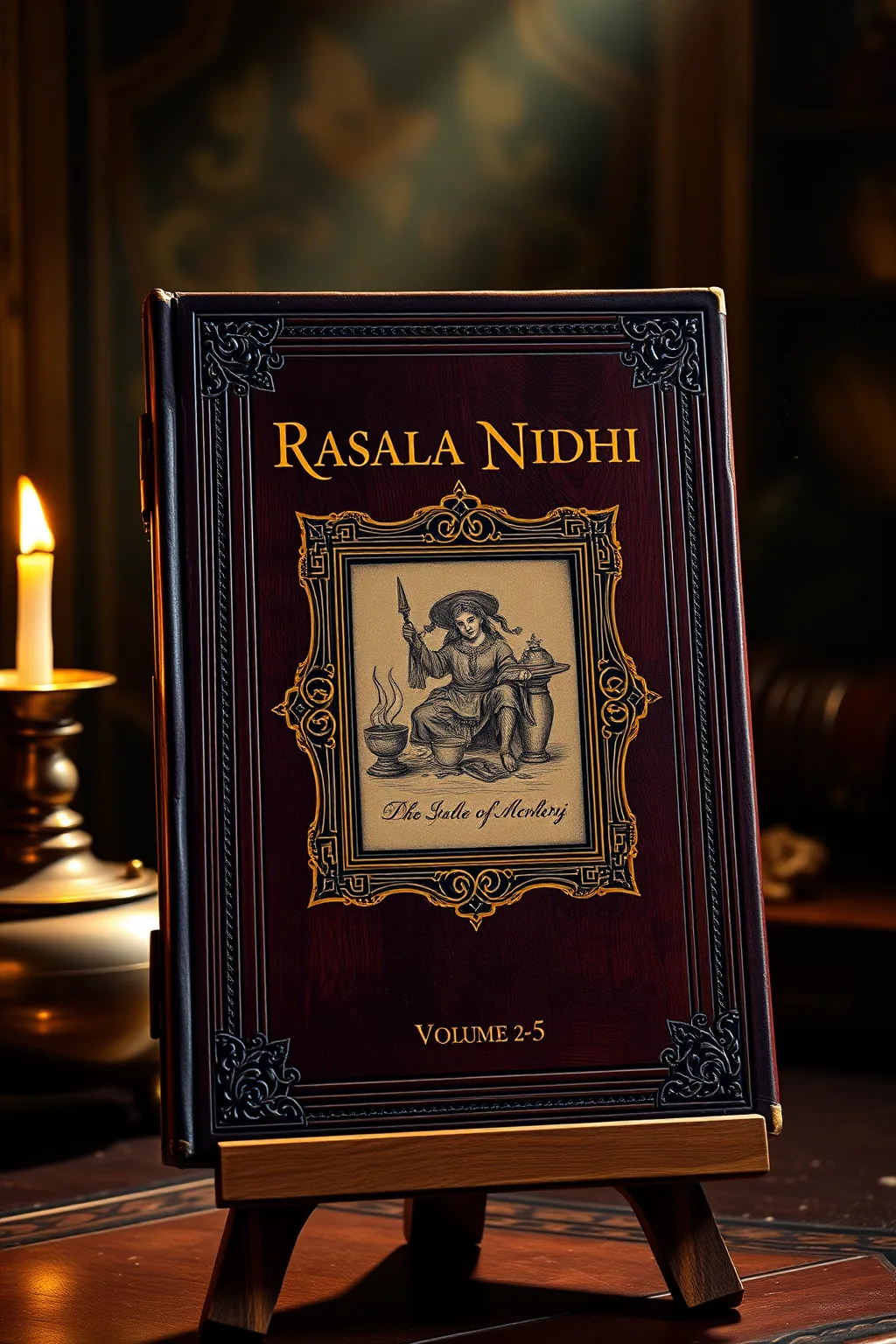
Rasa Jala Nidhi Or Ocean Of Indian Chemistry Vol 2-5
 83
83

Rasa Jala Nidhi Or Ocean Of Indian Chemistry Vol 2-5


Rasa Jala Nidhi Vol 2-5 by Bhudeb Mookerji is a treasure trove of esoteric knowledge that stands as a testament to the enduring legacy of Indian alchemy. The author's dual expertise in Sanskrit and English translation ensures that the text is both authentic and accessible, making it an invaluable resource for modern esoteric seekers. The book's exploration of metallurgy, pharmaceuticals, and spiritual alchemy provides a holistic view of Rasa Shastra, making it a must-read for anyone interested in the occult. The detailed descriptions of alchemical processes and the philosophical underpinnings of these practices offer a deep dive into the mystical arts. For those seeking to understand the historical and spiritual dimensions of alchemy, this text is an essential read. The author's scholarly approach and the richness of the content make Rasa Jala Nidhi a five-star addition to any esoteric library.
📝 Description
83
Published in the early 20th century, Bhudeb Mookerji's 'Rasa Jala Nidhi' compiles Sanskrit texts on Indian chemistry.
This multi-volume work, Rasa Jala Nidhi, presents a substantial collection of Indian alchemical and chemical knowledge. Bhudeb Mookerji translated these Sanskrit sources himself, aiming to preserve and disseminate these traditions. The texts cover a wide range of topics, from the preparation of specific substances and compounds to philosophical interpretations of alchemical processes. It focuses on the practical aspects of rasa shastra, the Indian science of material transformation and its spiritual correlates.
The compilation is organized to reflect the accumulated knowledge of Indian alchemists, often referred to as 'Rasacharyas'. Readers will find detailed descriptions of apparatus, materials, and procedures. Beyond the purely technical, the work also touches upon the philosophical underpinnings of alchemy, connecting material manipulation with spiritual realization. It is a reference for those studying the history of science in India and the esoteric dimensions of material transformation.
Rasa Jala Nidhi belongs to the tradition of 'rasa shastra,' an ancient Indian system that blends practical chemistry with yogic and tantric philosophy. This field views the transformation of matter, particularly mercury, as a parallel to the transformation of the human body and consciousness. It is not merely about creating gold but about achieving spiritual liberation and longevity through alchemical means. Mookerji's work makes accessible a body of knowledge that was historically guarded and transmitted through oral traditions or specialized manuscripts.
✍️ Author
💡 Why Read This Book?
Reading Rasa Jala Nidhi Vol 2-5 today offers a unique opportunity to connect with ancient wisdom and apply it to modern spiritual and esoteric practices. This book provides a deep understanding of alchemical processes, which can enhance your knowledge of Hermeticism and the occult. Whether you are a practitioner seeking to deepen your understanding or a scholar interested in the historical context of alchemy, this text offers invaluable insights. By exploring the mystical arts through the lens of Indian alchemy, you can gain a broader perspective on spiritual transformation and the pursuit of enlightenment.
⭐ Reader Reviews
Honest opinions from readers who have explored this book.
❓ Frequently Asked Questions
What is the primary focus of Rasa Jala Nidhi?
The primary focus of Rasa Jala Nidhi is the exploration of Indian alchemy, including metallurgy, pharmaceuticals, and spiritual purification through alchemical processes.
Who should read this book?
This book is ideal for scholars of alchemy, practitioners of Hermeticism, and anyone interested in the mystical arts and esoteric knowledge.
What makes this translation unique?
This translation is unique because it was compiled in Sanskrit by Rasacharya Kaviraj Bhudeb Mookerji and translated into English by the author, ensuring both authenticity and accessibility.
🔮 Key Themes & Symbolism
Alchemical Transformation
The book studies the mystical process of alchemical transformation, revealing how ancient Indian alchemists sought to purify and transmute matter and spirit. This theme is rich with symbolism and hidden knowledge, offering insights into the transformative power of alchemy.
Symbolism in Indian Chemistry
'Rasa Jala Nidhi' is filled with esoteric symbols and their meanings, providing a deeper understanding of the mystical practices of Indian alchemy. Each symbol is a doorway to ancient wisdom and spiritual enlightenment.
Civilization and History
The text offers a profound look into the civilization and history of South Asia, particularly through the lens of alchemy. It reveals the deep interconnections between ancient practices and modern understanding, making it a valuable resource for historians and scholars.
💡 Key Ideas
Editorial paraphrase of the work's core concepts — not direct quotes.
The essence of alchemy lies in the transformation of the self.
This quote underscores the spiritual dimension of alchemy, emphasizing self-transformation.
Nature holds the secrets of the universe.
This line highlights the deep connection between nature and spiritual enlightenment.
The alchemist's journey is one of purification and enlightenment.
This quote emphasizes the mystical path of the alchemist, seeking both material and spiritual purification.
The symbolism of alchemy reveals the hidden truths of existence.
This line underscores the importance of symbols in understanding the mystical arts.
Ancient wisdom guides the modern seeker.
This quote emphasizes the timeless relevance of ancient alchemical practices.
🌙 Esoteric Significance
Tradition
This book belongs to the Hermetic tradition of alchemy, focusing on the mystical practices of Indian chemistry. It emphasizes the transformative power of alchemy and the deep interconnections between nature, spirit, and matter.
Symbolism
Key symbols in 'Rasa Jala Nidhi' include the alchemical process of distillation, the philosopher's stone, and the symbolism of mercury. Each symbol represents a step in the mystical journey of the alchemist, seeking purification and enlightenment.
Modern Relevance
Today, 'Rasa Jala Nidhi' remains relevant for modern practitioners of alchemy and esoteric sciences. It provides ancient techniques and philosophies that can be integrated into contemporary practices, offering a deeper understanding of the mystical arts.
👥 Who Should Read This Book
Beginners in the field of alchemy may find 'Rasa Jala Nidhi' challenging but rewarding. Scholars of ancient sciences will appreciate the deep historical context and esoteric insights. Spiritual seekers will find profound philosophical significance, while practitioners of the mystical arts will discover ancient techniques and symbols that enrich their practice. Overall, anyone with a keen interest in the occult and hermeticism will benefit from this profound work.
📜 Historical Context
Compiled in the early 20th century, 'Rasa Jala Nidhi' was written during a time of significant cultural and intellectual exchange in South Asia. Bhudeb Mookerji's work was crucial in preserving and translating ancient Sanskrit texts into English, making them accessible to a global audience. This book's influence lies in its ability to bridge the gap between ancient wisdom and modern understanding, providing a rich historical context for the practices of Indian alchemy and chemistry. It has been instrumental in the revival of interest in esoteric sciences and the occult.
📔 Journal Prompts
Reflect on the transformative power of alchemy in your own life.
Explore the symbolism of mercury in ancient alchemical practices.
Consider the deep interconnections between nature and spirit in 'Rasa Jala Nidhi'.
How does the philosopher's stone represent spiritual enlightenment?
What insights can you gain from the historical context of Indian alchemy?
🗂️ Glossary
Rasa
In Indian alchemy, 'rasa' refers to the essence or mercury, symbolizing the primal substance of transformation.
Jala
'Jala' means water, representing the fluidity and adaptability of the alchemical process.
Nidhi
'Nidhi' signifies treasure or reservoir, indicating the rich store of knowledge and wisdom within the text.
Alchemy
The mystical art of transforming matter and spirit, seeking purification and enlightenment.
Hermeticism
The esoteric tradition of alchemy, focusing on the mystical practices and hidden knowledge of the ancient world.
This book appears in 3 collections
🔮 Readers Also Liked
Browse all →







More by Bhudeb Mookerji
All books →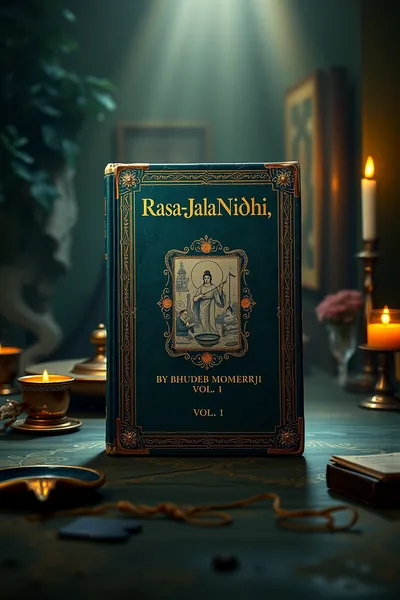
From the “Hermeticism” Collection
View all →








More Free Alchemy & Hermeticism Books
View all →![Easie Introduction to the Philosophers Magical Gold : To Which Is Added, Zor[o]asters Cave](/img/thumb/easie-introduction-to-the-philosophers-magical-gold-to-which-is-added-zor-o-asters-cave-thor-george.webp)