Magia Naturalis
 78
78

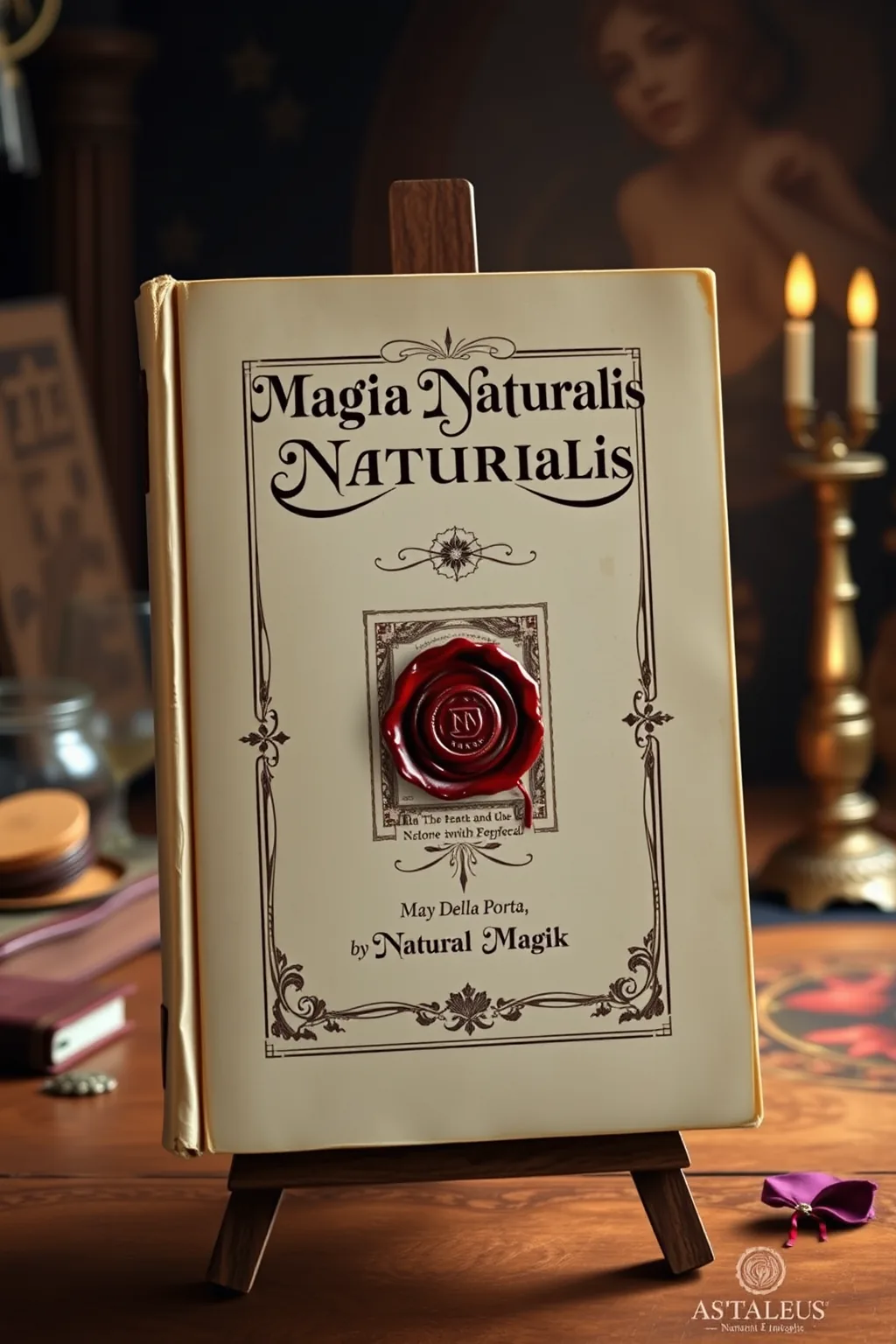
Magia Naturalis


Review by Alaric Kestrel (Metaphysical Studies Reviewer) — 'Magia Naturalis' stands as a monumental testament to the early modern quest for understanding the universe's hidden mechanisms. Della Porta masterfully bridges the gap between folklore and empirical inquiry, offering a fascinating perspective on phenomena often relegated to superstition. His attempts to naturalize magic, drawing upon a vast repository of observations and classical wisdom, provide invaluable insights into the Hermetic mindset. This work is particularly resonant for its exploration of sympathetic correspondences and the subtle interplay of forces. It is an indispensable resource for scholars of alchemy, Renaissance esotericism, and anyone seeking to grasp the intellectual foundations of natural philosophy. A truly illuminating and foundational text.
📝 Description
78
Giambattista Della Porta published 'Magia Naturalis' in 1558, later expanding it to twenty books.
Giambattista Della Porta's 'Magia Naturalis,' first published in 1558 and later enlarged to twenty books, collects a vast array of phenomena. Della Porta, a Neapolitan scholar, aimed to explain seemingly supernatural events through natural causes and classical references. The book is not just a catalog of wonders but a philosophical attempt to connect the visible world with its underlying forces. It presents existence as a weave where ordinary and extraordinary elements meet.
This work serves as a guide for those interested in concealed knowledge, the alchemical arts, and the study of Hermetic philosophy. It illuminates the intellectual atmosphere of early modern esotericism. Readers will find a perspective where observation, logic, and the subtle powers of nature come together.
Published in the 16th century, 'Magia Naturalis' emerged during a period of intense interest in the occult and natural philosophy. It sits within the Hermetic tradition, which sought to understand the cosmos through divine principles and correspondences. Della Porta attempted to reconcile Christian theology with Neoplatonic ideas and ancient magical practices, seeking a unified understanding of creation. The work reflects the Renaissance fascination with uncovering the hidden order of the universe through empirical study and philosophical inquiry.
✍️ Author
Natural Magick
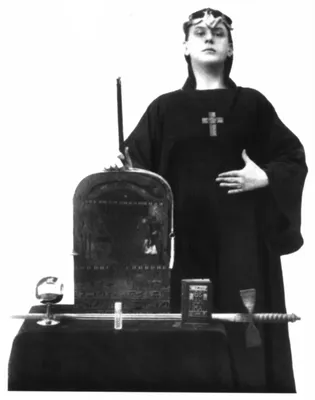
Thelema () is a Western esoteric and occult social and spiritual philosophy and a new religious movement founded in the early 1900s by Aleister Crowley (1875–1947), an English writer, mystic, occultist, and ceremonial magician. Central to Thelema is the co…
💡 Why Read This Book?
Uncover the Renaissance mind's fascination with the natural world and its hidden forces. 'Magia Naturalis' offers a unique perspective on early scientific inquiry intertwined with esoteric traditions. Ideal for students of alchemy, Hermeticism, and those seeking to understand the roots of modern scientific thought, this book bridges the gap between wonder and explanation, making the seemingly miraculous accessible through natural philosophy.
⭐ Reader Reviews
Honest opinions from readers who have explored this book.
❓ Frequently Asked Questions
What is 'Magia Naturalis' about?
'Magia Naturalis' by Giambattista Della Porta is a comprehensive exploration of natural phenomena, attempting to explain various 'magical' occurrences through observation and naturalistic reasoning, often referencing classical sources and early scientific principles.
When was 'Magia Naturalis' first published?
The initial publication of 'Magia Naturalis' was in 1558, with a significantly expanded edition appearing in 1586.
Who was Giambattista Della Porta?
Giambattista Della Porta was a prominent Neapolitan scholar, playwright, and polymath of the Renaissance, known for his wide-ranging interests in natural philosophy, optics, cryptography, and various forms of knowledge.
What is the relationship between 'Magia Naturalis' and alchemy?
The book is deeply intertwined with alchemical thought, exploring principles of transformation, sympathetic correspondences, and the hidden virtues of natural substances, attempting to provide rational explanations for processes often associated with alchemical arts.
Is 'Magia Naturalis' a book of spells and incantations?
While it discusses phenomena that might appear 'magical,' Della Porta's primary aim was to provide naturalistic justifications, moving away from purely supernatural or occult explanations and grounding them in the observable world and its inherent properties.
🔮 Key Themes & Symbolism
The Naturalization of Magic
Della Porta's core endeavor was to explain phenomena typically labeled as supernatural. He meticulously investigated reported marvels, seeking to uncover the underlying natural causes and mechanisms. This involved keen observation, experimentation (albeit rudimentary by modern standards), and an extensive cataloging of the properties of plants, minerals, and animals. By grounding these 'magical' effects in the principles of nature, he sought to legitimize them within a framework of rational inquiry, bridging the gap between folklore and nascent scientific understanding.
Sympathetic Correspondences and Hidden Virtues
A central to 'Magia Naturalis' is the exploration of sympathetic relationships in nature – how objects, substances, and beings can influence each other across distances through hidden affinities. Della Porta examines the concept of 'virtues' inherent in natural things, which can be harnessed and manipulated for specific effects. This theme resonates deeply with alchemical and Hermetic traditions, emphasizing the interconnectedness of the cosmos and the potential for humanity to understand and work with these subtle forces.
The Intersection of Observation and Classical Wisdom
The work is a profound synthesis of empirical observation and the vast repository of classical knowledge. Della Porta draws heavily on ancient Greek and Roman texts, philosophers, and naturalists, integrating their insights with his own investigations. This approach reflects the Renaissance humanist ideal of reviving and building upon the wisdom of antiquity. The book serves as a evidence of how classical learning was not merely preserved but actively engaged with and reinterpreted through the lens of contemporary inquiry, seeking to uncover timeless truths about the natural world.
💬 Memorable Quotes
Direct passages from the work, attributed to the author.
“Nature is the best teacher, and experience the surest guide.”
— This aphorism captures Della Porta's empirical approach, emphasizing the paramount importance of direct observation and practical experimentation in understanding the world's secrets, contrasting with purely theoretical or dogmatic learning.
“For what is called magic is nothing but the highest degree of natural philosophy.”
— Della Porta asserts that what is perceived as supernatural is, in fact, a profound and advanced understanding of natural laws, blurring the lines between the arcane and the scientific.
“To know nature is to know God.”
— This statement reflects the Hermetic principle of 'As Above, So Below' and the Renaissance view of the cosmos as a divine creation, where studying the natural world is a pathway to understanding the divine intellect.
💡 Key Ideas
Editorial paraphrase of the work's core concepts — not direct quotes.
The world is full of hidden virtues, awaiting discovery.
This quote speaks to the esoteric belief in the latent powers within all of nature, suggesting that the universe is a dynamic system of interconnected energies and properties that can be understood and utilized by the discerning mind.
The eye is the window of the soul, and the chief instrument of knowledge.
Highlighting the importance of visual perception and sensory experience in acquiring knowledge, this quote underscores Della Porta's reliance on observation as the primary means of empirical investigation.
🌙 Esoteric Significance
Tradition
This work is deeply rooted in the Hermetic tradition, drawing heavily on principles of correspondence, the hidden virtues of nature, and the belief in a unified cosmos where macrocosm and microcosm mirror each other. It also reflects the Neoplatonic influence prevalent in Renaissance esotericism, which emphasized divine emanation and the soul's ascent through knowledge of the natural world. Its attempt to rationalize phenomena aligns with the Hermetic goal of understanding the divine order through the study of creation.
Symbolism
Key symbolic themes include the interconnectedness of all things through sympathies and antipathies, the 'virtues' inherent in natural objects (often symbolized by their forms, colors, or origins), and the transformative power of natural processes. Della Porta's exploration of optics and perspective can also be seen as symbolic of gaining clearer vision or insight into hidden realities. The book itself acts as a symbolic key, unlocking the hidden workings of nature for the initiated reader.
Modern Relevance
In an age often characterized by hyper-specialization and a perceived disconnect from the natural world, 'Magia Naturalis' offers a holistic perspective. Its emphasis on observation, interconnectedness, and the inherent wonders of nature can inspire a renewed appreciation for ecological balance and the subtle energies that permeate existence. For practitioners of modern esotericism, it provides foundational insights into historical approaches to natural magic and the alchemical worldview, fostering a deeper understanding of the lineage of such practices.
👥 Who Should Read This Book
This key work is essential for a diverse audience. **Scholars** of Renaissance intellectual history, the history of science, and occult traditions will find it an invaluable primary source, revealing the intricate thought processes of the era. **Seekers** of esoteric knowledge will be drawn to its exploration of hidden forces and the interconnectedness of nature, offering a bridge between the material and the subtle realms. **Practitioners** of alchemy and natural magic will discover foundational principles and historical methodologies. Even **beginners** curious about the roots of Western esotericism and the early attempts to understand the universe through a blend of reason and wonder will find 'Magia Naturalis' a captivating and informative read.
📜 Historical Context
Published during the vibrant and transformative period of the Renaissance, 'Magia Naturalis' emerged from an era of intense intellectual curiosity, rediscovery of classical texts, and burgeoning scientific inquiry. The 16th century was a time when the boundaries between natural philosophy, magic, alchemy, and early science were fluid and often overlapping. Scholars like Della Porta were central in this intellectual landscape, attempting to reconcile ancient wisdom with new observations and experiments. The printing press facilitated the dissemination of such works, influencing thinkers across Europe and contributing to the intellectual ferment that would eventually lead to the Scientific Revolution. This book stands as a evidence of the era's combination of wonder, rationalism, and the persistent allure of hidden knowledge.
📔 Journal Prompts
Reflect on a phenomenon in nature that you once considered 'magical' and consider how Della Porta might seek a naturalistic explanation for it.
Explore the concept of 'sympathetic correspondences' in your own life or observations. How might seemingly unrelated things be connected?
Della Porta sought to explain the world. What aspects of modern life or understanding do you feel could benefit from a similar approach of seeking naturalistic explanations?
Consider the 'virtues' of a common natural object (e.g., a stone, a plant). How might these virtues be understood or utilized according to the principles discussed in 'Magia Naturalis'?
How does Della Porta's integration of classical wisdom with his own observations resonate with your own learning processes or understanding of knowledge acquisition?
🗂️ Glossary
Hermeticism
A philosophical and religious tradition based on the purported teachings of Hermes Trismegistus, emphasizing divine knowledge, the interconnectedness of the cosmos, and the pursuit of spiritual transformation through understanding natural laws.
Alchemy
An ancient proto-scientific and philosophical tradition concerned with the transformation of matter, often involving the pursuit of the philosopher's stone, the elixir of life, and the transmutation of base metals into gold.
Natural Philosophy
The historical term for the study of nature and the physical universe, encompassing what we now consider physics, chemistry, biology, and astronomy, often intertwined with metaphysical and philosophical considerations.
Sympathy (in esoteric contexts)
The principle that things in the universe are interconnected and can influence each other, even at a distance, through hidden affinities or correspondences, a key concept in Hermeticism and magic.
Virtues (of nature)
The inherent powers, qualities, or potencies believed to reside within natural substances (plants, minerals, etc.), which can be understood, harnessed, and utilized for specific effects, often through applications of natural magic or alchemy.
This book appears in 4 collections
🔮 Readers Also Liked
Browse all →








From the “Occultism” Collection
View all →






More Free Alchemy & Hermeticism Books
View all →