A New Light of Alchymie: Taken out of the Fountaine of Nature, and Manuall Experience. Etc.
 70
70

A New Light of Alchymie: Taken out of the Fountaine of Nature, and Manuall Experience. Etc.

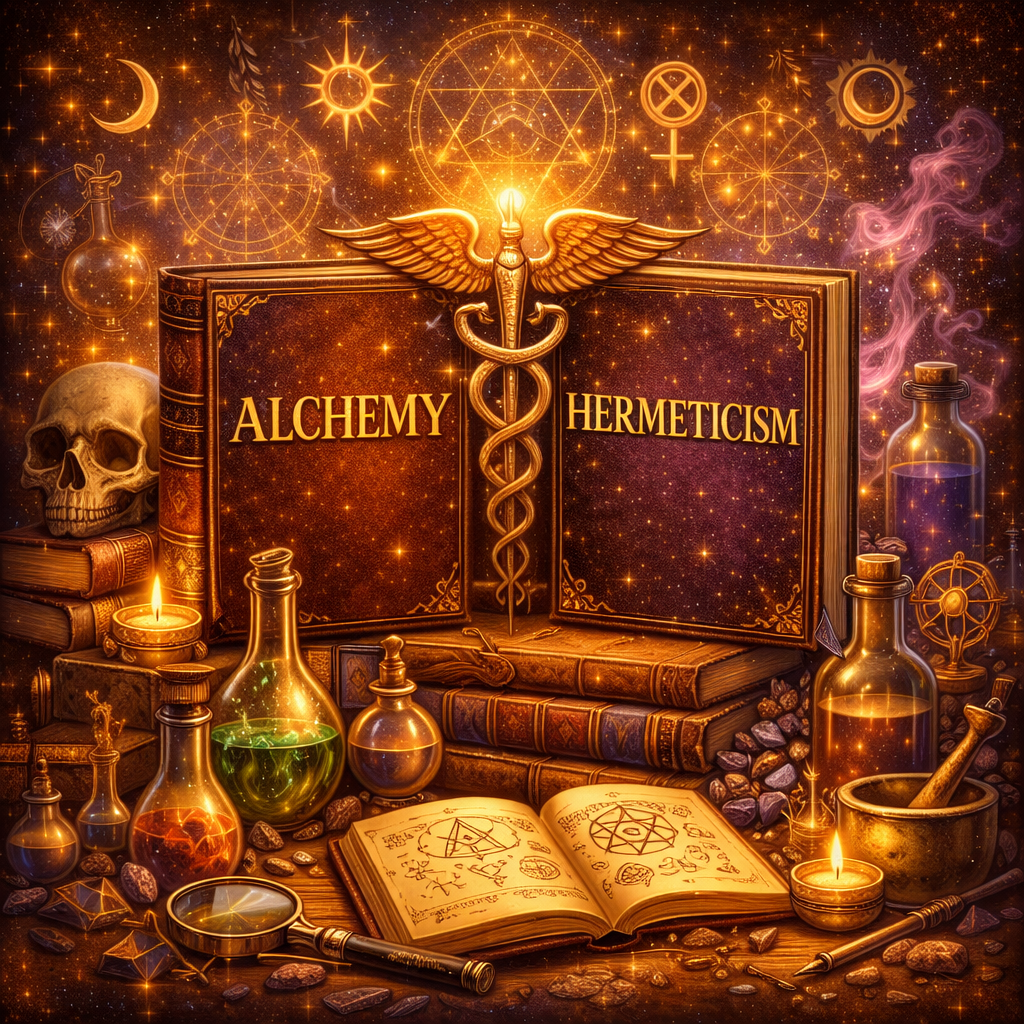

'A New Light of Alchymie' by Michal Sedziwój is a treasure trove of alchemical wisdom that remains relevant to modern esoteric seekers. The book's detailed exploration of sulfur and its role in alchemical transformations provides a fascinating glimpse into the early modern understanding of the natural world. Sedziwój's insights into the relationship between nature and the human spirit are particularly enlightening, offering a holistic view of alchemy that goes beyond mere chemical processes. For contemporary readers, this text serves as a bridge between historical alchemical practices and modern esoteric thought. It challenges readers to consider the deeper philosophical implications of alchemy and its potential for spiritual growth. Despite its age, 'A New Light of Alchymie' remains a compelling and thought-provoking read. It is a must-have for anyone interested in the esoteric traditions of the past and their enduring influence on contemporary spirituality.
📝 Description
70
Michal Sedziwój's 'A New Light of Alchymie' (1662) details the alchemical process through nature's fountains and manual experience.
Published in 1662, Michal Sedziwój's 'A New Light of Alchymie' draws on both natural observation and hands-on experimentation to explain alchemical principles. The text moves beyond mere physical transmutation, suggesting a deeper connection between the operations of alchemy and inner spiritual development. Sedziwój uses rich symbolism to convey his ideas, inviting careful study from those interested in hermetic philosophy.
The book presents the alchemical work as a path to understanding the fundamental forces of the universe and, concurrently, as a metaphor for personal change. It appeals to readers seeking to connect the material world with spiritual insights, offering a framework for interpreting natural phenomena through an alchemical lens. Sedziwój's approach emphasizes practical application alongside theoretical understanding.
Michal Sedziwój was a significant figure in 17th-century Bohemian alchemy, often associated with the Rosicrucian current. 'A New Light of Alchymie' fits within the broader tradition of Paracelsian and hermetic literature that sought to reconcile Christian theology with alchemical philosophy and natural science. This period saw alchemists increasingly document their theories and experiments, attempting to codify knowledge that was often guarded. Sedziwój's work contributed to this effort, framing alchemical operations as keys to understanding divine creation and human potential.
✍️ Author

Sedziwój, Michal
Michael Sendivogius (; Polish: Michał Sędziwój; 2 February 1566 – 1636) was a Polish alchemist, philosopher, and physician. A pioneer of chemistry, he developed ways of purifying and creating various acids, metals, and other chemicals.
💡 Why Read This Book?
Reading 'A New Light of Alchymie' today offers a unique opportunity to delve into the rich history of alchemy and its esoteric traditions. The book provides valuable insights into the alchemical process and its philosophical underpinnings, making it an essential read for anyone interested in the intersection of science and spirituality. By exploring the role of sulfur in alchemical transformations, Sedziwój's work challenges readers to consider the deeper implications of alchemy and its potential for personal and spiritual growth.
⭐ Reader Reviews
Honest opinions from readers who have explored this book.
❓ Frequently Asked Questions
What is the significance of sulfur in 'A New Light of Alchymie'?
Sulfur is a key element in alchemical processes, symbolizing transformation and purification. Sedziwój's exploration of sulfur provides insights into the philosophical and spiritual dimensions of alchemy.
How does 'A New Light of Alchymie' contribute to modern esoteric thought?
The book offers a historical perspective on alchemy that remains relevant to contemporary esoteric seekers, bridging the gap between past and present.
Is this book suitable for beginners in alchemy?
While 'A New Light of Alchymie' provides foundational knowledge, its esoteric nature may be better appreciated by those with some prior understanding of alchemical principles.
🔮 Key Themes & Symbolism
The Philosopher's Stone
The ultimate goal of alchemy is the creation of the Philosopher's Stone, a substance believed to possess the power of transmutation and spiritual enlightenment. Sedziwój explores the symbolic and practical aspects of this quest, revealing the deeper meaning behind the alchemical process.
The Three Principles
Sulfur, mercury, and salt are the three primary principles in alchemy, each representing different aspects of the self and the universe. Sedziwój examines the significance of these elements and their roles in the alchemical journey, providing insights into the hermetic philosophy.
Spiritual Transformation
Alchemy is not just about the transformation of matter but also about the spiritual growth of the alchemist. Sedziwój emphasizes the importance of personal transformation, using alchemical symbolism to guide readers on their path to inner enlightenment.
💬 Memorable Quotes
Direct passages from the work, attributed to the author.
“The alchemist's work is a journey of the soul, seeking to transform base metals into gold.”
— Sedziwój's words highlight the spiritual dimensions of alchemy, where the transmutation of matter symbolizes inner transformation.
“The elements of sulfur, mercury, and salt are the building blocks of the universe.”
— Sedziwój's exploration of the three primary principles reveals the interconnectedness of all things in the alchemical cosmos.
💡 Key Ideas
Editorial paraphrase of the work's core concepts — not direct quotes.
Nature is the fountain of all truth, and experience the key to unlocking its secrets.
This quote underscores the importance of direct experience and observation in the pursuit of alchemical knowledge.
The Philosopher's Stone is the culmination of the alchemical process, a symbol of perfection and enlightenment.
This quote emphasizes the ultimate goal of alchemy, representing the attainment of spiritual and material perfection.
Alchemy is the art of transmutation, both of matter and of the self.
This quote expresses the dual nature of alchemy, which seeks to transform both the physical and the spiritual realms.
🌙 Esoteric Significance
Tradition
A New Light of Alchymie' belongs to the hermetic tradition, which seeks to uncover the hidden knowledge of the ancient world and apply it to the pursuit of spiritual enlightenment. This tradition emphasizes the interconnectedness of all things and the transformative power of alchemy.
Symbolism
Key symbols in this book include the Philosopher's Stone, the three primary principles of sulfur, mercury, and salt, and the process of transmutation. These symbols represent the alchemical journey of purification and transformation, both of matter and of the self.
Modern Relevance
Sedziwój's insights into the symbolic and philosophical aspects of alchemy continue to influence modern practitioners. His emphasis on the spiritual dimensions of alchemy appeals to contemporary seekers who view the art as a path to personal and spiritual growth. Many modern alchemists and occult scholars study 'A New Light of Alchymie' to deepen their understanding of the hermetic principles and their application in daily life.
👥 Who Should Read This Book
Beginners interested in the occult and mystical arts will find 'A New Light of Alchymie' to be an accessible and enlightening introduction to alchemy. Scholars of the hermetic tradition will appreciate Sedziwój's clear insights and historical context. Spiritual seekers will benefit from the book's emphasis on personal transformation and spiritual enlightenment. Practitioners of alchemy will find valuable guidance on the symbolic and practical aspects of the alchemical process. Whether you are new to the mysteries of alchemy or an experienced practitioner, this text offers clear insights and a rich foundation for further exploration.
📜 Historical Context
Written in the late 16th century, 'A New Light of Alchymie' reflects the Renaissance fascination with ancient wisdom and the quest for spiritual and material transformation. During this era, alchemy was seen as a bridge between the natural world and the divine, offering insights into the mysteries of creation. Sedziwój's work was influential in shaping the hermetic tradition and the development of alchemical thought, providing a foundation for later alchemical practitioners and philosophers. The book's emphasis on practical experience and direct observation of nature aligns with the Renaissance emphasis on empiricism and the rediscovery of classical knowledge.
📔 Journal Prompts
Reflect on the significance of the Philosopher's Stone in your own spiritual journey.
How do the three primary principles of alchemy—sulfur, mercury, and salt—manifest in your life?
Consider the role of nature and experience in your pursuit of hidden knowledge.
How does the process of alchemical transmutation relate to personal transformation?
What symbols and metaphors in 'A New Light of Alchymie' resonate with your own spiritual beliefs?
🗂️ Glossary
Philosopher's Stone
A legendary substance believed to possess the power of transmutation and spiritual enlightenment, representing the ultimate goal of alchemy.
Hermetic Tradition
A mystical and philosophical tradition that seeks to uncover hidden knowledge and apply it to spiritual growth and enlightenment.
Transmutation
The alchemical process of transforming base metals into gold, symbolizing spiritual and material transformation.
Sulfur
One of the three primary principles in alchemy, representing the soul or spirit and the process of purification.
Alchemy
An ancient mystical art that combines elements of chemistry, metallurgy, and spiritual philosophy, aiming to transform both matter and the self.
This book appears in 3 collections
🔮 Readers Also Liked
Browse all →









From the “Hermeticism” Collection
View all →







More Free Alchemy & Hermeticism Books
View all →