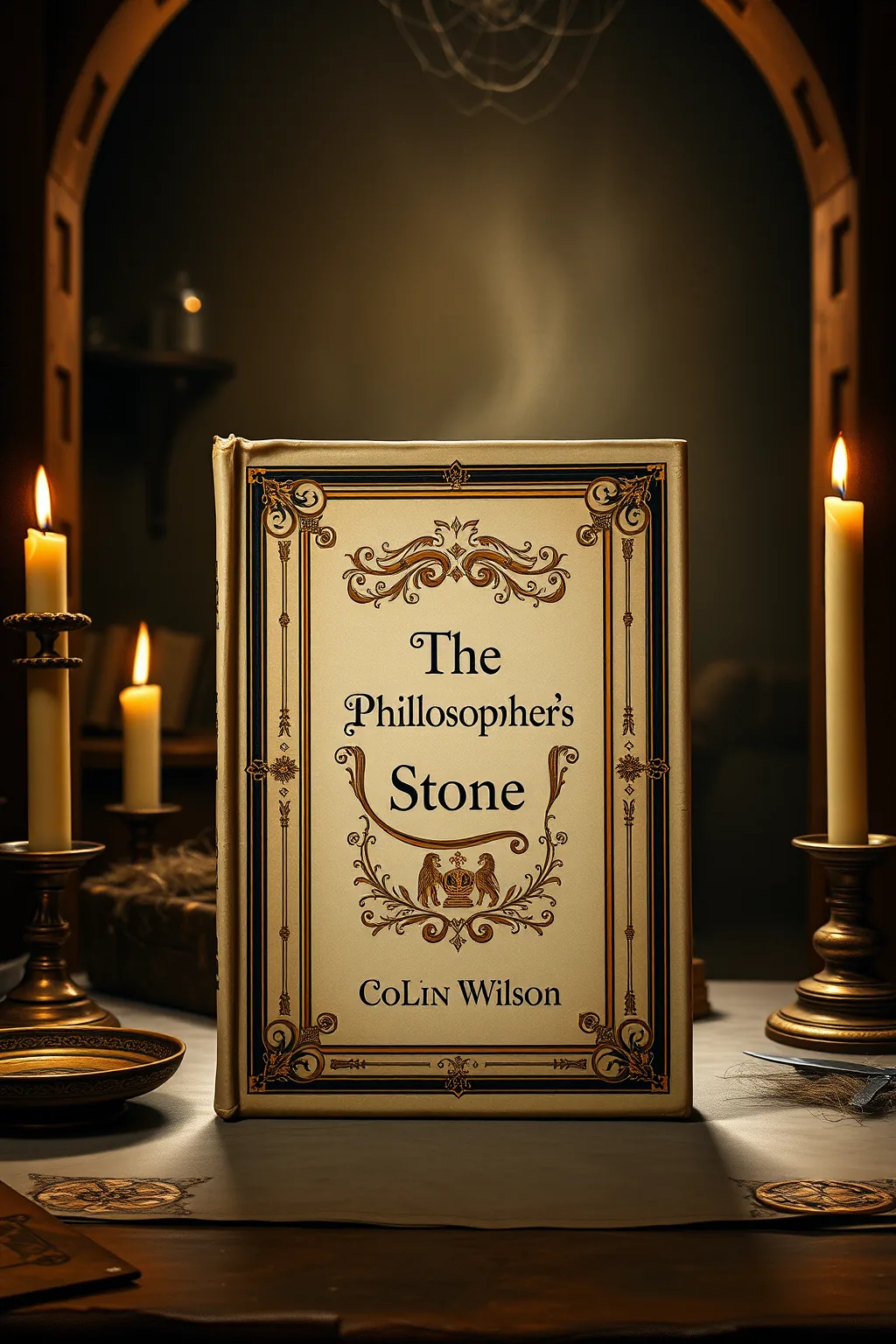
The philosopher's stone
 71
71

The philosopher's stone


Review by Lorelei Sage (Contemplative Literature Editor) — Colin Wilson's 'The Philosopher's Stone' stands as a beacon of esoteric insight, seamlessly blending fiction with deep Hermetic philosophy. The novel's strength lies in its ability to evoke a sense of wonder and curiosity, making it an essential read for anyone interested in the mystical arts. Wilson's exploration of alchemical symbolism and hidden knowledge is both enlightening and thought-provoking, offering readers a unique perspective on the interconnectedness of the universe. This book is particularly suited for those who are already familiar with the basics of Hermeticism and are looking to delve deeper into its mysteries.
📝 Description
71
Colin Wilson's 1969 novel, The Philosopher's Stone, reimagines the alchemical quest.
Published in 1969, Colin Wilson's The Philosopher's Stone centers on the alchemist Nicodemus and his pursuit of the legendary elixir. The narrative follows Nicodemus as he seeks to transmute not only base metals but also human consciousness. Wilson uses alchemical symbolism to frame a story about self-transformation and the hidden potentials within human experience.
The book blends historical occult traditions with fictional elements, presenting a worldview where the pursuit of knowledge and spiritual awakening are paramount. It questions the limitations of rational thought and suggests a broader reality accessible through altered states and esoteric practices. The story is told with a certain intensity, reflecting Wilson's own engagement with occult philosophy.
Colin Wilson's work often engages with the history of Western esotericism, and 'The Philosopher's Stone' is a prime example. The novel draws on the rich symbolic language of alchemy, a tradition concerned with spiritual purification and the transformation of both matter and the soul. It situates itself within the Hermetic tradition, which emphasizes hidden wisdom and the correspondence between the microcosm (human) and the macrocosm (universe). Wilson's approach is less about literal magical practice and more about the psychological and philosophical dimensions of these esoteric paths.
💡 Why Read This Book?
Why read this book — 'The Philosopher's Stone' is a treasure trove of esoteric wisdom, making it an invaluable resource for seekers, scholars, and practitioners of alchemy and Hermeticism. Wilson's masterful storytelling and deep philosophical insights provide a rich tapestry of symbolism and hidden knowledge, inviting readers to explore the mystical dimensions of existence. This book is ideal for those who are curious about the Hermetic tradition and its significance in modern times.
⭐ Reader Reviews
Honest opinions from readers who have explored this book.
❓ Frequently Asked Questions
What is the central theme of 'The Philosopher's Stone'?
The central theme revolves around the quest for the Philosopher's Stone, a symbol of spiritual transformation and enlightenment in alchemy.
Is this book suitable for beginners in Hermeticism?
While it offers profound insights, 'The Philosopher's Stone' is best appreciated by those with some prior knowledge of Hermetic principles.
How does Wilson incorporate alchemical symbolism?
Wilson weaves alchemical symbols and processes into the narrative, using them as metaphors for spiritual growth and self-discovery.
What makes this book unique in the genre of esoteric literature?
Its unique blend of fiction and deep philosophical exploration sets it apart, making it both an engaging read and a valuable study tool.
Can 'The Philosopher's Stone' be read as a standalone novel?
Yes, it can be enjoyed as a standalone work, but readers familiar with Hermetic and alchemical concepts will gain deeper insights.
🔮 Key Themes & Symbolism
The Quest for Transformation
The novel's central theme is the alchemical quest for the Philosopher's Stone, symbolizing spiritual transformation and enlightenment. This theme encourages readers to begin their own journeys of self-discovery and transcendence.
Symbolism and Hidden Knowledge
Wilson's use of alchemical symbolism and hidden knowledge creates a body of meaning, inviting readers to decipher the mysteries embedded within the text. This theme is particularly appealing to those interested in the deeper layers of esoteric literature.
The Interconnectedness of the Universe
Through its exploration of Hermetic principles, 'The Philosopher's Stone' reveals the interconnectedness of all things, highlighting the mystical unity that underlies the physical world. This theme appeals to seekers of spiritual enlightenment and practitioners of Hermetic arts.
💡 Key Ideas
Editorial paraphrase of the work's core concepts — not direct quotes.
The true alchemist seeks not gold, but the gold within.
This quote underscores the spiritual nature of alchemy, emphasizing the quest for inner transformation.
The Philosopher's Stone is not a physical object, but a state of being.
This line highlights the esoteric understanding of the Philosopher's Stone as a symbol of enlightenment.
In the area of the spirit, all things are possible.
This passage emphasizes the boundless potential of spiritual exploration and self-discovery.
The journey to the Philosopher's Stone is a journey to the self.
This quote emphasizes the personal and introspective nature of the alchemical quest.
Alchemy is the art of turning base metals into gold, and the soul into spirit.
This line captures the transformative power of alchemy, both in the physical and spiritual realms.
🌙 Esoteric Significance
Tradition
This book belongs to the Hermetic tradition, which emphasizes the unity of all things and the quest for spiritual enlightenment through hidden knowledge and alchemical practices.
Symbolism
Key symbols include the Philosopher's Stone, representing spiritual transformation, and the alchemical processes of distillation and transmutation, symbolizing purification and enlightenment.
Modern Relevance
Today, 'The Philosopher's Stone' remains relevant for modern practitioners of Hermeticism and alchemy, offering insights into the mystical dimensions of existence and the quest for spiritual growth.
👥 Who Should Read This Book
Beginners may find the esoteric themes challenging, but scholars and spiritual seekers will appreciate the depth of philosophical exploration. Practitioners of Hermetic arts will find valuable insights and inspiration in Wilson's work. This book is particularly suited for those who are already familiar with the basics of Hermeticism and are looking to delve deeper into its mysteries.
📜 Historical Context
Written in the mid-20th century, 'The Philosopher's Stone' emerged during a time of renewed interest in esoteric and mystical traditions. This era saw a resurgence of Hermetic and alchemical studies, as seekers and scholars alike sought to uncover the hidden knowledge of the ancient world. Wilson's work contributed significantly to this revival, offering a combination of fiction and philosophy that continues to inspire modern practitioners and scholars of the occult.
📔 Journal Prompts
Reflect on a moment in your life where you felt a deep sense of spiritual transformation.
How does the symbol of the Philosopher's Stone resonate with your personal journey?
Consider the interconnectedness of all things in the universe. How does this concept influence your understanding of reality?
What hidden knowledge or esoteric insights have you discovered recently, and how have they impacted your life?
Imagine yourself on a quest for the Philosopher's Stone. What challenges might you encounter, and how would you overcome them?
🗂️ Glossary
Philosopher's Stone
A legendary alchemical substance said to transform base metals into gold and grant immortality, symbolizing spiritual enlightenment.
Alchemy
An ancient practice combining elements of chemistry, mysticism, and spirituality, aiming to purify and transform both physical substances and the human soul.
Hermeticism
A philosophical and spiritual tradition based on the writings attributed to Hermes Trismegistus, emphasizing the unity of all things and the quest for spiritual enlightenment.
Transmutation
The alchemical process of transforming one substance into another, often symbolizing spiritual transformation and purification.
Distillation
An alchemical process of purifying substances by separating them into their essential components, symbolizing the refinement of the soul.
This book appears in 3 collections
🔮 Readers Also Liked
Browse all →








More by Colin Wilson
All books →




From the “Hermeticism” Collection
View all →






More Free Alchemy & Hermeticism Books
View all →