What is Shapeshifting?
Shapeshifting, in its broadest sense, refers to the ability of a being to alter its physical form, often to that of another creature or an inanimate object. Across cultures, this phenomenon appears in mythology, folklore, and religious texts, attributed to deities, spirits, sorcerers, or individuals undergoing magical or spiritual transformation. The concept explores themes of identity, illusion, and the mutable nature of reality, often serving as a metaphor for profound personal change or the hidden potentials within existence.
Best Books for Complete Beginners
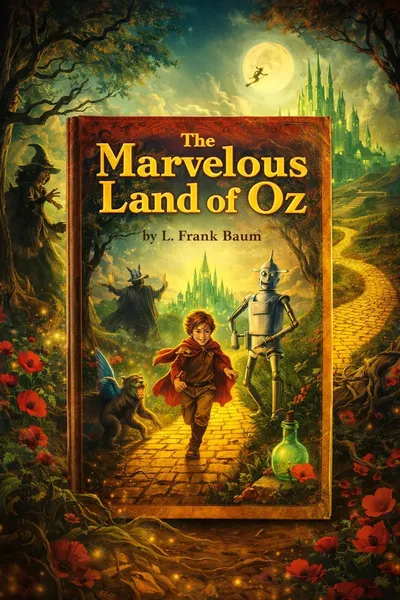
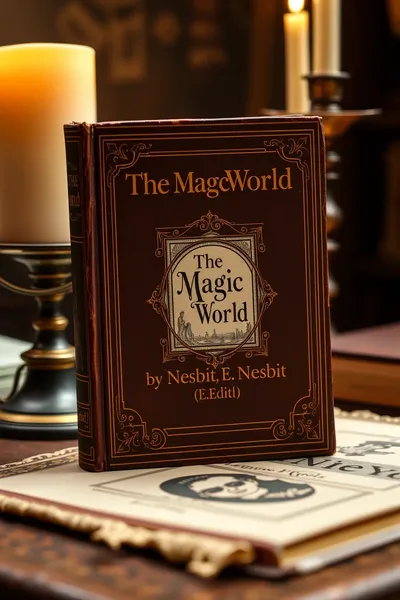
For those new to the concept, starting with accessible narratives is key. L. Frank Baum's 'The Marvelous Land of Oz' offers a whimsical introduction to transformation through its characters and magical elements. Edith Nesbit's 'The Magic World' provides further fictional explorations of magical change and its consequences. Florence Warden's 'A Witch of the Hills' presents a narrative steeped in folklore and the perceived magical abilities of individuals. These works introduce the idea of altered forms in engaging, story-driven contexts.
Intermediate Reading
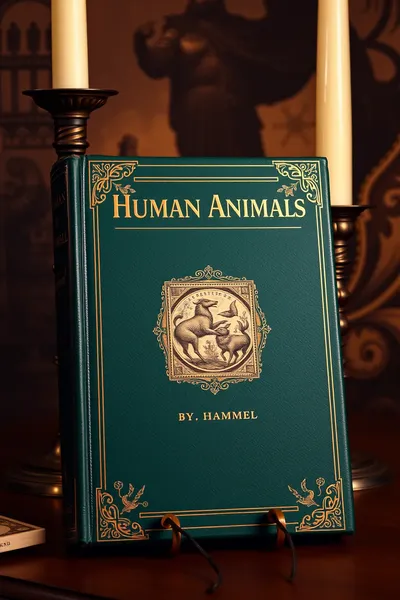
Moving beyond narrative, intermediate texts examine the underlying principles and historical contexts. George William Russell's 'AE in the Irish Theosophist' explores spiritual concepts that can inform an understanding of form. Evelyn Underhill's 'The Essentials of Mysticism' discusses altered states of consciousness and spiritual union, which can relate to perceived shifts in being. Frank Hamel's 'Human Animals' directly addresses the theme of animal transformation in human contexts, drawing from folklore and occult traditions.
Classical / Advanced Texts
Advanced study requires engagement with primary sources and foundational esoteric philosophies. Jacob Boehme's 'Threefold Life of Man' (2009) and 'Dialogues on the Supersensual Life' offer complex theological and philosophical frameworks for understanding divine and created forms. Arthur Edward Waite's 'Lives of alchemystical philosophers' provides historical accounts and bibliographical resources on figures who pursued transformative arts. Michal Sedziwój's 'A New Light of Alchymie' presents alchemical perspectives on transmutation and the manipulation of substance.
Reading Order — Step by Step
Begin with narrative explorations like L. Frank Baum's 'The Marvelous Land of Oz' and Edith Nesbit's 'The Magic World' (Month 1, Weeks 1-2) to grasp the imaginative scope. Transition to folklore-infused works such as Florence Warden's 'A Witch of the Hills' and Frank Hamel's 'Human Animals' (Month 1, Weeks 3-4) to see thematic development. In Month 2, engage with spiritual and mystical texts like George William Russell's 'AE in the Irish Theosophist' and Evelyn Underhill's 'The Essentials of Mysticism'. For Month 3 and beyond, examine the advanced alchemical and philosophical works of Jacob Boehme ('Threefold Life of Man') and Arthur Edward Waite ('Lives of alchemystical philosophers'), using the latter's bibliography to guide further research.
Frequently Asked Questions
Which shapeshifting book should I read first?
For a gentle introduction, begin with 'The Marvelous Land of Oz' by L. Frank Baum. Its fantastical narrative makes the concept of transformation accessible and engaging for new readers.
Are there books that discuss shapeshifting from a historical perspective?
Yes, Arthur Edward Waite's 'Lives of alchemystical philosophers' provides historical accounts of individuals engaged in transformative practices, including alchemy, which often involved notions of transmutation.
What is the difference between folklore and occult texts on shapeshifting?
Folklore texts, like those by E. Nesbit or F. Warden, present shapeshifting as part of traditional stories and beliefs. Occult texts, such as those by F. Hamel or M. Sedziwój, often explore it as a practice or a symbolic representation within esoteric systems.
Can I find books on the spiritual aspects of transformation?
Certainly. Works like Jacob Boehme's 'Dialogues on the Supersensual Life' and Evelyn Underhill's 'The Essentials of Mysticism' explore spiritual states and union, which can be understood as profound internal transformations.
Where can I learn about alchemical transformation?
Michal Sedziwój's 'A New Light of Alchymie' and Arthur Edward Waite's 'Lives of alchemystical philosophers' are key resources. Waite's work also includes a bibliography for further exploration into alchemy and hermetic philosophy.
Are there any fictional books that deal with shapeshifting?
Absolutely. 'The Marvelous Land of Oz' by L. Frank Baum and 'The Magic World' by E. Nesbit are examples of fiction that incorporate shapeshifting and magical transformations into their narratives.