A land called Tarot
 67
67

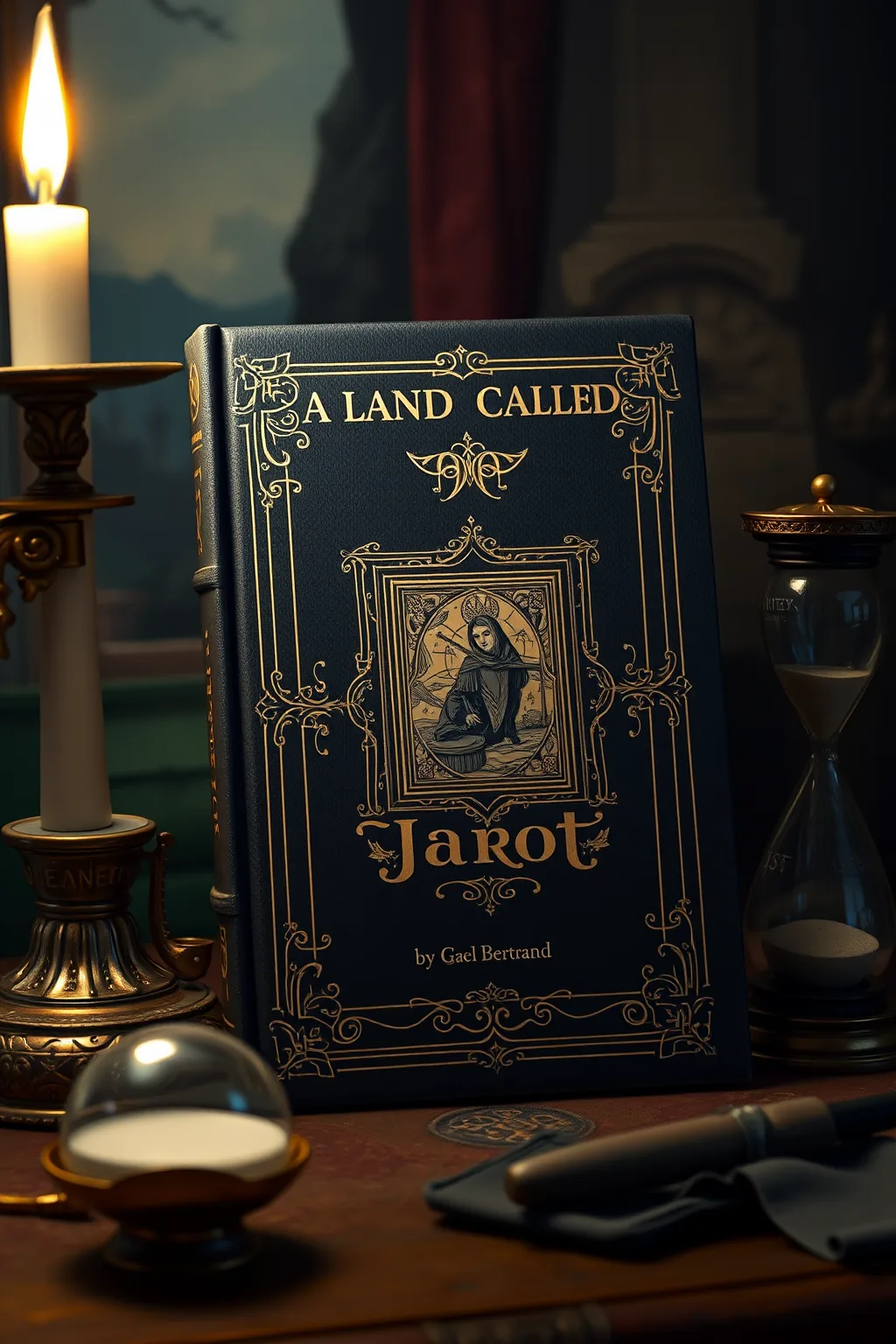
A land called Tarot



Lorelei Sage, Contemplative Literature Editor: Gael Bertrand’s "A Land Called Tarot" is a masterful visual exegesis of the Tarot's profound symbolic language. Bertrand eschews didacticism, instead allowing the archetypal imagery and the Knight of Swords’ quest to serve as a conduit for esoteric insight. The silent narrative is a testament to the power of visual storytelling, revealing layers of meaning that resonate deeply with practitioners and seekers alike. This work transcends the typical graphic novel, offering a meditative journey into the unconscious and the universal currents of existence. Its strength lies in its ability to evoke introspection and personal revelation, making it an essential read for anyone drawn to the deeper mysteries of the Tarot and its application in understanding the human condition.
📝 Description
67
Gael Bertrand's 2020 graphic novel, 'A Land Called Tarot,' uses visual storytelling to represent Tarot archetypes.
In 'A Land Called Tarot,' Gael Bertrand presents a narrative built entirely on the imagery of the seventy-eight Tarot cards. The story follows a figure, the Knight of Swords, as he moves through symbolic landscapes. Rather than relying on spoken dialogue, the graphic novel uses the visual language of the cards to communicate its themes. Each illustration is designed to evoke the meanings and archetypes associated with the Tarot system.
The book functions as a visual initiation into the Tarot's symbolic structure. It aims to connect the reader with subconscious patterns and universal energies through the archetypal figures and scenes depicted. For those interested in a non-traditional approach to Tarot study, 'A Land Called Tarot' offers a unique way to engage with its symbolism.
This work situates itself within the esoteric tradition by directly employing the Rider-Waite-Smith Tarot deck's visual language as its narrative structure. It bypasses traditional academic or occult textual approaches, opting instead for a graphic medium to convey esoteric concepts. The book taps into the visual grammar that has become common in modern Tarot practice, making the archetypes of the Major and Minor Arcana the primary vehicle for meaning. It is an example of how esoteric symbolism can be translated into contemporary art forms.
💡 Why Read This Book?
Delve into a visually stunning exploration of the Tarot's deepest archetypes, guided by the resolute Knight of Swords. Experience a narrative told through potent imagery, revealing hidden mystical truths and universal energies. Ideal for Tarot enthusiasts, practitioners, seekers of esoteric knowledge, and lovers of imaginative fantasy seeking a profound, visually-driven spiritual journey.
⭐ Reader Reviews
Honest opinions from readers who have explored this book.
❓ Frequently Asked Questions
What is the primary narrative device in "A Land Called Tarot"?
The primary narrative device is visual storytelling. The story unfolds through evocative imagery and archetypal symbolism, rather than conventional dialogue, allowing readers to interpret the journey of the Knight of Swords through the symbolic landscape of the Tarot.
Who is the central protagonist of the story?
The central protagonist is the Knight of Swords, a potent archetype within the Tarot deck, who embarks on an exploration of the mystical realm known as 'A Land Called Tarot'.
What makes this book unique for Tarot readers?
It offers a unique visual interpretation of the Tarot's archetypes and their interrelationships, presented as a narrative journey. It encourages active engagement and personal interpretation of the symbolic language.
Is prior knowledge of Tarot required to enjoy this book?
While prior knowledge of Tarot can enhance the experience, the book's powerful imagery and narrative structure are designed to be accessible and evocative even for those new to the Tarot, sparking curiosity and introducing core concepts.
What is the overall tone and atmosphere of the book?
The tone is mystical, contemplative, and adventurous, with an atmosphere that is both wondrous and deeply symbolic. It invites readers into a realm of magic, introspection, and profound discovery.
🔮 Key Themes & Symbolism
The Archetypal Journey
The book masterfully employs the archetypes inherent in the Tarot deck as the very foundation of its narrative landscape and inhabitants. The Knight of Swords, a figure often associated with action, intellect, and the pursuit of truth, serves as the reader's guide through this symbolic realm. His journey is not merely physical but represents an inner quest for understanding, mirroring the individual's own path of self-discovery and spiritual evolution. The encounters he has with the denizens of this land are visual representations of the lessons and challenges presented by the Major and Minor Arcana, urging the reader to contemplate their own unfolding destiny.
Symbolism and Visual Language
Operating on a profound level of visual symbolism, "A Land Called Tarot" eschews explicit dialogue in favor of potent imagery that speaks directly to the subconscious. Each panel, each character, each landscape is imbued with layers of meaning drawn from centuries of esoteric tradition. Readers are invited to become active interpreters, deciphering the visual cues that represent concepts such as courage, intuition, transformation, and illumination. This reliance on a universal symbolic language makes the book a powerful tool for meditation and introspection, encouraging a deeper connection with the intuitive aspects of the self and the hidden patterns of the cosmos.
The Tarot as a Living Realm
Bertrand presents the Tarot not as a static set of cards, but as a vibrant, living dimension – a metaphysical landscape teeming with magical potential and profound wisdom. The 'Land Called Tarot' is a manifestation of the collective unconscious, a place where the archetypal forces that govern human experience take tangible form. The book's narrative illustrates the interconnectedness of these forces and the dynamic interplay between the individual and the greater cosmic order. It suggests that by understanding and navigating this symbolic realm, one can gain clear insights into their own life, purpose, and the mysteries of existence.
💬 Memorable Quotes
Direct passages from the work, attributed to the author.
“Whispers of the Fates, painted in hues of destiny.”
— This suggests that the visual narrative itself carries the traces of preordained paths and cosmic influences, woven into the very fabric of the story's art.
“Each encounter, a mirror to the soul's hidden chambers.”
— This highlights the introspective nature of the journey, where the characters and situations met by the Knight reflect the inner landscape and unresolved aspects of the reader's own psyche.
“A silent symphony of archetypes, played upon the canvas of the mind.”
— This emphasizes the non-verbal communication of the book, where the universal symbols of the Tarot create a profound and resonant experience within the reader's consciousness.
“Where imagination breathes life into the sacred geometry of being.”
— This speaks to the creative power of the book, illustrating how the artistic and conceptual fusion of Tarot symbolism forms a living representation of fundamental universal structures.
💡 Key Ideas
Editorial paraphrase of the work's core concepts — not direct quotes.
The Knight rides forth, a blade of truth against the veil of illusion.
This quote captures the Knight of Swords' role as a catalyst for clarity, cutting through deception to reveal underlying realities and the pursuit of knowledge.
🌙 Esoteric Significance
Tradition
This work draws heavily from the Western esoteric traditions, particularly Hermeticism, Kabbalah, and Tarot symbology. It interprets the Tarot not merely as a divination tool, but as a map of consciousness and a symbolic language for understanding the forces of the universe and the human psyche. The journey of the Knight of Swords can be seen as an alchemical process or a path of initiation, reflecting the transformative potential inherent in these ancient systems of knowledge.
Symbolism
The book's symbolism is directly derived from the archetypal imagery of the Tarot. Each card's meaning is visually represented through the landscapes, characters, and events encountered by the Knight. Key symbols would include the Knight himself (action, intellect, ambition), the specific suits (Swords representing thought and conflict), and the various figures and settings that embody the Major Arcana's stages of spiritual development and the Minor Arcana's everyday experiences and elemental influences.
Modern Relevance
In an era often characterized by information overload and a disconnection from deeper meaning, "A Land Called Tarot" offers a powerful counterpoint. Its visual, symbolic language bypasses the rational mind to speak directly to intuition and the soul, fostering a sense of wonder and introspection. The archetypal narratives provide timeless wisdom for navigating modern challenges, encouraging self-awareness, personal growth, and a connection to the underlying order of existence, making the ancient wisdom of the Tarot profoundly relevant today.
👥 Who Should Read This Book
This book is a treasure for a diverse audience. For Tarot practitioners and enthusiasts, it offers a fresh, visually immersive perspective on the cards, deepening their understanding of archetypal narratives and symbolic interplay. Seekers of esoteric knowledge and spiritual growth will find it a contemplative journey, a visual guide to the hidden currents of existence. Students of mythology and symbolism will appreciate its sophisticated use of universal archetypes. Even readers new to the Tarot will be captivated by its imaginative world and profound visual storytelling, finding an engaging entry point into the detailed symbolism of this ancient system.
📜 Historical Context
While "A Land Called Tarot" is a contemporary work, its genesis is deeply rooted in the rich historical set of Tarot and esoteric thought. The Tarot itself emerged in the 15th century, initially as playing cards, but gradually evolved into a complex system of divination and symbolic exploration, particularly gaining prominence in the occult revival of the 18th and 19th centuries. Figures like Antoine Court de Gébelin and Eliphas Lévi were instrumental in attributing mystical significance to the cards, linking them to ancient Egyptian wisdom, Kabbalah, and Hermetic philosophy. Bertrand's work draws upon this legacy, translating the esoteric principles articulated by these historical pioneers into a modern, visual medium. The graphic novel format itself, while relatively new, has a lineage that can be traced to early illustrated manuscripts and woodcuts, making its use for conveying complex symbolic narratives a natural, albeit modern, evolution.
📔 Journal Prompts
Reflect on the Knight of Swords' journey: What aspects of his quest resonate with your own inner journey?
Identify a visual symbol from the book that particularly struck you. What personal meaning does it hold?
How does the absence of dialogue impact your interpretation of the narrative? What does this reveal about the power of visual communication?
Consider a specific encounter the Knight has. What Tarot card or archetype do you believe it represents, and why?
Imagine yourself entering 'A Land Called Tarot.' What would be the first landscape you'd explore, and what would you hope to discover there?
🗂️ Glossary
Archetype
A universal, inherited pattern of thought or image derived from the collective unconscious and forming the basis of myth and symbolism, such as the Knight or the Fool.
Esoteric
Intended for or likely to be understood by only a small number of people with a specialized knowledge or interest.
Hermeticism
A philosophical and religious tradition based primarily upon writings attributed to Hermes Trismegistus, emphasizing spiritual enlightenment and the unity of all things.
Kabbalah
A system of Jewish mysticism that seeks to understand the divine nature and the creation of the universe through esoteric interpretations of scripture and symbolic diagrams like the Tree of Life.
Symbolism
The use of symbols to represent ideas and qualities by giving them symbolic meaning that is different from their literal sense.
This book appears in 3 collections
🔮 Readers Also Liked
Browse all →
From the “Tarot” Collection
View all →
More Free Divination & Tarot Books
View all →