WTF is Tarot?
 64
64

WTF is Tarot?



Ophelia Vance, Mystical Literature Reviewer — Bakara Wintner’s 'WTF is Tarot?' is a revelation for anyone seeking to understand the deeper currents of this ancient art. Wintner masterfully navigates the complex symbolism of the Tarot, presenting it not as a rigid system of prediction, but as a vibrant, living map of the human psyche and spiritual journey. Her accessible yet profound approach invites readers to engage with the cards on an intuitive and alchemical level. This book is a treasure for beginners eager to break free from dogma and for experienced readers looking to reignite their passion and expand their understanding of the archetypal energies at play. It’s an essential addition to any serious student’s esoteric library.
📝 Description
64
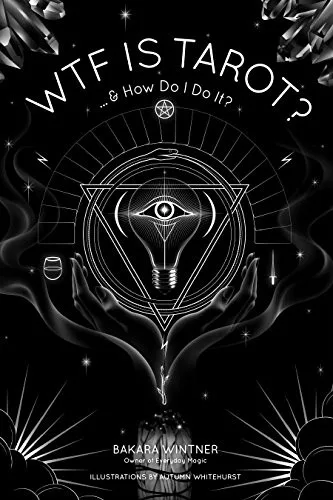
Bakara Wintner's 2017 book, 'WTF is Tarot?', explains the Tarot as a symbolic language.
Bakara Wintner's 'WTF is Tarot?' approaches the Tarot not as a simple fortune-telling device, but as a symbolic system for understanding oneself and the world. Wintner examines the archetypes and meanings behind each card, from The Fool to The World. The book guides readers through the inherent symbolism and potential interpretations, encouraging a deeper connection with the cards.
This work is for anyone interested in using the Tarot for personal growth and spiritual development. It aims to move beyond predicting future events and instead offers a framework for self-reflection and co-creating one's path. The author's aim is to transform how readers perceive the Tarot, revealing its potential for insight and clarity.
This book fits within the Western esoteric tradition that views the Tarot as a system of esoteric knowledge, often linked to Kabbalah, astrology, and alchemy. Such traditions see the cards not just as tools for divination, but as a symbolic map of consciousness and the universe. Wintner's work engages with this lineage, presenting the Tarot as a language for inner exploration and understanding the hidden connections within existence, a common theme in esoteric studies.
💡 Why Read This Book?
Uncover the mystical secrets of the Tarot beyond superficial interpretations. 'WTF is Tarot?' offers a transformative perspective, guiding you to harness its symbolic language for profound self-discovery and spiritual growth. Ideal for seekers, practitioners, and anyone ready to decode the universe's hidden messages and unlock their inner wisdom. This book is your key to a deeper, more meaningful connection with the Tarot.
⭐ Reader Reviews
Honest opinions from readers who have explored this book.
❓ Frequently Asked Questions
Is 'WTF is Tarot?' suitable for absolute beginners?
Absolutely. Bakara Wintner’s approachable style breaks down complex concepts, making the Tarot accessible and exciting for those with no prior experience. She guides you step-by-step into the cards' profound wisdom.
What makes this book different from other Tarot guides?
Unlike many, 'WTF is Tarot?' delves into the alchemical and psychological depths of the cards, presenting them as tools for transformation rather than mere fortune-telling devices. It emphasizes intuition and personal connection.
Can I use this book for professional readings?
While the book empowers personal understanding, its focus is on deep self-exploration and intuitive development. It provides a strong foundation for building your own unique reading style and ethical practice.
Does the book cover specific spreads or card interpretations?
Yes, it offers insights into individual card meanings and touches upon how they interact, encouraging readers to develop their own interpretations through intuition and understanding of archetypal energies.
What kind of esoteric tradition does this book align with?
The book draws from a rich tapestry of esoteric thought, including Jungian psychology, Hermeticism, and archetypal symbolism, presenting a holistic, deeply spiritual approach to Tarot interpretation.
🔮 Key Themes & Symbolism
Archetypal Language of the Soul
The Tarot is presented not as a mere deck of cards, but as a profound symbolic language that mirrors the archetypal patterns inherent in the human psyche and the cosmos. Wintner guides readers to understand these universal symbols, revealing how they speak to our deepest desires, fears, and aspirations. This theme explores the collective unconscious and how the Tarot acts as a key to unlocking its wisdom, fostering a deeper connection to our authentic selves and the spiritual currents that shape our lives, transforming mere images into potent keys of self-awareness.
Alchemical Transformation and Self-Mastery
Central to 'WTF is Tarot?' is the concept of the Tarot as an alchemical tool for personal transformation. Each card represents a stage or element within the grand work of spiritual evolution. Wintner illuminates how understanding and integrating the energies of the Major and Minor Arcana can lead to profound personal growth, healing, and the mastery of one's inner world. This perspective encourages readers to view challenges as opportunities for transmutation, using the Tarot as a guide to read through the shadows and emerge with greater wisdom and inner power.
Intuitive Divination and Synchronicity
This book champions an intuitive approach to Tarot reading, moving beyond rote memorization to cultivate a direct, soul-level dialogue with the cards. Wintner emphasizes the role of synchronicity and the reader's own inner knowing in deciphering the messages of the Tarot. It encourages readers to trust their gut feelings and personal resonance with the imagery and narratives of the cards, fostering a practice that is both deeply personal and profoundly accurate. This theme empowers individuals to become their own oracle, connecting with the subtle energies that guide their path.
💬 Memorable Quotes
Direct passages from the work, attributed to the author.
“Each card is a whispered secret of the universe.”
— This evocative statement speaks to the profound, hidden knowledge contained within the Tarot's symbolism, inviting readers to listen closely to its ancient messages.
“The Fool is not foolish, but fearless.”
— This interpretation challenges common perceptions, reframing the Fool's archetype as one of courage and willingness to begin the unknown, a foundational principle for spiritual journeys.
“Embrace the shadow, for within it lies the seed of your greatest light.”
— This profound statement speaks to the alchemical nature of the Tarot, encouraging readers to confront and integrate their darker aspects to achieve spiritual illumination and wholeness.
💡 Key Ideas
Editorial paraphrase of the work's core concepts — not direct quotes.
The Tarot is not a crystal ball; it's a mirror.
This quote highlights the book's emphasis on self-reflection and inner wisdom, positioning the Tarot as a tool for understanding oneself rather than predicting external events.
We are the weavers of our own destinies, the cards, our threads.
This quote underscores the empowering message that the Tarot reveals potential paths and influences, but ultimately, the individual holds the agency to shape their future.
🌙 Esoteric Significance
Tradition
This book draws heavily from the Hermetic and Kabbalistic traditions, which have historically informed Western esoteric interpretations of the Tarot. It also incorporates insights from Jungian psychology, particularly its emphasis on archetypes and the collective unconscious. Wintner bridges these disciplines, presenting the Tarot as a living map of the soul's journey, aligning with the alchemical pursuit of inner transformation and spiritual enlightenment inherent in these esoteric lineages.
Symbolism
The Tarot's symbolism is the heart of its esoteric power. 'WTF is Tarot?' unpacks the archetypal imagery of each card, from the elemental forces represented in the suits to the profound numerological and astrological correspondences. Wintner illuminates how these symbols, rooted in ancient mythologies and spiritual philosophies, function as keys to unlocking hidden knowledge about human nature, cosmic principles, and the unfolding of destiny. Understanding this rich symbolic language is presented as essential for accessing the Tarot's divinatory and transformative potential.
Modern Relevance
In an age often characterized by materialism and disconnection, 'WTF is Tarot?' offers a powerful antidote by reconnecting readers to their intuition, inner wisdom, and the spiritual dimensions of existence. The book's emphasis on self-discovery, personal empowerment, and conscious creation of one's reality makes it highly relevant for contemporary seekers. It provides a framework for navigating life's complexities, fostering resilience, and cultivating a more meaningful and aligned existence through the timeless wisdom of the Tarot.
👥 Who Should Read This Book
This informative guide is a must-read for the curious beginner eager to explain the Tarot and begin a path of self-discovery. Seasoned practitioners seeking to deepen their intuitive connection and explore more profound layers of meaning will find invaluable insights. Scholars of esotericism will appreciate Wintner's nuanced synthesis of psychological and spiritual perspectives. Ultimately, anyone feeling a pull towards ancient wisdom, seeking tools for personal transformation, or yearning for a more profound understanding of life's hidden currents will benefit immensely from this transformative work.
📜 Historical Context
Bakara Wintner's 'WTF is Tarot?' emerges within a contemporary resurgence of interest in esoteric practices, particularly the Tarot. While Tarot's origins trace back to 15th-century Europe, its popularization as a divinatory tool flourished in the late 19th and early 20th centuries, notably through the influence of the Hermetic Order of the Golden Dawn and figures like A.E. Waite and Pamela Colman Smith. This era saw a deliberate infusion of occult and Kabbalistic symbolism into the cards, transforming them into sophisticated tools for spiritual exploration. Wintner's work builds upon this rich legacy, offering a modern, psychologically informed, and spirit-centered interpretation that speaks to contemporary seekers grappling with existential questions and a desire for deeper meaning in a rapidly changing world. Her approach reflects a broader cultural shift towards valuing intuition, personal empowerment, and the integration of ancient wisdom into daily life.
📔 Journal Prompts
Reflect on the archetype of The Fool in your own life. Where are you being called to step into the unknown with fearless curiosity?
Choose a card that speaks to a current challenge you are facing. How might its symbolism offer a new perspective or pathway forward?
Explore the interplay between your inner world and the external messages you receive. How does the Tarot act as a bridge between the two?
Consider the elemental forces within the suits (Wands, Cups, Swords, Pentacles). How are these energies manifesting in your daily life?
Journal about a moment of synchronicity you've experienced. How might the Tarot help you better interpret and integrate such meaningful coincidences?
🗂️ Glossary
Archetype
Universal, primal patterns of human nature and experience that are part of the collective unconscious, often represented by figures or symbols in myths and dreams.
Hermeticism
A philosophical and religious tradition based on the writings attributed to Hermes Trismegistus, emphasizing the unity of all things and the potential for human spiritual ascent.
Kabbalah
An esoteric tradition within Judaism that explores the divine nature and the creation of the universe through mystical interpretations, often visualized through the Tree of Life.
Alchemy
An ancient philosophical and proto-scientific tradition that sought to purify, mature, and perfect certain objects. In a spiritual context, it refers to the transformation of the self.
Synchronicity
The occurrence of meaningful coincidences that appear to be causally unrelated, as described by psychologist Carl Jung.
This book appears in 3 collections
🔮 Readers Also Liked
Browse all →
More by Bakara Wintner
All books →
From the “Tarot” Collection
View all →
More Free Divination & Tarot Books
View all →