Oracle I Ching
 61
61

Oracle I Ching



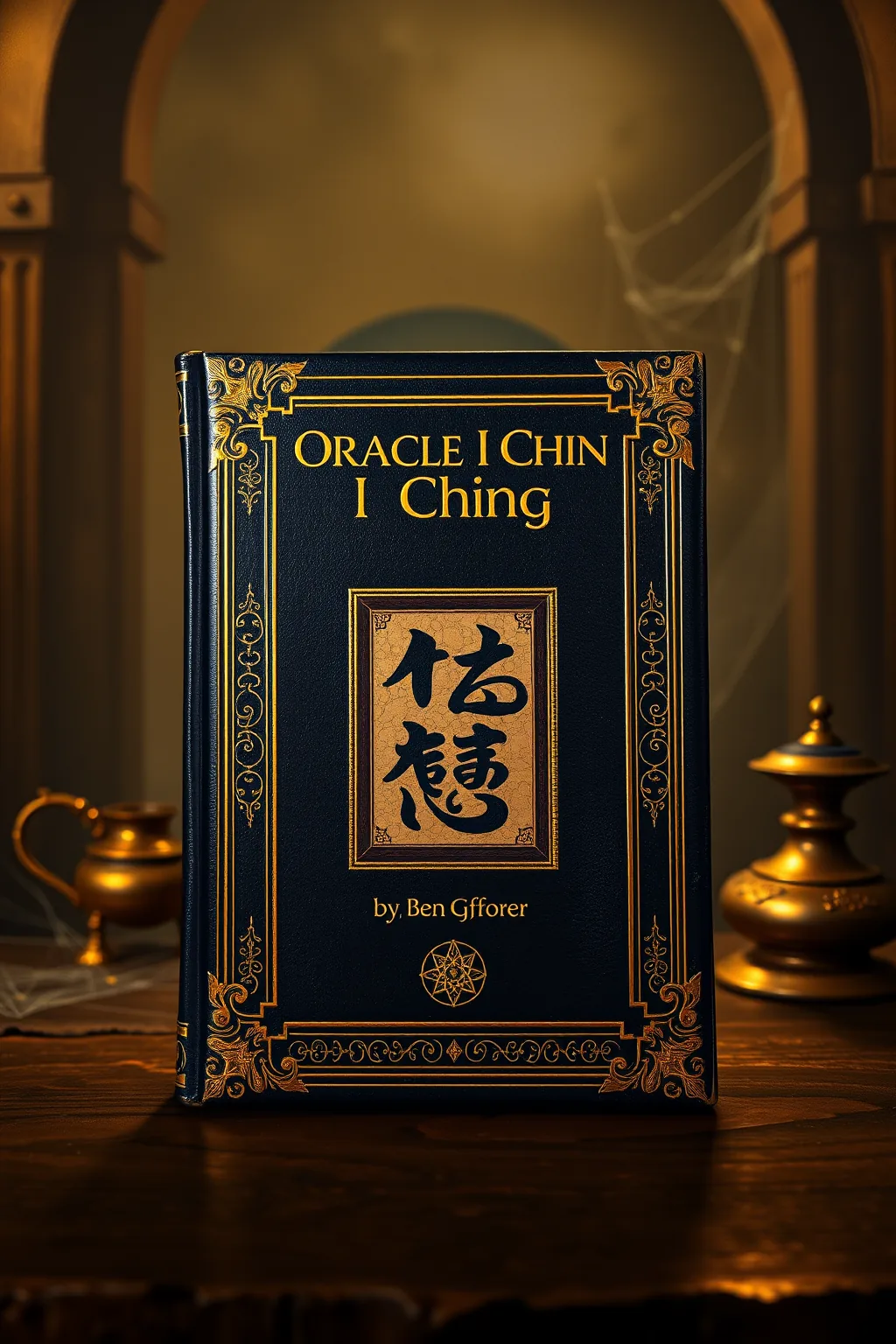
Ben Gfrorer's 'Oracle I Ching' is a masterful gateway into one of humanity's most enduring systems of wisdom. Lorelei Sage commends its clarity and depth, noting how Gfrorer’s approach transcends simple fortune-telling, instead illuminating the philosophical underpinnings of change and destiny. This edition serves both the novice inquirer and the seasoned practitioner, offering lucid interpretations of the hexagrams and their profound symbolism. It is a vital resource for anyone seeking to navigate life's complexities with insight and intention, fostering a contemplative practice that resonates deeply with the esoteric traditions.
📝 Description
61
Ben Gfrorer's Oracle I Ching (2023) translates the ancient Chinese text for modern readers.
Ben Gfrorer's Oracle I Ching presents a translation and commentary on the classic Chinese divination text. The book focuses on the I Ching as a system for understanding change and making decisions. It examines the sixty-four hexagrams, their constituent lines, and their interpretations as tools for introspection. Gfrorer aims to make the text accessible, moving beyond simple prediction to foster a philosophical grasp of interconnectedness.
The work discusses the interplay of Yin and Yang, the cyclical nature of events, and how individuals can align their actions with the natural order of the Tao. It is intended for those seeking a deeper engagement with the text's philosophical and guidance-oriented aspects, rather than solely its divinatory functions. The book emphasizes self-reflection and understanding the forces that shape one's circumstances.
The I Ching, or Book of Changes, is a cornerstone of Chinese philosophy and divination. Its origins are traditionally traced to the mythical emperor Fu Xi, though its compilation likely spans centuries. It is central to Taoist thought and has influenced Confucianism. The text uses sixty-four hexagrams, formed from combinations of six broken (Yin) or solid (Yang) lines, to represent universal archetypes and situations. Each hexagram carries specific interpretations and associated judgments, traditionally used for divinatory purposes and ethical reflection. Its study is considered a path toward understanding cosmic patterns and aligning oneself with the natural flow of existence.
💡 Why Read This Book?
Unravel the enigmatic wisdom of the I Ching with Ben Gfrorer's illuminating guide. This book offers a profound exploration of cosmic cycles and personal transformation. Ideal for seekers of ancient knowledge, practitioners of divination, and scholars of Eastern philosophy, it provides practical tools for self-discovery and alignment with universal energies, fostering a deeper understanding of life's ever-changing currents.
⭐ Reader Reviews
Honest opinions from readers who have explored this book.
❓ Frequently Asked Questions
What is the I Ching?
The I Ching, or 'Book of Changes,' is an ancient Chinese divination text and philosophical classic. It comprises 64 hexagrams, each representing a fundamental situation or archetype, used to gain insight into present circumstances and future possibilities through symbolic interpretation.
How does one use the I Ching for divination?
Traditionally, coins or yarrow stalks are used to generate hexagrams. Each generated hexagram is then consulted within the text, where its associated imagery, judgments, and line texts offer guidance and reflection on the querent's situation.
Is this book suitable for beginners?
Yes, Ben Gfrorer's 'Oracle I Ching' is designed to be accessible to beginners. It provides clear explanations and context, making the complex symbolism of the I Ching understandable for those new to its study and practice.
What is the philosophical significance of the I Ching?
The I Ching emphasizes the constant flux of existence and the interconnectedness of all things. It teaches about balance, adaptation, and the Tao (the Way), encouraging individuals to live in harmony with the natural order and to cultivate wisdom through understanding change.
Can the I Ching be used for more than just predicting the future?
Absolutely. While it can offer insights into potential outcomes, the I Ching is primarily a tool for self-reflection, ethical guidance, and understanding the underlying dynamics of situations. Its true value lies in fostering wisdom and conscious decision-making.
🔮 Key Themes & Symbolism
The Dynamics of Change
At its heart, the I Ching is a profound meditation on the universal principle of change. It illustrates that nothing remains static and that understanding the natural cycles of transformation is key to navigating life with wisdom. The hexagrams depict various stages and forms of change, from the nascent stirrings of beginnings to the completion of cycles and the seeds of new growth. This theme encourages adaptability, resilience, and a philosophical acceptance of impermanence, urging readers to align their actions with the cosmic flow rather than resisting it.
The Interplay of Yin and Yang
The fundamental forces of Yin (feminine, passive, dark) and Yang (masculine, active, light) are the building blocks of the I Ching. This duality is not seen as opposition but as complementary energies whose dynamic interaction creates all phenomena. Understanding the balance and interplay of these forces within oneself and in the external world is crucial for harmony and clarity. The book explores how the subtle shifts and ratios of Yin and Yang manifest in different hexagrams, offering a framework for analyzing situations and making balanced choices.
Symbolic Language and Archetypal Wisdom
The I Ching employs a wide range of imagery and symbolism, drawing from nature, human relationships, and societal structures. Each hexagram and its constituent trigrams are imbued with layers of meaning that speak to universal human experiences and archetypal patterns. Gfrorer's interpretation helps to decode this symbolic language, revealing the profound psychological and spiritual insights embedded within the text. This theme highlights the power of metaphor and archetype in accessing deeper levels of consciousness and understanding the hidden currents of existence.
💬 Memorable Quotes
Direct passages from the work, attributed to the author.
“In the stillness, the traces of change are most clearly heard.”
— This suggests that introspection and quiet contemplation are essential for discerning the subtle movements and transformations occurring in life, revealing deeper truths.
“To understand the dance of the universe is to learn to dance with it.”
— This highlights the I Ching's philosophy of aligning oneself with the natural flow of events, advocating for harmonious participation in life's unfolding rather than forceful resistance.
“The wisdom of the ancients is not lost, but waiting to be rediscovered.”
— This speaks to the enduring relevance of the I Ching and its potential to offer useful insights and guidance to modern seekers, underscoring the timeless nature of its teachings.
“Each line is a breath, each hexagram a cosmic sigh.”
— This poetic expression illustrates the organic and interconnected nature of the I Ching's structure, suggesting that its elements work in concert to convey profound, living wisdom.
💡 Key Ideas
Editorial paraphrase of the work's core concepts — not direct quotes.
The hexagrams are not fixed prophecies, but mirrors reflecting the present.
This quote emphasizes the I Ching's function as a tool for self-awareness, guiding users to examine their current situation with clarity rather than seeking deterministic future predictions.
🌙 Esoteric Significance
Tradition
The I Ching is a core part of Chinese esoteric traditions, particularly Taoism and its philosophical underpinnings. It is viewed as a living repository of cosmic principles, a map of the forces that govern existence. Its hexagrams and their changing lines are seen as manifestations of the Tao, illustrating the dynamic interplay of Yin and Yang. Esoteric practitioners utilize the I Ching not merely for prediction, but for understanding the energetic currents of a situation, aligning their will with the natural order, and cultivating inner harmony through contemplative practice.
Symbolism
The I Ching's symbolism is rich and complex, rooted in the fundamental trigrams (Heaven, Earth, Thunder, Wind, Water, Fire, Mountain, Lake) and their combinations into 64 hexagrams. Each trigram and hexagram possesses a wealth of imagery, often drawn from nature, that represents archetypal forces and situations. For instance, Heaven (☰) signifies the creative, active principle, while Earth (☷) represents the receptive, nurturing force. The changing lines within the hexagrams signify specific points of transition and potential, offering nuanced guidance on how to work through the evolving dynamics of a situation.
Modern Relevance
In the modern era, the I Ching continues to offer profound relevance as a tool for introspection, decision-making, and philosophical inquiry. Its emphasis on change, adaptability, and understanding cyclical patterns resonates deeply in a world characterized by rapid flux and uncertainty. For individuals seeking a deeper connection to universal principles, exploring the I Ching provides a framework for navigating personal challenges, fostering ethical development, and cultivating a sense of inner balance. It serves as an ancient yet timeless guide for living a more mindful and harmonized existence.
👥 Who Should Read This Book
This 'Oracle I Ching' is a treasure for a diverse audience. Beginners to divination and Eastern philosophy will find Ben Gfrorer's explanations exceptionally clear and accessible, providing a gentle yet profound introduction. Scholars of comparative religion, philosophy, and ancient texts will appreciate the depth and nuanced interpretations offered. For the earnest seeker of wisdom and self-understanding, the I Ching serves as a potent mirror and guide, informative life's challenges and opportunities. Practitioners of esoteric arts and those interested in cyclical patterns and archetypal wisdom will discover a rich resource for deepening their practice and expanding their perception of reality.
📜 Historical Context
The I Ching, or 'Book of Changes,' boasts a lineage stretching back over three millennia, making it one of the oldest and most influential texts in Chinese civilization. Its origins are shrouded in legend, often attributed to the sage-kings Fu Xi, King Wen, and the Duke of Zhou, with Confucius and his disciples contributing significantly to its philosophical commentary. Initially a divinatory manual, it evolved into a profound treatise on cosmology, philosophy, and ethics, deeply intertwining with Taoism and Confucianism. During the Warring States period and subsequent imperial dynasties, the I Ching served as a core part of education and governance, influencing everything from military strategy and statecraft to personal cultivation and understanding the natural world. Its complex system of hexagrams, derived from the fundamental trigrams of Yin and Yang, provided a framework for interpreting the ceaseless flux of existence and understanding one's place within the cosmic order.
📔 Journal Prompts
Reflect on a recent significant change in your life. How might the principles of the I Ching illuminate this transition?
Consider the interplay of Yin and Yang in a current decision you are facing. Where is the balance, and where might it be shifting?
What archetypal symbol from the I Ching resonates most strongly with your current life circumstances, and why?
How can the wisdom of the I Ching encourage greater adaptability and resilience in your daily life?
Explore a situation where you felt resistance to change. How could a shift in perspective, informed by the I Ching, alter your approach?
🗂️ Glossary
Hexagram
A six-line figure formed by the combination of two trigrams. Each hexagram represents a specific situation, archetype, or stage of transformation within the I Ching's system.
Trigram
A three-line figure composed of broken (Yin) and unbroken (Yang) lines. The eight trigrams are fundamental symbolic representations of cosmic forces and elements.
Yin
One of the two primordial forces in Chinese philosophy, often associated with the passive, feminine, dark, receptive, and yielding aspects of existence.
Yang
The complementary primordial force to Yin, associated with the active, masculine, light, creative, and assertive aspects of existence.
Tao (Dao)
The fundamental principle of the universe in Taoist philosophy; the 'Way' or 'Path.' It represents the natural order, the underlying essence, and the flow of existence.
This book appears in 3 collections
🔮 Readers Also Liked
Browse all →






From the “Tarot” Collection
View all →









More Free Divination & Tarot Books
View all →