Manual for the Steampunk Tarot
 72
72

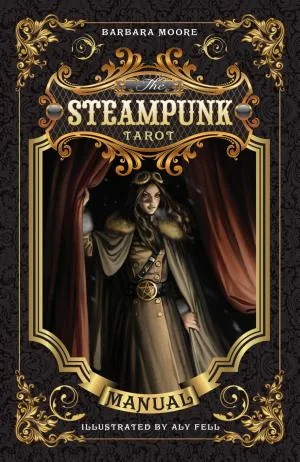
Manual for the Steampunk Tarot
Barbara Moore’s *Manual for the Steampunk Tarot* offers a curious, if somewhat niche, expansion of the tarot lexicon. The strength lies in its meticulous integration of steampunk’s visual and thematic elements into card interpretations. For instance, the depiction of a card like The Chariot, reimagined with a steam-powered automaton, provides a fresh perspective on will and control. However, the manual occasionally strains to connect complex steampunk machinery to subtler, more abstract tarot concepts, leading to interpretations that feel slightly forced. A passage discussing the Tower as a collapsing industrial factory, while evocative, could benefit from a more direct link to spiritual upheaval. Despite this, the work succeeds in creating a distinct interpretive framework for those drawn to its specific aesthetic.
📝 Description
72
Barbara Moore's 2014 book, Manual for the Steampunk Tarot, reinterprets tarot through a Victorian industrial lens.
This book applies the aesthetics and ideas of steampunk to the archetypal language of tarot cards. It was written for tarot readers looking for fresh meanings, artists drawn to Victorian futurism, and practitioners interested in how technology, history, and divination connect. The Manual emerged in the 2010s, aligning with a growing fascination for steampunk, a genre that idealizes the industrial era and envisions different technological paths. It draws on established tarot traditions while providing a modern perspective.
The work details how anachronistic devices, gears, clockwork mechanisms, and Victorian societal frameworks can symbolize tarot concepts. It maps these symbols to figures like the Fool and the High Priestess, illustrating how the deck's core ideas find new expression through this unique thematic overlay. The book aims to expand the understanding of tarot symbolism by integrating a distinct subcultural aesthetic.
The Manual for the Steampunk Tarot places itself within the contemporary evolution of tarot practice. By adopting the steampunk subgenre, it continues a long tradition of tarot decks reflecting and commenting on their historical and cultural moments. This approach mirrors earlier deck designs that engaged with specific artistic movements or philosophical ideas, offering a fresh interpretation of archetypes for a new generation of readers interested in the intersection of speculative fiction and divination.
💡 Why Read This Book?
• Gain access to a unique symbolic system that reinterprets traditional tarot archetypes through the lens of Victorian futurism and mechanical innovation. • Discover how anachronistic technologies like clockwork and steam power can serve as potent metaphors for psychological and spiritual states. • Explore a fresh perspective on divination that bridges historical aesthetics with modern esoteric practice, appealing to artists and collectors alike.
⭐ Reader Reviews
Honest opinions from readers who have explored this book.
❓ Frequently Asked Questions
What is the steampunk aesthetic and how does it apply to tarot?
Steampunk blends Victorian-era fashion and technology with imaginative, often steam-powered, futuristic inventions. In this manual, this aesthetic recontextualizes tarot imagery, using gears, automatons, and dirigibles to symbolize archetypal meanings.
Who is Barbara Moore?
Barbara Moore is a prolific author and artist known for her innovative tarot decks and companion books, often exploring unique themes and historical influences.
When was the Manual for the Steampunk Tarot first published?
The Manual for the Steampunk Tarot was first published in 2012, reflecting the growing popularity of the steampunk genre.
Does this manual come with a specific tarot deck?
This manual is designed to accompany a specific Steampunk Tarot deck, also created by Barbara Moore. The interpretations are tailored to its unique imagery.
How does this differ from traditional tarot interpretations?
It offers a fresh perspective by mapping traditional tarot meanings onto the visual language of steampunk. Concepts like 'progress' or 'invention' take on mechanical, anachronistic forms.
What kind of historical influences are present in steampunk?
Steampunk draws heavily from the Industrial Revolution of the 19th century, particularly the Victorian era in Britain, incorporating elements of its fashion, architecture, and early technological advancements.
🔮 Key Themes & Symbolism
Mechanical Archetypes
The manual reinterprets tarot archetypes through the lens of intricate clockwork mechanisms and steam-powered contraptions. Figures like The Magician might be depicted as an inventor with an array of fantastical gadgets, while The Lovers could represent the harmonious coupling of two complex machines. This approach imbues traditional meanings with a sense of mechanical precision and anachronistic ingenuity, offering a unique visual and conceptual vocabulary for divination.
Victorian Futurism
Steampunk's fascination with a technologically advanced past is central. The manual uses imagery of dirigibles, automatons, and elaborate Victorian attire to explore themes of progress, invention, and societal structures. Cards that speak to ambition, societal roles, or unforeseen changes are framed within this retro-futuristic context, suggesting that the future is not a singular path but a collection woven from historical threads and imagined possibilities.
The Alchemy of Innovation
Beyond mere aesthetics, the manual hints at an alchemical process where disparate elements—past and future, organic and mechanical—are fused. The transformation inherent in tarot readings finds a parallel in the steampunk ethos of repurposing old technologies to create something new and extraordinary. This theme encourages readers to see the potential for innovation and personal evolution within seemingly rigid structures or outdated systems.
The Clockwork Cosmos
The intricate, interconnected nature of clockwork serves as a metaphor for the cosmos and fate itself. The manual suggests that just as each gear and spring plays a vital role in a complex timepiece, so too do individual elements contribute to the grand unfolding of destiny. This perspective invites contemplation on causality, interconnectedness, and the elegant design underlying perceived chaos.
💬 Memorable Quotes
Direct passages from the work, attributed to the author.
“Where the past and future converge . . . With a turn of the wheel and a spin of the cog, the oracular machinery lumbers into action.”
— This blurb sets the stage, evoking the core steampunk aesthetic of blending historical elements with imagined technological futures, and positions the tarot as a complex, mechanical oracle.
“Interpretation: The Hierophant might be depicted as a master clockmaker, imparting ancient, intricate knowledge of temporal mechanics.”
— This interpretation links the traditional role of the Hierophant as a spiritual teacher to the steampunk world of intricate machinery and the concept of time.
“Interpretation: The World card signifies the successful completion of a grand, intricate invention, a evidence of masterful engineering and vision.”
— This interpretation connects the tarot's message of fulfillment and completion to the steampunk ideal of achieving grand, complex technological feats.
💡 Key Ideas
Editorial paraphrase of the work's core concepts — not direct quotes.
Interpretation: The Fool's journey is reimagined as the maiden voyage of a fantastical airship, venturing into unknown skies.
This paraphrased concept illustrates how a core tarot archetype is translated into a specific steampunk visual, emphasizing themes of adventure and venturing into the unknown.
Interpretation: The Emperor is a formidable industrial magnate, ruling his empire through technological prowess and strict organizational principles.
This paraphrased concept frames the Emperor's authority not just through traditional power, but through the lens of industrial might and systematic control inherent in steampunk.
🌙 Esoteric Significance
Tradition
This work does not strictly adhere to a single, established esoteric lineage like Hermeticism or Kabbalah. Instead, it operates within a contemporary esoteric milieu that embraces eclectic approaches and thematic fusion. It borrows from the universal archetypes found in traditional tarot, a practice rooted in Western esotericism, but applies them through a highly specific, modern subcultural lens. Its significance lies in its attempt to create a new symbolic vocabulary for divination, inspired by a particular aesthetic movement.
Symbolism
Key symbols revolve around mechanical metaphors. Gears and clockwork represent interconnectedness, fate, and the intricate workings of systems, both internal and external. Steam power often symbolizes potent, raw energy, drive, and the potential for dramatic transformation or even explosive change, akin to The Tower. Automatons and intricate machinery can represent the constructed self, societal roles, or the illusion of control over destiny.
Modern Relevance
Contemporary practitioners of tarot who seek non-traditional interpretations and enjoy blending esoteric practices with distinct artistic styles find value here. It appeals to those interested in the intersection of art, history, and spirituality, particularly within communities that engage with steampunk culture. The manual's approach encourages creative thinking about how archetypes can be continuously re-contextualized for new generations.
👥 Who Should Read This Book
• Tarot enthusiasts seeking novel interpretive frameworks beyond traditional decks, particularly those drawn to historical aesthetics and mechanical themes. • Artists, writers, and creators immersed in or inspired by the steampunk subgenre, looking for symbolic inspiration for their work. • Esoteric practitioners interested in exploring how cultural movements can influence and refresh divination practices, offering a unique perspective on universal archetypes.
📜 Historical Context
The *Manual for the Steampunk Tarot*, published in 2012, emerged during a period of significant cultural interest in the steampunk subgenre. Steampunk, which gained traction in the late 1990s and early 2000s, draws heavily from Victorian-era aesthetics, industrial revolution technology, and science fiction tropes. It imagines a retro-futuristic world where steam power reigns supreme and elaborate, anachronistic inventions abound. This manual taps directly into that cultural zeitgeist, offering a tarot interpretation framework that aligns with steampunk's visual and thematic preoccupations. It follows in a tradition of tarot authors who have sought to connect the cards to specific cultural movements or artistic styles, such as the Art Nouveau tarot or the Egyptian tarot. While not a product of the Victorian era itself, it reflects a modern fascination with that period, reinterpreted through a speculative lens, much like steampunk literature from authors such as Jules Verne or H.G. Wells.
📔 Journal Prompts
How does the imagery of gears and clockwork change your perception of fate?
Consider a personal challenge through the lens of a steampunk invention.
What 'steam-powered' energy is driving your current path?
Reflect on the balance between mechanical order and wild invention in your life.
How can you 're-engineer' an outdated belief system?
🗂️ Glossary
Steampunk
A subgenre of science fiction and fantasy inspired by 19th-century industrial steam-powered machinery and Victorian-era aesthetics, often featuring anachronistic technology.
Cog
A tooth on the edge of a wheel or gear designed to fit into a gap between the teeth of another wheel or gear, enabling the transfer of motion.
Oracular Machinery
A metaphorical term suggesting that the tools of divination, like the tarot, function as complex, interconnected mechanisms that reveal hidden truths or future possibilities.
Archetype
A universally understood symbol, character, or pattern of behavior found in the collective unconscious, often represented in tarot cards.
Cartomancy
The practice of divination using a deck of cards, most commonly the tarot.
Anachronistic
Belonging to a period other than that being portrayed; not in accordance with the appropriate time period.
Dirigible
A type of airship, typically steered and powered by an engine, often featured in steampunk imagery.
This book appears in 1 collection
🔮 Readers Also Liked
Browse all →








From the “Tarot” Collection
View all →![CIA Reading Room cia-rdp84-00022r000200150084-5: ORIENTATION COURSE LECTURE ON 'SERVICES OF [ ] [ ]'](/img/thumb/cia-reading-room-cia-rdp84-00022r000200150084-5-orientation-course-lecture-on-services-of-cia-reading-room.webp)







More Free Occult Philosophy Books
View all →