How to use tarot spreads
 65
65

How to use tarot spreads



Lorelei Sage (Contemplative Literature Editor) — Sylvia Abraham's "How to Use Tarot Spreads" offers a compelling and deeply insightful exploration into the heart of cartomancy. Abraham masterfully demystifies the construction and interpretation of Tarot spreads, presenting them not as rigid formulas but as dynamic frameworks for accessing intuitive wisdom. Her prose is both learned and accessible, imbuing the subject with a sense of sacred artistry. This work is particularly valuable for its emphasis on the symbolic resonance within each spread, encouraging readers to move beyond rote memorization towards a more profound, interpretive understanding. It's an indispensable guide for the dedicated student of Tarot, promising to elevate their practice to new heights of clarity and spiritual insight.
📝 Description
65
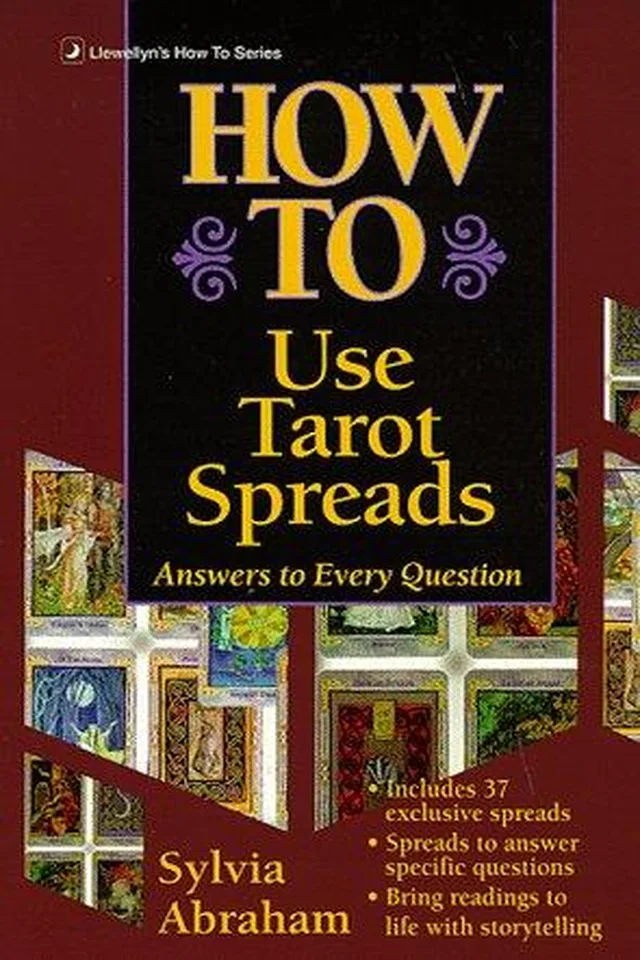
Sylvia Abraham's 1996 book explains how to construct and interpret tarot spreads.
Sylvia Abraham's "How to Use Tarot Spreads," published in 1996, moves beyond basic card meanings to focus on the construction and interpretation of tarot layouts. Abraham details how different spread formations can create narratives from card placements, linking them to fate, destiny, and the subconscious. The book aims to foster introspection and develop intuitive abilities through the symbolic language of the tarot.
It addresses both new students of the tarot and those with existing practice. Abraham examines the philosophical basis of divination, encouraging readers to find personal meaning in the archetypal imagery. The goal is to deepen a connection with the universe and one's inner self, using tarot as a tool for self-discovery and spiritual growth. The text encourages moving past superficial readings to access the tarot's deeper potential.
This book fits within the Western esoteric tradition of divination, particularly the use of tarot as a tool for psychological insight and spiritual development. It draws on the tradition that views tarot not just as a predictive device but as a symbolic system reflecting universal archetypes and the human psyche. Abraham's approach aligns with methods that emphasize personal meaning-making and intuitive connection, distinguishing it from purely fortune-telling applications of the cards.
💡 Why Read This Book?
Unlock the profound secrets encoded within Tarot spreads. This book transforms card layouts into powerful narratives for self-discovery and divination. Ideal for beginners seeking a clear path and experienced practitioners aiming to deepen their intuitive connection. Explore ancient symbolism and gain insights into your life's journey, fostering a richer, more meaningful engagement with the Tarot.
⭐ Reader Reviews
Honest opinions from readers who have explored this book.
❓ Frequently Asked Questions
What is the primary benefit of learning different Tarot spreads?
Learning diverse Tarot spreads allows for more nuanced and specific inquiries. Each spread is designed to illuminate different facets of a situation, providing deeper insights and more tailored guidance than a simple one-card draw.
Is this book suitable for absolute beginners to Tarot?
Yes, "How to Use Tarot Spreads" is exceptionally well-suited for beginners. It begins with foundational principles and guides readers step-by-step through constructing and interpreting various spreads, making the learning process accessible and engaging.
Does the book cover advanced or esoteric spread techniques?
Absolutely. While it provides a solid foundation, Abraham also delves into more complex and esoteric spread configurations, offering advanced practitioners new perspectives and methods for exploring deeper layers of meaning within their readings.
How does this book enhance intuitive development?
The book emphasizes the interpretive aspect of Tarot, encouraging readers to connect with the symbolism and narrative flow of each spread. This practice cultivates intuition by teaching you to 'read' the story the cards are telling, rather than just identifying individual meanings.
Can the spreads taught be adapted for different types of readings?
Indeed. The principles of spread construction and interpretation are universal. Abraham provides the framework to adapt these spreads for various purposes, including personal growth, relationship insights, career guidance, and spiritual exploration.
🔮 Key Themes & Symbolism
The Art of Cartomantic Narrative
This theme explores how Tarot spreads are not merely arrangements of cards but intricate narrative structures. Each position within a spread acts as a chapter or a character in a unfolding story, allowing the reader to combine together the symbolic language of the Tarot into a coherent and insightful narrative that addresses the querent's query with depth and nuance. It emphasizes the dynamic interplay between the cards and the querent's life circumstances.
Symbolic Resonance and Archetypal Echoes
Explore the profound symbolism embedded within the Tarot, and how this symbolism is amplified and contextualized through the strategic placement in various spreads. This theme examines the archetypal energies that each card represents and how their arrangement in a spread creates a powerful resonance, echoing universal truths and offering useful insights into the human psyche and the cosmic order. Understanding this resonance is key to unlocking deeper levels of interpretation.
Intuition as the Compass of Divination
This crucial theme highlights the indispensable role of intuition in mastering Tarot spreads. Abraham guides readers to cultivate their inner knowing, using the spreads as a scaffold to support and direct their intuitive faculties. It emphasizes that while knowledge of card meanings and spread structures is vital, true mastery comes from the ability to perceive the subtle energetic connections and intuitive messages that emerge when the cards are laid out.
💬 Memorable Quotes
Direct passages from the work, attributed to the author.
“Each card whispers a secret, but the spread allows them to converse.”
— This highlights the shift from individual card meanings to the dynamic interaction between cards within a spread. It emphasizes that the true power of Tarot divination lies in understanding the dialogue and relationships that emerge when cards are placed together.
“To read the spread is to read the currents of destiny.”
— This evocative statement links the practice of Tarot spread interpretation to the grander flow of fate and cosmic influence. It suggests that by understanding the patterns revealed in a spread, one can gain insight into the underlying forces shaping their life.
💡 Key Ideas
Editorial paraphrase of the work's core concepts — not direct quotes.
The spread is the map, the cards are the landmarks, and intuition is your guide.
This quote expresses the core philosophy of using spreads effectively. It positions the spread as a structural framework, the cards as the elements within that structure, and intuition as the essential faculty that navigates and interprets the journey.
The Tarot does not predict; it illuminates the path forward.
This quote reframes Tarot's purpose from fatalistic prediction to empowering guidance. It emphasizes that the cards offer clarity and potential directions, empowering the individual to make conscious choices on their journey.
Within the circle of the spread, the microcosm reflects the macrocosm.
This quote speaks to the hermetic principle of 'as above, so below.' It suggests that the patterns and insights revealed in a Tarot spread (microcosm) hold a reflection of universal truths and larger cosmic forces (macrocosm).
🌙 Esoteric Significance
Tradition
This work is deeply rooted in the Western Esoteric Tradition, drawing heavily from Hermeticism, Kabbalah, and Neoplatonism. It views the Tarot not just as a divinatory tool but as a symbolic language, a 'Book of Thoth,' that mirrors the structure of the cosmos and the human psyche. The spreads themselves are seen as ritualistic arrangements designed to evoke specific archetypal energies and facilitate communion with higher consciousness or the subconscious mind.
Symbolism
The core symbolism revolves around the Major and Minor Arcana, interpreted through their archetypal meanings and astrological/elemental associations. Spreads then act as crucibles where these individual symbols interact, creating emergent meanings. For instance, the placement of a card in a 'past' position signifies its influence on the foundation of the present, while a card in a 'future' position highlights potential outcomes, all imbued with the rich symbolic history of each card.
Modern Relevance
In an age often characterized by information overload and existential uncertainty, "How to Use Tarot Spreads" offers a vital anchor. It provides a structured yet flexible method for navigating personal challenges, fostering self-awareness, and cultivating a sense of purpose. The book empowers individuals to engage with their inner wisdom and the subtle energies of the universe, offering a timeless yet relevant pathway to clarity, resilience, and spiritual fulfillment in the modern world.
👥 Who Should Read This Book
This essential guide is crafted for a diverse audience of seekers. **Beginners** will find a clear, step-by-step introduction to the foundational principles of Tarot spread interpretation, explaining the process. **Intermediate practitioners** will discover new methods and deeper interpretive insights, enhancing their existing skill set. **Scholars of esotericism** will appreciate the book's grounding in historical and symbolic traditions. **Spiritual seekers** and those on a path of self-discovery will find Tarot spreads a powerful tool for introspection, guidance, and understanding life's unfolding mysteries.
📜 Historical Context
Sylvia Abraham's "How to Use Tarot Spreads" emerges from a wide range of Western esoteric traditions, deeply influenced by the revival of Tarot studies in the late 19th and early 20th centuries. This era saw figures like Arthur Edward Waite and Pamela Colman Smith revolutionize Tarot imagery and interpretation, embedding Kabbalistic, astrological, and alchemical symbolism into the deck. Abraham builds upon this legacy, offering a modern synthesis that respects the historical depth of cartomancy while making it accessible to contemporary seekers. The book reflects a continued fascination with Tarot as a tool for psychological exploration, spiritual growth, and self-divination, moving beyond mere fortune-telling to embrace its potential as a profound system of wisdom and introspection.
📔 Journal Prompts
Reflect on a recent challenge and lay out a simple three-card spread (Past, Present, Future) to gain insight. What narrative emerges?
Choose a specific spread from the book and apply it to a question about your personal growth. How do the card placements illuminate your inner landscape?
Consider the archetypal meaning of a Major Arcana card you frequently draw. How might its appearance in different positions within a spread alter its message?
After practicing a new spread, journal about the intuitive hits you experienced. Were there connections or meanings that surprised you?
How can the wisdom gained from interpreting a complex spread be practically applied to your daily life or decision-making?
🗂️ Glossary
Querent
The individual for whom a Tarot reading is being conducted. The querent is the focus of the inquiry and the recipient of the insights offered by the cards and the spread.
Spread
A specific arrangement of Tarot cards laid out in a pattern to answer a particular question or explore a given situation. Each position in the spread has a defined meaning or area of inquiry.
Archetype
A universal, archaic symbol or motif that derives its meaning from the collective unconscious. In Tarot, each card represents a fundamental human experience or divine principle.
Intuition
The ability to understand something immediately, without the need for conscious reasoning. In Tarot, it is the key faculty used to interpret the cards and their relationships within a spread.
Cartomancy
The practice of divination using a deck of cards, most commonly the Tarot. It involves interpreting the symbols and their arrangement to gain insight into the past, present, or future.
This book appears in 3 collections
🔮 Readers Also Liked
Browse all →
More by Abraham, Sylvia
All books →
From the “Tarot” Collection
View all →
More Free Divination & Tarot Books
View all →