Gnostic tarot
 64
64

Gnostic tarot



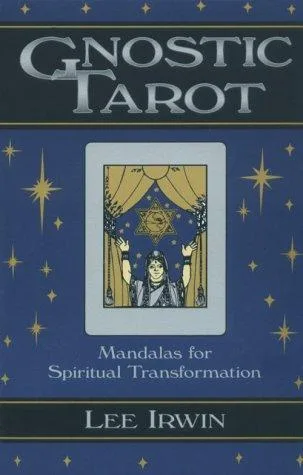
Lee Irwin's 'Gnostic Tarot' stands as a monumental achievement in esoteric scholarship and practical divination. Irwin deftly navigates the intricate tapestry of Gnostic thought, presenting a compelling framework for understanding the Tarot as a vehicle for spiritual awakening. The book's strength lies in its ability to translate complex philosophical concepts into accessible, yet deeply resonant, archetypal interpretations. This is an essential text for seasoned practitioners seeking to deepen their understanding of symbolic language and for serious students of Gnosticism. It offers a potent antidote to superficial divinatory practices, guiding the reader toward profound self-realization.
📝 Description
64
Lee Irwin's Gnostic Tarot connects 78 archetypes to the search for direct divine experience.
Lee Irwin's Gnostic Tarot is a deck and guide that links traditional tarot imagery to Gnostic philosophy. The work aims to use the cards as a tool for spiritual insight, rather than simple prediction. Irwin integrates the symbolism found in the 78 tarot archetypes with Gnostic ideas about the material world and the divine spark within humanity.
The book suggests that each card can act as a point of contemplation, encouraging users to look beyond ordinary reality. It frames divination as a way to communicate with one's higher self and to understand one's true spiritual nature. The Gnostic Tarot is presented as a method for personal empowerment through the application of ancient mystical principles.
This work situates itself within Gnosticism, a historical and philosophical current that emphasizes direct, personal knowledge (gnosis) of the divine. Gnostic traditions often view the material world as a flawed creation and seek liberation through spiritual understanding. By merging these ideas with the tarot's symbolic system, Irwin proposes a method for accessing esoteric truths and recognizing the divine immanent within the individual.
💡 Why Read This Book?
Uncover the lost wisdom of Gnosticism through the profound symbolism of the Tarot. This book offers a unique lens for self-discovery, revealing the divine spark within and the illusory nature of material existence. Ideal for spiritual seekers, Tarot enthusiasts, and scholars of esoteric traditions yearning for a deeper, more philosophical approach to divination.
⭐ Reader Reviews
Honest opinions from readers who have explored this book.
❓ Frequently Asked Questions
What is Gnosticism and how does it relate to the Tarot?
Gnosticism is an ancient spiritual and philosophical movement emphasizing direct, intuitive knowledge (gnosis) of the divine. This book reinterprets Tarot archetypes through a Gnostic lens, viewing them as keys to unlocking inner spiritual awareness and understanding cosmic principles.
Is this book suitable for beginners in Tarot?
Yes, while it offers profound depth for experienced practitioners, the clear explanations and unique perspective make it accessible to beginners who are drawn to spiritual exploration.
What makes the Gnostic Tarot unique compared to other Tarot systems?
It integrates the Gnostic quest for spiritual liberation and understanding of the divine within the material world into the Tarot's symbolic language, offering a more philosophical and transcendent approach to interpretation.
Does the book include a specific Gnostic Tarot deck?
The book focuses on the philosophical and symbolic interpretation of the Tarot through a Gnostic framework, providing the understanding to work with any Tarot deck, or a specially designed Gnostic deck if available.
How can the Gnostic Tarot be used for personal growth?
By meditating on the archetypes through a Gnostic perspective, readers can gain insights into their own spiritual journey, identify limiting beliefs, and access their innate divine potential for transformation.
🔮 Key Themes & Symbolism
The Inner Gnosis and the Tarot
This theme explores the core Gnostic concept of gnosis – direct spiritual knowing – and how the Tarot serves as a symbolic map for its attainment. The book posits that each Tarot archetype represents a stage or aspect of the soul's journey toward recognizing its divine origin, obscured by the material realm. It reveals how the cards act as keys, unlocking dormant spiritual faculties and guiding the practitioner toward a profound understanding of their true self, free from the illusions and limitations of the mundane world.
Archetypes as Cosmic Principles
Irwin presents Tarot archetypes not as mere characters or situations, but as fundamental cosmic principles and divine emanations. Drawing from Gnostic cosmology, the book elucidates how figures like the Fool, the High Priestess, or The World embody aspects of the Pleroma (divine fullness) and the Archons (rulers of the material cosmos). This perspective transforms the Tarot into a tool for comprehending the intricate workings of the universe and one's place within it, fostering a sense of cosmic interconnectedness and purpose.
The Mandala of the Soul's Journey
The Tarot deck is envisioned as a sacred mandala, a circular diagram representing the universe and the individual's spiritual evolution. Each card, when understood through the Gnostic lens, becomes a step in a profound inner pilgrimage. The book guides readers to see their own life path reflected in these sacred images, encouraging introspection and self-awareness. By engaging with the Tarot as a mandala, practitioners can work through the challenges of existence, integrate shadow aspects, and ultimately move towards spiritual wholeness and liberation.
💬 Memorable Quotes
Direct passages from the work, attributed to the author.
“To know oneself is to know the divine spark within the prison of the material world.”
— This captures the Gnostic paradox of inherent divinity trapped by material illusion, highlighting the self-knowledge gained through Tarot as the path to recognizing this inner light.
“Each card is a whispered secret from the aeons, a fragment of divine memory.”
— This emphasizes the ancient and profound nature of Tarot symbolism, portraying the cards as conduits of timeless, sacred knowledge accessible through esoteric study and intuition.
“The journey of the Fool is the soul's courageous leap into the unknown of self-discovery.”
— This interprets the Fool's archetype as representing the essential Gnostic quest for self-awareness, embracing the unknown and the inherent risks involved in spiritual liberation.
“Through the symbols, we reclaim the language of the cosmos and our own divine inheritance.”
— This highlights the Tarot's symbolic language as a means to re-establish a connection with universal truths and to reassert one's inherent spiritual birthright, a core Gnostic aspiration.
💡 Key Ideas
Editorial paraphrase of the work's core concepts — not direct quotes.
The Tarot is a mirror reflecting the luminous void from which all creation springs.
This quote suggests the Tarot's power to reveal the ultimate, unmanifest source of existence, implying a connection to the primordial, undifferentiated consciousness central to Gnostic thought.
🌙 Esoteric Significance
Tradition
This work is deeply rooted in Gnosticism, an ancient spiritual path characterized by its emphasis on gnosis (direct spiritual knowledge) as the key to liberation. Gnosticism posits that the material world is an illusion or a flawed creation, and that humanity possesses a divine spark within that seeks to return to the ultimate divine source. The Gnostic Tarot reinterprets the traditional Tarot archetypes through this lens, viewing them as symbols of the soul's journey through the cosmos and its struggle for awakening.
Symbolism
The symbolism of the Gnostic Tarot is layered and profound, drawing from Gnostic cosmology, mythology, and philosophical concepts. Key symbols include the Aeons (divine emanations), the Demiurge (the flawed creator of the material world), Sophia (divine wisdom), and the Pleroma (the fullness of the divine realm). Each Tarot card is re-contextualized to reflect these Gnostic ideas, transforming familiar imagery into potent metaphors for spiritual realization, the overcoming of illusion, and the recognition of one's true divine nature.
Modern Relevance
In a world often perceived as materialistic and spiritually disconnected, the Gnostic Tarot offers a powerful pathway to inner awakening and reclaiming one's authentic self. Its emphasis on direct experience, critical inquiry, and the inherent divinity within resonates deeply with contemporary seekers disillusioned by dogma and superficial spirituality. It provides a framework for understanding the challenges of modern life as opportunities for spiritual growth and for cultivating a profound sense of purpose and connection to the transcendent.
👥 Who Should Read This Book
This key work is a treasure for a diverse range of spiritual explorers. Beginners in Tarot seeking a deeper, more philosophical foundation will find their understanding profoundly enriched. Experienced Tarot practitioners yearning to move beyond predictive readings will discover a potent tool for self-exploration and spiritual growth. Scholars of esoteric traditions, particularly Gnosticism and comparative religion, will appreciate the rigorous scholarship and unique synthesis. Ultimately, anyone on a path of inner seeking, who feels a pull towards understanding the deeper mysteries of existence and their own divine potential, will find the Gnostic Tarot an indispensable guide.
📜 Historical Context
The Gnostic Tarot emerges from a rich lineage of esoteric thought, drawing heavily from the Gnostic revival of the late 19th and early 20th centuries, which saw renewed interest in early Christian mysticism, Hermeticism, and mystical traditions. Figures like Helena Blavatsky and the Theosophical Society played a central role in popularizing these ancient systems. Simultaneously, the Tarot itself was undergoing a significant transformation, moving beyond mere fortune-telling to become a tool for psychological and spiritual exploration, particularly championed by occultists like A.E. Waite and Aleister Crowley. Lee Irwin's work builds upon this foundation, synthesizing the philosophical depth of Gnosticism with the symbolic richness of the Tarot, offering a contemporary interpretation that speaks to modern seekers grappling with questions of consciousness, reality, and spiritual liberation in an increasingly complex world.
📔 Journal Prompts
Reflect on a personal 'Archon' (limiting belief or external influence) and how a specific Gnostic Tarot card might illuminate its illusory nature.
Consider the concept of 'gnosis' as it relates to a recent moment of profound clarity or intuition in your life. Which Tarot archetype best represents this experience?
Explore the idea of the material world as a 'prison' or 'illusion' from your personal perspective. How does the symbolism of the Tarot offer pathways to transcend this perception?
Meditate on a Tarot card that currently speaks to your spiritual journey. What 'divine spark' or hidden potential does it reveal within you?
How can the archetypal journey presented in the Gnostic Tarot inform your actions and choices in the external world, bringing more spiritual awareness into your daily life?
🗂️ Glossary
Gnosis
Direct, intuitive spiritual knowledge; a core concept in Gnosticism referring to the experiential understanding of divine truths and one's own divine nature.
Aeons
Divine emanations or spiritual beings originating from the ultimate Godhead in Gnostic cosmology, representing aspects of the divine realm.
Demiurge
In Gnosticism, the lesser creator deity often depicted as ignorant or malevolent, responsible for the flawed material world, distinct from the true, transcendent God.
Pleroma
The fullness of the divine realm in Gnosticism, representing the totality of the divine emanations and the ultimate spiritual reality.
Mandala
A circular spiritual symbol in various traditions, representing the universe, wholeness, and the integration of the self; used in the Gnostic Tarot to depict the soul's journey.
This book appears in 3 collections
🔮 Readers Also Liked
Browse all →








More by Lee Irwin
All books →

From the “Tarot” Collection
View all →






More Free Divination & Tarot Books
View all →