How to read the tarot
 64
64

How to read the tarot



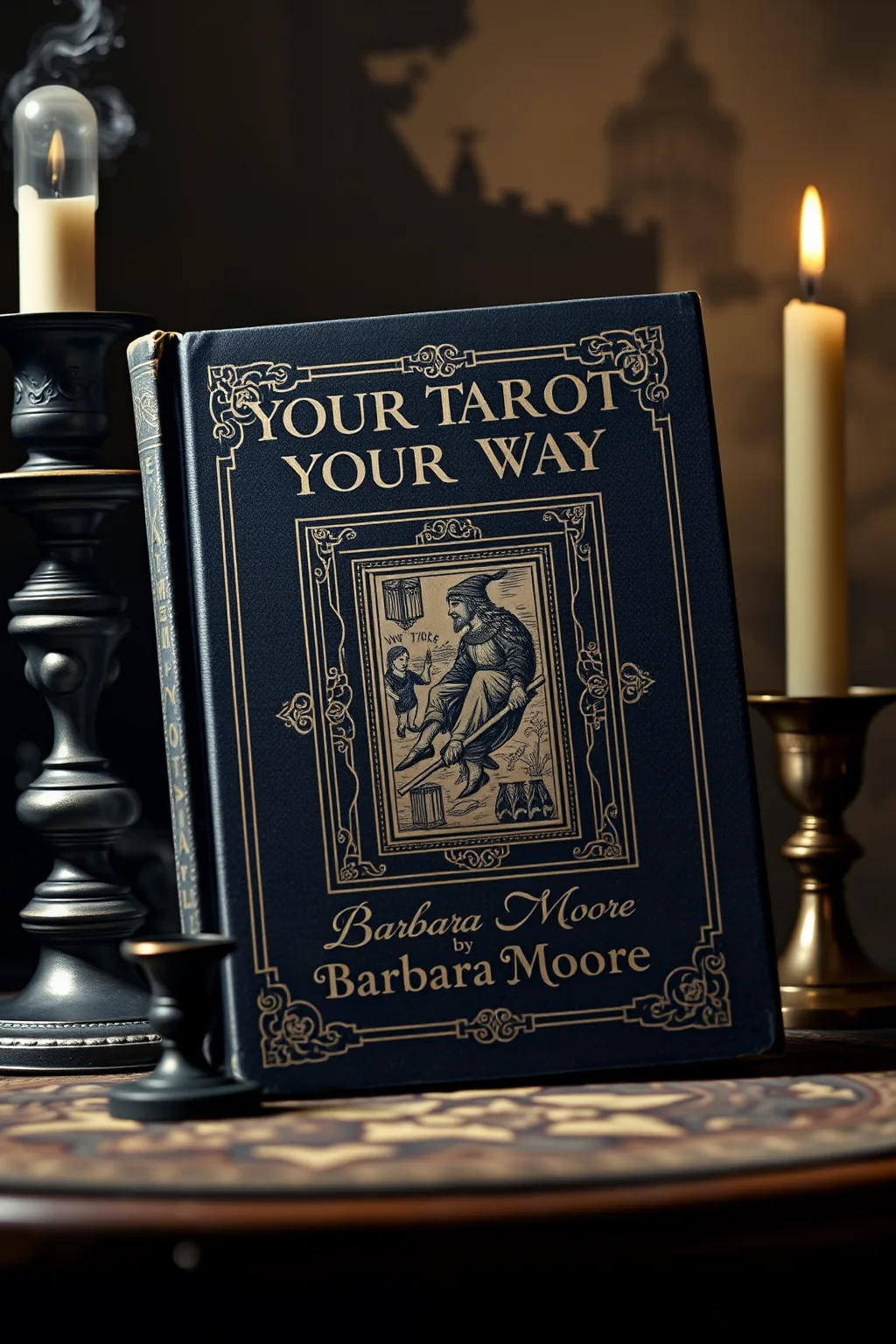
Sylvia Abraham's 'How to Read the Tarot' is a beacon for those navigating the esoteric currents of divination. Abraham offers more than a mere primer; she provides a deeply insightful, philosophically rich exploration of the Tarot's symbolic lexicon. Her approach, steeped in the tradition of hermeticism, illuminates the profound connections between the Major Arcana and the stages of spiritual ascent. This work is particularly valuable for its ability to demystify complex symbolism without sacrificing its inherent mystery. It is an essential text for aspiring practitioners seeking authentic guidance and for seasoned students eager to deepen their understanding of this ancient art.
📝 Description
64
Sylvia Abraham's 'How to Read the Tarot' was published in 1988.
Sylvia Abraham's 'How to Read the Tarot' approaches card interpretation as a method for understanding symbolic language. The book examines archetypal imagery, explaining how each Tarot card relates to broader energies and individual paths. Readers will learn to interpret the subtle currents of divination through the lens of mystics and seers.
The work discusses the philosophical basis of cartomancy. Abraham presents the Tarot as a tool that reflects the inner self and the interplay between fate and personal choice. The text aims to reveal unspoken truths that influence our lives.
This book fits within the Western esoteric tradition of divination and self-reflection through symbolic systems. It follows in a lineage that views tools like the Tarot not just as predictive instruments, but as mirrors for psychological and spiritual insight. Abraham's work connects to traditions that see correspondences between the macrocosm and the microcosm, using the Tarot to map these connections for the individual.
💡 Why Read This Book?
Unveil the veiled truths of existence and master the language of destiny. This book offers a profound, mystical approach to Tarot, transcending simple card meanings to reveal deep symbolic wisdom. Ideal for seekers of hidden knowledge, aspiring diviners, and those who wish to deepen their intuition and connection to the archetypal forces that shape our lives. Discover the Tarot as a sacred tool for self-discovery and spiritual growth.
⭐ Reader Reviews
Honest opinions from readers who have explored this book.
❓ Frequently Asked Questions
What is the core philosophy behind Abraham's Tarot reading approach?
Abraham's philosophy centers on the Tarot as a symbolic map of the human psyche and spiritual journey, emphasizing intuition and the interconnectedness of all things. It's about 'reading' the soul's narrative, not just predicting outcomes.
Is this book suitable for complete beginners?
Absolutely. Abraham's clear yet evocative prose makes complex concepts accessible to newcomers, while offering depth for those with prior experience.
How does this book differ from other Tarot guides?
It distinguishes itself by focusing on the esoteric and philosophical underpinnings, treating the Tarot as a sacred text and a tool for profound self-awareness, rather than a mere fortune-telling device.
Can I use my own Tarot deck with this book?
Yes. While Abraham may reference specific imagery, the core principles and symbolic interpretations are universal and transferable to most standard Tarot decks.
What is the intended atmosphere of learning from this book?
The atmosphere is one of quiet contemplation, mystical discovery, and intellectual engagement. It encourages a reverent and thoughtful approach to the sacred art of Tarot.
🔮 Key Themes & Symbolism
The Archetypal Journey
This theme explores the Tarot as a visual representation of the archetypal journey of the human soul. Abraham looks at how the Major Arcana mirrors stages of individuation, spiritual growth, and the universal human experience. Each card becomes a portal to understanding core psychological patterns and life lessons, informative the path from the Fool's innocence to the World's completion. It’s about recognizing these universal patterns within oneself and the collective consciousness, fostering a deeper connection to the grand narrative of existence.
Symbolic Language of the Cosmos
Abraham positions the Tarot as a sacred script, a coded language through which the cosmos communicates. This theme focuses on deciphering the collection of symbols, imagery, and numerology embedded within each card. It emphasizes that these symbols are not arbitrary but are deeply rooted in ancient wisdom traditions, astrology, and mythology. Understanding this language allows the reader to perceive the subtle energies at play in their lives, revealing hidden meanings and guiding them towards greater clarity and insight.
Intuition and Inner Vision
Central to Abraham's teaching is the cultivation of intuition as the primary key to unlocking the Tarot's wisdom. This theme stresses that the cards are not passive objects but catalysts for awakening inner knowing. The book guides readers in developing their psychic faculties, learning to trust their gut feelings, and perceiving the energetic resonance of the cards. It promotes a practice where the reader's inner vision merges with the symbolic language of the Tarot, creating a deeply personal and transformative divinatory experience.
💬 Memorable Quotes
Direct passages from the work, attributed to the author.
“Each card is a glyph, a whisper from the eternal.”
— This highlights the profound, almost divine nature of Tarot imagery, portraying each card as a potent symbol carrying ancient, timeless messages.
“To read the Tarot is to converse with the archetypes.”
— This emphasizes the connection to universal patterns of human experience and consciousness, positioning Tarot reading as an interaction with these fundamental forces.
“Intuition is the true key, unlocking the silent dialogue between the cards and your spirit.”
— This points to the paramount importance of inner knowing and personal resonance in the Tarot reading process, beyond mere intellectual understanding.
“The journey through the cards is the journey within.”
— This succinctly captures the book's core message: that Tarot divination is fundamentally a path of self-discovery and personal evolution.
💡 Key Ideas
Editorial paraphrase of the work's core concepts — not direct quotes.
The Tarot is a mirror to the soul, reflecting its deepest truths and hidden potentials.
This quote underscores the introspective power of the Tarot, suggesting it reveals not external fate but internal landscapes and undiscovered aspects of the self.
🌙 Esoteric Significance
Tradition
This work is deeply rooted in the Western Esoteric Tradition, drawing heavily from Hermeticism, Kabbalistic principles, and Jungian archetypal psychology. It views the Tarot as a microcosm of the universe and a macrocosm of the individual psyche. The emphasis on symbolic interpretation and the ascent through the Major Arcana aligns with initiation rituals and spiritual progression found in various mystery schools, offering a framework for self-transformation and gnosis.
Symbolism
The esoteric significance lies in the Tarot's profound symbolic language. Abraham likely explores how each card's imagery – from the elemental forces of the Minor Arcana to the cosmic journey of the Major Arcana – represents universal principles, psychological states, and spiritual archetypes. Understanding these symbols unlocks a deeper perception of reality, revealing the interconnectedness of all things and the hidden order within apparent chaos, acting as a Rosetta Stone for the subconscious.
Modern Relevance
In an age often characterized by disconnection and superficiality, Abraham's work offers a vital link to inner wisdom and universal truths. The Tarot, as presented here, serves as a powerful tool for introspection, self-awareness, and ethical guidance. Its modern relevance lies in its capacity to foster intuition, provide clarity amidst uncertainty, and empower individuals to navigate personal challenges with greater insight and resilience, reconnecting them with a deeper sense of purpose and meaning.
👥 Who Should Read This Book
This comprehensive guide is important for a diverse range of readers. **Beginners** will find a clear, yet deeply spiritual, introduction to the art of Tarot reading, clarifying the cards and building a solid foundation. **Scholars of esotericism** will appreciate the philosophical depth and historical context Abraham brings to the subject. **Spiritual seekers** will discover a powerful tool for self-exploration, intuition development, and understanding life's deeper currents. **Practitioners** of Tarot, regardless of experience level, will find new insights and a renewed appreciation for the symbolic richness and transformative potential of the cards.
📜 Historical Context
Sylvia Abraham's 'How to Read the Tarot' emerges from a rich lineage of esoteric thought, likely influenced by the late 19th and early 20th-century revival of occult studies. This period saw a surge of interest in Hermeticism, Kabbalah, and symbolic systems as pathways to spiritual enlightenment. Authors and practitioners sought to synthesize ancient wisdom with contemporary understanding, viewing the Tarot not just as a card game but as a profound philosophical and mystical text. Abraham's work contributes to this tradition by offering a coherent, accessible, yet deeply esoteric interpretation, positioning the Tarot as a vital tool for reading through the complexities of the human psyche and the spiritual path, echoing the intellectual and spiritual currents of its time.
📔 Journal Prompts
Reflect on a recent challenge: which Tarot card would embody its essence and what message does it hold for you?
How does the imagery of 'The Fool' resonate with your current life path and your willingness to embrace the unknown?
Consider a recurring dream or symbol in your life; how might the Tarot interpret its deeper meaning?
If the Tarot is a mirror to the soul, what aspect of yourself are you most ready to see reflected today?
How can you integrate the archetypal wisdom of the Tarot into your daily decision-making and interactions?
🗂️ Glossary
Archetype
Universal, archaic patterns and images that derive from the collective unconscious and are the psychic counterpart of instinct.
Gnosis
Spiritual or mystical knowledge, often understood as a direct, intuitive apprehension of divine truths.
Hermeticism
A philosophical tradition based on the purported teachings of Hermes Trismegistus, emphasizing the unity of all things and the divine nature of the universe.
Individuation
In Jungian psychology, the process of psychological integration which brings the conscious and unconscious into harmony, leading to a fully developed personality.
Mysticism
The pursuit of achieving communion with, identity in, or conscious awareness of an ultimate reality, divinity, or spiritual truth through direct experience.
This book appears in 3 collections
🔮 Readers Also Liked
Browse all →
More by Abraham, Sylvia
All books →
From the “Tarot” Collection
View all →
More Free Divination & Tarot Books
View all →