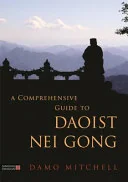
A Comprehensive Guide to Daoist Nei Gong
 71
71

A Comprehensive Guide to Daoist Nei Gong
Damo Mitchell's "A Comprehensive Guide to Daoist Nei Gong" tackles a subject often obscured by esoteric jargon and incomplete transmission. Mitchell’s strength lies in his methodical approach, presenting the philosophical framework and practical steps with a clarity rarely found in English-language texts on this topic. He effectively links the physical postures and energetic movements to the underlying alchemical principles, particularly evident in his explanation of how the Three Treasures (Jing, Qi, Shen) are cultivated. A potential limitation for some readers might be the sheer density of information; this is not a casual introduction but requires focused study. The passage detailing the energetic shifts during the 'Lesser Heavenly Circulation' is particularly illuminating, offering a concrete example of the internal transformations described. This book is a significant resource for serious students of Daoist internal arts.
📝 Description
71
Damo Mitchell's 2014 book details Daoist internal alchemy beyond basic qi gong.
This guide examines the internal alchemical practices within the Daoist tradition. It moves past superficial qi gong exercises to focus on the deeper, transformative processes of cultivating vital energy. The text outlines the philosophical underpinnings, explaining how internal alchemy aims to refine the body and spirit for longevity and spiritual realization.
The work is intended for dedicated practitioners of Nei Gong and Qi Gong who seek a deeper understanding of their practice. It will also interest practitioners of internal martial arts and students of Chinese medicine interested in energetic principles. A basic knowledge of these disciplines is assumed.
Nei Gong is situated within the broader spectrum of Daoist practices, tracing its lineage and evolution. The book emphasizes the practical application of these methods in contemporary times.
Internal alchemy, or Nei Dan, represents a sophisticated branch of Daoist practice focused on transforming physiological and energetic substances within the body. It draws upon Daoist cosmology and ethics, viewing these philosophical elements as inseparable from the practical cultivation of vital energy. These internal arts developed over centuries, often alongside external martial arts and meditation techniques, aiming for longevity and spiritual realization.
💡 Why Read This Book?
• Learn the foundational principles of Daoist internal alchemy, including the cultivation of Jing, Qi, and Shen, as detailed in the book's exploration of the Three Treasures. This offers a structured path beyond basic Qi Gong. • Understand the philosophical basis of Nei Gong, connecting ancient Daoist cosmology and ethics to practical energy work, as presented in the text's philosophical sections. • Gain step-by-step instructions for Nei Gong practices, providing a practical framework for internal cultivation that is often only transmitted orally, as outlined in the book's comprehensive explanations.
⭐ Reader Reviews
Honest opinions from readers who have explored this book.
❓ Frequently Asked Questions
What is the primary focus of Damo Mitchell's "A Comprehensive Guide to Daoist Nei Gong"?
The book's primary focus is a detailed explanation of the Daoist Nei Gong internal alchemical process, including its philosophical underpinnings and step-by-step practical applications for practitioners.
Who is the intended audience for this book?
It is intended for practitioners of Nei Gong, Qi Gong, martial arts, and Chinese medicine who seek a deeper understanding of internal energy cultivation and its alchemical aspects.
When was "A Comprehensive Guide to Daoist Nei Gong" first published?
The book was first published on August 21, 2018, making it a relatively recent yet comprehensive guide to these ancient practices.
Does the book cover the philosophical basis of Nei Gong?
Yes, a significant portion of the book is dedicated to explaining the philosophical and alchemical concepts that form the foundation of Nei Gong practice.
What distinguishes this guide from other books on Qi Gong?
This guide distinguishes itself by focusing on the deeper internal alchemical processes (Nei Dan) rather than just external movements or basic energy circulation, offering a more comprehensive and transformative approach.
Are the practices described in the book suitable for beginners?
While comprehensive, the book assumes some familiarity with Qi Gong or similar practices. Beginners may find it beneficial to have a foundational understanding before engaging with the more advanced internal alchemical concepts presented.
🔮 Key Themes & Symbolism
Internal Alchemy Process
The core of the book details the complex process of internal alchemy, known as Nei Dan. This involves the refinement of the body's fundamental substances—Jing (essence), Qi (vital energy), and Shen (spirit)—transforming them into higher energetic states. The guide meticulously outlines the stages, energetic shifts, and alchemical principles involved, moving beyond superficial energy work to address the profound transformation of the practitioner's energetic constitution.
Philosophical Foundations
Mitchell emphasizes that Nei Gong is inseparable from its Daoist philosophical roots. The book looks at concepts such as Yin and Yang, the Five Elements, and the Daoist understanding of cosmology and human physiology. This grounding ensures that practitioners understand the 'why' behind the 'how,' linking the energetic practices to a holistic worldview aimed at harmony and longevity.
Energetic Cultivation
The guide provides practical, step-by-step instructions for cultivating and transforming Qi. It explains the function of key energetic centers, such as the Dantian, and the pathways through which energy circulates. The focus is on developing a refined and potent energetic field within the body, essential for both health and spiritual development according to Daoist tradition.
Practical Application
Beyond theory, the book offers actionable techniques for practitioners. It addresses the application of Nei Gong principles in daily life, its relevance to martial arts, and its connection to broader concepts in Traditional Chinese Medicine. This practical orientation makes the esoteric subject accessible to dedicated students seeking to integrate these ancient methods.
💬 Memorable Quotes
Direct passages from the work, attributed to the author.
“Nei Gong is an internal alchemical process.”
— This fundamental statement highlights that the practice is not merely about physical exercise but about a deep, transformative process involving the refinement of one's internal energetic and spiritual substance.
“The Three Treasures: Jing, Qi, and Shen.”
— This refers to the core energetic constituents of a human being in Daoist thought. The book explains how Nei Gong aims to cultivate, refine, and transform these three vital aspects for health, vitality, and spiritual advancement.
“Understanding the energetic pathways is crucial for effective practice.”
— This emphasizes the anatomical and energetic map within the body that Nei Gong practitioners must comprehend. Knowledge of these pathways allows for targeted cultivation and manipulation of Qi.
“The philosophical basis informs the practice.”
— This highlights the integrated nature of Daoist Nei Gong, where the theoretical framework derived from Daoist cosmology and philosophy is essential for guiding and understanding the energetic exercises.
“Internal alchemy seeks to transform the practitioner.”
— This points to the ultimate goal of Nei Gong: not just physical health or increased energy, but a profound inner transformation of one's being on multiple levels—physical, energetic, and spiritual.
🌙 Esoteric Significance
Tradition
This work is firmly rooted in the Daoist esoteric tradition, specifically focusing on internal alchemy (Nei Dan). It aligns with the lineage that seeks spiritual realization and longevity through the refinement of the body's fundamental energies. Unlike more external-focused practices, Nei Gong emphasizes the transformation of Jing, Qi, and Shen, aiming for a union with the Dao, which is a central tenet of Daoist esotericism.
Symbolism
Key symbols include the Dantian (energy centers, often depicted as cauldrons or furnaces), the circulation of Qi (often visualized as rivers or microcosmic orbits), and the Three Treasures (Jing, Qi, Shen), representing the fundamental building blocks of life. The 'furnace and cauldron' imagery, for instance, symbolizes the alchemical process of transformation within the body, where energies are heated and refined.
Modern Relevance
Contemporary practitioners of holistic health, somatic psychology, and embodied spirituality are increasingly drawn to the deep, transformative potential of practices like Nei Gong. Thinkers exploring consciousness, energy medicine, and advanced meditation techniques find in Mitchell's work a structured approach to cultivating profound internal states and energetic vitality, bridging ancient wisdom with modern inquiry.
👥 Who Should Read This Book
• Dedicated practitioners of Qi Gong and Neidan seeking to deepen their understanding beyond introductory levels, gaining access to detailed alchemical principles and step-by-step methodologies. • Martial artists interested in the internal energy cultivation aspects of their training, looking to integrate advanced Nei Gong techniques for enhanced power, resilience, and energetic awareness. • Students of comparative religion and esoteric traditions interested in the practical applications of Daoist philosophy, specifically how internal alchemy translates into tangible energetic and spiritual development.
📜 Historical Context
Published in 2018, Damo Mitchell's "A Comprehensive Guide to Daoist Nei Gong" entered a landscape where detailed English texts on internal alchemy were relatively scarce. While Qi Gong gained popularity in the late 20th century, often presented in simplified forms, Mitchell's work aimed to restore the alchemical depth of Nei Gong. He situates his teachings within the broader Daoist tradition, which has a history stretching back millennia, with foundational texts like the Dao De Jing and Zhuangzi shaping its philosophical outlook. Contemporaries like Mantak Chia had already established significant followings for their Daoist internal arts systems, but Mitchell's approach often emphasizes a more direct lineage and rigorous alchemical progression. The work implicitly engages with the historical tendency in some Western interpretations to divorce physical practice from its deep philosophical and alchemical roots, arguing for their inseparability.
📔 Journal Prompts
Reflect on the concept of the Three Treasures (Jing, Qi, Shen) and their relationship to your current energetic state.
How does the philosophical basis of Daoism, as described in the text, inform your understanding of internal alchemy?
Consider the specific energetic pathways discussed; how might visualizing them aid your practice?
Analyze the alchemical process described; what parallels can you draw to other transformative processes you've experienced?
Evaluate the practical application of Nei Gong in relation to your personal health or martial arts goals.
🗂️ Glossary
Nei Gong
Literally 'internal work,' referring to Daoist practices focused on cultivating internal energy (Qi) and transforming the body and spirit through internal alchemy.
Qi
Vital life force or energy that permeates all things. In Nei Gong, it is cultivated, refined, and circulated within the body.
Jing
Essence; the fundamental generative and physical energy of the body. It is considered the densest form of energy, convertible to Qi.
Shen
Spirit or consciousness; the most refined form of energy. Cultivating Shen is the ultimate goal of many Daoist internal arts.
Dantian
Energy centers within the body, typically located in the lower abdomen, chest, and head, where Qi is stored, refined, and transformed.
Internal Alchemy (Nei Dan)
The sophisticated Daoist practice of transforming the body's fundamental energies (Jing, Qi, Shen) into spiritual potency and longevity, often using the body as a 'furnace and cauldron'.
Lesser Heavenly Circulation
A foundational Nei Gong practice involving the circulation of Qi along the Governing (Du) and Conception (Ren) meridians, often referred to as the Microcosmic Orbit.
This book appears in 1 collection
🔮 Readers Also Liked
Browse all →





From the “Qi Gong” Collection
View all →


More Free Sacred Texts & Gnosticism Books
View all →