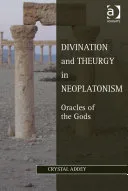
Divination and Theurgy in Neoplatonism
 72
72

Divination and Theurgy in Neoplatonism
Crystal Addey's "Divination and Theurgy in Neoplatonism" provides a meticulously researched account of a crucial, yet often overlooked, intersection of ancient thought. The strength of the work lies in its detailed exegesis of primary texts, particularly Porphyry's "Philosophy from Oracles." Addey effectively demonstrates how these divinatory practices were not mere superstition but were integrated into complex philosophical systems. A notable limitation, however, is the dense prose, which may present a barrier for readers less familiar with the intricacies of Neoplatonic terminology. The analysis of Iamblichus' "De Mysteriis" regarding the hierarchy of divine intermediaries is particularly illuminating, offering a nuanced perspective on theurgy. This book is a valuable scholarly resource for understanding late antique intellectual currents.
📝 Description
72
Crystal Addey's 2014 book examines divination and theurgy in late antiquity.
Crystal Addey's "Divination and Theurgy in Neoplatonism" analyzes the complex relationship between prophetic speech and philosophical thought in the final centuries of the Greco-Roman world. The book focuses on the 3rd and 4th centuries CE, a time of considerable intellectual and religious upheaval. Addey investigates how Neoplatonist thinkers incorporated oracles and other divinatory methods into their philosophical frameworks. This approach contrasted with contemporary Christian intellectuals who were often suspicious of such practices.
The work is aimed at academics and students of ancient philosophy, religious studies, and classical history. It will interest those curious about the philosophical basis of ancient religious customs, particularly within the Neoplatonic school. Readers wishing to understand the intellectual disagreements between pagan philosophers and early Christians concerning divine communication will find extensive material. The book also speaks to modern practitioners of esoteric traditions seeking the historical origins of divination within a developed philosophical context.
This book situates Neoplatonic practices within the broader context of late antique spiritual traditions. It traces the philosophical justification for techniques used to access divine knowledge, connecting them to theurgy, a practice aimed at invoking divine presence. By examining thinkers like Iamblichus and Porphyry, Addey shows how these philosophers sought to integrate ecstatic prophecy and oracular consultation into a coherent worldview. The work demonstrates how these ancient methods of seeking divine guidance were understood within a sophisticated philosophical system, offering a historical precedent for later esoteric practices.
💡 Why Read This Book?
• Gain a sophisticated understanding of how Porphyry, writing in the 3rd century CE, philosophically defended the use of oracles, moving beyond simplistic notions of superstition. • Explore the arguments within Iamblichus' "De Mysteriis" concerning divine intermediaries and the practice of theurgy, revealing its role in Neoplatonic spiritual ascent. • Grasp the intellectual context of the 4th century CE, particularly the debates between pagan philosophers and Christian intellectuals regarding the divine origin of oracular pronouncements.
⭐ Reader Reviews
Honest opinions from readers who have explored this book.
❓ Frequently Asked Questions
What specific Neoplatonist texts does Crystal Addey focus on in "Divination and Theurgy in Neoplatonism"?
The book prominently features detailed analyses of Porphyry's "Philosophy from Oracles" and Iamblichus' "De Mysteriis," examining their arguments concerning divination and theurgy in the 3rd and 4th centuries CE.
When was "Divination and Theurgy in Neoplatonism" first published?
The original publication date for Crystal Addey's "Divination and Theurgy in Neoplatonism" was October 28, 2014.
What is the primary historical period covered by the book?
The book concentrates on Late Antiquity, specifically the third and fourth centuries CE, a pivotal era for Neoplatonism and its engagement with religious traditions.
Who were the key intellectual figures discussed in relation to divination?
The central figures are the Neoplatonist philosophers Porphyry and Iamblichus, whose works are examined for their philosophical approaches to oracles and theurgy.
What was the intellectual conflict highlighted in the book?
The book explores the significant debates between pagan philosophers, particularly Neoplatonists, and Christian intellectuals concerning the nature and validity of oracles.
What is 'theurgy' as discussed in the context of Neoplatonism?
Theurgy refers to a set of ritual practices within Neoplatonism aimed at invoking divine presence and facilitating spiritual purification or ascent, often intertwined with divinatory understanding.
🔮 Key Themes & Symbolism
Oracles as Philosophical Authority
Addey examines how Neoplatonists like Porphyry did not merely accept oracular pronouncements but subjected them to philosophical scrutiny. The book details how these pronouncements were integrated into broader metaphysical frameworks, serving not just as divine messages but as philosophical data points to understand the cosmos and humanity's place within it. This section highlights the intellectual rigor applied to deciphering divine will during the 3rd and 4th centuries CE.
Theurgy and Divine Access
The work looks at the concept of theurgy, particularly as presented by Iamblichus in "De Mysteriis." It explains how these ritual practices were seen as essential for purification and for enabling the soul to ascend towards the divine. Theurgy is presented not as simple magic, but as a sophisticated system for aligning human consciousness with cosmic forces, bridging the gap between the material and spiritual realms.
Pagan-Christian Intellectual Contention
A significant aspect of the book is its exploration of the polemics between pagan philosophers and Christian intellectuals concerning the nature of divine communication. Addey illustrates how the Neoplatonists' defense of oracles was often met with condemnation from Christian writers, who viewed such practices as demonic illusions. This conflict underscores the volatile religious and intellectual field of Late Antiquity.
Neoplatonism's Metaphysical Synthesis
The book positions Neoplatonism as a complex philosophical synthesis that sought to incorporate diverse religious and mystical traditions into a coherent worldview. Addey shows how divination and theurgy were not peripheral elements but integral components of this system, reflecting the Neoplatonists' aim to provide a comprehensive explanation of reality and the path to salvation.
💬 Memorable Quotes
Direct passages from the work, attributed to the author.
“Pagan philosophers and Christian intellectuals debated the authenticity and divine origin of oracles.”
— This highlights the central conflict explored in the book, where the validity of prophetic utterances was a major point of contention between different religious and philosophical schools in Late Antiquity.
“Iamblichus integrated theurgy into his philosophical system as a means of spiritual purification.”
— This points to the practical application of Neoplatonic thought, showing how ritualistic practices were seen as essential tools for achieving spiritual progress and divine communion.
“Porphyry's 'Philosophy from Oracles' sought to provide philosophical justification for consulting oracles.”
— This emphasizes the intellectual effort made by Neoplatonists to rationalize and validate divinatory practices, treating them as subjects worthy of serious philosophical inquiry.
“The Neoplatonic approach viewed divine intermediaries as crucial for bridging the human and divine realms.”
— This interpretation focuses on the hierarchical structure of the Neoplatonic cosmos and the role of various spiritual beings in facilitating communication and ascent.
“Divination was a contested element in the religious traditions of the 3rd and 4th centuries CE.”
— This statement underscores the book's focus on the period and the controversial nature of oracular practices, which were central to some traditions but viewed with suspicion by others.
🌙 Esoteric Significance
Tradition
This work is firmly situated within the lineage of Neoplatonism, a major philosophical and mystical tradition that profoundly influenced subsequent esoteric thought, including Hermeticism, Gnosticism, and later magical and alchemical systems. Addey's analysis reveals how Neoplatonism provided a sophisticated philosophical underpinning for practices like divination and theurgy, which were often present in earlier Hellenistic mystery cults and continued to be vital in various esoteric paths.
Symbolism
The primary symbols explored revolve around the concept of divine intermediaries and the mechanisms of spiritual ascent. Oracles themselves function as symbols of divine will or knowledge descending into the human realm. Theurgy, as a ritual practice, symbolizes the active human participation in aligning with cosmic order. The hierarchical structure of the Neoplatonic cosmos, with its various divine emanations, also serves as a symbolic map for spiritual journeys.
Modern Relevance
Contemporary thinkers and practitioners in Western Esotericism, particularly those interested in Hermeticism, ceremonial magic, and philosophical mysticism, draw heavily on Neoplatonic concepts. The meticulous examination of texts like "De Mysteriis" provides a foundational understanding for modern theurgic practices and the philosophical justification for seeking divine knowledge through ritual and contemplation.
👥 Who Should Read This Book
• Scholars of Ancient Philosophy and Religious Studies: Those researching Late Antiquity, Neoplatonism, or the history of divination will find rigorous textual analysis and historical context. • Students of Western Esotericism: Individuals interested in the historical roots of magical and mystical traditions will gain insight into the philosophical foundations of theurgy and oracle consultation. • Comparative Religion Researchers: Readers seeking to understand the intellectual debates and syncretic tendencies of the 3rd and 4th centuries CE will find valuable perspectives on pagan-Christian interactions.
📜 Historical Context
The intellectual milieu of the 3rd and 4th centuries CE was one of profound transition, marked by the rise of Christianity and the continued influence of Hellenistic philosophical schools, most notably Neoplatonism. This era saw intense debate over religious and metaphysical truth. Neoplatonists like Porphyry and Iamblichus sought to systematize and philosophically validate existing religious practices, including divination and theurgy, often in response to critiques from both within and outside their philosophical tradition. Porphyry, a student of Plotinus, directly addressed the value of oracles in his "Philosophy from Oracles." Contemporaneously, Christian intellectuals, such as Eusebius of Caesarea, often viewed these pagan practices as fraudulent or demonic. This intellectual friction highlights the contested nature of religious authority and divine communication during this period, as pagan philosophers strove to maintain the relevance of their traditions against a rising monotheistic competitor.
📔 Journal Prompts
The role of Porphyry's 'Philosophy from Oracles' in justifying divination.
Iamblichus' conception of theurgy as a path to the divine.
The intellectual conflict between pagan philosophers and Christian intellectuals regarding oracular pronouncements.
Neoplatonism's synthesis of philosophical inquiry with religious practices.
The function of divine intermediaries in Neoplatonic thought.
🗂️ Glossary
Neoplatonism
A philosophical system originating in the 3rd century CE with Plotinus, which synthesized Platonic philosophy with mystical and religious elements, emphasizing emanation from a supreme, ineffable One.
Theurgy
A system of ritual practices within Neoplatonism aimed at invoking divine presence, purification, and facilitating the soul's ascent towards the divine realm.
Oracles
In Late Antiquity, prophetic pronouncements or divine messages, often delivered through specific individuals or sites, which were a subject of intense philosophical and religious debate.
Porphyry
A 3rd-century CE philosopher and student of Plotinus, whose work 'Philosophy from Oracles' is a key text for understanding Neoplatonic engagement with divination.
Iamblichus
A 3rd/4th-century CE Syrian philosopher, a major figure in Neoplatonism, known for his work 'De Mysteriis,' which extensively discusses theurgy and divine knowledge.
Late Antiquity
The historical period spanning roughly from the 3rd to the 7th century CE, characterized by significant cultural, religious, and intellectual transformations in the Mediterranean world.
Divine Intermediaries
Spiritual beings or entities within the Neoplatonic cosmology that facilitate communication and passage between the material world and the divine, transcendent realm.