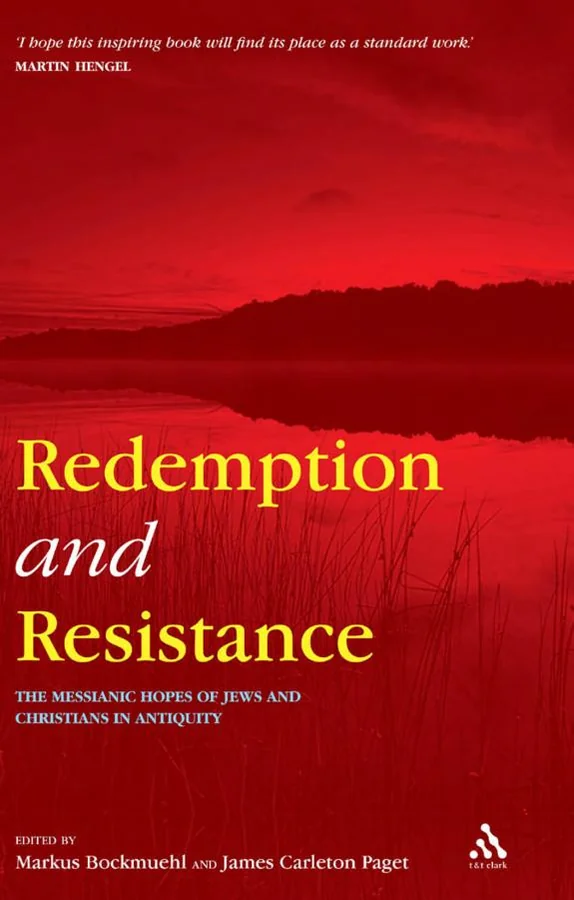
Redemption and Resistance
 83
83

Redemption and Resistance
Markus Bockmuehl and James Carleton Paget’s "Redemption and Resistance" offers a rigorously academic exploration into the volatile landscape of Messianic expectations in antiquity. Its strength lies in its detailed examination of the internal dynamics within both Jewish and Christian groups, moving beyond simplistic narratives of external persecution. The authors expertly highlight the controversies and oppositions that arose *between* these communities and even within them, particularly concerning differing interpretations of redemption and divine intervention. One particularly illuminating section details the varied responses to apocalyptic literature and Messianic claims in the face of Roman imperial power. A limitation, however, is the dense scholarly apparatus, which may present a barrier for the non-specialist reader seeking a more accessible overview. Despite this, the work provides an indispensable resource for understanding the socio-theological pressures that shaped early religious movements. It is a vital, if demanding, contribution to historical and theological scholarship.
📝 Description
83
Markus Bockmuehl and James Carleton Paget's 2007 book examines Messianic expectations and their conflicts in early Jewish and Christian communities.
Published in 2007, Redemption and Resistance analyzes the development of Messianic hopes and the conflicts that arose from them within both Jewish and Christian groups. The authors meticulously trace how these expectations and struggles were shaped by internal disagreements and external pressures. These pressures came from fellow Jews, emerging Christians, and pagan societies during crucial historical eras.
The book situates the rise of Messianic fervor and communal strife within a turbulent ancient world. It considers the Roman Empire's environment, where various religious and philosophical ideas competed. The study specifically covers the period before and after the Second Temple's destruction in 70 CE, a watershed moment that redefined Jewish identity and Christian self-perception. This event intensified arguments over Messianic claims and the meaning of divine redemption.
This work engages with the historical and theological roots of Messianic belief, a central concern in esoteric traditions that often explore hidden meanings and divine interventions in human history. It situates the development of these beliefs within specific historical moments, particularly the period surrounding the destruction of the Second Temple, a cataclysm that profoundly impacted Jewish and early Christian understandings of redemption and divine purpose. The book's focus on the varied interpretations of Messianic figures and the resultant communal tensions touches upon themes of spiritual authority, community formation, and the reception of prophetic or revelatory claims.
💡 Why Read This Book?
• Gain a nuanced understanding of how Messianic expectations evolved differently within Jewish and early Christian contexts, moving beyond singular interpretations, as explored through the book's analysis of the period around 70 CE. • Grasp the concept of 'resistance' not just as external persecution, but as internal conflict and theological debate that fractured nascent religious communities, a core theme of the book. • Appreciate the historical forces, including pagan opposition and internal Jewish controversies, that directly influenced the theological divergence between Judaism and Christianity, as detailed in the book's examination of pre-70 CE Judea.
⭐ Reader Reviews
Honest opinions from readers who have explored this book.
❓ Frequently Asked Questions
What is the primary focus of "Redemption and Resistance"?
The book examines how Messianic hopes and internal conflicts developed for both Christians and Jews when faced with opposition from fellow Jews, Christians, and pagans, exploring the period of antiquity.
Who are the authors of "Redemption and Resistance"?
The authors are Markus Bockmuehl and James Carleton Paget. The work was first published on July 31, 2007.
What historical period does the book cover?
It primarily covers the formative period of early Christianity and Second Temple Judaism, a time marked by significant Messianic expectations and communal upheaval, particularly around events like the destruction of the Temple in 70 CE.
How does the book differentiate between internal and external conflict?
It highlights that 'resistance' was not solely from external pagan forces but also significant internal opposition and controversy between different Jewish factions and between Jews and emerging Christians.
Is "Redemption and Resistance" suitable for a general audience?
While offering valuable insights, the book is written for an academic audience, featuring detailed scholarly analysis that might be challenging for readers without a background in religious studies or history.
What is the significance of 'Messianic hopes' in the book?
The book explores the diverse and often conflicting expectations of a promised deliverer or redeemer held by various groups within Judaism and by early Christians, and how these shaped their identities and actions.
🔮 Key Themes & Symbolism
Messianic Expectations
The work meticulously dissects the complex nature of Messianic hopes prevalent in antiquity. It moves beyond a monolithic understanding, illustrating how different Jewish sects and early Christian communities harbored distinct, often competing, visions of a redeemer figure. These expectations were not static but evolved dynamically in response to historical events, political pressures from Roman rule, and internal theological debates, forming a crucial element in the group identity and future orientation of these communities.
Internal and External Resistance
A central argument of "Redemption and Resistance" is the pervasive nature of both internal and external opposition. The book details how emerging Christian movements and various Jewish factions faced not only persecution from the Roman authorities or disapproval from pagan neighbors but also intense theological disputes and social ostracism from within their own broader religious traditions. This internal friction significantly shaped the boundaries and self-definition of these groups.
Theological Divergence
The book traces the critical points of divergence between Jewish and Christian interpretations of divine redemption. By examining the controversies surrounding Messianic claims and the understanding of salvation, it illustrates how these differing perspectives, often exacerbated by resistance, led to the eventual separation of Christianity from its Jewish roots. The text analyzes the intellectual and social currents that propelled these theological trajectories apart.
Formation of Identity
"Redemption and Resistance" underscores how shared beliefs about redemption and the experience of resistance were instrumental in forging distinct communal identities. For both Jews and early Christians, these elements provided a framework for understanding their place in history, their relationship with the divine, and their stance against perceived adversaries. The shared and contested narratives of Messianic hope played a central role in solidifying group cohesion and self-perception.
💬 Memorable Quotes
Direct passages from the work, attributed to the author.
“Messianic hopes and conflicts developed in the face of opposition and controversy with fellow Jews, Christians, and pagans.”
— This core statement captures the book's thesis: that the evolution of Messianic expectations was not a solitary pursuit but occurred within a complex web of internal disagreements and external pressures, shaping religious identity and practice.
“The work examines the historical Jesus movement and its relation to the broader Jewish context.”
— This highlights the book's focus on situating the origins of Christianity within its original Jewish milieu, emphasizing the interconnectedness and subsequent divergence of these traditions rather than viewing them in isolation.
“The destruction of the Second Temple in 70 CE was a significant turning point.”
— This points to a crucial historical event that profoundly impacted Jewish and Christian thought, intensifying discussions about divine plans, Messianic fulfillment, and the nature of religious community in the aftermath.
“The interplay between theological expectation and social reality.”
— This concept underscores the book's methodological approach, linking abstract religious beliefs and hopes with the concrete social, political, and communal struggles that influenced their development and expression.
💡 Key Ideas
Editorial paraphrase of the work's core concepts — not direct quotes.
Understanding the diverse reactions to Messianic claims is key.
This paraphrased concept emphasizes that the book explores the spectrum of responses—acceptance, rejection, debate—to Messianic figures and ideas across different groups, revealing a dynamic and contested landscape.
🌙 Esoteric Significance
Tradition
While not strictly an esoteric text in the vein of Hermeticism or Kabbalah, "Redemption and Resistance" looks at the mystical and spiritual dimensions of Messianic hope within Judaism and Christianity. It explores the fervent, often visionary, expectations of divine intervention and redemption that animated these traditions. Its significance lies in clear the esoteric undercurrents of early religious movements, showing how deeply held spiritual beliefs about a coming savior shaped communal action and identity in the face of material realities.
Symbolism
The primary symbolic motif is the 'Messiah' or 'Redeemer' figure itself, representing divine intervention, liberation, and a restored cosmic or political order. The concept of 'redemption' carries profound symbolic weight, signifying not just spiritual salvation but also historical vindication and the overcoming of oppressive forces. 'Resistance,' conversely, can symbolize a clinging to tradition, a struggle against assimilation, or a defiance of dominant powers, both internal and external, reflecting archetypal patterns of conflict and preservation.
Modern Relevance
Contemporary scholars of comparative religion and New Testament studies continue to draw on Bockmuehl and Paget's work to understand the roots of inter-religious conflict and dialogue. Thinkers exploring the sociology of religion and the psychology of belief systems find value in its analysis of how shared hopes and oppositions forge group identity. Its examination of Messianic movements remains relevant for those studying contemporary millenarianism and political-theological movements that seek radical transformation.
👥 Who Should Read This Book
• Scholars of early Christianity and Second Temple Judaism seeking a rigorous analysis of Messianic expectations and communal conflicts. • Theologians and religious historians interested in the socio-historical factors that led to the divergence of Jewish and Christian traditions. • Advanced students of comparative religion and biblical studies looking to understand the complex interplay of belief, identity, and opposition in ancient religious movements.
📜 Historical Context
Published in 2007, "Redemption and Resistance" engages with scholarship on Second Temple Judaism and early Christianity, periods marked by intense Messianic speculation and profound social upheaval. The early Roman Empire, particularly Judea, was a crucible of competing religious and political ideologies. The destruction of the Second Temple in 70 CE served as a watershed moment, profoundly impacting Jewish self-understanding and the trajectory of the nascent Christian movement. This era saw the flourishing of apocalyptic literature and diverse interpretations of divine intervention. The work situates itself within ongoing scholarly debates, engaging with figures like Geza Vermes and E.P. Sanders, who have extensively studied the historical Jesus and his Jewish context. Reception was primarily within academic circles, acknowledging its detailed synthesis of complex historical and theological arguments concerning the divergence of Judaism and Christianity.
📔 Journal Prompts
The evolution of Messianic expectations and their impact on communal identity.
Internal controversies within early Jewish and Christian groups.
The nature of 'resistance'—both internal and external—to religious movements.
The role of apocalyptic thought in shaping responses to historical crises.
The theological points of divergence between Judaism and early Christianity.
🗂️ Glossary
Messianic Hope
Expectations concerning a divinely appointed figure or event that would bring about a radical transformation, often involving liberation from oppression, restoration of justice, and a new era of divine favor.
Second Temple Judaism
The period of Jewish history spanning from the rebuilding of the Temple in Jerusalem c. 516 BCE to its destruction by the Romans in 70 CE, characterized by diverse religious sects and Messianic ferment.
Apocalyptic Literature
A genre of literature, prominent in ancient Judaism and early Christianity, that often features symbolic visions, divine revelations, and eschatological prophecies concerning the end times and divine judgment.
Pagan
A term historically used by Jews and Christians to refer to adherents of polytheistic religions of the Greco-Roman world, distinct from monotheistic traditions.
Messiah
Literally 'anointed one,' a title referring to a divinely chosen leader or savior figure expected in Judaism and Christianity, though interpretations of the role varied significantly.
Communal Identity
The sense of belonging and shared self-understanding that binds members of a group together, often shaped by common beliefs, historical narratives, and shared experiences of opposition or persecution.
Theological Divergence
The process by which distinct religious doctrines and interpretations arise within related traditions, leading to significant differences in belief and practice over time.
This book appears in 1 collection
🔮 Readers Also Liked
Browse all →







From the “Messianism” Collection
View all →






More Free Sacred Texts & Gnosticism Books
View all →