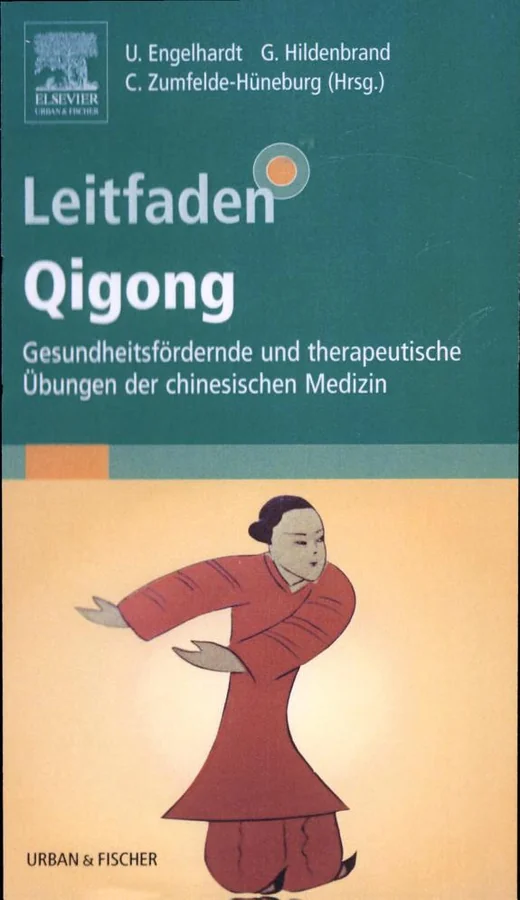
Leitfaden Qigong
 80
80

Leitfaden Qigong
Engelhardt's "Leitfaden Qigong" offers a grounded introduction to a practice often shrouded in mystique. The work commendably demystifies the core principles of "Qi" cultivation, presenting it not as mere physical exercise but as a profound engagement with vital energy. The historical tracing back to pre-Common Era China is particularly effective in establishing the practice's deep lineage. A minor limitation, however, is the text's initial density, which might require persistent readers to fully absorb the foundational concepts. The explanation of the three treasures (Jing, Qi, Shen) provides a clear framework for understanding the multi-layered aims of Qigong practice. It’s a solid primer for the serious inquirer.
📝 Description
80
Ute Engelhardt's Leitfaden Qigong appeared in 2004, detailing the cultivation of vital life force.
Leitfaden Qigong, by Ute Engelhardt, addresses the Chinese practice of cultivating and directing 'Qi,' or vital life force. This practice has roots predating the Common Era, forming an ancient system for health and longevity. Within Traditional Chinese Medicine, Qigong is the active, self-directed element for maintaining well-being and aiding recovery. The book is intended for those who seek more than just physical exercise, appealing to martial artists, meditators, students of TCM, and anyone interested in ancient Chinese health philosophies. It covers the concept of Qi as the animating force and how practitioners learn to guide it through posture, movement, and breath. The aim is to harmonize Qi flow, remove blockages, and improve vitality, which can affect both physical health and spiritual growth.
Qigong's origins are deeply intertwined with Chinese philosophical traditions like Taoism and Buddhism, which often used movement and breath for spiritual and physical aims. While the term 'Qigong' is more recent, emerging in the mid-20th century, the practices themselves are ancient. Engelhardt's work places Qigong within this lineage, showing how it functions as a method for harmonizing internal energies, a concept central to many esoteric paths focused on mind-body unity and the manipulation of subtle forces.
💡 Why Read This Book?
• Gain a foundational understanding of "Qi" (life force) as described in ancient Chinese traditions, moving beyond simple physical exercise to grasp its energetic and vitalistic dimensions, as detailed in the historical context. • Learn the practical application of Qigong as an active method for self-healing and health preservation, directly referencing its role within Traditional Chinese Medicine as presented in the introductory sections. • Explore the integration of breath, movement, and intention as tools for cultivating vitality, understanding how these elements work synergistically according to the principles outlined in the key concepts of the practice.
⭐ Reader Reviews
Honest opinions from readers who have explored this book.
❓ Frequently Asked Questions
What does the term 'Qigong' literally translate to?
The term "Qigong" is composed of two Chinese characters: "Qi," meaning vital life force or energy, and "Gong," signifying work, cultivation, or achievement. Thus, Qigong translates to "energy work" or "cultivation of life force."
When did Qigong practices originate in China?
The tradition of Qigong exercises can be traced back to ancient China, with evidence suggesting its origins predate the Common Era, making it a practice with millennia of history.
What is the relationship between Qigong and Traditional Chinese Medicine (TCM)?
Within TCM, Qigong is considered the active component, representing the practitioner's personal effort and practice aimed at maintaining health and facilitating healing. It is a method of self-cultivation for well-being.
What are the fundamental components of Qigong practice?
Qigong typically involves a combination of specific postures or movements, controlled breathing techniques, and focused mental intention to cultivate and direct the body's vital energy, or "Qi."
Is Qigong primarily a spiritual or a physical practice?
Qigong integrates both physical and spiritual dimensions. While it involves physical movements and breathwork for health, it also emphasizes mental focus and intention, often leading to spiritual development and self-awareness.
Who is Ute Engelhardt and what is her contribution to Qigong literature?
Ute Engelhardt is the author of "Leitfaden Qigong," first published in 2007. Her work provides a structured guide to the principles and practices of Qigong, making this ancient Chinese discipline accessible to a wider audience.
🔮 Key Themes & Symbolism
The Nature of Qi
The book elaborates on Qi, the fundamental life force in Chinese philosophy, defining it not merely as breath but as an encompassing energetic principle that animates all existence. It explores how Qi flows through meridians and influences health, vitality, and spiritual awareness. Understanding Qi is presented as the a core part of Qigong practice, enabling practitioners to consciously work with this subtle energy for personal betterment.
Qigong as Self-Cultivation
Engelhardt emphasizes Qigong as an active, self-directed path toward health and longevity, integral to Traditional Chinese Medicine. It is presented as a system of personal effort and practice, distinct from passive treatments. The focus is on empowering individuals to take charge of their well-being through consistent training, integrating mind, body, and spirit for holistic development.
Ancient Roots and Modern Application
The text traces the lineage of Qigong practices back to ancient China, highlighting their deep historical and philosophical roots. It bridges the gap between these age-old traditions and contemporary needs, showing how these practices remain relevant for modern individuals seeking balance, stress reduction, and enhanced physical and mental vitality in a fast-paced world.
Integration of Mind-Body-Spirit
A core theme is the holistic approach of Qigong, which harmonizes mental focus, physical movement, and breath control. This integration is key to cultivating and balancing Qi. The practice aims to achieve a state of unity where the practitioner's inner world and outer expression are aligned, leading to greater self-awareness and overall well-being.
💬 Memorable Quotes
Direct passages from the work, attributed to the author.
“Qi is the vital life force.”
— This concise statement captures the essence of the central concept in Qigong. It defines Qi not just as air or breath, but as the fundamental energy that animates all living beings and the universe itself.
“Qigong is the active part of Traditional Chinese Medicine.”
— This highlights Qigong's role as a proactive system within the broader framework of Chinese healing. It emphasizes personal practice and self-effort as crucial elements for health maintenance and recovery.
“The practice can be traced back before our era.”
— This points to the ancient origins of Qigong, underscoring its long history and deep cultural roots. It positions Qigong as a time-tested discipline, not a modern invention.
“It involves diverse exercise methods.”
— This acknowledges the wide range of techniques and styles within Qigong, suggesting that it is not a monolithic practice but a broad category of exercises designed to work with life force.
“The goal is to work with the life force.”
— This directly addresses the purpose of Qigong practice. It's about consciously engaging with and cultivating one's internal energy for specific outcomes related to health and vitality.
🌙 Esoteric Significance
Tradition
While not explicitly aligned with a single Western esoteric lineage like Hermeticism or Kabbalah, "Leitfaden Qigong" engages with principles resonant with many esoteric traditions: the concept of a vital life force (akin to Prana or Od), the mind-body connection, and practices aimed at spiritual and physical purification. It fits within the broader umbrella of vitalistic philosophies and internal alchemy, emphasizing the transformation of energy within the practitioner.
Symbolism
The primary symbolic concept is "Qi" itself, representing the animating breath of the cosmos. Other implicit symbols include the body as a microcosm reflecting the macrocosm, and the directed flow of energy through energetic pathways (meridians), analogous to subtle currents. The harmony sought in Qigong practice symbolizes the Taoist ideal of balance and alignment with natural principles.
Modern Relevance
Contemporary thinkers and practitioners in fields such as mindfulness, somatic psychology, and integrated health continue to draw upon Qigong principles. Schools focusing on mind-body disciplines, including certain yoga lineages and therapeutic movement practices, often incorporate Qigong's emphasis on breath, intention, and energy cultivation, adapting them for modern wellness and stress-reduction contexts.
👥 Who Should Read This Book
• Individuals curious about the foundational principles of Traditional Chinese Medicine, seeking to understand the energetic basis of health and healing beyond Western biomedical models. • Practitioners of meditation or martial arts looking to deepen their practice by incorporating specific energy cultivation techniques and breathwork as detailed in the book. • Students of comparative philosophy and ancient healing systems interested in exploring the historical and cultural context of mind-body practices originating in China.
📜 Historical Context
Published in 2007, Ute Engelhardt's "Leitfaden Qigong" entered a landscape where Qigong was increasingly recognized in the West, often presented through simplified forms or martial arts contexts. Its emergence occurred during a period of growing interest in complementary and alternative medicine, particularly within Europe and North America. The work draws from a tradition that developed alongside Taoism and Buddhism, systems that have profoundly shaped Chinese culture for millennia. While the term "Qigong" gained traction in the mid-20th century, consolidating various existing practices, Engelhardt's book situates these methods within their ancient historical and philosophical milieu. This period also saw ongoing academic engagement with Traditional Chinese Medicine, with scholars like Ted J. Kaptchuk publishing influential works that explored its principles for Western audiences. Engelhardt's guide provides a structured entry point into a practice with roots stretching back thousands of years, offering a counterpoint to more superficial interpretations.
📔 Journal Prompts
The concept of Qi as a vital life force.
The active role of personal effort in Qigong practice.
Tracing the historical lineage of Qigong exercises.
The integration of posture, breath, and intention.
The definition of Qigong as 'energy work'.
🗂️ Glossary
Qi
The fundamental vital life force or energy that animates all living beings and the universe, central to Qigong and Traditional Chinese Medicine.
Gong
Meaning work, cultivation, or achievement. When combined with Qi, it refers to the practice and skill developed through consistent effort in working with life force energy.
Leitfaden
German for 'guide' or 'manual.' In this context, it signifies a practical instructional text designed to lead the reader through the principles and practices of Qigong.
Traditional Chinese Medicine (TCM)
A comprehensive system of medical theory and practice developed in China over thousands of years, encompassing acupuncture, herbal medicine, and Qigong, focused on maintaining balance and harmony in the body.
Life Force
A general term referring to the energy or vital principle that animates living organisms. In the context of Qigong, it is specifically understood as Qi.
Self-Cultivation
The process of developing one's mind, character, or capabilities through self-discipline and effort, often with the aim of achieving spiritual or personal growth.
Meridians
In TCM and Qigong, these are believed to be pathways through which Qi flows throughout the body. Blockages or imbalances in meridians are associated with illness.
This book appears in 1 collection
🔮 Readers Also Liked
Browse all →







From the “Qi Gong” Collection
View all →


More Free Occult Philosophy Books
View all →