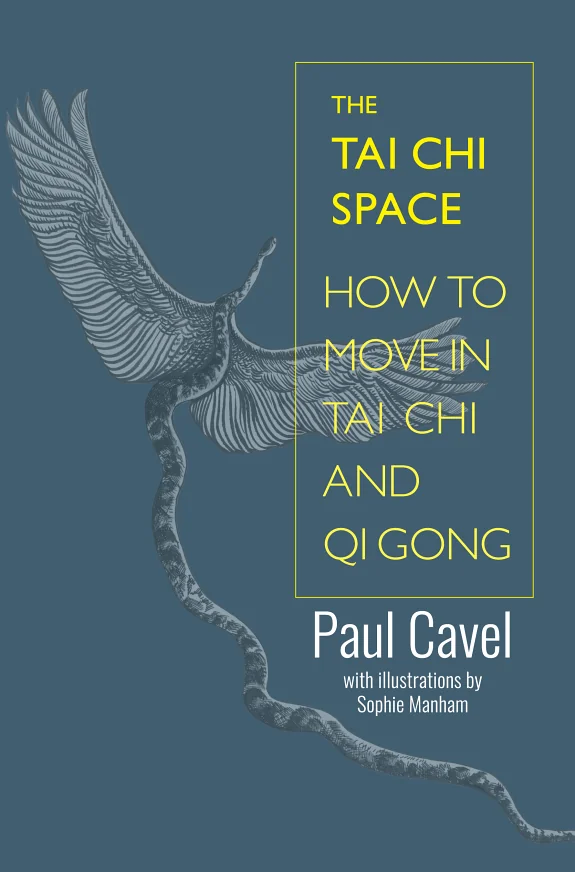
The Tai Chi Space
 78
78

The Tai Chi Space
Paul Cavel's "The Tai Chi Space" offers a refreshingly analytical approach to the often-opaque principles of Tai Chi. He moves beyond the purely physical, drawing clear lines between the practice and its energetic, almost alchemical, implications. The section "Become a Sandbag" is particularly effective, demystifying the concept of root and yielding through concrete, albeit abstract, imagery that prompts immediate internal recalibration. However, the book's strength in conceptualization sometimes leads to a density that might challenge readers less familiar with esoteric terminology. While Cavel provides a robust framework, the practical application of these advanced principles requires significant prior somatic experience. The work serves as an excellent intellectual companion for dedicated practitioners, clarifying the deeper currents beneath the surface of the form.
📝 Description
78
Paul Cavel's 2017 book, The Tai Chi Space, interprets Tai Chi through esoteric philosophy.
Paul Cavel's The Tai Chi Space, published in 2017, examines Tai Chi not just as a physical discipline but through the lens of esoteric philosophy. Cavel focuses on the energetic and conceptual foundations of the practice, translating complex ideas into understandable principles. The book draws connections between internal martial arts and broader metaphysical concepts, aiming to illuminate the 'why' and 'how' behind Tai Chi's effectiveness. It is written for practitioners who have moved beyond basic forms and seek a deeper understanding of the energetic dynamics and philosophical implications.
This work offers a structured approach to understanding internal states and energetic awareness through Tai Chi. Cavel unpacks specific principles such as 'Energy Moves Fluids, Fluids Nourish the Body,' 'Balance the Sphere,' and 'Become a Sandbag.' These are presented as practical guides for developing internal power and achieving a particular energetic state. The central idea of 'Moving into Stillness' is highlighted, illustrating the paradox of active movement containing a quiet core, which is characteristic of advanced meditative and martial practices.
While Tai Chi has ancient roots in Chinese martial and health traditions, Cavel's 2017 book situates these principles within a contemporary esoteric discourse. The book echoes earlier Western esoteric traditions that often sought metaphysical interpretations of Eastern practices. It aligns with a current interest in embodied practices and their energetic dimensions, serving as a link between traditional martial arts and modern spiritual inquiry. The work engages with concepts that bridge physical discipline and inner development.
💡 Why Read This Book?
• Gain a deeper understanding of energetic principles like 'Energy Moves Fluids, Fluids Nourish the Body' to refine your internal cultivation beyond physical form. • Learn the concept of 'Become a Sandbag' to develop structural integrity and effortless yielding, crucial for advanced practice. • Explore the paradox of 'Moving into Stillness' to integrate dynamic action with profound inner quietude, a hallmark of developed Tai Chi.
⭐ Reader Reviews
Honest opinions from readers who have explored this book.
❓ Frequently Asked Questions
What is the primary focus of "The Tai Chi Space" by Paul Cavel?
The book focuses on the energetic and conceptual principles of Tai Chi, presenting them as esoteric guidelines for cultivating internal power and awareness, rather than just physical technique.
When was "The Tai Chi Space" first published?
Paul Cavel's "The Tai Chi Space" was first published on October 4, 2017.
Is this book suitable for absolute beginners in Tai Chi?
No, it is best suited for practitioners with some foundational Tai Chi knowledge who wish to explore the deeper energetic and philosophical aspects of the practice.
What does the principle 'Balance the Sphere' refer to in the book?
This principle likely refers to maintaining an integrated, centered, and expansive energetic state while engaging in movement, a core concept in cultivating internal martial arts.
Does the book provide step-by-step instructions for Tai Chi forms?
The book emphasizes principles and concepts rather than detailed form instruction. It assumes some familiarity with Tai Chi movements.
What is the significance of 'Gather and Bank' in the context of Tai Chi?
This principle likely relates to the strategic accumulation and retention of internal energy (Qi) during movement, a concept vital for developing potency and resilience.
🔮 Key Themes & Symbolism
Energetic Fluidity
Cavel's work heavily emphasizes the dynamic interplay of energy and bodily fluids, a concept central to traditional Chinese medicine and internal martial arts. Principle 36, 'Energy Moves Fluids, Fluids Nourish the Body,' suggests that the cultivation of internal energy directly impacts physiological health and vitality. This perspective elevates Tai Chi beyond mere exercise, positioning it as a method for direct energetic nourishment and systemic balance, aligning with esoteric views on the body as a microcosm of universal energetic flows.
The Paradox of Stillness
A recurring theme is the integration of profound stillness within dynamic movement, captured in Principle 40, 'Moving into Stillness.' This concept is fundamental to advanced esoteric practices across various traditions, highlighting the potential for the mind and body to achieve a state of alert presence while engaged in activity. Cavel explores how the outward flow of Tai Chi forms can simultaneously cultivate an unshakeable internal quietude, a state essential for clarity, power, and deep energetic connection.
Structural Integrity and Yielding
Principles such as 'Become a Sandbag' (Principle 38) and 'Ride the Wave' (Principle 39) address the sophisticated balance between structural stability and responsive yielding. This is not about rigidity but about maintaining an integrated energetic framework that can absorb, redirect, and utilize external forces. The 'Sandbag' metaphor suggests a grounded, unshakeable core, while 'Riding the Wave' implies an adaptive, fluid responsiveness, crucial for both martial application and energetic resilience.
Holistic Energetic Cultivation
The overarching theme is the cultivation of the self through a holistic approach that integrates mind, body, and energy. By presenting Tai Chi principles as esoteric guides, Cavel invites practitioners to view their practice as a path toward self-mastery and expanded awareness. The linking of postures into 'Fluid Forms' (Principle 42) underscores the interconnectedness of all aspects of the practice, promoting a unified energetic field rather than isolated techniques.
💬 Memorable Quotes
Direct passages from the work, attributed to the author.
“Energy Moves Fluids, Fluids Nourish the Body”
— This principle highlights the psychosomatic connection central to many esoteric practices. It suggests that focused intention and cultivated internal energy directly influence physiological processes, promoting health and vitality through energetic coherence.
“Become a Sandbag”
— This striking metaphor points towards developing a deeply rooted, yet yielding, structural integrity. It implies an ability to absorb force without being destabilized, maintaining an unshakeable center amidst external pressures.
“Moving into Stillness”
— This core paradox suggests that true dynamic action arises from, and contains, a profound inner quietude. It is the goal of many meditative and martial arts to achieve this state of alert presence within continuous motion.
“Postures Link into Fluid Forms”
— This emphasizes the interconnectedness of individual movements within the larger practice. It suggests that the true essence of Tai Chi lies not in isolated postures but in their seamless transition and unified energetic flow.
“Balance the Sphere”
— This concept likely refers to the cultivation of a unified, centered, and expansive energetic field. It implies maintaining equilibrium and wholeness in all dimensions of being while engaging with the external world.
🌙 Esoteric Significance
Tradition
The work draws implicitly from a lineage of esoteric thought that seeks universal principles underlying diverse practices. While rooted in the specific context of Tai Chi, its exploration of energy ('Qi'), internal states, and the body as a vessel for subtle forces aligns with Hermetic and Taoist philosophies. Cavel's approach positions Tai Chi not merely as a martial art or health exercise but as a path for cultivating internal alchemy and energetic transformation, echoing Gnostic and Neoplatonic ideas about the soul's journey toward integration.
Symbolism
The concept of the 'Sphere' ('Balance the Sphere') is a potent symbol representing wholeness, integration, and the cosmos. In many esoteric traditions, the sphere signifies perfection and unity. The dynamic yet centered movement inherent in Tai Chi, as described by Cavel, embodies the microcosm reflecting the macrocosm—a balanced, energetic universe contained within the practitioner. The idea of 'Fluid Forms' symbolizes the ceaseless, interconnected flow of existence, where boundaries are permeable and transformation is constant.
Modern Relevance
Contemporary practitioners of embodied spiritual disciplines, somatic therapists, and internal martial artists increasingly seek to understand the energetic and psychological dimensions of their work. Cavel's book speaks to this growing interest, offering a framework for those who perceive practices like Tai Chi as vehicles for profound inner development. Thinkers and practitioners exploring concepts of energy medicine, consciousness studies, and the integration of mind-body practices find resonance in his methodical breakdown of principles that foster self-awareness and energetic coherence.
👥 Who Should Read This Book
• Dedicated Tai Chi practitioners seeking to deepen their understanding beyond physical form and explore the energetic and philosophical underpinnings of their art. • Students of esoteric philosophy interested in how ancient movement practices can serve as vehicles for internal alchemy and energetic cultivation. • Individuals exploring mind-body integration and somatic awareness who are looking for structured principles to enhance their practice and perception of internal states.
📜 Historical Context
Paul Cavel's "The Tai Chi Space," published in 2017, enters a contemporary landscape where Eastern martial arts are often viewed through lenses ranging from fitness to mysticism. While Tai Chi's lineage is deeply rooted in Chinese martial traditions dating back centuries, Cavel’s approach frames its principles within a modern esoteric discourse. This aligns with a historical trend, particularly prominent in the late 19th and early 20th centuries, where Western esotericists like Helena Blavatsky and later figures in the Theosophical and Hermetic movements sought to interpret and integrate Eastern philosophies and practices. Cavel’s work can be seen as a continuation of this cross-cultural engagement, offering a structured metaphysical interpretation of Tai Chi concepts. Unlike purely academic studies or popular fitness guides, his work engages with contemporaries like Thomas Hanna or practitioners exploring somatic psychology, suggesting a broader interest in embodied self-awareness, though Cavel’s focus remains distinctly esoteric.
📔 Journal Prompts
Reflect on the principle of 'Become a Sandbag' and its implications for structural integrity.
Explore the concept of 'Moving into Stillness' within your own practice or daily life.
Consider how 'Energy Moves Fluids, Fluids Nourish the Body' might apply to your current well-being.
Analyze the transition between 'Postures Link into Fluid Forms' in your movements.
How does 'Balance the Sphere' manifest in your energetic state during activity?
🗂️ Glossary
Qi (Chi)
The fundamental concept of vital life force or energy in traditional Chinese culture, central to practices like Tai Chi, acupuncture, and Qigong. It is believed to flow through pathways in the body, influencing health and vitality.
Fluid Forms
Refers to the seamless, interconnected transitions between individual postures in Tai Chi. It emphasizes the continuous, flowing nature of movement, where each pose emerges organically from the last and leads into the next.
The Sphere
A conceptual model representing wholeness, integration, and balanced energetic presence. Maintaining 'the sphere' in Tai Chi involves cultivating a centered, expansive, and unified sense of self.
Sandbag
A metaphor for developing deep root, structural integrity, and the ability to yield without losing one's center. It implies a grounded stability that can absorb and redirect force.
Nourish the Body
In the context of 'Energy Moves Fluids, Fluids Nourish the Body,' this refers to the physiological benefits derived from the cultivation and circulation of internal energy (Qi), promoting health and systemic balance.
Ride the Wave
This principle suggests adapting to external forces with fluidity and responsiveness, much like a surfer on a wave. It emphasizes skillful yielding and redirection rather than direct confrontation.
Gather and Bank
Likely refers to the process of accumulating internal energy (Qi) and storing or consolidating it within the energetic system, a key aspect of developing internal power and resilience.
🔮 Readers Also Liked
Browse all →









From the “Qi Gong” Collection
View all →



More Free Occult Philosophy Books
View all →