80
80

Heaven and Hell



Sophia Crane (Associate Editor) — Sophia Crane — Emanuel Swedenborg's 'Heaven and Hell' remains a monumental pillar of Western esoteric thought. This meticulously detailed account, born from direct spiritual perception, offers an unparalleled cartography of the afterlife. Swedenborg's genius lies in his ability to translate ethereal experiences into comprehensible, earthly terms, revealing the profound ethical and psychological underpinnings of celestial and infernal states. His work transcends simple religious dogma, presenting a comprehensive spiritual philosophy that resonates deeply with mystics, theologians, and philosophical explorers alike. For those seeking a deeper understanding of consciousness, divine order, and the eternal consequences of our choices, this book is an indispensable, illuminating guide.
📝 Description
Embark on an unparalleled journey into the profound mysteries of the afterlife with Emanuel Swedenborg's seminal work, 'Heaven and Hell.' First unveiled in 1758, this foundational text is not mere theological discourse but a vivid, firsthand exploration of realms unseen, gleaned from Swedenborg's extraordinary spiritual clairvoyance. Delve into the intricate celestial architecture of Heaven, a tapestry woven with love, divine order, and eternal joy, inhabited by souls who have achieved spiritual harmony. Contrast this with the stark, yet instructive, realities of Hell, understood not as eternal damnation but as states of being born from disordered affections and self-will. Swedenborg meticulously details the transitional World of Spirits, where souls prepare for their eternal destinations. This book is a beacon for seekers of hidden wisdom, offering a unique, experiential cosmology that bridges the material and the spiritual, revealing the profound interconnectedness of our earthly lives with our eternal destiny. Uncover the symbolic language of the spiritual world and gain profound insights into the nature of the soul, divine providence, and the true meaning of human existence.
✍️ Author
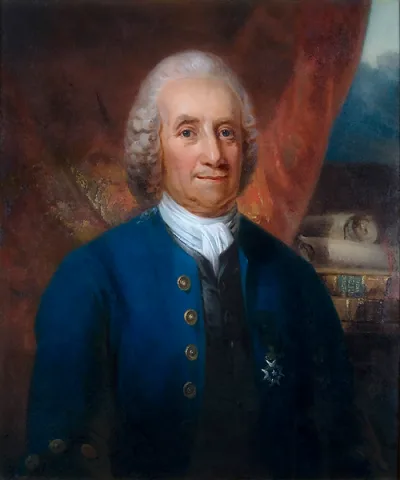
Emanuel Swedenborg
Emanuel Swedenborg (; Swedish: [ɛˈmɑ̂ːnʉɛl ˈsvêːdɛnˌbɔrj] ; born Emanuel Swedberg; 29 January 1688 – 29 March 1772) was a Swedish polymath; a scientist, engineer, astronomer, anatomist, Christian theologian, philosopher, and mystic. He became best known for…
💡 Why Read This Book?
This timeless classic offers a unique, direct-as-possible glimpse into the structure and inhabitants of the afterlife, based on claimed spiritual perception. It provides profound insights into the nature of the soul, divine justice, and the consequences of our earthly choices. Ideal for spiritual seekers, comparative religion scholars, and those interested in mystical experiences and consciousness studies.
⭐ Reader Reviews
Honest opinions from readers who have explored this book.
❓ Frequently Asked Questions
What is the primary source of Swedenborg's insights in 'Heaven and Hell'?
Swedenborg claimed his detailed descriptions were derived from direct, conscious spiritual experiences and observations of the afterlife, a state he maintained he could access while still alive.
Is 'Heaven and Hell' a literal depiction of the afterlife?
While presented as factual accounts from his spiritual journeys, Swedenborg's descriptions are deeply symbolic, illustrating spiritual truths through tangible imagery and experiences.
Does Swedenborg's depiction of Hell imply eternal damnation?
No, Swedenborg presents Hell not as a place of eternal punishment, but as a state of being characterized by disordered affections and self-imposed suffering, from which souls can potentially be led away.
Who is the intended audience for 'Heaven and Hell'?
The book is intended for anyone seeking a deeper understanding of the spiritual world, the nature of the soul, and the consequences of human actions, transcending specific religious doctrines.
What makes 'Heaven and Hell' an esoteric text?
Its esoteric nature lies in its revelation of hidden spiritual laws and correspondences, and its presentation of the afterlife as a realm governed by internal states rather than external judgment.
🔮 Key Themes & Symbolism
The Architecture of the Soul's Journey
Swedenborg meticulously constructs a detailed cosmology of the spiritual realms, presenting Heaven as a divinely ordered society of love and mutual association, and Hell as a reflection of self-absorbed desires. This thematic exploration goes beyond simple duality, revealing the intricate spiritual mechanics that govern existence and the profound interconnectedness of all things. His descriptions are not static but dynamic, illustrating the continuous flow of divine energy and the active role each soul plays in its eternal state. The book offers a profound understanding of the soul's eternal progression and the spiritual principles that sustain the universe.
Divine Providence and Human Free Will
A central tenet explored in 'Heaven and Hell' is the concept of Divine Providence, the idea that God actively guides all events for the ultimate good of humanity. Swedenborg posits that while God's plan is perfect, human free will is paramount. He elucidates how our choices, driven by our affections and intentions, shape our spiritual trajectory and determine our eternal state. This interplay between divine guidance and individual agency is crucial, offering a nuanced perspective on responsibility and the soul's capacity for growth or perpetual confinement within self-created spiritual prisons. The text emphasizes that true freedom lies in aligning one's will with the divine.
The Language of Correspondences
Swedenborg's unique contribution to esoteric thought is his doctrine of correspondences, the principle that all things in the natural world have a spiritual counterpart or meaning. In 'Heaven and Hell,' he applies this doctrine to illuminate the symbolic language of the spiritual realms. Angels are not merely beings but embody specific spiritual qualities, and earthly phenomena are seen as outward expressions of inner spiritual realities. This theme invites readers to perceive the world with a new set of eyes, recognizing the hidden spiritual significance in everyday life and understanding how the seemingly mundane can serve as a gateway to profound spiritual truths and divine wisdom.
💬 Memorable Quotes
“There is a correspondence between the visible and the invisible.”
— This quote encapsulates Swedenborg's core doctrine of correspondences, suggesting that the physical world is a symbolic reflection of deeper spiritual realities.
“The Lord is in the details of His works.”
— This highlights Swedenborg's belief in the meticulous care and divine intention present in every aspect of creation and spiritual governance.
“Man is an organ of the divine life.”
— This profound statement emphasizes the interconnectedness of humanity with the divine, portraying individuals as channels for God's life and love.
“Love is the very life of man.”
— Swedenborg posits that love, particularly divine love, is the fundamental essence of existence and the driving force behind all spiritual activity and well-being.
“There are three heavens, and they are all distinct from each other.”
— This points to the hierarchical structure and diverse nature of the celestial realms, indicating that spiritual states are not monolithic but possess distinct levels of purity and understanding.
🌙 Esoteric Significance
Tradition
Swedenborg's work is foundational to Swedenborgianism, a distinct Christian mystical tradition. It also profoundly influenced later esoteric movements like Spiritualism, Theosophy, and New Age thought. His detailed cosmology and emphasis on spiritual perception offered a comprehensive framework for understanding the unseen realms, bridging the gap between organized religion and more direct, experiential forms of spirituality. His doctrine of correspondences remains a key tool for esoteric interpretation.
Symbolism
The book is rich with symbolism, where natural phenomena and human actions are presented as outward manifestations of inner spiritual states. Heavenly societies are described through architectural and social metaphors, representing the harmony and order of divine love. Conversely, infernal states are depicted through imagery of darkness, cold, and confinement, symbolizing the self-imposed limitations of disordered affections. Swedenborg's symbolism provides a profound lens through which to understand the spiritual laws governing existence and the inner workings of the human psyche.
Modern Relevance
In an age increasingly grappling with questions of consciousness, the nature of reality, and the meaning of life, Swedenborg's 'Heaven and Hell' offers enduring relevance. Its exploration of spiritual causality, the impact of intentions, and the inherent interconnectedness of all beings provides a timeless framework for personal growth and spiritual understanding. The book's emphasis on internal states as the determinant of our experience resonates with contemporary psychological and philosophical inquiries, offering a unique spiritual perspective on well-being and the afterlife.
👥 Who Should Read This Book
This profound text is essential for spiritual seekers yearning for a deeper understanding of the afterlife and the soul's eternal journey. Scholars of comparative religion and philosophy will find its systematic theology and unique cosmology invaluable. Practitioners of meditation and contemplative arts may discover profound insights into consciousness and spiritual development. Even those new to esoteric literature will find Swedenborg's clear, experiential prose accessible, offering a compelling introduction to the hidden dimensions of existence and divine order.
📜 Historical Context
Published in 1758 during the Age of Enlightenment, Emanuel Swedenborg's 'Heaven and Hell' emerged at a time of burgeoning scientific inquiry and intellectual revolution. While the era prized reason and empirical evidence, Swedenborg offered a radical counterpoint, grounding his profound metaphysical claims in direct spiritual experience. His work challenged prevailing religious orthodoxies, presenting a detailed, systematic, and deeply personal vision of the afterlife that was both revolutionary and controversial. The book resonated with a growing interest in mysticism and the occult, finding an audience among those seeking spiritual truths beyond the confines of institutionalized religion. Its detailed descriptions and symbolic interpretations contributed significantly to the development of Western esoteric traditions and continue to inspire contemplation on the nature of consciousness and the human soul.
📔 Journal Prompts
Reflect on a recent experience. How might it be interpreted through the lens of 'correspondences' between the natural and spiritual worlds?
Consider your deepest desires. How do they align with or diverge from the principles of love and divine order described in Heaven?
Imagine your own 'World of Spirits.' What spiritual lessons or realizations are you currently undergoing?
Swedenborg emphasizes that Hell is a state of being rather than a place. What internal states do you experience that feel 'hellish,' and what might lead you toward a more celestial state?
How does the concept of 'divine providence' influence your understanding of challenges and blessings in your life?
🗂️ Glossary
Correspondences
The doctrine that all things in the natural world have a spiritual counterpart or meaning, serving as a symbolic representation of divine truths and spiritual realities.
Spiritual World
The realm of existence that Swedenborg claims to have visited, encompassing Heaven, Hell, and the intermediate World of Spirits, accessible to consciousness after physical death.
Divine Providence
The belief that God actively guides and governs all events for the ultimate good of humanity, ensuring that everything works towards spiritual growth and salvation.
Affection
In Swedenborg's theology, affections are the fundamental desires and loves that drive human behavior and determine one's spiritual state and eternal destiny.
World of Spirits
An intermediate realm where souls undergo a period of judgment and preparation before entering either Heaven or Hell, based on their earthly life and affections.