Astral City
 83
83

Astral City



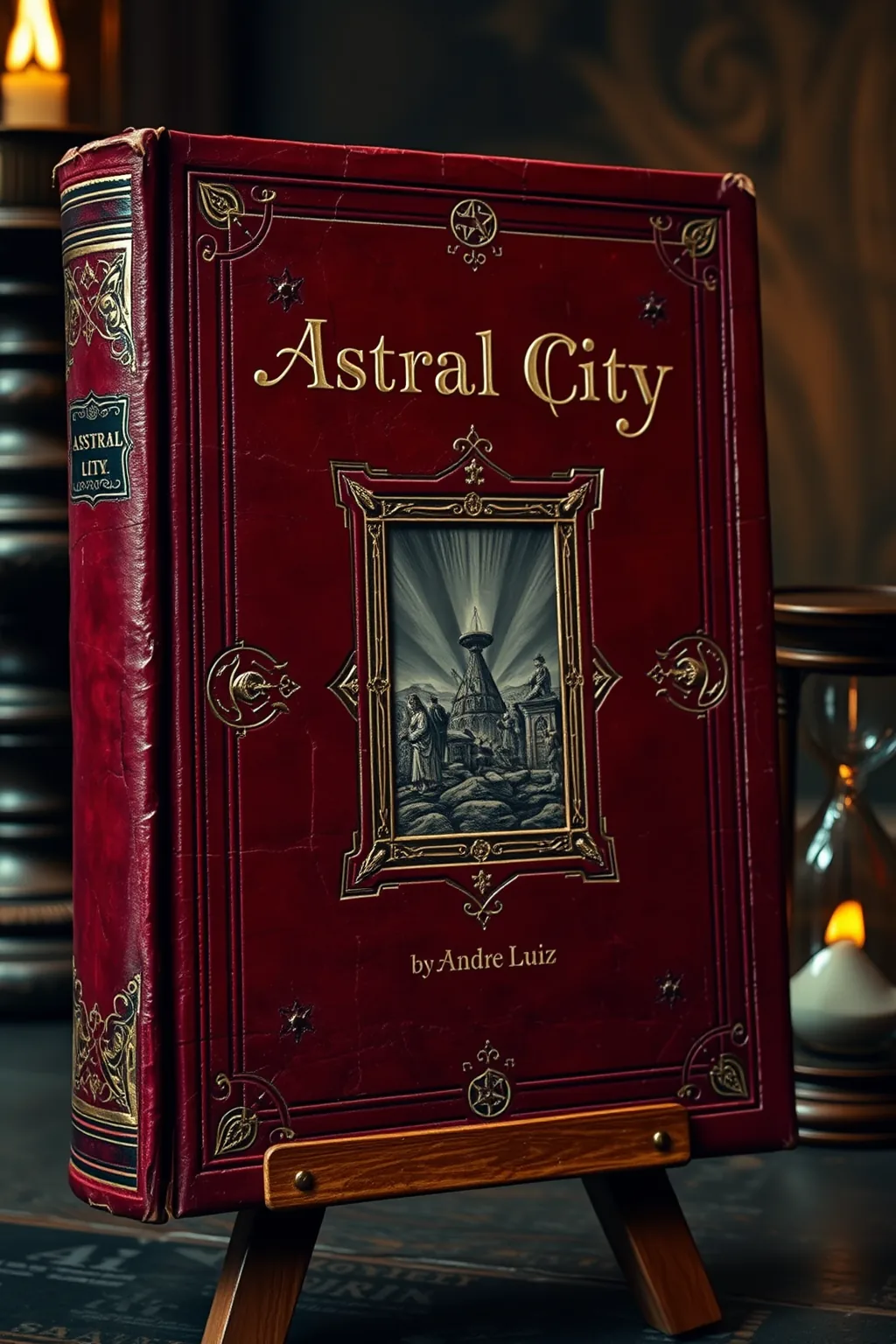
From the esteemed Esoteric Library, Evander Ashcroft, Editor of Alchemy & Hermeticism, presents 'Astral City' as a cornerstone of modern Spiritualist literature. André Luiz’s meticulously detailed account, facilitated by Chico Xavier’s remarkable mediumship, transcends conventional afterlife narratives. It offers a profound exploration of spiritual mechanics, the law of cause and effect, and the structured evolution of souls within a celestial framework. The work’s strength lies in its logical exposition of spiritual governance and the practical application of moral principles in the post-mortem existence. This is essential reading for spiritual scholars, those grappling with existential questions, and practitioners seeking to comprehend the energetic and ethical underpinnings of the spiritual realms.
📝 Description
83
André Luiz channeled through Chico Xavier details the spiritual planes in 'Astral City'.
Published in 1944, 'Astral City' recounts André Luiz's experiences after his death. He awakens in the 'umbral,' a difficult spiritual plane, and begins to learn about the organization and purpose of the afterlife. The book describes a structured spiritual city where souls work and learn to progress. Luiz's narrative moves beyond simple ideas of heaven or hell, showing a complex system of spiritual consequence and development. Readers encounter the daily lives of spirits, their struggles, and their efforts to ascend to higher planes. This work aims to explain the mechanics of spiritual evolution and the interconnectedness of life after physical death.
This book belongs to the Spiritist tradition, a philosophical and scientific movement founded by Allan Kardec. Spiritism, as presented here, posits a continuous cycle of reincarnation and spiritual evolution. It offers a structured view of the afterlife, contrasting with more traditional religious doctrines. The concept of the 'umbral' and the hierarchy of spiritual planes are key tenets within this framework, suggesting that the afterlife is not a static reward or punishment but a dynamic environment for soul growth. The work emphasizes moral responsibility and the impact of earthly actions on one's spiritual state.
✍️ Author
Andre Luiz
André — sometimes transliterated as Andre — is the French and Portuguese form corresponding to the English name Andrew and is now also used in the English-speaking world. It is used in France, Quebec, Canada and other French-speaking countries, as well as i…
💡 Why Read This Book?
Uncover the hidden architecture of the spiritual realms and gain profound insight into the continuity of consciousness. 'Astral City' offers a unique, detailed perspective on life after death, challenging traditional doctrines and revealing the intricate workings of spiritual law. Ideal for seekers of truth, students of comparative religion, and anyone yearning for a more comprehensive understanding of existence beyond the physical.
⭐ Reader Reviews
Honest opinions from readers who have explored this book.
❓ Frequently Asked Questions
What is the 'umbral' in Astral City?
The 'umbral' is depicted as a transitional spiritual region where souls who have unresolved earthly issues or negative karma experience the consequences of their actions, serving as a crucial phase for learning and spiritual rehabilitation.
Who is André Luiz?
André Luiz is the spiritual entity whose experiences and observations form the basis of 'Astral City.' He was a prominent doctor in Rio de Janeiro during his earthly life, offering a unique perspective as an educated individual confronting the spiritual world.
Is this book a religious text?
While deeply spiritual and offering profound moral teachings, 'Astral City' is presented as a factual account of spiritual life rather than a dogma-bound religious scripture. It draws from and expands upon spiritualist principles.
What is the role of Chico Xavier?
Chico Xavier was the highly respected Brazilian medium through whom André Luiz psychographed the messages contained in 'Astral City' and numerous other works, acting as the bridge between the spiritual and physical planes.
How does Astral City differ from traditional afterlife beliefs?
Unlike binary Heaven/Hell concepts, 'Astral City' presents a graduated, organized spiritual society with distinct zones and levels of evolution, emphasizing personal responsibility and ongoing spiritual development rather than eternal judgment.
🔮 Key Themes & Symbolism
The Architecture of the Spirit World
This theme explores the meticulously crafted celestial metropolis described in 'Astral City,' showcasing a spiritual realm not as a nebulous void, but as a structured, organized society with cities, institutions, and laws. It explores the energetic architecture and the principles that govern its existence, offering a tangible vision of life beyond physical death and challenging preconceived notions of ethereal realms. The detailed descriptions invite contemplation on the order and purpose underlying the cosmos, suggesting a divine design in the very fabric of spiritual existence.
Spiritual Evolution and Reincarnation
Fundamentally, , 'Astral City' illuminates the continuous journey of the soul through multiple earthly lives and subsequent spiritual existences. It emphasizes that spiritual growth is not a singular event but an ongoing process of learning, purification, and service. The narrative illustrates how past actions ('karma') shape present circumstances and influence future trajectories, highlighting the interconnectedness of all lives and the inherent drive towards spiritual perfection. This theme offers solace and purpose, framing life and death as integral parts of a grander evolutionary cycle.
The Law of Cause and Effect (Karma)
The book profoundly explores the immutable law of cause and effect, often referred to as karma, as the fundamental principle governing spiritual justice and personal growth. André Luiz's own journey through the 'umbral' serves as a powerful evidence of how unfulfilled responsibilities and negative actions on Earth necessitate periods of learning and reparation in the spiritual planes. This theme stresses personal accountability, demonstrating that every thought, word, and deed carries energetic weight, influencing one's spiritual trajectory and ultimate destiny within the celestial hierarchies.
💬 Memorable Quotes
Direct passages from the work, attributed to the author.
“Work is the divine lever of progress.”
— This highlights the essential role of labor and contribution in spiritual advancement and the unfolding of one's potential.
“Charity is the supreme virtue.”
— This emphasizes the paramount importance of selfless love and compassion as the highest spiritual attainment and guiding principle.
“We are all students in the great school of the universe.”
— This universalizes the learning process, framing all beings as participants in an ongoing cosmic education, regardless of their current plane of existence.
“The future belongs to those who sow seeds of kindness today.”
— This poignant statement connects present actions to future outcomes, advocating for a proactive approach to creating a positive spiritual legacy through benevolent deeds.
💡 Key Ideas
Editorial paraphrase of the work's core concepts — not direct quotes.
Life is perpetual activity.
This quote underscores the dynamic and purposeful nature of existence, both physical and spiritual, suggesting that stagnation is antithetical to true life.
🌙 Esoteric Significance
Tradition
This work is a foundational text within the modern Spiritualist tradition, particularly the Kardecist branch originating in Brazil. It expands upon Allan Kardec's foundational principles by providing a vivid, detailed, and highly organized depiction of the spiritual planes, drawing parallels to Hermeticism's emphasis on universal laws and the structured nature of reality. It offers a practical, experiential approach to understanding spiritual mechanics and the soul's journey, moving beyond abstract philosophy to concrete (albeit spiritual) realms.
Symbolism
The 'Astral City' itself is a potent symbol of spiritual order, progress, and community. Its tiered structure represents the graduated nature of spiritual evolution, with different districts signifying varying levels of attainment and specific functions. The 'umbral' symbolizes the necessary process of confronting one's shadows and karmic debts. The tireless work of the spirits represents the Hermetic principle of 'As Above, So Below' applied to spiritual labor as the engine of growth and the manifestation of divine will.
Modern Relevance
In an age often characterized by existential anxiety and a disconnect from spiritual realities, 'Astral City' offers a compelling vision of hope, purpose, and continuity. Its detailed exploration of karma and spiritual responsibility appeals to contemporary discussions on consciousness, ethics, and personal growth. The book provides a framework for understanding life's challenges as opportunities for learning and evolution, offering solace and guidance to those seeking to read through the complexities of existence with a deeper spiritual awareness.
👥 Who Should Read This Book
This profound work is essential for seekers of spiritual truth and anyone questioning the nature of life and death. Scholars of comparative religion and esoteric traditions will find it an invaluable addition to their studies. Practicing spiritualists will recognize and be further illuminated by its detailed descriptions. Beginners beginning their spiritual journey will discover a comprehensive and encouraging guide to the unseen realms, offering a foundational understanding of spiritual laws and the soul's eternal progression.
📜 Historical Context
Published in 1944 amidst the global upheaval of World War II and a burgeoning interest in spiritualism and the occult, 'Astral City' emerged from Brazil, a nation deeply influenced by both Catholic traditions and vibrant African spiritual heritage. Chico Xavier, its channel, was an important figure in disseminating Spiritualist doctrine, which itself gained traction in the late 19th and early 20th centuries as a response to materialism and a desire for empirical evidence of life after death. The book's detailed, almost bureaucratic, depiction of the afterlife can be seen as a reflection of the era's fascination with organization and progress, offering a structured counterpoint to the chaos of the physical world. Its enduring popularity speaks to a universal human yearning for meaning and reassurance about what lies beyond the veil.
📔 Journal Prompts
Reflect on a time you experienced a significant consequence for your actions. How does this resonate with the concept of the 'umbral'?
Describe a 'spiritual city' or ideal community you envision. What principles would govern it?
Consider your current 'work' in life. How does it contribute to your spiritual growth and the progress of others?
What 'seeds of kindness' can you sow today to positively influence your future and the collective consciousness?
How can the concept of perpetual activity in 'Astral City' inspire you to engage more fully with your present life?
🗂️ Glossary
Umbral
A transitional spiritual region where souls confront the consequences of their earthly actions and engage in learning and rehabilitation before progressing to higher planes.
Spiritualism
A belief system and philosophical movement that posits the possibility of communication with the spirits of the deceased, and emphasizes the continuity of life and spiritual evolution.
Mediumship
The practice or ability of a person to act as a conduit or intermediary between the physical world and the spirit world, facilitating communication.
Karma
The principle of cause and effect, where actions in one life influence the circumstances and experiences of future lives, guiding spiritual evolution and learning.
Nosso Lar
The Portuguese title of 'Astral City,' translating to 'Our Home,' referring to the specific spiritual city where André Luiz awakens and begins his journey.
This book appears in 2 collections
🔮 Readers Also Liked
Browse all →






From the “Spiritualism” Collection
View all →




More Free Spiritualism & Afterlife Books
View all →