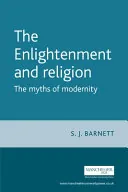
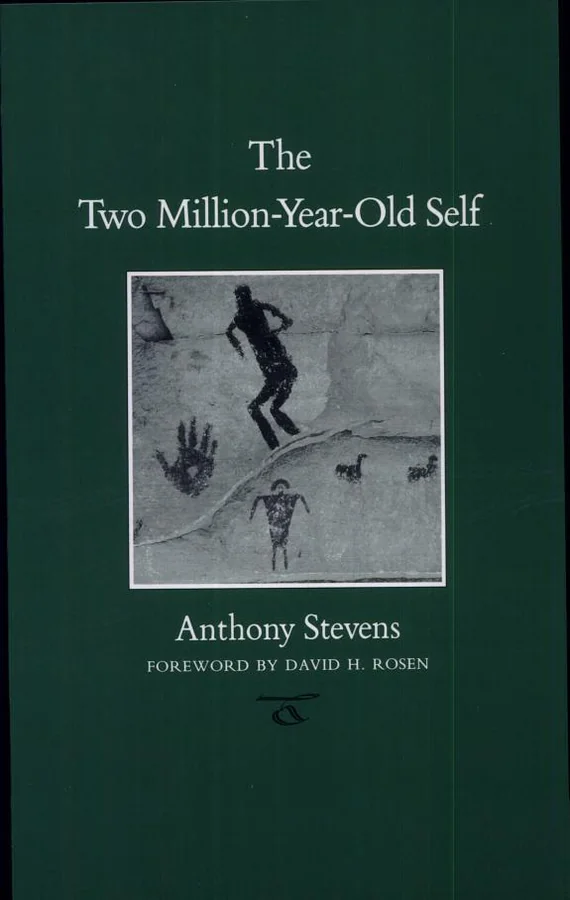
The Two Million-Year-Old Self
 73
73

The Two Million-Year-Old Self
Anthony Stevens’s 1993 exploration, 'The Two Million-Year-Old Self,' offers a compelling, albeit dense, perspective on consciousness as an evolutionary phenomenon. Stevens ambitiously links the deep past of biological evolution—from reptiles to primates—to the emergence of the human psyche and its archetypal structures. A notable strength lies in its detailed examination of how primal instincts and biological imperatives might inform the collective unconscious, a concept he grounds in evolutionary theory. However, the sheer scope can feel overwhelming, and at times, the arguments verge on speculative, particularly when drawing direct lines from ancient brain structures to specific psychological phenomena. A passage discussing the persistence of reptilian fear responses within modern anxieties, for instance, vividly illustrates his thesis but also highlights the interpretive leaps required. The work is a significant contribution to evolutionary psychology and Jungian thought, though it demands considerable reader engagement to fully unpack its intricate arguments.
📝 Description
73
Anthony Stevens's 1993 book, 'The Two Million-Year-Old Self,' argues nature became self-aware through human evolution.
Published in 1993, Anthony Stevens's 'The Two Million-Year-Old Self' examines the evolution of human consciousness, viewing it as nature's process of becoming aware of itself. Stevens applies Jungian psychology to trace this development from early biological roots, like reptilian and mammalian instincts, up through the collective unconscious. He suggests that our species' recent evolutionary history is still working out its ultimate purpose. The book aims at readers interested in the connections between evolutionary biology, psychology, and mythology. It seeks to illuminate the biological and psychological bases of human behavior, beliefs, and culture. Students of Jungian archetypes and the long-term development of the human psyche will find much to consider.
Stevens's work emerged during a renewed interest in Jungian and evolutionary psychology in the late 20th century. It engaged with contemporary theories on consciousness and its biological origins. By connecting archetypes and the collective unconscious to evolutionary biology, Stevens sought to ground Jungian concepts in scientific observation. This approach distinguished his work from purely philosophical or spiritual interpretations of the psyche, placing it within a specific intellectual lineage while also attempting a scientific basis.
This book stands within the tradition of analytical psychology, specifically drawing from Carl Jung's theories on archetypes and the collective unconscious. Stevens's contribution is to frame these concepts within an evolutionary biological context, positing that the human psyche itself is a product of millions of years of natural selection. He connects deep biological history to the inherited patterns of human thought and behavior, suggesting a continuity between our animal past and our current psychological state. The work engages with ideas of consciousness as an emergent property of complex biological systems, viewed through a lens informed by mythology and depth psychology.
💡 Why Read This Book?
• Gain an understanding of consciousness not as a static entity but as a product of millions of years of biological evolution, as detailed in Stevens's discussion of the 'reptilian brain' and primate ancestry. • Explore the Jungian concept of the 'collective unconscious' through an evolutionary biology framework, learning how ancient instincts might shape contemporary human behavior and myth. • Grasp the idea of nature achieving self-awareness through the development of the human psyche, a unique perspective offered by Stevens's synthesis of psychology and evolutionary theory.
⭐ Reader Reviews
Honest opinions from readers who have explored this book.
❓ Frequently Asked Questions
What is the core idea behind 'The Two Million-Year-Old Self'?
The book posits that human consciousness is the means by which nature has become aware of itself, a process unfolding over millions of years of biological evolution from reptilian to human forms.
How does Anthony Stevens connect biology and psychology in this book?
Stevens links the evolutionary history of the brain, from its earliest forms to the complex human structure, to the development of archetypes and the collective unconscious.
What are 'archetypes' according to Stevens in this context?
Archetypes are presented as fundamental patterns of the collective unconscious, deeply encoded in the human brain through evolutionary history, influencing our instincts and perceptions.
Is this book accessible to someone new to Jungian psychology?
While Stevens builds on Jungian concepts, his evolutionary approach offers a unique entry point. However, prior familiarity with psychological and evolutionary theory would enhance comprehension.
When was 'The Two Million-Year-Old Self' first published?
The book was first published in 1993, placing it within a period of significant interdisciplinary thought merging psychology and evolutionary science.
Where can I find a free online version of this book?
An open-access, full-text edition is available online, with the URL provided in the original blurb: http://oaktrust.library.tamu.edu/handle/1969.1/85768
🔮 Key Themes & Symbolism
Consciousness as Evolution
Stevens argues that consciousness is not an isolated human trait but the culmination of nature's long evolutionary journey. The book traces this development from the instinctual drives of early life forms, through mammalian and primate stages, to the complex self-awareness of Homo sapiens. It suggests that the very structure of the human brain, shaped over millions of years, is the vehicle through which the universe is observing itself, making human consciousness a profound evolutionary achievement.
The Collective Unconscious
Building on Jungian theory, Stevens reinterprets the collective unconscious as a biological inheritance. This vast reservoir of instinctual patterns and archetypal images is seen as being encoded in the ancient parts of the human brain. These are not abstract concepts but deeply ingrained predispositions shaped by the survival needs and experiences of our ancestors across eons, influencing our dreams, myths, and behaviors in ways we are only beginning to understand.
Archetypes as Biological Imprints
The book views archetypes not merely as symbolic representations but as the fundamental operating system of the psyche, imprinted by evolutionary pressures. From the primal fear of the serpent (representing the reptilian brain's survival instincts) to the nurturing mother archetype, Stevens posits that these universal patterns are direct legacies of our biological past, dictating how we perceive and interact with the world.
Nature's Self-Awareness
A central, audacious concept is that through the evolution of human consciousness, nature itself has finally become conscious of its own existence. The human mind, with its capacity for reflection and abstract thought, serves as the focal point for this planetary self-realization. This perspective elevates human consciousness to a cosmic role, positioning us as the inheritors of a process billions of years in the making.
💬 Memorable Quotes
Direct passages from the work, attributed to the author.
“With the evolution of human consciousness, nature has finally become conscious of itself.”
— This foundational statement expresses Stevens's ambitious thesis: that the development of the human mind is not just a biological event but a cosmic one, enabling the universe to observe and understand itself.
“It has taken eons of time, this lumbering progress through the minds of reptiles, mammals, and primates...”
— This highlights the immense timescale Stevens considers, emphasizing that human consciousness is built upon a deep biological foundation, inheriting patterns and instincts from our most ancient ancestors.
“...and it is still working its purpose out in the archetypes of the collective unconscious encoded in the most ancient parts of the human brain.”
— This points to the enduring influence of evolutionary history on our psyche, suggesting that the archetypes are living blueprints shaped by millions of years of survival and adaptation.
“The recent evolutionary history of our species, which...”
— This phrase, from the original blurb, signals that the book examines how our more immediate evolutionary past continues to shape our present psychological landscape and collective destiny.
💡 Key Ideas
Editorial paraphrase of the work's core concepts — not direct quotes.
The work explores the evolutionary trajectory of consciousness from primitive biological forms to human self-awareness.
This paraphrased concept conveys the book's central narrative arc: a journey through biological history to understand the emergence and nature of the human mind.
🌙 Esoteric Significance
Tradition
While not strictly adhering to a single esoteric lineage, Stevens's work heavily draws from Jungian analytical psychology, which itself has significant overlap with Gnostic and Hermetic traditions through its exploration of the unconscious and archetypal imagery. His interpretation of archetypes as biologically imprinted structures offers a unique, naturalistic framing to concepts often explored through mystical or spiritual lenses, bridging the esoteric with evolutionary science.
Symbolism
Key symbols in Stevens's work include the serpent, representing the primal reptilian brain and its instinctual survival drives; the mother figure, embodying the nurturing and generative aspects of the collective unconscious inherited from mammalian evolution; and the archetype of the 'old wise man,' symbolizing accumulated ancestral knowledge and the drive towards consciousness.
Modern Relevance
Contemporary thinkers in evolutionary psychology, consciousness studies, and even depth psychology continue to engage with Stevens's ideas. His work speaks to modern discussions on the biological basis of spirituality, the enduring power of myths, and the concept of a shared human heritage encoded within our very being. It informs approaches that seek to understand modern anxieties and societal patterns through the lens of deep evolutionary history.
👥 Who Should Read This Book
['• Students of Jungian psychology: Those seeking to understand how archetypes can be viewed through an evolutionary and biological lens, moving beyond purely symbolic interpretations.', '• Evolutionary psychology enthusiasts: Readers interested in how deep biological history, from reptilian to primate stages, may have shaped human consciousness and behavior.', '• Comparative mythology scholars: Individuals looking for a framework that connects universal myths and symbols to inherited psychological structures rooted in evolutionary time.']
📜 Historical Context
When 'The Two Million-Year-Old Self' was first published in 1993, the intellectual landscape was ripe for interdisciplinary explorations of the human mind. Evolutionary psychology was gaining significant traction, challenging purely cultural or cognitive explanations of human behavior. Anthony Stevens’s work situated itself within this burgeoning field, drawing heavily on the established framework of Carl Jung's analytical psychology while seeking to ground its concepts in biological and evolutionary evidence. This approach distinguished it from more speculative or purely phenomenological interpretations of archetypes. Contemporaries like Steven Pinker were also exploring the biological roots of human nature, though often with a more reductionist focus. Stevens's book offered a synthesis, attempting to bridge the gap between the deep, inherited structures of the psyche and the observable mechanisms of evolution, appealing to those interested in a more mythopoetic understanding informed by science.
📔 Journal Prompts
The reptilian brain's influence on modern anxieties.
Evolutionary origins of the mother archetype.
Nature's self-awareness through human consciousness.
Archetypes as biological imprints from primate ancestry.
The eons of progress shaping the collective unconscious.
🗂️ Glossary
Archetype
Universal, inherited patterns of thought or imagery derived from the collective unconscious, which shape our perceptions and behaviors according to evolutionary history.
Collective Unconscious
A concept describing the part of the unconscious mind derived from ancestral memory and experience, common to all humankind, believed by Stevens to be biologically encoded.
Reptilian Brain
The oldest part of the human brain, responsible for basic survival functions and instincts inherited from our reptilian ancestors, which Stevens argues still influences our psyche.
Evolution of Consciousness
The process by which nature, through biological development, has progressed towards self-awareness, culminating in the complex psyche of Homo sapiens.
Nature becoming conscious of itself
Stevens's central thesis that the development of human consciousness serves as the mechanism through which the natural world achieves self-observation and understanding.
Mammalian Ancestry
The evolutionary lineage from mammals that contributed specific instincts and archetypal patterns, such as nurturing and social bonding, to the human psyche.
Primate Ancestry
The evolutionary stage preceding humans, which provided complex social structures and cognitive abilities that laid the groundwork for human consciousness.
This book appears in 1 collection
🔮 Readers Also Liked
Browse all →









From the “Collective Unconscious” Collection
View all →




More Free Esoteric History & Biography Books
View all →