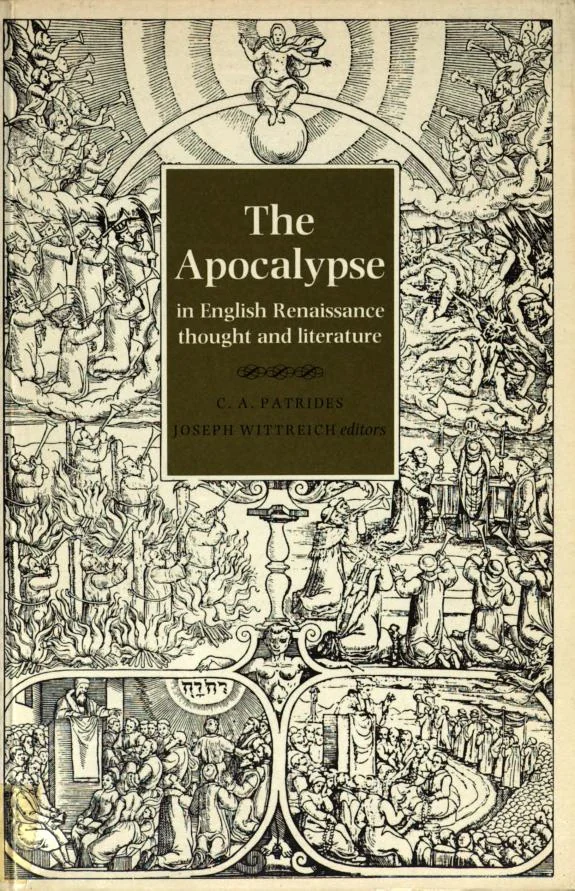
The Apocalypse in English Renaissance Thought and Literature
 83
83

The Apocalypse in English Renaissance Thought and Literature
The strength of Patrides and Wittreich's "The Apocalypse in English Renaissance Thought and Literature" lies in its scholarly breadth, drawing on a distinguished group of contributors to map the pervasive influence of apocalyptic thinking. The essays collectively demonstrate how eschatological anxieties were not merely abstract theological concerns but potent forces shaping political discourse and artistic output. A notable strength is the detailed exploration of how figures like John Milton engaged with and reinterpreted these ideas, moving beyond simple repetition of prophecy. However, the volume’s academic rigor, while commendable, can sometimes render its prose dense for the casual reader. The section discussing the influence of Joachim of Fiore’s millennial ideas on later English thought, while crucial for context, requires significant prior knowledge. Ultimately, this collection remains a vital resource for understanding a crucial undercurrent in early modern intellectual life.
📝 Description
83
Published in 1984, this collection analyzes apocalyptic thought in English Renaissance culture.
This 1984 collection examines apocalyptic thought and its presence in English Renaissance culture. It gathers essays from academics who discuss how end-times visions and interpretations of the Book of Revelation affected theological discussions, political actions, and artistic creations over centuries. The volume is useful for students of early modern literature, religious history, and the history of ideas. It is especially relevant for those studying the connection between theological prophecy, political thought, and literary works during a time of major religious and social change.
The English Renaissance, from the late 15th to the early 17th century, saw many millenarian expectations and theological arguments. The Reformation, for instance, led to varied readings of biblical prophecies about the end times, often tied to political events and royal successions. This collection is situated within this period of eschatological speculation. The book considers how apocalyptic stories influenced not just theological writings but also the political sphere, affecting Puritan sermons and courtly dealings. It also tracks literary effects, showing how these eschatological structures shaped poetry, plays, and visual arts, serving as a way to express current worries and hopes.
This work engages with a long tradition of apocalyptic speculation, particularly potent during the English Renaissance. This era, marked by profound religious and political shifts like the Reformation, saw widespread millennial expectations. Scholars debated end-times prophecies, often linking them to contemporary events and the perceived divine plan. The book situates these discussions within a broader history of how religious belief, political anxieties, and cultural production intersected when contemplating the future and the ultimate fate of the world.
💡 Why Read This Book?
• Gain insight into the specific eschatological frameworks that influenced English thinkers and artists between the 15th and 17th centuries, understanding how they interpreted texts like the Book of Revelation. • Discover concrete examples of how apocalyptic visions directly informed political machinations and religious reforms of the era, moving beyond abstract theological concepts. • Analyze how these end-times narratives were translated into literary and artistic forms, offering a unique perspective on the cultural output of the English Renaissance.
⭐ Reader Reviews
Honest opinions from readers who have explored this book.
❓ Frequently Asked Questions
What is the primary focus of "The Apocalypse in English Renaissance Thought and Literature"?
The book focuses on how apocalyptic thought, particularly concerning the Book of Revelation, influenced theological discourse, political activities, and artistic endeavors in England during the Renaissance period, roughly from the late 15th to the early 17th century.
Who were the main scholars involved in this collection?
The collection features essays by a distinguished group of American and English scholars, with C. A. Patrides and Joseph Anthony Wittreich serving as the editors.
What historical events are discussed in relation to apocalyptic thought?
The volume explores the connections between apocalyptic expectations and significant historical events of the era, such as the Reformation, and how these beliefs impacted political ideologies and religious movements.
How did apocalyptic ideas manifest in Renaissance literature?
The book examines how themes of prophecy, judgment, and the end times were integrated into poetry, drama, and other literary forms, reflecting contemporary anxieties and hopes.
When was "The Apocalypse in English Renaissance Thought and Literature" first published?
The collection was first published in 1984, bringing together scholarly research on a complex and influential aspect of Renaissance intellectual history.
Does the book cover specific interpretations of the Book of Revelation?
Yes, the essays delve into various centuries-long interpretations of the Book of Revelation and how these understandings shaped beliefs and actions during the English Renaissance.
🔮 Key Themes & Symbolism
Millenarianism and Political Power
This theme investigates the potent link between eschatological expectations and the exercise of political power during the English Renaissance. The essays explore how prophecies concerning the end times were not abstract theological musings but actively employed to legitimize or challenge ruling powers. Thinkers and leaders often interpreted contemporary events through the lens of biblical prophecy, seeing divine favor or wrath in political shifts. This section highlights how the anticipation of a coming kingdom or a final judgment directly informed statecraft, religious reformations, and even revolutionary fervor, demonstrating the tangible impact of apocalyptic visions on earthly dominion.
Literary Manifestations of Prophecy
This theme examines how the pervasive cultural atmosphere of apocalyptic expectation found expression in the literature of the English Renaissance. It moves beyond theological texts to explore how poets, playwrights, and artists grappled with visions of the end. The collection analyzes how concepts of divine judgment, the struggle between good and evil, and the promise of a renewed world were woven into dramatic narratives, epic poetry, and visual arts. This section reveals the literary techniques and symbolic language used to convey these profound eschatological concerns to a wider audience.
Theological Debates and Revelation
Central to the collection is an exploration of the intense theological debates surrounding the Book of Revelation throughout the English Renaissance. Scholars dissect how different religious factions and thinkers interpreted John's visions, often projecting their contemporary struggles and hopes onto the prophetic timeline. This theme highlights the diversity of eschatological views, from those anticipating immediate divine intervention to those seeing a more gradual unfolding of God's plan. It underscores how these interpretations were not merely academic but had wide implications for religious practice and identity.
Joachim of Fiore's Legacy
The enduring influence of the 12th-century abbot Joachim of Fiore on subsequent apocalyptic thought, particularly in England, is a significant thread. This theme traces how his cyclical view of history, divided into epochs (Father, Son, and Holy Spirit), and his specific prophecies continued to shape millennial expectations centuries later. The essays demonstrate how Joachim's ideas provided a framework for understanding historical progression and the imminence of the final age, influencing figures and movements that directly contributed to the intellectual field of the English Renaissance.
💬 Memorable Quotes
Direct passages from the work, attributed to the author.
“The Apocalypse was not merely a subject for learned theologians but a force that impinged upon the political consciousness of the age.”
— This statement emphasizes that visions of the end times were not confined to scholarly circles but actively influenced political discourse and decision-making during the English Renaissance.
“Literary works served as conduits, translating complex theological prophecies into accessible narratives for a broader public.”
— This highlights the role of Renaissance literature in disseminating and popularizing apocalyptic ideas, making them understandable and impactful beyond purely religious or academic contexts.
“Interpretations of the Book of Revelation were often shaped by, and in turn shaped, contemporary historical events and anxieties.”
— This points to the dynamic, reciprocal relationship between the study of prophecy and the lived experience of historical moments, where current events informed exegesis and vice versa.
“The anticipation of a final epoch or divine intervention colored perceptions of earthly power and societal change.”
— This suggests that the belief in an impending end or a divine restructuring of the world influenced how people viewed their present political and social realities.
“Apocalyptic themes provided a framework for understanding historical progression and the ultimate destiny of humankind.”
— This interpretation underscores the philosophical and historical utility of apocalyptic thought, offering a grand narrative that gave meaning to past events and projected a future trajectory.
🌙 Esoteric Significance
Tradition
This work engages with the Western esoteric tradition, specifically its roots in Christian esotericism and millenarianism. While not strictly Gnostic or Kabbalistic, it touches upon traditions that interpret scripture allegorically and seek hidden meanings related to divine timelines and cosmic events. The focus on apocalyptic literature places it within a lineage concerned with end-times prophecy, divine judgment, and the ultimate transformation of the world, a common theme in various esoteric movements seeking spiritual enlightenment or historical revelation.
Symbolism
Key symbols explored include the Beast of Revelation, often interpreted as representing tyrannical political or religious powers, and the Four Horsemen, symbolizing divine judgment, war, famine, and pestilence. The New Jerusalem represents the ultimate utopian ideal or the perfected spiritual state to be achieved after earthly tribulations. These symbols function not merely as narrative elements but as potent allegorical tools for understanding historical cycles and the human condition within a divine cosmic plan.
Modern Relevance
Contemporary thinkers and groups interested in the intersection of religion, politics, and cultural studies continue to draw upon the analysis presented. Scholars examining political rhetoric, fringe religious movements, and the enduring appeal of doomsday narratives find value in this foundational text. Its examination of how apocalyptic thought shaped collective psychology and historical interpretation remains relevant for understanding contemporary anxieties and the search for meaning in times of perceived crisis or transformation.
👥 Who Should Read This Book
• Scholars of early modern English literature and history seeking to understand the pervasive influence of apocalyptic thought on texts and events of the period. • Students of religious studies and comparative theology interested in the diverse interpretations of the Book of Revelation and their historical impact. • Researchers of political ideology and cultural history who want to explore how eschatological beliefs shaped public discourse and governance during the Renaissance.
📜 Historical Context
The English Renaissance, a period of immense cultural and religious ferment from the late 15th to the early 17th century, was deeply marked by apocalyptic thinking. The Protestant Reformation, beginning in earnest in the 1520s, fractured religious unity and fueled diverse interpretations of biblical prophecy, particularly concerning the Book of Revelation. This era saw intense millennial expectations, with many believing the end times were imminent. Figures like John Bale and later Puritan leaders actively engaged with these prophecies, linking them to political events and divine mandates. Contemporaries such as John Milton, whose works grappled with biblical themes, engaged with this intellectual current. The period was also characterized by a rival school of thought emphasizing historical providence rather than immediate apocalyptic fulfillment, creating a complex intellectual landscape. Reception of these ideas varied, often becoming intertwined with political propaganda and religious dissent, rather than being confined to purely academic discourse.
📔 Journal Prompts
The Book of Revelation's symbolic language and its application to Renaissance political contexts.
The influence of Joachim of Fiore's millennial theories on later English thought.
Literary representations of eschatological themes in Renaissance drama and poetry.
The relationship between theological interpretation and political action in the 16th and 17th centuries.
How apocalyptic visions of the New Jerusalem compare to other utopian concepts.
🗂️ Glossary
Apocalypticism
A belief system that posits an imminent end to the present world and the beginning of a new, divinely ordered age, often involving supernatural intervention, judgment, and cosmic transformation.
Millenarianism
A specific form of apocalypticism centered on the belief in a coming earthly millennium, a golden age of peace and righteousness, often associated with the thousand-year reign mentioned in the Book of Revelation.
Book of Revelation
The final book of the New Testament, attributed to John of Patmos, containing symbolic prophecies concerning the end times, divine judgment, and the ultimate triumph of good over evil.
Eschatology
The branch of theology concerned with death, judgment, the end of the world, and the ultimate destiny of humankind and the universe.
Joachim of Fiore
A 12th-century Italian abbot and mystic whose influential writings proposed a tripartite division of history (Age of the Father, Son, and Holy Spirit) and detailed prophecies regarding future spiritual and historical epochs.
Theological Discourse
The formal discussion, debate, and communication concerning religious beliefs, doctrines, and interpretations, particularly within academic or ecclesiastical contexts.
Renaissance Humanism
An intellectual movement of the Renaissance that emphasized classical learning, human potential, and worldly achievements, often reinterpreting religious texts and traditions within this framework.
This book appears in 1 collection
🔮 Readers Also Liked
Browse all →






From the “Apocalyptic Literature” Collection
View all →


More Free Esoteric History & Biography Books
View all →