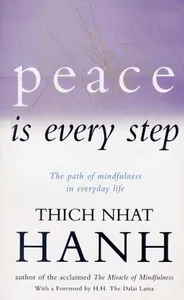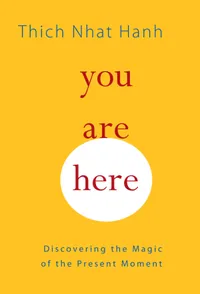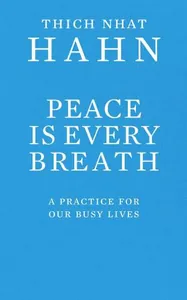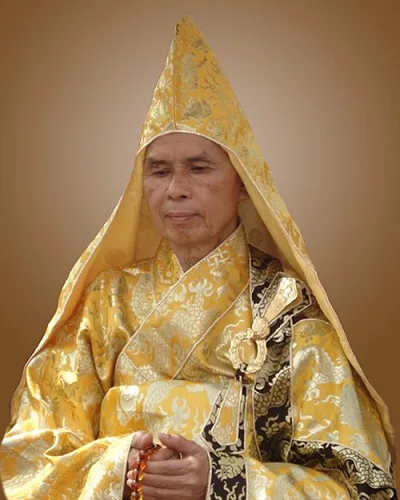
Thich Nhat Hanh was a Vietnamese Zen Buddhist monk, peace activist, and author who founded the Plum Village Tradition and popularized mindfulness.
Thich Nhat Hanh, born Nguyễn Xuân Bảo in 1926, was a prominent Vietnamese Thiền Buddhist monk, peace activist, poet, and influential teacher. He is widely recognized as a key figure in the development of engaged Buddhism and is often called the "father of mindfulness," significantly impacting Buddhist practices in the West. He established the Plum Village Tradition and numerous monasteries and centers. His activism led to his exile from South Vietnam in 1966 due to his opposition to the war. Martin Luther King Jr. nominated him for a Nobel Peace Prize in 1967. Thich Nhat Hanh advocated for deep listening and promoted awareness of interconnectedness as paths to peace. After a long exile, he was allowed to visit Vietnam again and returned to his root temple in 2018, where he lived until his passing in 2022 at the age of 95.
Early Life and Spiritual Calling
Born Nguyễn Xuân Bảo in 1926 in Huế, Vietnam, Thich Nhat Hanh hailed from a notable lineage, being a descendant of the poet Nguyễn Đình Chiểu. His father served in the French administration, while his mother was a homemaker. As a child, he was deeply moved by imagery of the Buddha and an encounter with a hermit who embodied profound peace. These experiences, coupled with a desire for deep satisfaction, ignited his aspiration to become a Buddhist monk. Despite initial parental caution, he began his monastic training at age 16.
Monastic Training and Intellectual Pursuits
At 16, Thich Nhat Hanh entered Từ Hiếu Temple, studying under Zen Master Thanh Quý Chân Thật. He received training in Mahayana and Theravada Buddhism, alongside learning several languages including Chinese, English, and French. He later attended Báo Quốc Buddhist Academy but found it lacking. In 1950, he moved to Saigon, was ordained as a monk in 1951, and pursued higher education at Saigon University, earning a degree in literature and philosophy. He also served as editor for the publication "Vietnamese Buddhism," advocating for the unification of Buddhist organizations, which led to his expulsion from a temple and a period of retreat and writing.
Activism and Engaged Buddhism
Returning to South Vietnam in 1963, Thich Nhat Hanh played a role in restructuring Vietnamese Buddhism following political changes. He advocated for peace and reconciliation, proposing initiatives like a call for an end to the war and the establishment of training centers for social workers based on Buddhist principles. He co-founded the School of Youth for Social Service (SYSS), a volunteer corps dedicated to aiding war-affected communities. His peace advocacy, including referring to the Viet Cong as brothers, led to the closure of his journal and his eventual exile in 1966. He coined the term "engaged Buddhism" to describe a practice that integrates spiritual awareness with social action.
International Influence and Exile
During his exile, Thich Nhat Hanh continued his work internationally. He established the Plum Village Monastery in France in 1982, which became a significant center for his teachings. He traveled extensively, giving retreats and talks, and was nominated for the Nobel Peace Prize by Martin Luther King Jr. in 1967. His teachings focused on mindfulness, deep listening as a conflict resolution tool, and the interconnectedness of all things, profoundly influencing Western understanding and practice of Buddhism. He was finally permitted to return to Vietnam in 2005 and later returned permanently in 2018.
Key Ideas
- Engaged Buddhism: The practice of integrating spiritual mindfulness with social and political action.
- Mindfulness: Cultivating present-moment awareness as a path to peace and understanding.
- Deep Listening: A nonviolent communication technique to understand others and resolve conflict.
- Interconnectedness: Recognizing the interdependence of all phenomena and its role in fostering peace.
Books by
16 free public domain books · Read online or download