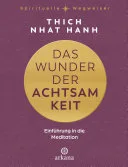
Das Wunder der Achtsamkeit
 82
82

Das Wunder der Achtsamkeit
Thich Nhat Hanh's "Das Wunder der Achtsamkeit" offers a direct path to understanding and implementing mindfulness, a concept often discussed but rarely demystified so effectively. The strength of this work lies in its practical, 32-exercise structure, moving beyond abstract philosophy to actionable steps. For instance, the exercise on mindful breathing, a foundational element, is presented with a clarity that makes it immediately applicable, even for someone entirely new to meditation. A minor limitation might be that the sheer number of exercises could feel slightly overwhelming to some readers initially, suggesting a need for slow, deliberate engagement. However, the book's quiet authority, stemming from Thich Nhat Hanh's profound experience, ensures that even simple instructions carry significant weight. It's a guide that delivers precisely what it promises: a way to access peace in the present.
📝 Description
82
Thich Nhat Hanh's 2024 book, Das Wunder der Achtsamkeit, offers practical ways to manage daily overwhelm.
This book by Thich Nhat Hanh addresses the common experience of feeling overwhelmed by daily life and the habit of acting without full awareness. He presents mindfulness as a direct response to stress, anxiety, and the feeling of burnout. The text is aimed at individuals looking for ways to cope with modern life's demands. It is especially helpful for those new to meditation or mindfulness who feel caught in continuous activity and mental noise. The exercises are structured for immediate use in everyday situations.
The author, a Zen master and peace activist, refined these practices over many years. His teachings appeared as Western psychology and spirituality began to explore Eastern contemplation more deeply. His approach gained attention with the rise of the mindfulness movement in the late 20th and early 21st centuries.
Thich Nhat Hanh's work is rooted in Zen Buddhism, a tradition emphasizing direct experience and awakening through mindful practice. His teachings connect the ancient contemplative methods of Buddhism with contemporary psychological understanding. The book places itself within the broader stream of Eastern traditions that seek inner peace and clarity through disciplined attention, a practice that has found resonance in secular contexts worldwide.
💡 Why Read This Book?
• Learn 32 specific exercises to integrate mindfulness into daily life, as presented in Thich Nhat Hanh's framework, allowing you to combat stress directly. • Discover how to break free from the autopilot of everyday routines by focusing on present-moment awareness, a core teaching from the 2024 publication. • Experience a tangible reduction in anxiety and exhaustion through the practical application of contemplative techniques detailed in the book's self-developed exercises.
⭐ Reader Reviews
Honest opinions from readers who have explored this book.
❓ Frequently Asked Questions
What is the core teaching of Thich Nhat Hanh's "Das Wunder der Achtsamkeit"?
The core teaching is mindfulness, defined as paying attention to the present moment without judgment. The book offers 32 exercises to help readers cultivate this awareness, combating stress and finding peace in daily life.
How many exercises are included in "Das Wunder der Achtsamkeit"?
The book features 32 self-developed exercises designed to teach and integrate mindfulness into everyday activities, as outlined by Thich Nhat Hanh.
When was "Das Wunder der Achtsamkeit" first published?
The book "Das Wunder der Achtsamkeit" by Thich Nhat Hanh was first published on July 1, 2024.
Is this book suitable for beginners in meditation?
Yes, it is specifically designed as an introduction to meditation and mindfulness, making it highly suitable for beginners who feel overwhelmed by daily life and wish to learn practical techniques.
What kind of benefits can one expect from practicing the exercises?
Practicing the exercises can lead to reduced stress, less anxiety, and a greater sense of calm and presence. It helps individuals break free from autopilot mode and find contentment in ordinary moments.
Who is Thich Nhat Hanh?
Thich Nhat Hanh was a renowned Vietnamese Zen Buddhist monk, peace activist, and author. He was a leading figure in bringing mindfulness and Buddhist teachings to the West, recognized globally for his wisdom and compassionate approach.
🔮 Key Themes & Symbolism
Present Moment Awareness
The book emphasizes the profound power of focusing on the 'now'. It moves beyond the conceptual understanding of mindfulness to practical application, suggesting that true peace is accessible through simple attention to breath, body sensations, or daily activities. This theme challenges the modern tendency to dwell on past regrets or future anxieties, anchoring the reader in the only moment that truly exists and can be acted upon.
Mindfulness as Stress Antidote
This work positions mindfulness not just as a spiritual practice but as a potent tool against the chronic stress and exhaustion plaguing contemporary life. Through its 32 exercises, it offers concrete methods to interrupt cycles of worry and overthinking. The core idea is that by becoming aware of our reactions and internal states, we gain the capacity to respond more skillfully, thereby mitigating the damaging effects of stress.
Breaking Autopilot
A central concern addressed is the state of living on 'autopilot', where daily routines are performed without conscious engagement. Thich Nhat Hanh guides readers to recognize this pattern and offers techniques to disengage from it. By cultivating mindful presence, individuals can transform mundane tasks into opportunities for inner exploration and find greater meaning and satisfaction in their everyday existence.
Inner Peace Through Simple Practice
The book illustrates that profound inner peace does not require elaborate rituals or distant retreats. Instead, it is achievable through consistent, simple practices integrated into the fabric of one's day. The 32 exercises serve as accessible entry points, demonstrating how basic mindful actions—like mindful eating or walking—can lead to a significant shift in one's overall well-being and perspective.
💬 Memorable Quotes
Direct passages from the work, attributed to the author.
“The present moment is filled with joy and happiness. If you are attentive, you will see this.”
— This highlights the book's central tenet: that contentment is not contingent on external circumstances but on our internal state of awareness. It encourages active observation of the present, revealing the potential for peace that often goes unnoticed.
“We run like the wind, but we don't know where we are going.”
— This powerful image captures the feeling of being caught in the hustle of daily life without clear direction or purpose. It serves as a call to pause and re-evaluate, suggesting that conscious awareness is key to purposeful living.
“Breathe in, I calm my body. Breathe out, I smile.”
— This is a simple yet profound instruction for a basic mindfulness exercise. It demonstrates how the act of breathing can be directly linked to cultivating physical relaxation and emotional well-being, even in fleeting moments.
💡 Key Ideas
Editorial paraphrase of the work's core concepts — not direct quotes.
Mindfulness is a way of befriending ourselves and the world.
This quote expresses the gentle, non-confrontational approach Thich Nhat Hanh advocates. It suggests that mindfulness cultivates a compassionate relationship with oneself and one's surroundings, fostering acceptance and understanding rather than struggle.
Looking deeply into the nature of things, we see that they are impermanent.
This quote points to a deeper Buddhist insight about impermanence. Understanding this concept through mindfulness can help release attachment to fixed states, fostering greater adaptability and reducing suffering caused by clinging.
🌙 Esoteric Significance
Tradition
While Thich Nhat Hanh's work is deeply rooted in Zen Buddhism, a Mahayana tradition, its presentation in "Das Wunder der Achtsamkeit" transcends sectarian boundaries. It aligns with broader esoteric principles of inner transformation and the cultivation of consciousness. The emphasis on direct experience and the mind's role in shaping reality echoes Gnostic and Hermetic ideas about self-knowledge, albeit framed within a Buddhist ethical and philosophical context.
Symbolism
The act of breathing itself serves as a primary symbol, representing the vital life force (prana) and the constant, yet often unnoticed, rhythm of existence. The 'autopilot' state can be seen as a symbol of spiritual slumber or Maya (illusion), from which mindful awareness serves as the awakening. The 'hamster wheel' metaphor symbolizes the cyclical, unenlightmented existence driven by unexamined desires and aversions.
Modern Relevance
Thich Nhat Hanh's approach to mindfulness has profoundly influenced contemporary secular mindfulness movements, including MBSR (Mindfulness-Based Stress Reduction) developed by Jon Kabat-Zinn. His teachings are foundational for many modern therapeutic modalities, wellness programs, and even corporate stress-management initiatives, demonstrating a significant impact on contemporary practical spirituality and psychology.
👥 Who Should Read This Book
['• Individuals experiencing chronic stress or burnout seeking practical, non-dogmatic techniques for mental and emotional regulation.', '• Beginners to meditation and mindfulness who want a clear, step-by-step guide with actionable exercises from a respected teacher.', '• Those interested in Eastern contemplative traditions but prefer an accessible approach focused on immediate life application rather than complex philosophy.']
📜 Historical Context
Thich Nhat Hanh's teachings on mindfulness gained significant momentum in the late 20th and early 21st centuries, a period marked by a burgeoning Western interest in Eastern contemplative practices. His work offered a practical, secularized approach to Buddhist principles, diverging from more dogmatic interpretations. While the Beat Generation and figures like Alan Watts had previously introduced Eastern philosophies, Thich Nhat Hanh's accessible style and emphasis on everyday application resonated broadly. His advocacy for peace, particularly during the Vietnam War, brought him international recognition. His approach stood in contrast to the more esoteric or purely philosophical explorations of meditation common in earlier Western engagement with Buddhism. The widespread adoption of his methods by institutions and individuals underscores their perceived efficacy in addressing modern psychological stress.
📔 Journal Prompts
Reflect on the concept of 'autopilot' in relation to your daily routines.
Identify one specific moment from your day where you can practice mindful breathing.
Consider the 'hamster wheel' metaphor and how it might apply to your current life patterns.
How does befriending yourself, as suggested by mindfulness, differ from your usual self-talk?
What does 'paying attention without judgment' mean in the context of your immediate sensory experience?
🗂️ Glossary
Achtsamkeit (Mindfulness)
The practice of paying attention to the present moment, intentionally and non-judgmentally. It involves awareness of thoughts, feelings, bodily sensations, and the surrounding environment.
Autopilot
A state of operating through daily activities and interactions without conscious awareness or engagement, often driven by habit and routine.
Hamsterrad (Hamster Wheel)
A metaphor for a repetitive, often exhausting cycle of activity that feels inescapable, symbolizing a life lived without conscious direction or release.
Stress
A state of mental or emotional strain resulting from demanding circumstances. The book presents mindfulness as a method to manage and reduce this.
Erschöpfung (Exhaustion)
A state of extreme physical or mental fatigue. Mindfulness practices are offered as a way to restore energy and prevent burnout.
Meditation
A practice where an individual uses a technique – such as mindfulness, or focusing the mind on a particular object, thought, or activity – to train attention and awareness, and achieve a mentally clear and emotionally calm and stable state.
Gegenwart (Present Moment)
The current point in time. The book emphasizes that this is the only moment where life is truly lived and where peace can be found.