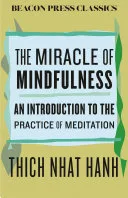
The Miracle of Mindfulness
 77
77

The Miracle of Mindfulness
Thich Nhat Hanh's *The Miracle of Mindfulness* offers a profoundly simple yet potent method for grounding oneself in the present. The author's strength lies in his ability to demystify mindfulness, presenting it not as an arduous spiritual pursuit but as an inherent capacity accessible through everyday actions. His chapter detailing mindful dishwashing, for instance, brilliantly illustrates how even mundane tasks can become portals to profound peace. A limitation, however, might be the book's very simplicity for those accustomed to more intellectually rigorous philosophical texts; it eschews deep theoretical dives for actionable guidance. Nonetheless, the consistent emphasis on the breath as an anchor is a valuable takeaway. The work functions as a practical manual for cultivating equanimity in an often-chaotic world.
📝 Description
77
Thich Nhat Hanh's 2025 book, The Miracle of Mindfulness, offers practical Zen techniques for daily life.
The Miracle of Mindfulness serves as a practical guide to cultivating present-moment awareness, a core practice in Zen Buddhism. Thich Nhat Hanh structures the book as a manual, presenting accessible methods for readers to develop mindfulness. He prioritizes direct instruction and relatable examples from everyday activities over complex philosophical discussions. The book aims to help individuals manage stress, increase self-awareness, and find more peace in their daily routines. It is suitable for those new to mindfulness or experienced practitioners seeking gentle refreshers on established methods. People interested in contemplative practices outside formal religious contexts will find its approach particularly useful.
Thich Nhat Hanh, a prominent figure in introducing Buddhist thought to the West, crafted a version of Zen that is both gentle and secular. This work appeared during a time of growing Western interest in Eastern contemplative traditions. It coincided with popular figures discussing Eastern philosophy and early scientific inquiry into the psychological benefits of practices like meditation.
This book emerges from the Mahayana Buddhist tradition, specifically the Zen school. Zen emphasizes direct experience and meditation for insight, often bypassing extensive scriptural study. Thich Nhat Hanh's interpretation, as seen in this work, simplifies these practices for a broader audience, focusing on integrating mindfulness into mundane activities like eating or walking. The concept of 'interbeing,' central here, reflects the Buddhist understanding of dependent origination, where all phenomena arise in relation to others.
💡 Why Read This Book?
• Gain practical techniques for integrating mindfulness into daily routines, learning how to perform tasks like "washing the dishes" with full presence, as detailed in the book's early sections. • Understand the concept of "interbeing" through Thich Nhat Hanh's accessible explanations, fostering a deeper connection to the world around you by recognizing interconnectedness. • Develop the "stopping" practice, a specific method taught by the author to interrupt negative thought patterns and cultivate emotional regulation, offering immediate relief.
⭐ Reader Reviews
Honest opinions from readers who have explored this book.
❓ Frequently Asked Questions
What is the core teaching of Thich Nhat Hanh's 'The Miracle of Mindfulness'?
The core teaching is that mindfulness—being awake and fully aware—can be cultivated through everyday activities, leading to greater self-understanding and peace, as demonstrated by his practical exercises starting from the book's 2025 publication.
How does 'The Miracle of Mindfulness' differ from other meditation guides?
It emphasizes integrating mindfulness into mundane tasks like breathing or peeling an orange, rather than focusing solely on formal seated meditation, making the practice accessible to everyone regardless of their schedule.
Can this book help with stress reduction?
Yes, the book provides practical exercises and gentle anecdotes designed to help readers become more aware of their thoughts and emotions, thereby reducing reactivity and stress through present-moment awareness.
Is 'The Miracle of Mindfulness' a religious text?
While rooted in Zen Buddhist principles, the book focuses on the practical application of mindfulness, making its teachings accessible and beneficial to individuals of any spiritual or secular background.
What is the 'stopping' technique mentioned in the book?
The 'stopping' technique is a method taught by Thich Nhat Hanh to interrupt cycles of suffering or negative thinking by consciously returning awareness to the breath, anchoring oneself in the present moment.
When was 'The Miracle of Mindfulness' first published?
The book was first published on October 7, 2025, introducing Thich Nhat Hanh's accessible approach to mindfulness to a global audience.
🔮 Key Themes & Symbolism
Present Moment Awareness
The book champions the practice of "mindfulness," defined as being fully awake and aware in the present moment. Thich Nhat Hanh illustrates this through simple, everyday actions – from drinking tea to walking. The esoteric angle lies in recognizing that each moment, however ordinary, contains a gateway to deeper consciousness and a cessation of mental wandering, aligning with contemplative traditions that seek enlightenment through direct experience rather than abstract doctrine.
Interbeing and Interconnectedness
A central tenet explored is "interbeing," the profound understanding that nothing exists independently. All phenomena are interconnected and interdependent. This concept moves beyond individualistic spiritual seeking, suggesting that true peace and understanding arise from recognizing our fundamental connection to all beings and the universe. This speaks to various mystical traditions that emphasize cosmic unity and the dissolution of the ego.
Mindful Living as Practice
The work posits that spiritual practice is not confined to a meditation cushion but is woven into the fabric of daily life. Activities like washing dishes, answering the phone, or peeling an orange become opportunities for "mindful living." This approach democratizes spiritual development, making it accessible to anyone, anywhere, by transforming routine into a path toward greater self-understanding and tranquility.
The Power of the Breath
Conscious breathing is presented as the primary tool for anchoring oneself in the present moment and cultivating mindfulness. The simple act of observing the breath serves as a constant reminder and a readily available method to interrupt cycles of distraction and suffering. This focus on breath aligns with ancient yogic and meditative practices across numerous esoteric traditions.
💬 Memorable Quotes
Direct passages from the work, attributed to the author.
“Being aware of what is happening in the present moment, both internally and externally.”
— This captures the essence of mindfulness as presented by Thich Nhat Hanh – a state of active, non-judgmental observation of one's experience.
“The practice of mindful breathing is a way to calm the mind and body.”
— This interpretation emphasizes the physiological and psychological benefits of conscious breathing as a foundational technique taught in the book.
“We can find peace not by escaping our circumstances, but by transforming our relationship to them.”
— This concept underscores the book's pragmatic approach, suggesting that inner peace is cultivated through mindful engagement with life, rather than avoidance.
“The miracle is not to walk on water. The miracle is to walk on the living earth, in the present moment.”
— This iconic sentiment, often attributed to Thich Nhat Hanh, captures the profound beauty found in ordinary existence when experienced with full awareness.
💡 Key Ideas
Editorial paraphrase of the work's core concepts — not direct quotes.
Each moment holds within it an opportunity to work toward greater self-understanding and peacefulness.
This paraphrased concept highlights the book's core message: that even mundane activities are fertile ground for spiritual growth and cultivating inner calm.
🌙 Esoteric Significance
Tradition
While deeply rooted in Zen Buddhism, a Mahayana tradition, Thich Nhat Hanh's work presents mindfulness in a manner that transcends strict sectarian boundaries. Its emphasis on present-moment awareness, the interconnectedness of all things (interbeing), and the transformation of ordinary life into a spiritual practice aligns with broader esoteric currents seeking direct experience of reality beyond dogma. It offers a practical entry point into contemplative disciplines found in various mystical paths.
Symbolism
The most prominent symbol is the breath itself, representing the constant, yet often overlooked, anchor to the present moment and the flow of life. The act of "stopping" signifies a pause in the conditioned reactions of the mind, a moment of clarity akin to the "still point" sought in many esoteric traditions. The mundane activities elevated to practice—washing dishes, drinking tea—symbolize the sacred potential inherent in everyday existence, a core teaching in traditions valuing immanence.
Modern Relevance
Thich Nhat Hanh's teachings, particularly through this work, remain highly relevant today. They directly inform contemporary secular mindfulness movements, stress-reduction programs (MBSR), and therapeutic approaches like ACT (Acceptance and Commitment Therapy). Thinkers and practitioners in fields ranging from positive psychology to integral theory often reference his accessible articulation of core contemplative principles, demonstrating the enduring power of his simple yet profound methods.
👥 Who Should Read This Book
['• Individuals seeking practical, secular methods to manage stress and anxiety, who will learn specific breathing and awareness techniques directly applicable to daily challenges.', '• Beginners interested in contemplative practices, who will find an unintimidating introduction to mindfulness principles and exercises grounded in everyday life.', "• Long-time practitioners of meditation or yoga, who can refresh their understanding and find renewed inspiration in Thich Nhat Hanh's gentle yet potent approach to presence."]
📜 Historical Context
The publication of *The Miracle of Mindfulness* in 2025 placed it within a resurgent wave of interest in Eastern philosophies and contemplative practices in the West. Following figures like D.T. Suzuki and Alan Watts who had introduced Zen and other traditions decades prior, Thich Nhat Hanh offered a particularly accessible and gentle interpretation. This work emerged when secular mindfulness had begun to detach from its Buddhist roots, gaining traction in therapeutic and corporate settings, partly due to research emerging from institutions like the University of Massachusetts Medical School's Stress Reduction Clinic, founded by Jon Kabat-Zinn. While Buddhism was gaining wider acceptance, it still faced occasional skepticism, yet Thich Nhat Hanh's emphasis on practical application rather than dogma helped bridge divides. His work stood in contrast to more academic or historically dense Buddhist texts, prioritizing direct experiential understanding.
📔 Journal Prompts
Reflect on the sensation of your breath during a mundane task like washing dishes.
Consider the concept of 'interbeing' in relation to a common object you use daily.
Describe a time you successfully used the 'stopping' technique to manage a difficult emotion.
How can the practice of mindful eating, as described in the book, enhance your appreciation for food?
Identify one daily activity that could be transformed into a mindfulness practice, inspired by the book's examples.
🗂️ Glossary
Mindfulness
The practice of bringing full, non-judgmental awareness to the present moment, encompassing thoughts, feelings, bodily sensations, and the surrounding environment.
Interbeing
Thich Nhat Hanh's concept describing the interconnectedness and interdependence of all phenomena, emphasizing that nothing exists in isolation.
Stopping
A technique to interrupt cycles of suffering, worry, or anger by consciously returning awareness to the breath and the present moment.
Zen
A school of Mahayana Buddhism emphasizing meditation and intuitive understanding, often characterized by direct experience rather than scripture.
Present Moment
The specific point in time currently being experienced, the focus of mindfulness practice, distinct from past regrets or future anxieties.
Awareness
The state or ability to perceive, feel, or be conscious of events, objects, or sensory patterns; the core of mindfulness.
Daily Practice
Integrating mindfulness techniques into routine activities like eating, walking, or working, as advocated in the book.