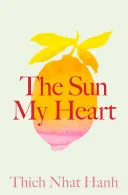
The Sun My Heart
 78
78

The Sun My Heart
Thich Nhat Hanh’s The Sun My Heart offers a gentle yet persistent invitation to look beyond the surface of daily life. Hanh’s characteristic ability to distill complex Buddhist philosophy into relatable metaphors is on full display, using mundane observations from his hermitage in Plum Village to illuminate profound truths. The section detailing the settling of pulp in apple juice serves as a powerful illustration of impermanence and the nature of phenomena. While the accessibility is a significant strength, the book occasionally feels repetitive in its core message, particularly for readers already familiar with Hanh's extensive bibliography. However, the clarity and kindness with which these teachings are presented make it a valuable resource for those beginning to explore the path from mindfulness to insight. It is a quiet reminder that awakening is not found in grand gestures, but in the mindful observation of the ordinary.
📝 Description
78
Published in 2024, The Sun My Heart collects Zen master Thich Nhat Hanh's teachings on spiritual insight.
This book gathers teachings from Zen master Thich Nhat Hanh, focusing on deepening spiritual insight. Hanh uses simple analogies from his life at Plum Village to explain complex Buddhist ideas. The aim is to connect basic awareness with true understanding, making advanced spiritual concepts accessible. This volume is for those who have practiced basic mindfulness and wish to advance their contemplative path. It is also useful for people interested in applying Buddhist psychology and knowledge to daily life. Readers seeking practical ways to cultivate insight, rather than just theory, will find Hanh's method particularly helpful. It may also interest students of comparative religion and contemplative practices.
Thich Nhat Hanh's work appeared as Western interest in Eastern spirituality grew. Following the initial popularity of Buddhism in the 1960s and 70s, a need arose for teachings that were both authentic and easy to grasp. Hanh, a Vietnamese Thiền Buddhist monk, was instrumental in this, presenting an engaged Buddhism that many found relatable. His writings, including this collection, offered a direct experience and application of Buddhist principles, contrasting with more academic approaches. The 2024 publication indicates a continuing interest in his message.
The Sun My Heart fits within the Mahayana Buddhist tradition, specifically the Thiền lineage as practiced in Vietnam. Thich Nhat Hanh's teachings emphasize direct experience and the cultivation of present moment awareness, drawing from the concept of 'interbeing' – the interconnectedness of all phenomena. This approach moves beyond intellectual understanding to a lived realization of Buddhist truths, aligning with contemplative practices that seek to transform consciousness. The book reflects a lineage that translates profound philosophical insights into accessible, everyday practice for spiritual growth.
💡 Why Read This Book?
• Learn to recognize the subtle shift from observing phenomena, like the "gradual settling of the pulp in a glass of apple juice," to genuine insight, a concept central to Buddhist epistemology as presented by Thich Nhat Hanh. • Understand how everyday occurrences within a specific setting, such as "the wind blowing into the room and scattering papers about" at Plum Village, can serve as direct teaching tools for applying Buddhist psychology. • Discover a practical method for deepening your spiritual practice beyond basic mindfulness, as advocated by Thich Nhat Hanh, fostering a more direct and experiential understanding of Buddhist teachings.
⭐ Reader Reviews
Honest opinions from readers who have explored this book.
❓ Frequently Asked Questions
What is the relationship between The Sun My Heart and Thich Nhat Hanh's earlier work?
The Sun My Heart is considered a sequel to The Miracle of Mindfulness. It builds upon the foundational principles of mindfulness introduced in the earlier book, guiding readers toward a deeper level of spiritual insight and understanding.
Where did Thich Nhat Hanh draw inspiration for the examples in The Sun My Heart?
Thich Nhat Hanh drew inspiration from the everyday objects and events within his hermitage at Plum Village. Examples include the settling of pulp in apple juice and the wind scattering papers.
What Buddhist concepts are explored in The Sun My Heart?
The book explores concepts from Buddhist psychology and epistemology. It focuses on the transition from mindfulness to true insight, emphasizing direct experience and mindful observation of ordinary life.
Is this book suitable for beginners in Buddhism?
Yes, while it builds on mindfulness, the book is designed to be accessible. It uses everyday examples to explain profound spiritual ideas, making it suitable for those ready to move beyond introductory mindfulness practices.
When was The Sun My Heart first published?
The book was first published on October 29, 2024, making it a recent addition to Thich Nhat Hanh's extensive body of work.
What is the main goal of The Sun My Heart?
The primary goal is to offer accessible guidance for spiritual seekers, moving them from a basic practice of mindfulness toward a more profound state of true insight and understanding of reality.
🔮 Key Themes & Symbolism
Mindfulness to Insight
This theme charts the progression from basic awareness (mindfulness) to a deeper, transformative understanding (insight). Hanh illustrates this journey using simple, observable phenomena like sediment in juice, suggesting that true insight arises not from complex doctrines but from attentive observation of the present. The work emphasizes that insight is an active process, a seeing-through of illusion that naturally follows sustained, mindful engagement with reality.
Buddhist Psychology & Epistemology
The book draws heavily on core Buddhist principles concerning the mind and knowledge. It examines how our perceptions shape our reality and how mental habits can obscure understanding. Hanh uses everyday examples to deconstruct these patterns, aligning with Buddhist epistemology’s focus on direct experience as a source of valid knowledge. This approach aims to cultivate a more accurate and less deluded way of knowing oneself and the world.
The Hermitage as a Microcosm
The setting of Thich Nhat Hanh's hermitage in Plum Village serves as a crucial backdrop, transforming mundane activities into spiritual lessons. Ordinary events, like wind scattering papers, are presented not as distractions but as opportunities for contemplation. This highlights the Buddhist ideal of finding the sacred within the secular, demonstrating that the path to enlightenment is accessible within the confines of daily life and routine.
Interdependence and Impermanence
Through observations of natural processes, Hanh subtly introduces the concepts of interdependence (pratītyasamutpāda) and impermanence (anicca). The settling of juice pulp, for instance, reflects the transient nature of all phenomena. By observing these processes mindfully, readers are encouraged to see the interconnectedness of all things and to accept the inevitable changes inherent in existence, fostering equanimity and reducing suffering.
💬 Memorable Quotes
Direct passages from the work, attributed to the author.
“The gradual settling of the pulp in a glass of apple juice.”
— This simple observation is used to symbolize the natural unfolding of phenomena and the arising of understanding. It suggests that clarity and insight, like settled sediment, emerge over time with patient observation, rather than through forceful intervention.
“The wind blowing into the room and scattering papers about.”
— This event serves as a metaphor for the unpredictable nature of life and the mind. It illustrates how external forces and internal distractions can disrupt our focus, highlighting the need for mindful awareness to maintain equanimity amidst chaos.
“Drawing from Buddhist psychology, epistemology, and the world of contemplation.”
— This phrase indicates the intellectual and practical foundations of Hanh's teachings. It suggests a synthesis of psychological understanding of the mind, theories of knowledge, and direct contemplative experience to achieve spiritual realization.
“Guidance for spiritual seekers on the path from mindfulness to true insight.”
— This statement clearly defines the book's purpose: to act as a guide for individuals on their spiritual journey, specifically focusing on the development from basic awareness practices to a deeper, more penetrating understanding of reality.
“Using the objects and events of everyday life.”
— This highlights Hanh's pedagogical method. He emphasizes that profound spiritual truths are not confined to scriptures or temples but are readily available in the ordinary moments and objects encountered throughout the day.
🌙 Esoteric Significance
Tradition
While Thich Nhat Hanh's work is rooted in Thiền (Zen) Buddhism, The Sun My Heart speaks to broader esoteric traditions by emphasizing direct experience and inner transformation over dogma. Its focus on uncovering hidden truths within the mundane aligns with Hermetic principles of 'As Above, So Below,' suggesting the universe's workings are reflected in everyday phenomena. The path from observation to insight mirrors alchemical processes of purification and transmutation, seeking a higher state of consciousness through diligent practice.
Symbolism
The "sun" in the title can be interpreted esoterically as the enlightened mind or the divine spark within. The "heart" represents the seat of compassion and intuitive understanding, essential for true insight. The "apple juice settling" symbolizes the natural process of purification and the revelation of truth once disturbances cease, akin to clarifying a substance in alchemy. The "scattering papers" represent the mind's distractions, which, when observed mindfully, can lead to a deeper understanding of impermanence.
Modern Relevance
Contemporary mindfulness movements, secularized Buddhist practices, and therapeutic approaches focusing on cognitive restructuring owe a significant debt to Hanh's accessible teachings. Thinkers and practitioners in fields like positive psychology and contemplative neuroscience often draw upon his methods for cultivating well-being and insight. His emphasis on integrating spiritual practice into daily life remains highly relevant for modern individuals seeking meaning and balance amidst the complexities of contemporary existence.
👥 Who Should Read This Book
• Beginners to Buddhist philosophy seeking practical methods to deepen their mindfulness practice beyond simple awareness. • Experienced meditators looking for fresh perspectives on cultivating insight and understanding the interplay between mind and reality. • Individuals interested in comparative religion or contemplative traditions who wish to explore the application of Buddhist psychology in everyday life.
📜 Historical Context
Thich Nhat Hanh's The Sun My Heart emerged in a global landscape increasingly receptive to Eastern spiritual philosophies. The late 20th and early 21st centuries witnessed a significant influx of Buddhist teachings into Western discourse, often adapted for secular and contemplative audiences. Hanh himself was a key figure, advocating for a form of 'Engaged Buddhism' that connected spiritual practice with social action. This book, published in 2024, follows decades of his influential work, building upon the foundation laid by his 1975 book, The Miracle of Mindfulness. His teachings offered an alternative to both the academic study of Buddhism and the more traditional, often monastic, forms of practice. While figures like the Dalai Lama gained international prominence, Hanh carved a unique niche with his emphasis on gentle mindfulness and accessible psychology. His work provided a vital bridge for Westerners grappling with the perceived complexities of Buddhist thought, offering practical application rooted in everyday experience, distinct from the philosophical debates prevalent in some academic circles.
📔 Journal Prompts
The gradual settling of pulp in apple juice as a metaphor for insight.
Reflecting on the scattering of papers by the wind: what mental patterns does this reveal?
Connecting the 'sun' and 'heart' symbolism to personal states of clarity and compassion.
Applying the principle of observing everyday events to cultivate deeper understanding.
Examining the transition from simple mindfulness to genuine insight in one's own experience.
🗂️ Glossary
Mindfulness
A state of active, open attention on the present. It involves observing thoughts, feelings, and sensations without judgment, as cultivated in practices like those taught by Thich Nhat Hanh.
Insight (Vipassanā)
In Buddhism, insight refers to a deep understanding of the true nature of reality, often achieved through sustained meditation and mindful observation, moving beyond superficial awareness.
Buddhist Psychology
The study of the mind and mental processes within the framework of Buddhist philosophy, focusing on concepts like consciousness, perception, emotion, and the path to liberation from suffering.
Epistemology
The branch of philosophy concerned with the theory of knowledge, investigating its nature, scope, and justification. In this context, it refers to how we know what we know, particularly through direct experience.
Plum Village
The name of the monastery founded by Thich Nhat Hanh in France, serving as a center for his teachings and a model for other monastic communities worldwide.
Hermitage
A place of religious seclusion or retirement, often a dwelling for a hermit or a small monastery. Thich Nhat Hanh's hermitage is a setting for contemplative practice and teaching.
Interdependence
The Buddhist concept (pratītyasamutpāda) that all phenomena arise in dependence upon other phenomena; nothing exists in isolation.