The Miracle of Mindfulness
 84
84

The Miracle of Mindfulness
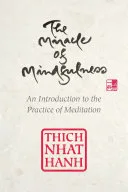
Thich Nhat Hanh’s *The Miracle of Mindfulness* succeeds remarkably in demystifying meditation for the uninitiated. The strength lies in Hanh’s directness; he avoids esoteric jargon, instead grounding principles in the observable actions of daily life. His anecdote about washing dishes, for instance, illustrates that presence is not confined to a cushion. The inclusion of his calligraphy adds a unique aesthetic dimension, though its direct contribution to the text’s core message is minimal. A notable limitation is the book’s brevity; while effective as an introduction, it only scratches the surface of the deeper philosophical underpinnings of Zen practice. For readers seeking a gentle, actionable guide to present-moment awareness, this edition offers a clear path. It is a concise, yet potent, invitation to mindful living.
📝 Description
84
Thich Nhat Hanh's 2016 book, The Miracle of Mindfulness, refines his teachings on present-moment awareness.
This edition of Thich Nhat Hanh's work on mindfulness includes his clear instructions on paying attention to the present moment, alongside archival photographs and his own calligraphy. The book acts as a simple introduction to meditation, showing how to find calm and focus in daily life. Hanh teaches that mindfulness is not about avoiding life but about fully participating in it, turning ordinary activities into chances for spiritual growth.
The text is good for people new to meditation or those wanting to improve their current practice. It will appeal to readers interested in Zen Buddhism, contemplative practices, and practical psychology. Those who like the connection between art and philosophy, shown by Hanh's calligraphy, will also find it valuable. The book's gentle style makes it accessible to many people, regardless of their past spiritual or philosophical beliefs.
Published in 2016, *The Miracle of Mindfulness* arrived as global interest in mindfulness and meditation grew, partly due to scientific studies on mental well-being. Thich Nhat Hanh, a respected Vietnamese Zen Buddhist monk, poet, and peace activist, had established a significant presence in the West. His teachings offered a way to connect Eastern contemplative practices with Western secular understanding, resonating with a broader search for spiritual alternatives.
💡 Why Read This Book?
• You will learn to transform mundane activities, like answering the phone or peeling an orange, into anchors for present-moment awareness, a core practice taught by Thich Nhat Hanh. • You can gain an introduction to the "Fourteen Mindfulness Trainings," offering ethical guidelines for integrating mindfulness into daily interactions, as presented in the book. • This work provides a foundational understanding of "interbeing," the concept of interconnectedness, as articulated by Hanh, allowing for a shift in perspective on your relationship with the world.
⭐ Reader Reviews
Honest opinions from readers who have explored this book.
❓ Frequently Asked Questions
What is the original publication year of Thich Nhat Hanh's The Miracle of Mindfulness?
The original publication year for Thich Nhat Hanh's *The Miracle of Mindfulness* was 2016. This specific edition features archival photography and his calligraphy.
What are the main benefits of practicing mindfulness as described in the book?
The book emphasizes that mindfulness, or paying attention to the present moment, can reduce stress, improve focus, and foster a deeper appreciation for everyday life. It teaches practitioners to find peace in simple actions.
Is Thich Nhat Hanh's The Miracle of Mindfulness suitable for beginners?
Yes, the book is widely considered an excellent introduction to mindfulness and meditation for beginners. Thich Nhat Hanh uses simple language and practical examples to make the concepts accessible.
What makes the 2016 edition of The Miracle of Mindfulness unique?
This 2016 edition is distinguished by its inclusion of archival photography and Thich Nhat Hanh's own calligraphy, adding an artistic and personal layer to the teachings on mindfulness.
Does the book offer specific exercises for practicing mindfulness?
Absolutely. Thich Nhat Hanh includes numerous practical exercises throughout the book, demonstrating how to apply mindfulness to common activities like breathing, walking, washing dishes, and more.
What is the concept of 'interbeing' mentioned in relation to this book?
'Interbeing' is a key concept Thich Nhat Hanh explores, signifying the interconnectedness of all things. The book suggests that by understanding interbeing, one can cultivate compassion and wisdom.
🔮 Key Themes & Symbolism
Present Moment Awareness
The central theme is cultivating full attention on the here and now, transforming ordinary moments into opportunities for peace. Thich Nhat Hanh illustrates this through simple acts like breathing consciously, walking with awareness, or fully engaging in household chores. This practice aims to free individuals from dwelling on the past or worrying about the future, anchoring them in the reality of their current experience. The book suggests that true liberation comes not from escaping circumstances, but from being fully present within them.
Mindful Action
This theme emphasizes that mindfulness is not confined to formal meditation sessions but is to be integrated into all daily activities. Whether washing dishes, answering the telephone, or drinking tea, each action becomes a vehicle for practice. Hanh presents these mundane tasks as sacred opportunities to cultivate presence and joy. The goal is to perform actions with full attention, transforming routine into a source of deep engagement and understanding of oneself and the world.
Interconnectedness (Interbeing)
A profound concept explored is 'interbeing,' the understanding that nothing exists independently. Hanh posits that we are all interconnected with everything else in the universe. Recognizing this interdependence fosters compassion, reduces ego-centricity, and promotes a sense of unity. This perspective challenges the illusion of separation, encouraging a more holistic and empathetic approach to life and our relationships with others and the environment.
The Fourteen Mindfulness Trainings
These trainings, derived from Buddhist precepts, serve as ethical guidelines for living a mindful life. They address issues such as non-violence, responsible consumption, and the cultivation of loving speech. Hanh presents them not as rigid rules, but as practices to deepen awareness and compassion in our interactions with ourselves, others, and the planet. They provide a framework for applying mindfulness principles in concrete, ethical ways.
💬 Memorable Quotes
Direct passages from the work, attributed to the author.
“The present moment is filled with joy and happiness. If you are not present, you will miss it.”
— This statement highlights the core message of mindfulness: that opportunities for contentment are abundant, but only accessible when one is fully engaged with the present. It suggests that distraction is the primary barrier to experiencing life's richness.
“Washing the dishes is one of the most beautiful meditations.”
— This memorable line exemplifies Hanh's philosophy of integrating mindfulness into daily life. It reframes a mundane chore as a potentially profound spiritual practice, accessible through focused attention.
“The root of suffering is attachment.”
— This concise statement reflects a fundamental Buddhist teaching. It suggests that our tendency to cling to desires, possessions, or ideas is a primary cause of distress, and letting go is key to liberation.
💡 Key Ideas
Editorial paraphrase of the work's core concepts — not direct quotes.
We can be aware of the fact that we are breathing. This is the first exercise in mindfulness.
This quote underscores the simplicity and accessibility of mindfulness. It points to the breath as a constant, readily available anchor for present-moment awareness, accessible to anyone, anywhere, at any time.
Because you are alive, everything is possible.
This quote emphasizes the inherent potential and preciousness of life. It encourages readers to recognize the power and opportunity that comes with simply being alive and present.
🌙 Esoteric Significance
Tradition
While rooted in Zen Buddhism, Thich Nhat Hanh's work on mindfulness transcends strict sectarian boundaries, aligning with broader contemplative and mystical traditions that emphasize direct experience and inner transformation. Its focus on present-moment awareness and the interconnectedness of all things echoes Gnostic and Hermetic ideals of immanence and unity. The emphasis on cultivating inner peace and ethical conduct through disciplined attention can be seen as a practical application of principles found in various esoteric paths seeking self-realization and harmony with the cosmos.
Symbolism
The act of breathing, central to the book's practice, serves as a primary symbol of life, presence, and the constant flow of existence. It is the universal, ever-present anchor to the here and now. The simple act of washing dishes or drinking tea becomes symbolic of finding the sacred in the mundane, transforming ordinary actions into rituals of awareness. The calligraphy itself, as an art form, symbolizes the mindful creation and the beauty that arises from focused intention, mirroring the book's core teachings.
Modern Relevance
Thich Nhat Hanh's teachings on mindfulness are foundational to contemporary secular mindfulness movements, particularly in therapeutic settings like Mindfulness-Based Stress Reduction (MBSR). Thinkers and practitioners in fields ranging from positive psychology to organizational leadership draw directly from his accessible methods. His concept of 'interbeing' also appeals to ecological and systems thinking, influencing those who advocate for interconnectedness and holistic approaches to global challenges. His work continues to be a touchstone for anyone seeking practical tools for mental well-being and ethical living.
👥 Who Should Read This Book
• Individuals seeking practical, non-dogmatic methods to reduce stress and anxiety, who will learn simple yet profound techniques for anchoring themselves in the present moment. • Aspiring practitioners of Zen Buddhism or general meditation, who will benefit from a clear, accessible introduction to core concepts like mindful breathing and mindful action. • Readers interested in the intersection of spirituality and daily life, who will discover how to infuse mundane activities with meaning and presence, as taught by Thich Nhat Hanh.
📜 Historical Context
The publication of *The Miracle of Mindfulness* in 2016 occurred within a global resurgence of interest in contemplative practices, largely driven by secular applications in psychology and neuroscience. Thich Nhat Hanh, a central figure in introducing Zen Buddhism to the West since his exile from Vietnam in 1966, was already a revered voice. His work emerged during a time when Western societies were grappling with the perceived alienation of modernity and seeking meaning beyond materialism. Hanh’s approach provided a gentle, non-dogmatic path to inner peace, contrasting with more rigid or ascetic forms of spiritual discipline. He engaged with Western audiences by framing mindfulness within accessible, everyday experiences, making it distinct from the more academic or culturally specific offerings of some Eastern traditions. His influence was felt across various spiritual and secular communities, bridging Eastern philosophy and Western practical well-being.
📔 Journal Prompts
The practice of mindful breathing: What sensations arise as you focus solely on your inhalations and exhalations?
Mindful action in daily chores: How can the act of washing dishes become an opportunity for present-moment awareness?
Reflecting on interbeing: Consider one object and trace its interconnectedness to other elements in the world.
The Fourteen Mindfulness Trainings: Which training calls to you most strongly for personal integration?
Your relationship with the present moment: How often do you find yourself truly inhabiting the 'here and now'?
🗂️ Glossary
Mindfulness
The practice of paying full attention to the present moment, non-judgmentally. It involves being aware of one's thoughts, feelings, bodily sensations, and surrounding environment as they arise.
Zen
A school of Mahayana Buddhism that originated in China, emphasizing meditation and intuitive understanding, particularly through direct experience rather than scripture.
Interbeing
A concept articulated by Thich Nhat Hanh, signifying the interconnectedness and interdependence of all phenomena. Nothing exists in isolation; everything contains everything else.
Meditation
A practice where an individual uses a technique – such as mindfulness, or focusing the mind on a particular object, thought, or activity – to train attention and awareness, and achieve a mentally clear and emotionally calm and stable state.
Fourteen Mindfulness Trainings
Ethical guidelines or precepts taught by Thich Nhat Hanh, derived from Buddhist principles, intended to foster compassion, understanding, and non-violence in daily life.
Presence
The state of being fully aware and attentive to the current moment, free from distractions of past regrets or future anxieties.
Calligraphy
Decorative handwriting or handwritten lettering. In this context, it refers to Thich Nhat Hanh's artistic practice, often integrated with his teachings.