Elementals and Nature-Spirits
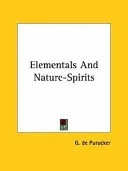
 82
82

Elementals and Nature-Spirits
G. De Purucker's Elementals and Nature-Spirits presents a systematic, albeit dated, cosmology of the unseen world. The book's strength lies in its detailed classification of elemental beings, offering a structured framework for understanding traditional animistic beliefs through a Theosophical lens. Purucker's exposition on the nature of these entities, particularly their connection to the classical elements, provides a compelling, if speculative, model of planetary consciousness. However, the text's primary limitation is its reliance on a specific, often arcane, esoteric doctrine. While the facsimile reprint preserves the original text's integrity, the language and conceptual framework can be dense for newcomers. A particularly striking passage details the supposed 'building' activities of salamanders in relation to fire, illustrating the imaginative depth of the work. Ultimately, this is a valuable resource for scholars of Theosophy and historical esotericism, but less accessible for those seeking a general introduction to nature spirits.
📝 Description
82
G. De Purucker's Elementals and Nature-Spirits, originally published in 2005, examines the unseen intelligences governing natural phenomena.
This facsimile reprint of G. De Purucker's 2005 work, Elementals and Nature-Spirits, focuses on the subtle beings believed to inhabit the natural world. It aims to explain the unseen forces and intelligences that purportedly direct Earth's phenomena, including weather patterns and the cycles of plant and animal life. The book is intended for students of esoteric philosophy, occultism, and comparative religion. Those interested in the Theosophical movement, De Purucker's own writings, and historical views on animism and elemental beings will find it particularly pertinent. It speaks to individuals seeking a deeper connection with nature and an understanding of its animating principles through traditional frameworks.
The text details the concept of elementals, described as semi-intelligent entities associated with earth, air, fire, and water. It outlines their supposed hierarchy, attributes, and their interactions with both the physical world and humanity. The book also addresses nature-spirits, a wider classification of beings connected to specific locations or natural features, thus presenting a systematic view of the planet's invisible ecology.
This book draws from 19th and early 20th-century esoteric thought, particularly the Theosophical Society's studies of nature spirits and elemental kingdoms. Its origins lie in a period of heightened interest in spiritualism and occultism, influenced by figures such as Helena Blavatsky and Rudolf Steiner. The work attempts to bridge scientific observation with spiritual understandings of the natural world, placing it within a lineage of literature seeking such reconciliation.
💡 Why Read This Book?
• Gain a structured understanding of elemental hierarchies, as detailed in Purucker's framework, to re-evaluate your perception of natural phenomena. • Explore the Theosophical perspective on nature spirits, drawing connections to early 20th-century occultism and its influence on spiritual thought. • Understand the concept of 'elementals' as presented in the book, offering a unique lens through which to view the subtle energies animating earth, air, fire, and water.
⭐ Reader Reviews
Honest opinions from readers who have explored this book.
❓ Frequently Asked Questions
What is the primary focus of G. De Purucker's Elementals and Nature-Spirits?
The book primarily focuses on the classification and characteristics of elemental beings, often associated with the classical elements, and nature-spirits believed to inhabit the earth's natural forces and phenomena.
When was Elementals and Nature-Spirits first published?
While this edition is a facsimile reprint from 2005, the original publication date of G. De Purucker's work would likely stem from the early to mid-20th century, a period of significant esoteric publishing.
Who was G. De Purucker?
G. De Purucker was an influential figure in the Theosophical movement, serving as the leader of the Theosophical Society from 1929 until his death in 1942, known for his extensive writings on spiritual philosophy.
What are elementals according to this book?
The book describes elementals as semi-intelligent beings intrinsically linked to the four classical elements: earth (gnomes), air (sylphs), fire (salamanders), and water (undines), each with specific roles and characteristics.
Is this book suitable for beginners in esoteric studies?
While offering foundational concepts, the book uses terminology and frameworks specific to Theosophy. Beginners might benefit from prior familiarity with esoteric principles or reading introductory texts alongside it.
What does 'facsimile reprint' mean in relation to this book?
A facsimile reprint means this edition is a close reproduction of the original publication. It aims to preserve the book's original layout and content, including any imperfections due to its age.
🔮 Key Themes & Symbolism
The Elemental Kingdoms
The work meticulously details the classification and nature of elemental beings, positing their existence as fundamental constituents of the cosmos. Purucker outlines distinct kingdoms associated with the four classical elements—earth, air, fire, and water—and explores their respective characteristics, functions, and hierarchical structures. This concept positions elementals not merely as mythical figures but as active agents in the unfolding of natural law, influencing everything from geological processes to meteorological events, and even human consciousness.
Nature-Spirits and Planetary Consciousness
Beyond the basic elementals, the book looks at the broader category of nature-spirits, entities that are often depicted as guardians or animating principles of specific natural locations or phenomena. This theme connects deeply with animistic traditions, suggesting that the Earth itself possesses a form of consciousness, expressed through these diverse spiritual intelligences. Purucker's exploration invites readers to perceive the natural world as alive and imbued with intelligence, moving beyond a purely materialistic worldview.
Theosophical Cosmology
Elementals and Nature-Spirits is firmly rooted in Theosophical doctrine, reflecting the movement's efforts to synthesize Eastern and Western esoteric traditions with a purportedly scientific framework. The book's teachings on elementals are presented as part of a larger cosmic evolutionary plan, aligning with concepts of reincarnation, karma, and the multi-layered nature of reality as taught by figures like Helena Blavatsky. It serves as an example of how Theosophy sought to explain the unseen dimensions of existence.
The Interplay Between Visible and Invisible Realms
A central tenet of the book is the continuous interaction between the physical, visible world and the subtle, invisible realms inhabited by elementals and nature-spirits. Purucker suggests that these unseen beings play a central role in manifesting physical phenomena and that human actions and consciousness can influence this interplay. This perspective encourages a more holistic view of reality, where the spiritual and material are inextricably linked and mutually influential.
💬 Memorable Quotes
Direct passages from the work, attributed to the author.
“The elemental world is the stage upon which the dramas of the physical world are enacted.”
— This statement captures the book's view of elementals as fundamental actors, suggesting that the visible events we perceive are manifestations of unseen forces and intelligences at work.
“Each element possesses its own hierarchy of beings, from the lowest to the highest.”
— This highlights the structured, hierarchical nature of the elemental kingdoms as presented in the text, emphasizing that these are not chaotic forces but organized spiritual entities.
“Nature-spirits are the custodians of the earth's beauty and vitality.”
— This interpretation emphasizes the protective and life-giving role attributed to nature-spirits, portraying them as essential guardians of the planet's natural environments and energies.
“Understanding elementals provides a key to unlocking the deeper secrets of nature.”
— This suggests that by studying these unseen forces, one can gain a more profound and comprehensive understanding of the underlying mechanisms and intelligences governing the natural world.
💡 Key Ideas
Editorial paraphrase of the work's core concepts — not direct quotes.
The thought-forms of humans can influence the activities of elementals.
This paraphrased concept points to the reciprocal relationship between human consciousness and the elemental world, suggesting that our mental states and intentions can impact these subtle beings.
🌙 Esoteric Significance
Tradition
This work is deeply embedded within the Theosophical tradition, a major esoteric lineage founded in the late 19th century. It represents an effort to systematize and elaborate upon concepts of unseen intelligences and hierarchies within the cosmos, drawing inspiration from Eastern philosophies, Hermeticism, and Kabbalah, but presenting them through the unique lens of Theosophical doctrine. Purucker's contribution lies in offering a detailed cosmology that complements and expands upon the foundational teachings of Helena Blavatsky.
Symbolism
Key symbols in the book include the four classical elements (earth, air, fire, water), each representing not just physical substances but also distinct energetic principles and realms inhabited by specific types of elementals like gnomes, sylphs, salamanders, and undines. The concept of 'hierarchy' itself is symbolic, representing the ordered, intelligent structure of the cosmos, suggesting that even the most subtle forces operate according to divine or natural law.
Modern Relevance
Contemporary paganism, animistic practices, and certain branches of depth psychology continue to engage with the concept of nature spirits and elemental forces. Modern esotericists and practitioners of nature-based spiritualities often draw upon historical frameworks like Purucker's to conceptualize their relationship with the environment. The book's ideas resonate with current ecological awareness, offering a spiritual perspective on the interconnectedness of all life and the intelligence perceived within natural systems.
👥 Who Should Read This Book
• Students of Theosophy and G. De Purucker's teachings seeking to understand his cosmology of elemental beings. • Researchers of comparative religion and occultism interested in historical perspectives on nature spirits and animistic beliefs. • Individuals drawn to esoteric philosophy who wish to explore traditional frameworks for comprehending the unseen forces animating the natural world.
📜 Historical Context
Elementals and Nature-Spirits emerges from the fertile ground of late 19th and early 20th-century esoteric thought, particularly the Theosophical movement. Founded by Helena Blavatsky in 1875, Theosophy sought to revive ancient wisdom traditions and present a spiritual interpretation of the universe, often engaging with scientific discoveries of the era. G. De Purucker, a prominent Theosophist who led the Theosophical Society from 1929 to 1942, continued this tradition with works like this. The book's exploration of nature spirits and elementals was contemporary with similar interests in spiritualism, occultism, and nature-based spirituality, influenced by thinkers like Rudolf Steiner, who also developed complex cosmologies involving elemental beings. While figures like Arthur Conan Doyle documented spiritualist phenomena, Purucker offered a more systematic philosophical framework. The reception of such works often involved intense debate between materialist science and burgeoning spiritual movements.
📔 Journal Prompts
The classification of elementals by classical element (earth, air, fire, water) and their associated activities.
Nature-spirits as custodians of specific geographical locations or natural phenomena.
The Theosophical framework for understanding elemental hierarchies within the broader cosmos.
The concept of 'semi-intelligent beings' and their role in natural processes.
The reciprocal influence between human thought-forms and elemental intelligences.
🗂️ Glossary
Elementals
Semi-intelligent beings believed to be associated with and embodying the classical elements of earth, air, fire, and water. They are often seen as the building blocks of the physical world in esoteric traditions.
Nature-Spirits
A broader category of spiritual beings, often considered guardians or animating forces of specific places, geographical features, or natural phenomena, such as mountains, rivers, or forests.
Gnomes
Elementals traditionally associated with the earth element, believed to inhabit the subterranean realms and be involved with the growth and mineral aspects of the planet.
Sylphs
Elementals associated with the air element, often described as ethereal beings inhabiting the atmosphere and influencing winds and weather patterns.
Salamanders
Elementals of the fire element, believed to reside in and control fire, often depicted as serpentine or lizard-like beings.
Undines
Elementals associated with the water element, traditionally inhabiting rivers, lakes, and oceans, and influencing aquatic life and currents.
Theosophy
A spiritual philosophy founded in the late 19th century by Helena Blavatsky, seeking to synthesize Eastern and Western esoteric traditions and present a spiritual interpretation of the universe and humanity's place within it.
This book appears in 1 collection
🔮 Readers Also Liked
Browse all →








From the “Nature Spirits” Collection
View all →
More Free Occult Philosophy Books
View all →