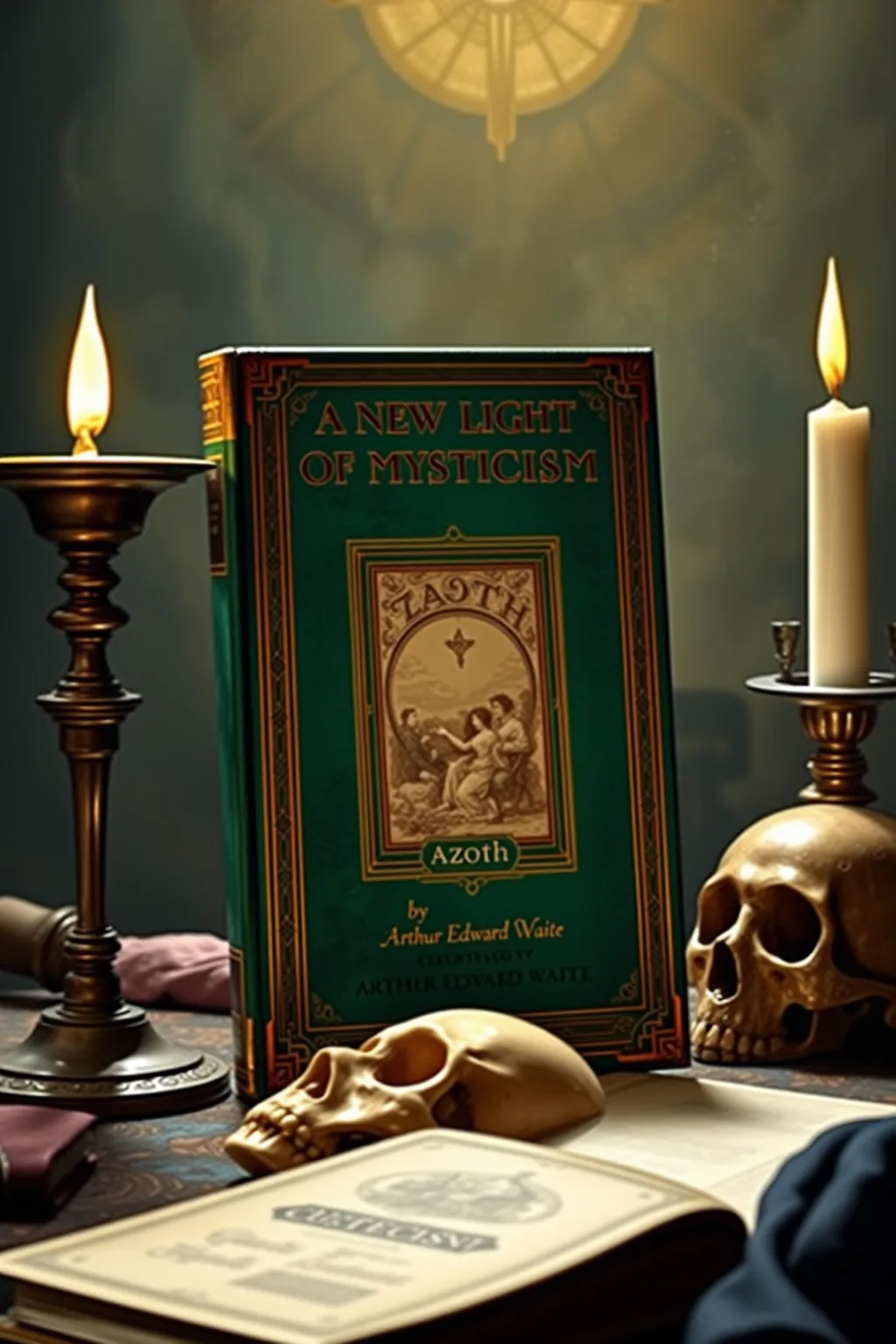
A New Light of Mysticism: Azoth; Or, The Star in the East ...
 79
79

A New Light of Mysticism: Azoth; Or, The Star in the East ...



'A New Light of Mysticism: Azoth; Or, The Star in the East' by Arthur Edward Waite is a cornerstone of esoteric literature that continues to captivate modern seekers of occult knowledge. Waite's mastery of alchemical and mystical symbolism shines through in this 1893 classic, making it an essential read for anyone interested in the deeper mysteries of the universe. The book's dense prose and rich historical references can be daunting, but for those willing to invest the time, the rewards are immense. Waite's insights into spiritual enlightenment and the quest for higher knowledge are as relevant today as they were over a century ago. For contemporary esoteric seekers, 'Azoth' offers a unique perspective on ancient wisdom and its application in modern times. This book is a must-read for those who wish to deepen their understanding of mysticism and contemplation.
📝 Description
79
Arthur Edward Waite published 'Azoth; Or, The Star in the East' in 1912, examining mystical and esoteric thought.
Arthur Edward Waite's 1912 work, 'A New Light of Mysticism: Azoth; Or, The Star in the East,' examines mystical and esoteric subjects. Waite focuses on the complex symbolism found in divine concepts and ancient traditions. He encourages readers to consider hidden meanings within these practices. His writing style aims to foster introspection, making the book suitable for individuals interested in the mystical foundations of the material world. The text acts as a guide through mystical ideas, pointing toward spiritual understanding.
This book is for those who wish to study the deeper currents of esoteric philosophy. Waite draws on various traditions to illuminate his points. The work is not a simple introduction but requires careful reading and contemplation of its subject matter. It aims to connect readers with the underlying spiritual principles that Waite believed informed existence.
Published in 1912, this book sits within the broader context of early 20th-century Western esotericism, a period marked by renewed interest in alchemy, mysticism, and occult philosophy. Waite, a prolific author in this field, sought to systematize and interpret these traditions for a contemporary audience. The work engages with concepts like the Azoth, a universal solvent or medicine in alchemy, and the 'Star in the East,' a symbol often linked to spiritual revelation and esoteric knowledge, placing it alongside other studies that sought to reconcile ancient wisdom with modern understanding.
💡 Why Read This Book?
Reading 'A New Light of Mysticism: Azoth; Or, The Star in the East' today provides readers with a deep dive into the esoteric traditions that have shaped modern spirituality. Arthur Edward Waite's insights into alchemical symbolism and mystical contemplation offer a unique perspective on the quest for higher knowledge. This book is particularly valuable for those interested in understanding the historical context of occult practices and their enduring relevance. By engaging with Waite's profound explorations, readers can gain a deeper appreciation for the mystical dimensions of life and enhance their spiritual journeys.
⭐ Reader Reviews
Honest opinions from readers who have explored this book.
❓ Frequently Asked Questions
What is the main theme of 'A New Light of Mysticism: Azoth; Or, The Star in the East'?
The main themes of this book include spiritual enlightenment, alchemical symbolism, and the quest for higher knowledge. Waite explores ancient mystical traditions and their relevance to modern seekers.
Who should read this book?
This book is ideal for those interested in esoteric literature, occult studies, and mystical contemplation. Readers with a background in spirituality or a curiosity about ancient wisdom will find it particularly enriching.
What is the historical significance of 'Azoth'?
Published in 1893, 'Azoth' reflects the resurgence of interest in the occult during the late 19th century. It provides valuable insights into the esoteric traditions that have influenced modern spirituality.
🔮 Key Themes & Symbolism
Divine Transformation
Waite's exploration of divine transformation studies the mystical processes that can elevate the human spirit. Through alchemical symbolism and spiritual philosophy, he reveals the pathways to spiritual enlightenment and the transcendence of physical limitations.
The Symbolism of the Azoth
The Azoth, a central symbol in alchemy, represents the divine substance that can transform base elements into gold. Waite's analysis of this symbol provides readers with a deeper understanding of its mystical implications and its connection to the 'Star in the East'.
The Mystical 'Star in the East'
Waite's examination of the 'Star in the East' reveals its significance in various mystical traditions. This theme invites readers to contemplate the deeper meanings behind this ancient symbol and its role in spiritual contemplation.
💬 Memorable Quotes
Direct passages from the work, attributed to the author.
“The path to spiritual enlightenment lies in the transformation of the divine within.”
— Waite emphasizes the inner journey towards spiritual transcendence through alchemical symbolism.
“The 'Star in the East' guides the seeker through the labyrinth of mystical thought.”
— Waite's exploration of this symbol serves as a beacon for those seeking spiritual enlightenment and hidden knowledge.
“The mysteries of the universe are revealed to those who seek the hidden knowledge.”
— Waite encourages readers to study the depths of esoteric literature to uncover the truths of the divine and the physical.
💡 Key Ideas
Editorial paraphrase of the work's core concepts — not direct quotes.
The Azoth is the key to unlocking the mysteries of the physical and the divine.
This quote highlights the significance of the Azoth in bridging the gap between the mystical and the physical realms.
Contemplation of the divine leads to the illumination of the spirit.
This quote underscores the importance of mystical contemplation in achieving spiritual transcendence.
🌙 Esoteric Significance
Tradition
This book belongs to the Hermetic tradition, which emphasizes the study of alchemy, astrology, and theurgy. Waite's exploration of the Azoth and the 'Star in the East' aligns with the Hermetic pursuit of spiritual enlightenment and the transformation of the divine within.
Symbolism
Key symbols in the book include the Azoth, representing the divine substance of transformation, and the 'Star in the East,' symbolizing spiritual guidance and illumination. These symbols are integral to Waite's exploration of mystical and esoteric themes.
Modern Relevance
Today, 'A New Light of Mysticism' remains relevant to modern practitioners of spiritual contemplation and esoteric studies. Its exploration of alchemical symbolism and mystical philosophy continues to influence contemporary esoteric thought and practices, making it a valuable resource for seekers of hidden knowledge and spiritual enlightenment.
👥 Who Should Read This Book
Beginners in mystical and esoteric studies will find foundational knowledge and accessible insights, while scholars will appreciate the depth and complexity of Waite's analysis. Spiritual seekers will benefit from the book's exploration of divine transformation and the symbolism of the Azoth. Practitioners of mystical contemplation will find valuable guidance in Waite's philosophical and spiritual journey.
📜 Historical Context
Written during a time of renewed interest in mysticism and occult studies, 'A New Light of Mysticism' reflects the spiritual fervor of the late 19th and early 20th centuries. Arthur Edward Waite's work was instrumental in bridging the gap between ancient mystical traditions and modern esoteric thought, influencing generations of spiritual seekers and scholars. The book's exploration of alchemical symbolism and mystical philosophy provided a foundation for many contemporary esoteric practices and beliefs.
📔 Journal Prompts
Reflect on the significance of the Azoth in your spiritual journey.
How does the 'Star in the East' guide your contemplation of mystical themes?
Consider the role of divine transformation in your pursuit of spiritual enlightenment.
What are the deeper meanings behind the symbols explored in 'A New Light of Mysticism'?
How does Waite's exploration of mystical philosophy influence your understanding of the divine and the physical?
🗂️ Glossary
Azoth
A central symbol in alchemy representing the divine substance that can transform base elements into gold. It signifies the potential for spiritual and physical transformation.
Hermetic Tradition
A philosophical and spiritual tradition that emphasizes the study of alchemy, astrology, and theurgy. It seeks to uncover hidden knowledge and achieve spiritual enlightenment.
Theurgy
The practice of rituals, sometimes seen as magical in nature, performed with the intention of invoking the action or presence of one or more gods, especially with the goal of uniting with the divine.
Alchemical Symbolism
The use of symbols in alchemy to represent mystical and spiritual processes. These symbols often have multiple layers of meaning, revealing hidden knowledge and divine truths.
Mystical Contemplation
The practice of deep, introspective reflection on mystical and spiritual themes. It involves seeking a connection with the divine and uncovering the hidden meanings behind ancient and esoteric traditions.
This book appears in 1 collection
🔮 Readers Also Liked
Browse all →







More by Arthur Edward Waite
All books →


From the “Christian Mysticism” Collection
View all →








More Free Mysticism & Contemplation Books
View all →