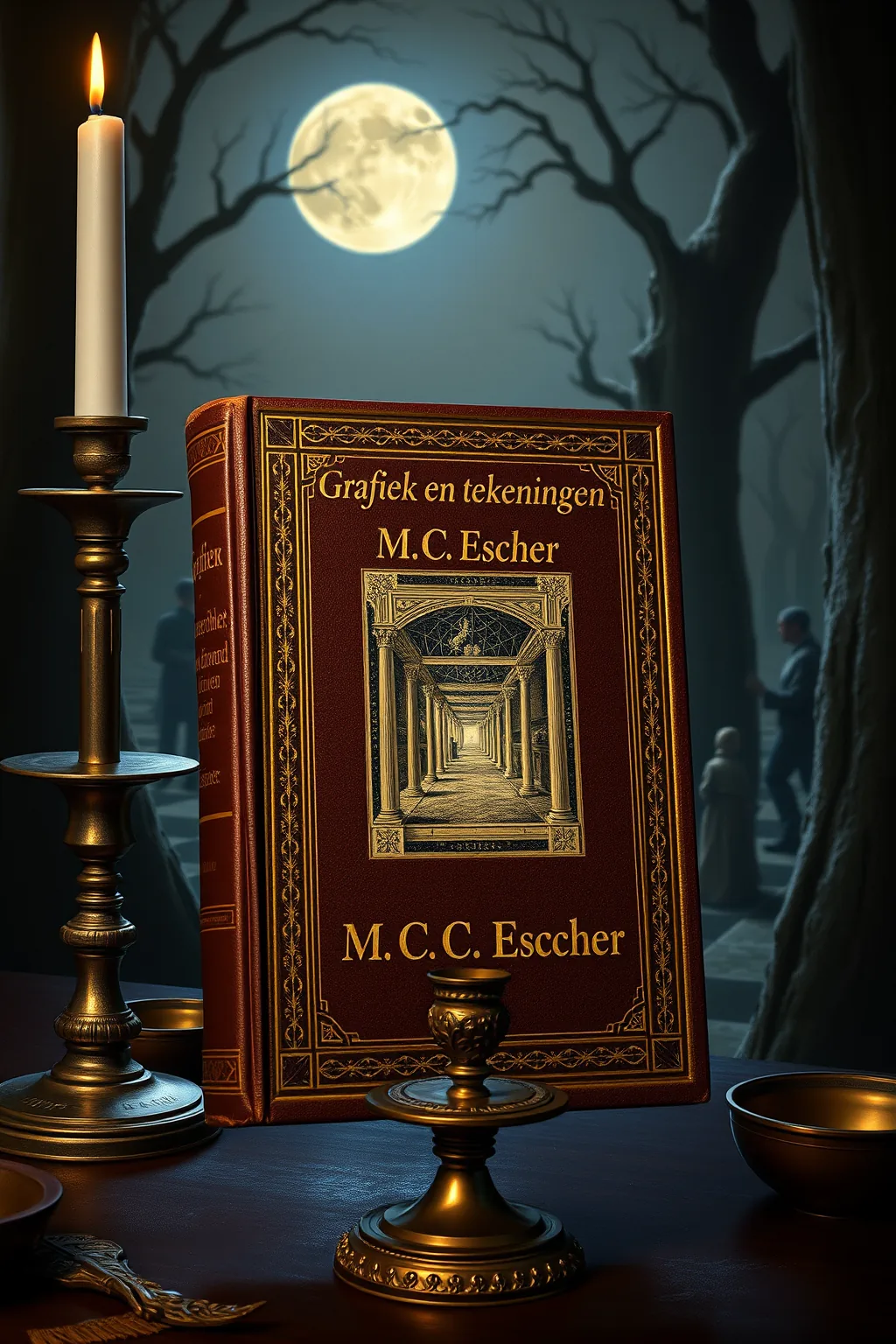
Grafiek en tekeningen
 73
73

Grafiek en tekeningen

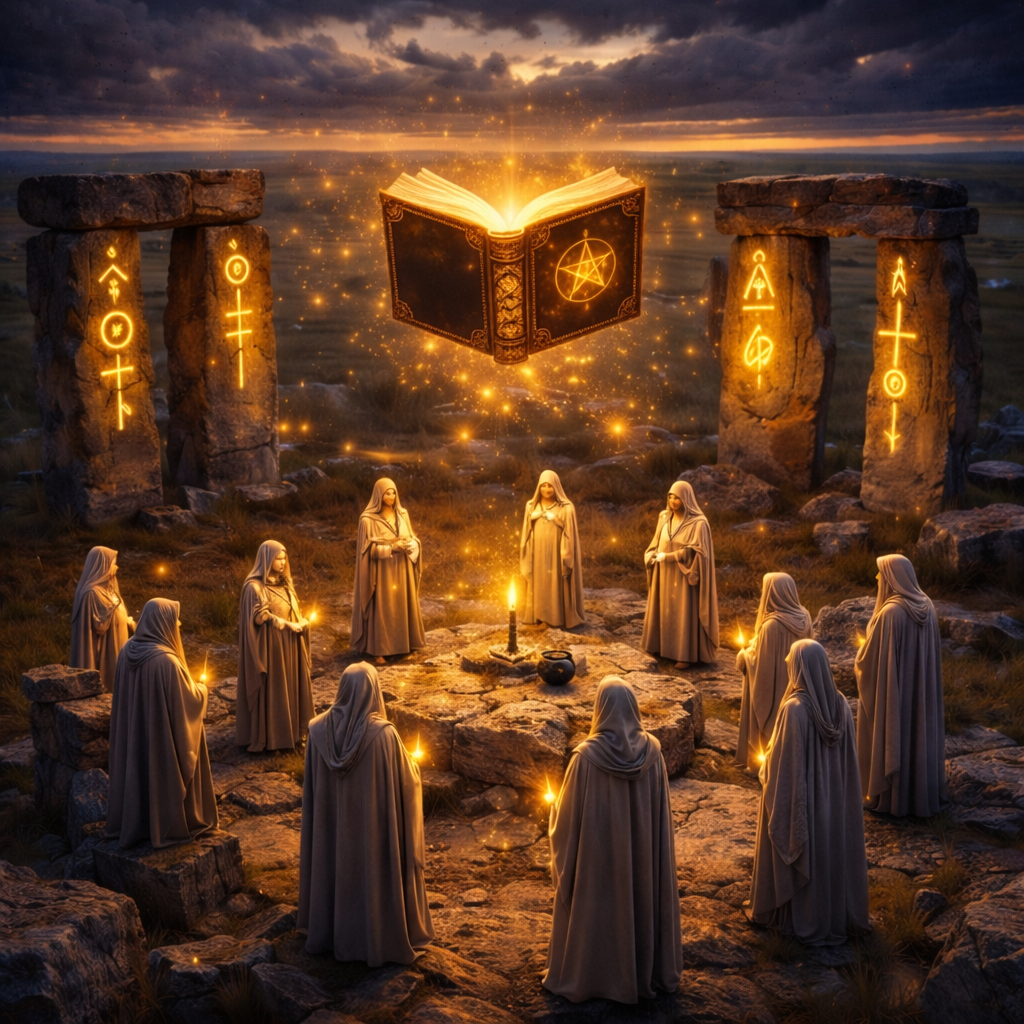

Aurelia Blackwood (Occult Philosophy Critic) — Escher’s ‘Grafiek en tekeningen’ is an indispensable compendium for the discerning mystic. Escher, consciously or not, tapped into the fundamental principles of cosmic manifestation and perceptual illusion, aligning his art with esoteric doctrines of duality, transformation, and the interconnectedness of all things. His tessellations and impossible structures are not merely visual puzzles but potent diagrams of metaphysical truths, revealing the fluid nature of reality and the mind’s capacity to transcend conventional limitations. This collection offers profound insights into the visual language of the ineffable, making it a treasure for scholars of Hermeticism, sacred geometry, and the philosophy of mind. It is a testament to the power of art as a vessel for profound, hidden knowledge, urging us to look beyond the surface of appearance.
📝 Description
73
Grafiek en tekeningen presents M.C. Escher's graphic art, which challenges visual logic and perception.
This collection, 'Grafiek en tekeningen,' showcases the graphic art of M.C. Escher. His prints and drawings are more than just images; they are visual investigations into space, time, and the nature of reality. Escher’s work often plays with impossible perspectives and transformations, inviting viewers to question their assumptions about the world. The meticulously rendered pieces demonstrate a deep engagement with mathematical concepts and visual paradoxes.
Readers will find in these works an invitation to contemplate the structure of existence and the nature of perception. Escher's art encourages a close examination of visual rules and their potential subversion. This volume serves as a record of his artistic output, highlighting the intellectual and perceptual puzzles embedded within his creations.
While not explicitly esoteric, Escher's art resonates with traditions that question the perceived reality and seek underlying orders. His explorations of symmetry, tessellations, and infinite repetition echo principles found in Hermetic philosophy and certain contemplative practices. The way his work contorts space and logic can be seen as a visual analogue to mystical inquiries into the nature of consciousness and existence, prompting viewers to consider the structure of reality beyond immediate sensory input.
💡 Why Read This Book?
Unravel the visual enigmas of M.C. Escher, a cartographer of the mind's infinite landscapes. This collection offers a unique portal into the esoteric dimensions of art, revealing hidden patterns and philosophical depths. Ideal for seekers of hidden knowledge, artists exploring symbolism, and scholars of metaphysical concepts who wish to engage with profound visual meditations on reality, perception, and the sublime.
⭐ Reader Reviews
Honest opinions from readers who have explored this book.
❓ Frequently Asked Questions
What makes Escher's work relevant to mystical and esoteric themes?
Escher's fascination with infinity, paradox, and the transformation of forms mirrors concepts found in various esoteric traditions, such as Hermeticism and Gnosticism, which explore the nature of reality, perception, and the divine order.
Are there specific esoteric traditions Escher's art aligns with?
While Escher didn't explicitly affiliate with any single tradition, his work resonates with principles of sacred geometry, the cyclical nature of existence, and the idea that reality is not as solid or fixed as it appears, echoing themes in Hermeticism and Neoplatonism.
What kind of 'hidden knowledge' can one find in this book?
The 'hidden knowledge' lies in understanding the symbolic language of his art—how tessellations represent unity in diversity, how impossible structures challenge our perception of reality, and how his works invite contemplation on the fundamental laws governing the universe.
Is this book suitable for beginners in esoteric studies?
Yes, the visual nature of Escher's art makes abstract esoteric concepts more accessible. Beginners can approach it as a beautiful introduction to visual symbolism and philosophical inquiry, sparking curiosity about deeper meanings.
What is the 'magic' in Escher's graphic art?
The 'magic' is in its ability to alter perception, create a sense of wonder, and reveal the underlying order and interconnectedness of the universe. It’s a visual alchemy that transforms the ordinary into the extraordinary, inviting a shift in consciousness.
🔮 Key Themes & Symbolism
The Architecture of Perception
Escher's mastery lies in deconstructing and reconstructing our visual understanding of space and form. His impossible constructions, like the Penrose stairs, are not mere optical illusions but profound meditations on the limits of human perception and the subjective nature of reality. This theme explores how our minds interpret visual information and how Escher's art challenges these ingrained interpretations, revealing the malleable boundaries between the real and the imagined, a concept deeply resonant with mystical traditions that seek to transcend ordinary consciousness.
Metamorphosis and Transformation
A central tenet in many esoteric philosophies is the concept of constant change and metamorphosis. Escher’s iconic tessellations, where one figure seamlessly transforms into another, embody this principle visually. From birds to fish, from reptiles to humans, these transformations are not random but follow intricate, often symmetrical, patterns. This theme explores the alchemical notion of transmutation, the cyclical nature of existence, and the hidden unity that underlies apparent diversity, suggesting a cosmic dance of creation and dissolution.
The Infinite and the Interconnected
Escher’s recurring exploration of infinity, whether through repeating patterns that recede into the impossible or through self-referential loops, speaks to a fundamental esoteric fascination with the boundless. His works often suggest a universe where everything is interconnected, where the micro and macrocosm reflect each other. This theme examines how his art visually articulates the concept of unity in multiplicity, a central to many mystical paths, inviting contemplation on the idea that separation is an illusion and that all existence is part of a single, magnificent whole.
💬 Memorable Quotes
Direct passages from the work, attributed to the author.
“I can only create what I see.”
— This seemingly simple statement belies a profound artistic philosophy, suggesting that the artist's inner vision and perception are the true source of creation, hinting at a reality accessible through internal exploration.
“Drawing is a way of exploring.”
— Escher viewed his artistic process as an investigation into the nature of reality, form, and perception, aligning his creative journey with a path of discovery and the unveiling of hidden truths.
“It is not an illusion, it is a construction.”
— Escher's emphasis on the constructed nature of his art highlights the deliberate manipulation of visual elements to create profound effects, encouraging viewers to analyze the mechanics of perception and reality itself.
“Even if the world is full of wonders, it is only the art that can make us see them.”
— This suggests that art serves as a crucial conduit, translating the inherent wonders and esoteric truths of existence into a form that human consciousness can apprehend and appreciate.
💡 Key Ideas
Editorial paraphrase of the work's core concepts — not direct quotes.
There is no reason to think that the world is not as strange as we imagine it to be.
This quote challenges conventional assumptions about reality, opening the mind to the possibility that the universe is far more wondrous and complex than our everyday experiences suggest, a core tenet of esoteric inquiry.
🌙 Esoteric Significance
Tradition
Escher's work deeply appeals to Hermetic principles, particularly the concept of 'As Above, So Below,' as his repeating patterns and self-referential structures suggest a universal order reflected at all scales. His explorations of paradox and illusion align with Gnostic ideas about the deceptive nature of the material world and the search for true knowledge (gnosis). The meticulous precision and exploration of form also touch upon sacred geometry, a fundamental language in many esoteric traditions for understanding divine creation and cosmic harmony.
Symbolism
Key symbols in Escher’s art include tessellations, representing unity in diversity and the interconnectedness of all things; impossible structures, symbolizing the limitations of linear thought and the potential for transcending perceived reality; and transformations, embodying alchemical principles of change, rebirth, and the cyclical nature of existence. His use of animals often carries symbolic weight, reflecting archetypal forces and the primal energies of nature.
Modern Relevance
In an age saturated with digital illusions and rapidly evolving understandings of consciousness and reality, Escher's art remains remarkably relevant. It serves as a visual primer for contemplating the nature of virtual reality, artificial intelligence, and the subjective experience of consciousness. His work encourages critical thinking about perception, challenges our assumptions about the solidity of the world, and offers a timeless aesthetic framework for exploring profound philosophical and metaphysical questions that continue to shape our understanding of ourselves and the universe.
👥 Who Should Read This Book
This volume is a rich source for a diverse readership. **Beginners** in esoteric studies will find Escher's visual language an accessible entry point into abstract metaphysical concepts. **Scholars** of art history, philosophy, and mathematics will discover a rich source for analyzing the intersection of logic, perception, and symbolic representation. **Seekers** of hidden knowledge will be captivated by the profound contemplative qualities of the artwork, which invites introspection and a questioning of reality. **Practitioners** of disciplines like meditation or mindfulness may find Escher's work a powerful aid for developing focus and exploring altered states of consciousness, offering visual keys to unlocking deeper levels of awareness.
📜 Historical Context
Created during the mid-20th century, a period marked by profound societal shifts, scientific advancements (including quantum physics, which challenged classical notions of reality), and a resurgence of interest in spiritual and philosophical inquiry, M.C. Escher's 'Grafiek en tekeningen' emerged from a fertile ground of intellectual curiosity. The post-war era saw a global search for meaning and order amidst chaos, leading many to explore alternative worldviews and artistic expressions that transcended the mundane. Escher’s unique graphic style, with its meticulous detail and exploration of paradox, resonated with artists, mathematicians, and thinkers who were questioning the established paradigms of reality and perception. His work became a visual language for complex ideas, bridging the gap between art, science, and philosophy, and finding a particular resonance within circles interested in the symbolic and the esoteric.
📔 Journal Prompts
Reflect on a moment when your perception of reality shifted unexpectedly. How does Escher's work echo this experience?
Analyze the concept of 'infinity' as depicted in one of Escher's works. How does it relate to your understanding of the boundless or the eternal?
Consider the idea of transformation. Choose an Escher print and describe the metamorphosis occurring within it, relating it to personal growth or change.
How does Escher's use of symmetry and pattern influence your sense of order or chaos? Does it suggest a hidden universal structure?
Imagine stepping into one of Escher's impossible worlds. What philosophical or existential questions arise from such a transition?
🗂️ Glossary
Tessellation
A pattern or tiling made up of repeating shapes that fit perfectly together without any gaps or overlaps, often seen in Escher's work to represent unity and interconnectedness.
Metamorphosis
The process of transformation from one form to another, a recurring theme in Escher's art that visually represents change, evolution, and the interconnectedness of different beings or states.
Impossible Construction
A visual representation of an object or structure that defies the laws of physics and geometry in three-dimensional space, challenging the viewer's perception of reality and logic.
Paradox
A seemingly absurd or self-contradictory statement or proposition that, when investigated or explained, may prove to be well-founded or true. Escher's art often explores visual paradoxes.
Sacred Geometry
The study of geometric forms and patterns believed to be of divine origin or to represent universal principles, often used in esoteric traditions to understand creation and cosmic order.
This book appears in 2 collections
🔮 Readers Also Liked
Browse all →









From the “Ceremonial Magic” Collection
View all →






More Free Magic & Ritual Books
View all →