61
61

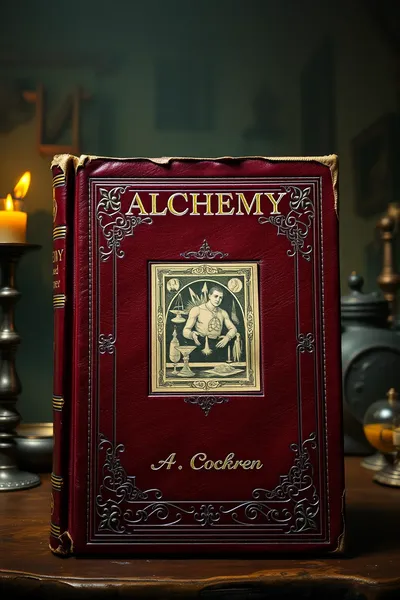
Kabalistic Alchemy



Review by Aurelia Blackwood (Occult Philosophy Critic) — Arthur Edward Waite's 'Kabalistic Alchemy' is a masterful synthesis of Kabbalistic and alchemical thought, presenting a rich tapestry of esoteric insights that will captivate both scholars and spiritual seekers. Waite's deep understanding of the Hermetic tradition shines through, making this book a must-read for anyone interested in the mystical underpinnings of alchemy. The strengths of this work lie in its scholarly rigor and the author's ability to render complex concepts accessible. This book is particularly suited for those who seek to understand the deeper symbolic meanings behind alchemical practices and their connections to Kabbalistic teachings.
📝 Description
<p>Arthur Edward Waite's 'Kabalistic Alchemy' invites readers into a labyrinth of mystical and occult knowledge, where the boundaries between alchemy and Kabbalah blur into a rich tapestry of hidden symbolism and philosophical depth. This profound work is not merely an academic exploration but a spiritual journey, weaving together ancient Jewish mysticism and the arcane arts of alchemy. The atmosphere is dense with esoteric allure, evoking a sense of timeless wisdom that beckons seekers of hidden truths. Waite's meticulous research and esoteric insights make this book an indispensable guide for those who delve into the mysteries of the Hermetic tradition. The philosophical significance lies in its ability to bridge the mystical and the material, offering readers a pathway to transcendental understanding.</p>
✍️ Author

Arthur Edward Waite
Arthur Edward Waite (2 October 1857 – 19 May 1942) was a British poet and scholarly mystic who wrote extensively on the occult and Western esotericism. He was the co-creator of the Rider–Waite Tarot (also called the Rider–Waite–Smith or Waite–Smith deck).
💡 Why Read This Book?
Read 'Kabalistic Alchemy' to gain a profound understanding of the mystical intersection between alchemy and Kabbalah. Ideal for seekers of hidden knowledge, scholars of esoteric traditions, and practitioners looking to deepen their spiritual and philosophical insights. This book offers a unique perspective on ancient mystical practices, making it an invaluable resource for anyone interested in the occult and metaphysical realms.
⭐ Reader Reviews
Honest opinions from readers who have explored this book.
❓ Frequently Asked Questions
What is the main focus of 'Kabalistic Alchemy'?
The main focus is the intersection of Kabbalistic teachings and alchemical practices, exploring their shared symbolism and mystical significance.
Is this book suitable for beginners in alchemy?
While it provides deep insights, beginners may find it challenging due to its complex subject matter and esoteric language.
How does Waite integrate Kabbalah and alchemy?
Waite weaves together Kabbalistic symbolism and alchemical processes, revealing hidden correspondences and mystical interpretations.
What makes this book unique?
Its uniqueness lies in the author's ability to bridge two distinct mystical traditions, offering a fresh perspective on ancient practices.
Is 'Kabalistic Alchemy' purely theoretical?
No, it offers both theoretical insights and practical applications, making it relevant for both scholars and practitioners.
🔮 Key Themes & Symbolism
Kabbalistic Symbolism
Waite delves into the intricate web of Kabbalistic symbolism, revealing how these ancient Jewish mystical symbols intersect with alchemical practices. This theme is central to understanding the deeper meanings behind alchemical processes and their spiritual significance.
Alchemical Processes
The book explores the various stages of alchemical transformation, from the prima materia to the philosopher's stone. Waite's insights into these processes are enriched by Kabbalistic interpretations, providing a unique perspective on the mystical journey of alchemy.
Mystical Correspondences
One of the most fascinating themes is the exploration of mystical correspondences between Kabbalistic teachings and alchemical symbols. Waite uncovers hidden connections that reveal the interconnectedness of these ancient traditions, offering readers a deeper understanding of their shared wisdom.
💬 Memorable Quotes
“Alchemy is not merely a physical process but a spiritual journey.”
— This quote underscores the mystical dimension of alchemy, emphasizing its role as a path to spiritual transformation.
“The Kabbalistic tree of life is the blueprint of the universe.”
— Waite highlights the profound symbolism of the Kabbalistic tree of life, suggesting it as a cosmic map for spiritual seekers.
“The philosopher's stone represents the ultimate unity of all things.”
— This quote reflects the alchemical goal of achieving spiritual and material unity, a theme central to Waite's exploration.
“Symbolism is the language of the mystics.”
— Waite emphasizes the importance of symbolism in mystical traditions, suggesting it as a key to unlocking hidden knowledge.
“The journey of alchemy is a journey of the soul.”
— This quote underscores the spiritual nature of alchemy, inviting readers to view it as a path to self-discovery and enlightenment.
🌙 Esoteric Significance
Tradition
This book belongs to the Hermetic tradition, which encompasses alchemy, astrology, and Kabbalah. Waite's work is particularly significant for its integration of Kabbalistic teachings into the alchemical framework, offering a unique perspective on these ancient mystical practices.
Symbolism
Key symbols include the Kabbalistic tree of life, the philosopher's stone, and the stages of alchemical transformation. These symbols are imbued with deep mystical meanings, representing the journey of spiritual and material alchemy.
Modern Relevance
In today's world, 'Kabalistic Alchemy' remains relevant for practitioners of Hermetic and Kabbalistic traditions. Modern scholars and seekers continue to draw on Waite's insights to deepen their understanding of these mystical practices and their applications in contemporary spirituality.
👥 Who Should Read This Book
This book is ideal for advanced scholars of esoteric traditions, spiritual seekers with a background in Kabbalah or alchemy, and practitioners looking to integrate these mystical traditions into their spiritual practice. Beginners may find it challenging due to its complex subject matter and esoteric language, but those with a foundational understanding will find it deeply enriching.
📜 Historical Context
Arthur Edward Waite's 'Kabalistic Alchemy' was written in an era when interest in occult and mystical traditions was resurging. The late 19th and early 20th centuries saw a renewed fascination with Hermeticism and Kabbalah, driven by figures like Eliphas Lévi and the Hermetic Order of the Golden Dawn. Waite's work was instrumental in bridging these traditions, offering a comprehensive exploration of their shared symbolism and practices. His book has had a lasting influence on the study of alchemy and Kabbalah, inspiring generations of scholars and practitioners.
📔 Journal Prompts
Reflect on how Kabbalistic symbolism enriches your understanding of alchemy.
Consider the spiritual significance of the alchemical journey in your own life.
Explore the mystical correspondences between Kabbalah and alchemy in your personal practice.
How does the philosopher's stone symbolize unity in your spiritual quest?
Journal about the role of symbolism in your mystical and spiritual journey.
🗂️ Glossary
Kabbalah
An ancient Jewish mystical tradition that explores the hidden meanings behind the Hebrew scriptures and the nature of the divine.
Alchemy
A mystical and philosophical tradition focused on the transformation of matter and the pursuit of spiritual enlightenment.
Prima Materia
The initial substance in alchemical processes, representing the raw material that undergoes transformation.
Philosopher's Stone
A legendary alchemical substance said to transform base metals into gold and grant immortality, symbolizing spiritual perfection.
Tree of Life
A central symbol in Kabbalah representing the structure of the universe and the path to spiritual enlightenment.


![The Kybalion [A Study Of The Hermetic Philosophy Of Ancient Egypt And Greece].pdf (PDFy mirror)](/img/thumb/the-kybalion-a-study-of-the-hermetic-philosophy-of-ancient-egypt-and-greece-pdf-pdfy-mirror.webp)