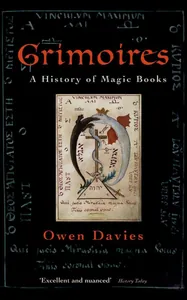
Grimoires

 78
78

Grimoires
Owen Davies’ "Grimoires" offers a welcome corrective to the more fanciful accounts of magical texts. The book’s strength lies in its grounded, scholarly approach, meticulously tracing the development and content of grimoires from their medieval roots to their more modern iterations. Davies’ examination of the fifteenth-century *Grimorium Verum*, for instance, provides a clear, unvarnished look at its structure and intended use, stripping away layers of myth. However, the text occasionally feels overly academic, at times sacrificing narrative flow for exhaustive detail. While the comprehensive bibliography is invaluable for further research, the main body could benefit from more direct engagement with the subjective experience of practitioners. The section detailing the influence of figures like Agrippa and the dissemination of texts through printing presses in the 16th century highlights the book’s meticulous research.
Despite its dense academic tone, "Grimoires" serves as an essential reference for understanding the material reality of magical books.
📝 Description
78
Owen Davies' 2009 book examines the historical reality of magical books, moving past sensationalism.
Published in 2009, Owen Davies' Grimoires offers a scholarly look at magical books and how they developed historically. The book goes beyond common sensational ideas to study the real content, use, and cultural effect of these texts, which are often misrepresented. Davies focuses on an academic grasp of grimoires, their origins, and their role in Western esotericism. It is not a manual for casting spells. The book places grimoires within larger historical and intellectual movements, following their path from ancient times through the Renaissance and into modern periods. It also looks at the social situations and belief structures that led to and kept alive the magic documented in these manuscripts. Davies discusses ideas like how magical knowledge is passed on, the magician's role as a go-between, and the power thought to be in written spells and invocations. The work examines the materials, languages, and structures that make a grimoire distinct from other occult writings.
This book examines grimoires, a specific genre of magical literature that flourished from the late Middle Ages through the early modern period. These texts typically contain instructions for rituals, invocations, and the creation of magical objects. Davies places them within the broader history of Western esotericism, a tradition that includes alchemy, astrology, and various forms of ceremonial magic. By focusing on the content and historical context, the book distinguishes academic study from popular or sensationalized views of magic.
💡 Why Read This Book?
• You will learn the specific historical development of grimoires, including their emergence in the late medieval period and proliferation in the 16th century, distinguishing them from earlier magical texts. • You will gain an understanding of the varied content found within grimoires, such as conjurations, rituals, and the classification of spirits, as detailed in Davies' analysis of key examples. • You will grasp the scholarly debate surrounding grimoires, differentiating between academic study and popular occultism, as Davies contextualizes their study within broader historical scholarship.
⭐ Reader Reviews
Honest opinions from readers who have explored this book.
❓ Frequently Asked Questions
What period do Owen Davies' "Grimoires" primarily focus on?
The work spans centuries, but a significant focus is placed on the period from the late medieval era through the Renaissance and into the 18th century, examining the earliest forms and widespread circulation of grimoires.
Are "Grimoires" by Owen Davies a practical guide to magic?
No, "Grimoires" is a scholarly historical analysis of magical books, not a practical spellbook. It examines their content, origins, and cultural significance rather than providing instructions for magical practice.
What is the 'Grimorium Verum' and why is it important?
The 'Grimorium Verum' is a significant grimoire examined in the book, dating potentially to the mid-18th century. Davies discusses its structure and contents, highlighting its influence on later magical traditions.
Does Owen Davies discuss the printing press's impact on grimoires?
Yes, the book details how the advent of the printing press in the 16th century facilitated the wider dissemination of grimoires, moving them from scarce manuscripts to more accessible printed volumes.
How does "Grimoires" differ from other books on magic?
Unlike many popular occult books, Davies' work is rigorously academic, relying on historical research and textual analysis to understand grimoires as cultural artifacts and historical documents.
What are some examples of grimoires discussed in the book?
The book analyzes various grimoires, including the 'Grimorium Verum', and references texts attributed to figures like Solomon and the influence of works like the 'Key of Solomon'.
🔮 Key Themes & Symbolism
Evolution of Magical Texts
The book meticulously charts the transformation of magical texts from rare, hand-copied manuscripts to widely printed books. It highlights how the advent of the printing press in the 16th century democratized access to grimoires, leading to their broader circulation and influence across Europe. Davies examines specific examples to illustrate this shift, detailing the content and intended use of these evolving documents and their integration into various occult traditions.
The Magician's Craft
Davies focuses on the practical application and theoretical underpinnings of magic as presented in grimoires. He explores the rituals, conjurations, and spirit evocations described, analyzing the magician's perceived role as an intermediary between the human and supernatural realms. The work dissects the structure of these texts, revealing the systematic approach to magic that characterized their use by practitioners.
Cultural and Social Context
Understanding grimoires requires situating them within their historical milieu. Davies connects the content and practice of magic to the social, religious, and intellectual climate of the times. He examines how societal beliefs and anxieties influenced the creation and interpretation of magical texts, demonstrating that grimoires were not isolated artifacts but products of their specific cultural environments.
Authenticity and Authorship
A significant aspect of grimoire studies involves discerning genuine historical practices from later accretions or fabrications. Davies addresses the complex issue of authorship, often attributed to ancient figures like Solomon, and critically evaluates the authenticity of various texts. This theme underscores the scholarly effort to reconstruct the history of magic based on verifiable textual evidence.
💬 Memorable Quotes
Direct passages from the work, attributed to the author.
“Grimoires were not merely collections of spells but also repositories of cosmological beliefs and instructions for navigating spiritual hierarchies.”
— This interpretation highlights that these books served a dual purpose: practical magical application and a framework for understanding the universe and its divine or spiritual forces.
“The efficacy of a grimoire was often tied to its perceived antiquity and the purity of its transmission.”
— This suggests that for users of magical books, the belief in the text's ancient origins and uncorrupted form was crucial to its perceived power and effectiveness.
“Many grimoires detail specific rituals for invoking spirits, often requiring precise timing and consecrated tools.”
— This points to the systematic and often rigorous nature of magical practices described in these texts, emphasizing the need for adherence to detailed instructions for successful evocation.
“Scholarly analysis seeks to separate historical practice from later romanticized or fictionalized accounts of magic.”
— This interpretation emphasizes the academic goal of grounding the study of grimoires in historical reality, distinguishing them from modern fantasy or sensationalist portrayals of witchcraft and sorcery.
💡 Key Ideas
Editorial paraphrase of the work's core concepts — not direct quotes.
The transition from manuscript to print dramatically altered the accessibility and dissemination of magical knowledge.
This paraphrased concept emphasizes the lasting impact of the printing press, making previously scarce magical texts available to a much wider audience and accelerating the spread of occult ideas.
🌙 Esoteric Significance
Tradition
This work engages primarily with the Western Esoteric Tradition, particularly its magical and ceremonial branches. It bridges the gap between historical textual analysis and the practical traditions of ceremonial magic that utilize grimoires. While not a practitioner's manual, it provides essential historical grounding for understanding the lineage and evolution of magical practices that continue to be explored today, fitting within the broader Hermetic and Kabbalistic currents that inform much of Western esotericism.
Symbolism
Grimoires often employ specific symbolic language and structures. For example, the use of divine names, angelic hierarchies, and planetary correspondences are central motifs. The book explores how these elements function not just as symbolic representations but as active components within magical rituals, intended to channel specific energies or establish authority over invoked entities. The very form of the grimoire, often presented as a direct transmission from ancient sources, carries symbolic weight.
Modern Relevance
Contemporary practitioners of ceremonial magic, occult researchers, and scholars of religion continue to draw upon Davies' historical analysis. His work provides a critical lens for understanding the origins of practices found in modern magical orders and solitary practices. Thinkers exploring the history of consciousness, the impact of textual transmission on belief systems, and the cultural construction of magic find valuable insights within its pages, informing current discussions on the enduring appeal of ritual and esoteric knowledge.
👥 Who Should Read This Book
• Students of Western Esotericism: Those researching traditions like ceremonial magic, Hermeticism, or Kabbalism will find a crucial historical overview of the texts that underpin many of these practices. • Comparative Religion Scholars: Researchers interested in the history of belief, ritual, and the intersection of religion and magic will gain insight into a specific genre of occult literature. • Aspiring Occult Historians: Individuals seeking a rigorous, academic foundation for understanding the development and content of magical books, moving beyond sensationalism, will benefit greatly.
📜 Historical Context
Published in 2009, Owen Davies' "Grimoires" emerged during a period of renewed academic interest in Western esotericism, building upon foundational work by scholars like Frances Yates and Antoine Faivre. The early 21st century saw a proliferation of studies exploring magic, alchemy, and astrology as legitimate historical phenomena, moving beyond earlier dismissals. Davies’ work situates itself within this scholarly milieu, directly engaging with texts that were often marginalized or sensationalized. The book's examination of the printing press's role in disseminating grimoires, particularly from the 16th century onwards, contrasts with the earlier manuscript culture. It addresses the reception of these texts, acknowledging both their influence on popular culture and their complex relationship with religious authorities who often viewed them with suspicion, a tension present since the medieval period.
📔 Journal Prompts
The concept of the 'magician's Bible' as applied to grimoires.
The significance of the printing press in disseminating occult knowledge.
The perceived power embedded within the written word in magical texts.
The historical relationship between grimoires and established religious doctrines.
The structure and components of a typical grimoire discussed by Davies.
🗂️ Glossary
Grimoire
A book of magic, typically containing spells, instructions for invoking spirits, and magical formulas. The term is often associated with texts from the late medieval period onwards.
Evocation
The act of calling forth or summoning a spirit or supernatural entity, typically through ritualistic means as described in grimoires.
Conjuration
A type of magical invocation, often involving the use of powerful names or commands to compel a spirit to appear or perform a task.
Manuscript Culture
The historical period and practice of creating and disseminating texts through hand-copying, prior to the widespread adoption of the printing press.
Ceremonial Magic
A formalized system of magic involving elaborate rituals, specific tools, incantations, and often the invocation of supernatural beings.
Grimorium Verum
A specific and influential grimoire, believed to have originated in the mid-18th century, detailing instructions for pacts with demons and various magical operations.
The Key of Solomon
A pseudepigraphal grimoire attributed to King Solomon, containing magical texts and instructions for various rituals, influential in Western esotericism.
🔮 Readers Also Liked
Browse all →







More by Owen Davies
All books →




More Free Magic & Ritual Books
View all →