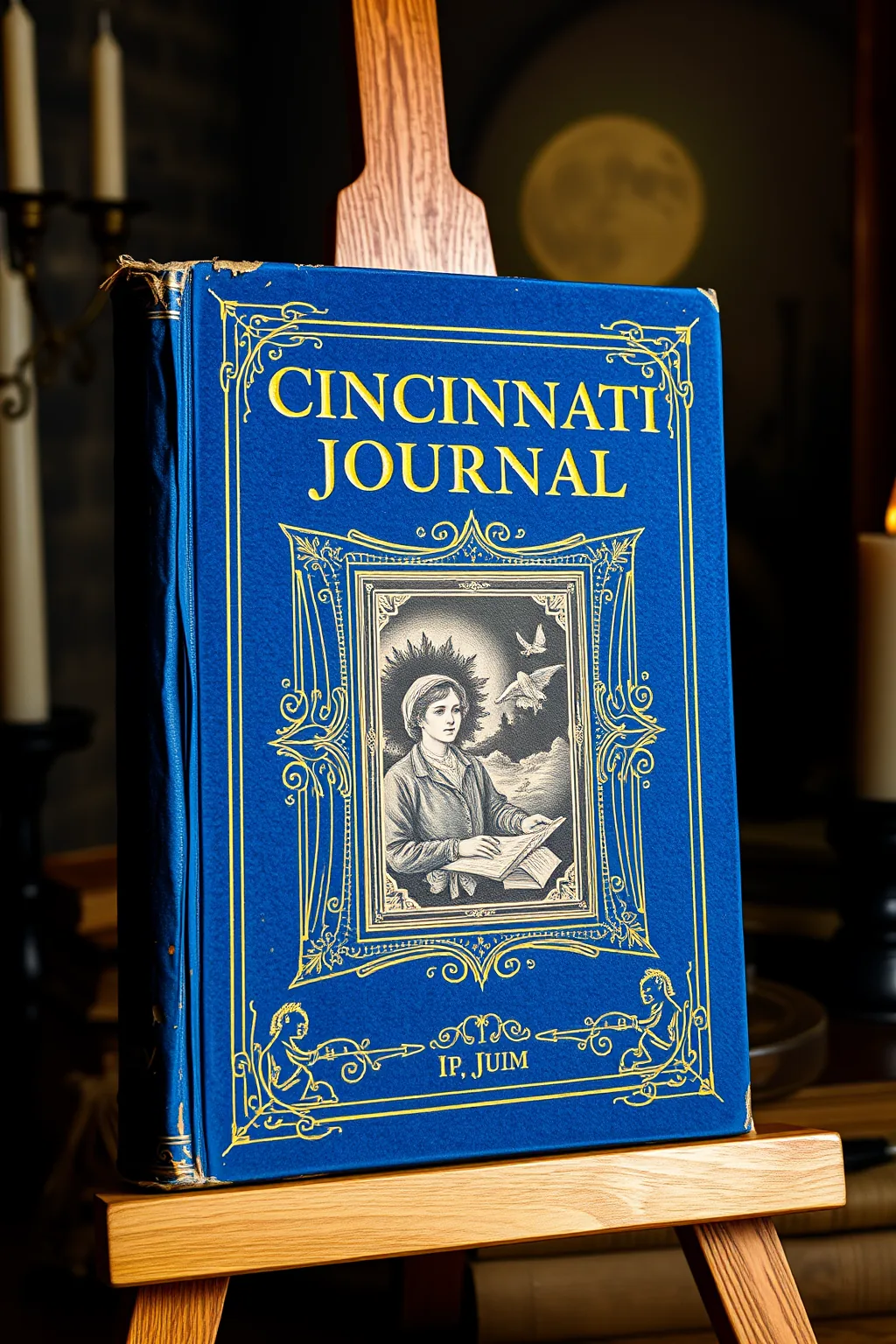
Cincinnati journal of ceremonial magick
 61
61

Cincinnati journal of ceremonial magick


Evander Ashcroft (Alchemy & Hermeticism Editor) — The 'Cincinnati Journal of Ceremonial Magick' is a rare gem for serious students of the occult. It eschews sensationalism for authentic exploration, offering scholarly yet accessible insights into ritualistic practices and their underlying philosophical frameworks. The depth of knowledge presented, particularly concerning the integration of various magical traditions, is commendable. This journal is an indispensable resource for those seeking to move beyond superficial understandings and engage directly with the transformative power of ceremonial work. Its pages resonate with a profound respect for the ancient arts.
📝 Description
61
The 'Cincinnati Journal of Ceremonial Magick' began publishing in 1990.
This periodical collects articles on ceremonial magick, focusing on practical application and theoretical understanding. It presents overlooked rituals, analyses of symbolic language, and discussions on the occult. The journal aims to connect practitioners and scholars with the deeper aspects of magical practice. Its content often touches upon the intersection of consciousness and the wider universe. The collected issues function as a serial grimoire, detailing methods for engaging with unseen forces. The publication emphasizes a serious approach to the study and practice of ceremonial magic. It encourages readers to actively participate in understanding these traditions.
The journal's approach is marked by both intellectual seriousness and a deep respect for its subject matter. It seeks to foster a more rigorous engagement with the principles and techniques of ceremonial magic. The articles cover a range of topics, from historical practices to contemporary interpretations. The aim is to create a space for sustained inquiry into the hidden aspects of reality and personal transformation.
The 'Cincinnati Journal of Ceremonial Magick' situates itself within the broader Western esoteric tradition, particularly the lineage of ceremonial magic. This tradition, which gained significant traction in the late 19th and early 20th centuries with figures like Aleister Crowley and the Hermetic Order of the Golden Dawn, emphasizes the systematic use of ritual, symbolism, and will to effect change in consciousness and the external world. The journal's content likely engages with these historical currents while also reflecting later developments and individual interpretations within the field.
💡 Why Read This Book?
Unlock profound esoteric knowledge and explore the intricate tapestry of ceremonial magick. This journal is an essential guide for practitioners seeking to deepen their ritualistic understanding, scholars investigating occult traditions, and seekers yearning to connect with the hidden currents of power and transformation. It offers a pathway to ancient wisdom and practical application.
⭐ Reader Reviews
Honest opinions from readers who have explored this book.
❓ Frequently Asked Questions
What is ceremonial magick?
Ceremonial magick is a structured system of ritualistic practice aimed at invoking spiritual entities, transforming consciousness, or manifesting desired outcomes through symbolic actions, incantations, and focused will.
Is this journal suitable for beginners?
While it delves into complex topics, the journal's comprehensive approach makes it valuable for beginners willing to dedicate themselves to study. Foundational concepts are often explored through practical examples, offering a rich learning environment.
What kind of rituals are discussed?
The journal covers a broad spectrum, from invocation and evocation to elemental workings, planetary magick, and the creation of sacred space, often drawing from historical and contemporary grimoires.
Are there practical exercises included?
Yes, many articles offer practical guidance, theoretical breakdowns of ritual components, and suggestions for personal experimentation within the framework of ceremonial magick.
What is the philosophical underpinning of the magick presented?
The philosophical underpinnings are diverse, often rooted in Hermeticism, Kabbalah, Western Esotericism, and various occult philosophies that emphasize the interconnectedness of the macrocosm and microcosm.
🔮 Key Themes & Symbolism
The Art of Invocation and Evocation
This theme explores the profound practices of calling forth spiritual intelligences and energies. It explores the nuanced techniques, ethical considerations, and psychological states required for successful invocation and evocation, examining how these practices can lead to expanded consciousness and direct communion with the divine or elemental forces. The journal dissects the symbolic language and ritualistic structures employed to create a bridge between the practitioner and the unseen realms, offering insights into the power and responsibility inherent in such workings.
Symbolism and the Language of the Cosmos
Explore the intricate range of symbols that form the bedrock of ceremonial magick. This theme unravels the multi-layered meanings embedded within sigils, divine names, planetary correspondences, and archetypal imagery. It illuminates how these symbols act as keys to unlocking deeper levels of understanding, facilitating communication with the subtle energies of the universe. The journal investigates the power of symbolic representation in shaping reality and consciousness, offering guidance on how to interpret and effectively utilize these potent tools in ritual practice.
The Transformation of Consciousness Through Ritual
This central theme focuses on the profound psychological and spiritual impact of ceremonial magick. It examines how structured rituals, intention, and focused will can induce altered states of consciousness, leading to personal growth, healing, and spiritual illumination. The journal explores the alchemical process of inner transformation, where the external act of ritual mirrors and catalyzes internal change. It highlights how engaging with ancient practices can foster self-awareness, dissolve limiting beliefs, and awaken dormant potentials within the individual.
💬 Memorable Quotes
Direct passages from the work, attributed to the author.
“Symbols are the language of the soul, spoken to the mind.”
— This emphasizes the profound power of symbolic representation in communicating deep truths and archetypal patterns directly to the subconscious and conscious mind, bypassing logical barriers.
“The greatest grimoire is the awakened consciousness.”
— This profound statement posits that the ultimate source of magical power and wisdom lies not in external texts but within the individual's own expanded awareness and understanding.
💡 Key Ideas
Editorial paraphrase of the work's core concepts — not direct quotes.
The veil between worlds is thinnest where intention is purest.
This quote emphasizes the crucial role of focused intent and purity of purpose in achieving success in magical workings. It suggests that the efficacy of ritual is directly proportional to the practitioner's clarity and dedication.
Within the circle, the microcosm mirrors the macrocosm.
Highlighting the Hermetic principle of 'As above, so below,' this quote underscores the belief that the sacred space of ritual acts as a perfect reflection of the entire universe, allowing for influence and understanding.
True magick is not merely manipulation, but communion.
This quote differentiates superficial spellcasting from deeper, more spiritual engagement, suggesting that authentic magick involves a respectful dialogue and connection with the forces being worked with.
🌙 Esoteric Significance
Tradition
This journal primarily draws from the Western Esoteric Tradition, encompassing Hermeticism, Kabbalah, ceremonial magick, and related occult disciplines. It aims to bridge historical magical practices with contemporary understanding, offering a coherent framework for exploring the divine and manifesting change through structured ritual and symbolic interaction.
Symbolism
Key symbols explored include the Pentagram, Hexagram, the Tree of Life, divine names, angelic hierarchies, and elemental correspondences. These symbols function as potent keys to understanding cosmic order, human potential, and the energetic forces that govern existence, serving as focal points for ritual and meditation.
Modern Relevance
In an age often characterized by materialism and disconnection, the journal's focus on inner transformation, symbolic language, and conscious interaction with subtle energies offers a vital counterpoint. It provides tools for personal empowerment, spiritual growth, and a deeper understanding of one's place within the cosmos, making ancient wisdom relevant to contemporary challenges.
👥 Who Should Read This Book
This journal is a treasure for the dedicated practitioner of ceremonial magick, offering advanced techniques and theoretical insights. Scholars of Western Esotericism and comparative religion will find rich primary source material and analytical depth. Seekers of spiritual truth and hidden knowledge will discover a profound pathway to understanding the universe and their place within it. Beginners eager to engage seriously with the occult will find a challenging yet rewarding introduction to the foundational principles and practices of this ancient art.
📜 Historical Context
Emerging from an era of renewed interest in occultism and esoteric philosophies, the 'Cincinnati Journal of Ceremonial Magick' likely reflects the intellectual currents of the late 19th and early 20th centuries, a period marked by the rise of secret societies, spiritualism, and the formalization of magical orders. This was a time when scholars and enthusiasts alike were actively rediscovering and reinterpreting ancient texts, grimoires, and mystical traditions from various cultures. The journal's existence suggests a community dedicated to the serious study and practice of ceremonial magick, seeking to preserve, disseminate, and evolve these ancient arts in a modern context. It stands as a evidence of the enduring human quest for hidden knowledge and spiritual exploration beyond the confines of conventional paradigms.
📔 Journal Prompts
Reflect on a personal ritual or magical act you have performed. What symbols were most potent for you, and why?
Consider the concept of 'sacred space.' How can you create and maintain a sense of the sacred in your daily life, beyond formal ritual?
Explore the relationship between intention and manifestation. How does clear intention amplify the power of your magical workings?
Write about a specific deity, spirit, or archetype that you feel drawn to. What does this entity represent, and how might you respectfully engage with its energy?
Journal about the 'language of the soul' as expressed through symbols. What symbols are recurring in your dreams or meditations, and what messages might they convey?
🗂️ Glossary
Invocation
A ritual act of calling forth a spiritual force or entity to be present within oneself or within a designated sacred space, often for guidance or empowerment.
Evocation
A ritual act of calling forth a spiritual force or entity to appear externally, often within a protective circle, for communication or instruction.
Sigil
A unique symbol created to represent a specific magical intention or concept, often charged with energy and used in ritual for manifestation.
Hermeticism
A philosophical and religious tradition based on the purported teachings of Hermes Trismegistus, emphasizing principles like 'As above, so below' and the interconnectedness of all things.
Kabbalah
A system of Jewish mysticism and esoteric interpretation that explores the nature of God, the universe, and the human soul through symbolic frameworks like the Tree of Life.
This book appears in 3 collections
🔮 Readers Also Liked
Browse all →





From the “Ritual Magic” Collection
View all →





More Free Magic & Ritual Books
View all →