Herbs for Magic and Ritual
 76
76

Herbs for Magic and Ritual
Teresa Moorey's 'Herbs for Magic and Ritual' offers a grounded approach to a subject often shrouded in vagueness. Unlike many contemporary works that prioritize poetic language over practical application, Moorey provides clear instructions for identifying, preparing, and utilizing herbs in specific ritual contexts. Her section detailing the correspondences between herbs, planets, and elements, for instance, is particularly well-organized and accessible, drawing from established Western esoteric frameworks. However, the book occasionally feels constrained by its 1997 publication date, with some discussions of historical sources lacking the benefit of more recent scholarship in magical history. A notable strength is its focus on the practicalities of herb preparation, moving beyond simple lists of correspondences to offer actionable advice. The work’s clarity on the preparation of incense and oils is a significant asset for practitioners. Despite minor limitations in its historical breadth, 'Herbs for Magic and Ritual' remains a valuable, hands-on resource for understanding the magical properties of plants.
📝 Description
76
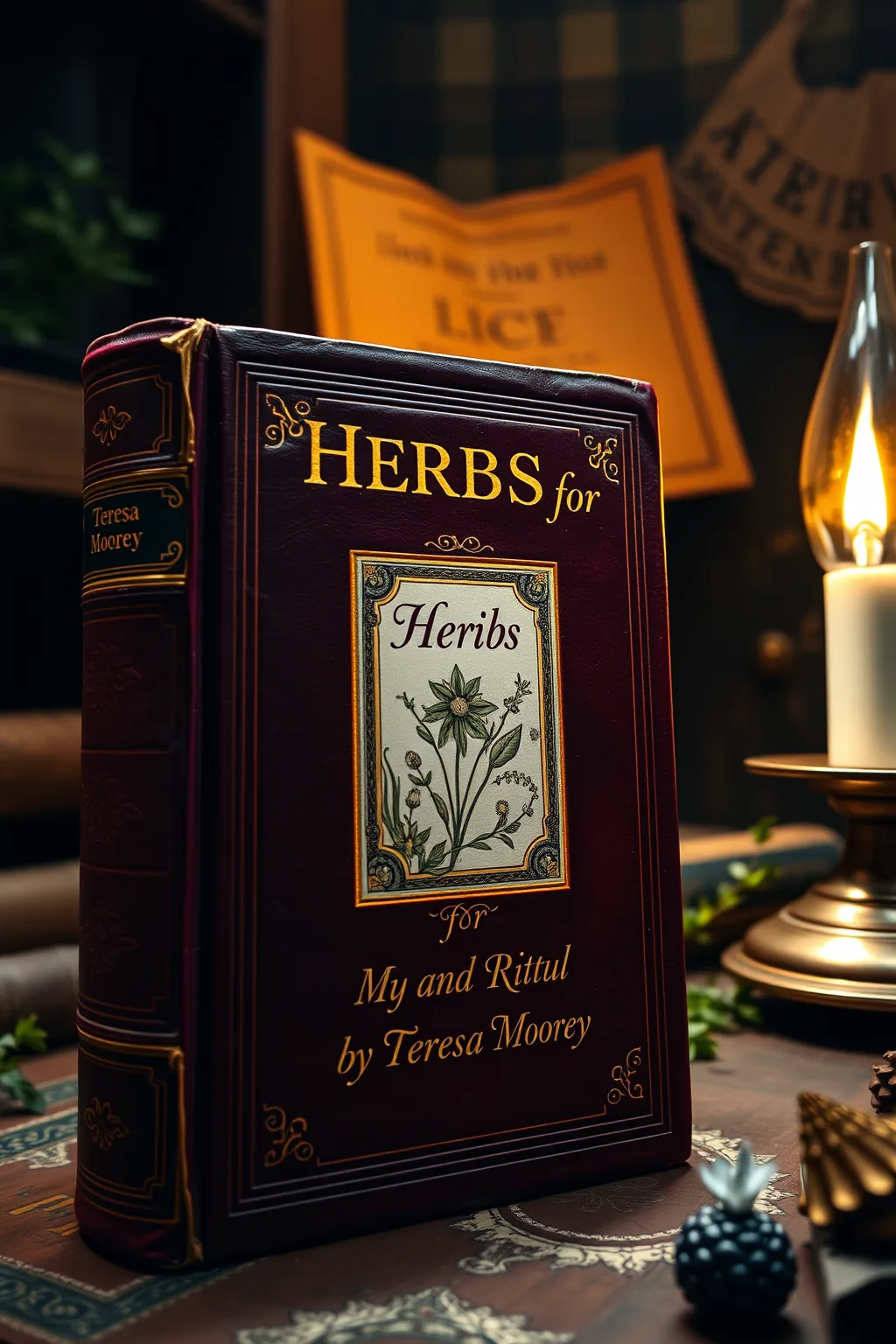
Teresa Moorey's 1997 book connects herbs to magical and ritualistic purposes.
Published in 1997, 'Herbs for Magic and Ritual' by Teresa Moorey serves as a practical guide to understanding plants through esoteric traditions. The book details the energetic properties and historical uses of various herbs, linking them directly to magical and ritualistic practices. Moorey categorizes specific plants, outlines their correspondences, and suggests methods for their integration into personal practice.
This work is aimed at practitioners of modern witchcraft, ceremonial magic, and folk magic who want a deeper connection with plant allies. It also appeals to those interested in the historical use of herbs in spiritual contexts and individuals seeking to broaden their ritual tools beyond purely symbolic items. Moorey's research draws on centuries of herbal lore, from ancient apothecaries to medieval grimoires and later occult revivals.
Moorey's book appeared during a late 20th century resurgence of interest in earth-based spiritualities and traditional magic. It builds upon a long history of herbal knowledge, referencing ancient Greek and Roman practices, medieval European grimoires, and later occult revivals. The work positions itself within a lineage that includes figures like Nicholas Culpeper, whose 'The Complete Herbal' (1653) remains an important reference for many.
💡 Why Read This Book?
• Gain practical knowledge of specific herb preparations for ritual work, such as creating incenses and oils, as detailed in Moorey's guide, offering tangible tools for magical practice. • Understand the system of plant correspondences to planets and elements, a core concept explored in the book, enabling you to select herbs with greater intention and efficacy. • Learn about the historical lineage of herbal magic, referencing figures like Nicholas Culpeper, providing context and depth to your practice beyond modern interpretations.
⭐ Reader Reviews
Honest opinions from readers who have explored this book.
❓ Frequently Asked Questions
When was Teresa Moorey's 'Herbs for Magic and Ritual' first published?
Teresa Moorey's 'Herbs for Magic and Ritual' was first published in 1997, reflecting the growing interest in earth-based spiritualities and practical magic during that period.
What kind of information does 'Herbs for Magic and Ritual' provide about plants?
The book details the energetic properties, historical uses, and magical correspondences of various herbs, offering guidance on their application in ritual and spiritual practice.
Does the book offer specific recipes or instructions?
Yes, 'Herbs for Magic and Ritual' provides practical instructions for preparing herbs, including recipes for incenses and oils, alongside advice on their ritualistic use.
Who is Nicholas Culpeper and why is he mentioned in relation to this book?
Nicholas Culpeper was an English herbalist and astrologer whose work, 'The Complete Herbal' (1653), is a foundational text for Western herbalism and is referenced as a precursor to Moorey's exploration of plant lore.
What esoteric traditions does 'Herbs for Magic and Ritual' draw upon?
The book draws upon a broad spectrum of Western esoteric traditions, including folk magic, witchcraft, and ceremonial magic, integrating their approaches to understanding plant energies.
Is this book suitable for beginners in herbal magic?
Yes, the book's clear explanations and practical focus make it accessible for beginners interested in learning about the magical properties and uses of herbs.
🔮 Key Themes & Symbolism
Plant Correspondences
The book meticulously maps herbs to celestial bodies, elements, and specific magical intentions. This system of correspondences, deeply rooted in Western esotericism, allows practitioners to select plants not just for their physical properties but for their energetic signatures and planetary influences, facilitating targeted magical work. Moorey explains how these connections, often drawn from ancient Greek and medieval European traditions, empower ritual by aligning natural forces with human will.
Ritual Preparation
Beyond simple identification, 'Herbs for Magic and Ritual' focuses on the practical preparation of herbs for ceremonial use. It provides detailed guidance on crafting ritual tools like incense blends, oils, and washes. This emphasis on tangible creation connects the reader directly to the magical process, moving beyond theoretical knowledge to hands-on application, a hallmark of practical occultism.
Esoteric Botany
Moorey presents a view of botany informed by esoteric principles, where plants are seen as sentient beings possessing unique energies and consciousness. This perspective encourages a deeper, more respectful relationship with the natural world, framing herbalism not merely as a science but as a spiritual discipline. The book bridges the gap between botanical knowledge and magical philosophy.
Historical Herbalism
The work engages with the historical use of herbs in magic and medicine, acknowledging traditions stretching back to classical antiquity and through the medieval period. By referencing figures like Nicholas Culpeper and exploring practices common in earlier centuries, Moorey anchors modern magical herbalism in a rich historical lineage, demonstrating its enduring relevance.
💬 Memorable Quotes
Direct passages from the work, attributed to the author.
“Plants possess distinct energies that can be harnessed for ritual.”
— This highlights the core belief that herbs are not inert substances but active participants in magical workings, possessing unique vibrational qualities that can influence spiritual and energetic fields.
“Correspondences link herbs to planets, elements, and desired outcomes.”
— This explains the foundational concept of magical herbalism: that specific plants align with cosmic forces, allowing practitioners to choose ingredients that resonate with their magical goals.
“Proper preparation is key to unlocking an herb's magical potential.”
— This emphasizes the practical aspect of working with magical herbs, suggesting that the method of preparation (e.g., drying, grinding, infusing) directly affects their efficacy in ritual.
“Respectful engagement with the plant kingdom is essential.”
— This points to an animistic or vitalist perspective, where plants are treated with reverence, acknowledging their inherent spirit or life force, crucial for successful and ethical magical work.
“Incense blends can be tailored to specific ritual needs.”
— This illustrates the practical application of correspondences and preparation, showing how to combine different herbs to create a desired atmosphere or energetic effect for a ritual.
🌙 Esoteric Significance
Tradition
This work fits within the broad spectrum of Western Esotericism, particularly drawing from traditions of folk magic, witchcraft, and ceremonial magic. It aligns with Hermetic principles by exploring the interconnectedness of the macrocosm (celestial influences) and the microcosm (herbs and their effects). The book interprets botanical elements through an occult lens, emphasizing their energetic properties and symbolic meanings, rather than purely scientific or medicinal ones.
Symbolism
A key symbol is the plant itself, representing the connection between the earthly realm and the divine, embodying life, growth, and healing. Correspondences between herbs and planets (e.g., rosemary with the Sun for clarity, lavender with Mercury for communication) serve as a symbolic language, allowing practitioners to invoke specific cosmic influences. The ritual preparation of herbs into incense or oils symbolizes the transformation of raw natural power into a focused tool for spiritual work.
Modern Relevance
Contemporary practitioners of modern witchcraft, neo-paganism, and eclectic spiritual paths continue to draw on Moorey's practical approach. Her clear mapping of correspondences remains a valuable resource for those seeking to deepen their understanding of plant allies. The emphasis on tangible ritual preparation speaks to a growing desire for hands-on, experiential spirituality in an increasingly digital world.
👥 Who Should Read This Book
• Aspiring practitioners of modern witchcraft and paganism seeking foundational knowledge on using herbs in ritual, offering clear guidance on correspondences and preparation. • Experienced ceremonial magicians looking to expand their materia magica with a practical, historically-informed perspective on botanical allies. • Folklorists and cultural historians interested in the practical application of esoteric beliefs concerning plants and their historical use in ritualistic contexts.
📜 Historical Context
Published in 1997, Teresa Moorey's 'Herbs for Magic and Ritual' arrived during a period of significant revival for Western esotericism and earth-based spiritualities. The late 20th century saw a burgeoning interest in paganism, Wicca, and ceremonial magic, with practitioners seeking accessible guides to traditional practices. Moorey's work draws upon a lineage of herbal lore that includes figures like Nicholas Culpeper, whose 'The Complete Herbal' (1653) synthesized astrological and botanical knowledge. This era also witnessed a broader academic engagement with occult history, though popular works often focused on practical application rather than deep historical critique. The book provided a bridge, offering a practical, hands-on approach to a subject steeped in centuries of tradition, contrasting with more purely academic or highly theoretical texts. It emerged in a landscape where authors like Scott Cunningham were popularizing Wiccan practices, and Moorey's guide offered a complementary focus on the botanical tools of magic.
📔 Journal Prompts
The energetic properties of Mugwort and its use in divination.
How the correspondence of Rosemary with the Sun enhances ritual clarity.
The process of preparing a ritual incense blend.
Reflecting on the historical significance of Culpeper's herbal tradition.
The concept of plant consciousness in magical practice.
🗂️ Glossary
Correspondences
In esoteric traditions, this refers to the symbolic relationships between different elements, such as herbs, planets, elements, colors, and deities, used to align magical workings with specific energies.
Materia Magica
Literally 'magical material,' this term encompasses all the physical substances used in magical practice, including herbs, crystals, metals, and animal products.
Energetic Properties
The belief that substances, particularly plants, possess distinct vibrational qualities or 'energies' that can influence the spiritual, emotional, or physical state of an individual or environment.
Sympathetic Magic
A form of magic based on the principle that like affects like, or that a cause and effect are linked by a resemblance or symbolic relationship, often used in spellcraft.
Planetary Correspondences
The assignment of specific herbs, colors, metals, or days to the seven classical planets (Sun, Moon, Mercury, Venus, Mars, Jupiter, Saturn) based on perceived shared qualities or influences.
Ritual Incense
A blend of aromatic substances, typically herbs and resins, burned during magical or spiritual ceremonies to purify space, invoke deities, or create a specific energetic atmosphere.
Folk Magic
Traditional practices and beliefs passed down through generations within a community, often focused on practical matters like healing, protection, and prosperity.
🔮 Readers Also Liked
Browse all →








More by Teresa Moorey
All books →





More Free Magic & Ritual Books
View all →