The Witches' Key to the Legion: A Guide to Solomonic Sorcery
 78
78

The Witches' Key to the Legion: A Guide to Solomonic Sorcery
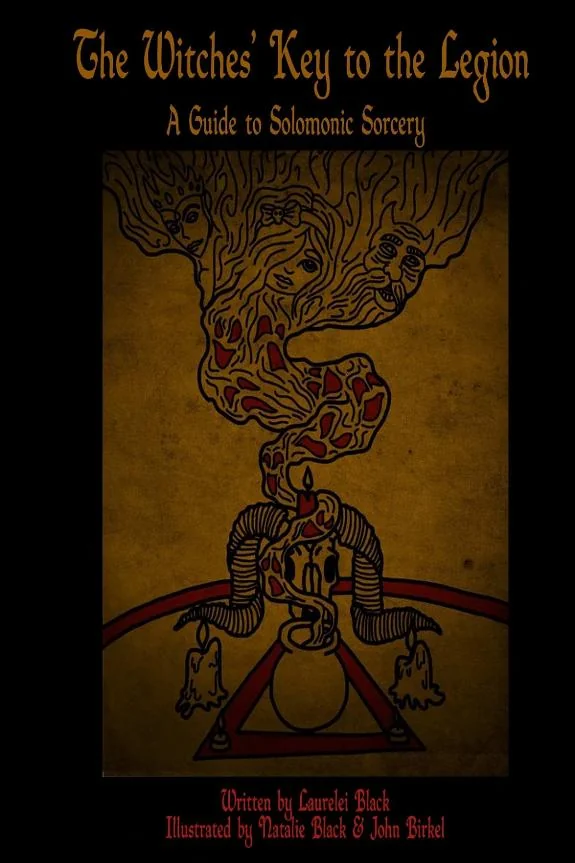
Laurelei Black's "The Witches' Key to the Legion" offers a much-needed ethical revision of the notorious Goetia. Instead of the typical triumphalist rhetoric of commanding spirits, Black guides the reader toward a more nuanced, respectful interaction with the 72 demons. The strength here lies in its consistent application of a witch's worldview to the Solomonic framework, demystifying the often-intimidating material and making it accessible without sacrificing esoteric depth. The section on reframing the traditional conjurations, moving from demands to invitations, is particularly effective. A potential limitation for seasoned ceremonial magicians might be the deliberate sidestepping of more complex, traditional ritual mechanics in favor of accessible, witch-centric methods. However, for its target audience, this focus is precisely its virtue. The book particularly shines when it discusses the concept of "spirit torture" and offers a practical alternative, demonstrating a clear philosophical departure from earlier editions. It provides a valuable, modern lens through which to engage with a foundational, yet often problematic, text of Western occultism.
📝 Description
78
Laurelei Black's The Witches' Key to the Legion offers a modern ethical approach to the Goetia.
This book reinterprets the 72 spirits cataloged in the Lesser Key of Solomon, moving away from traditional commanding or adversarial methods. Black's work suggests approaching these entities with respect and clear intent, framing them as powerful intelligences rather than malevolent forces needing subjugation. The text is intended for practitioners of modern witchcraft and pagan traditions who find older grimoires problematic. It appeals to those seeking to engage with Solomonic magic through an ethical lens that emphasizes consent and mutual understanding. Readers interested in the archetypal or psychological aspects of these spirits, independent of historical hierarchies, will also find value in this perspective.
Black challenges the common perception of Goetic demons as solely hostile or subservient. She proposes a framework for interacting with them that aligns with contemporary ethical standards. This approach contrasts with historical interpretations that often focused on dominance and control. The book aims to make Solomonic sorcery accessible and applicable to a modern pagan audience.
The Lesser Key of Solomon, compiled around the mid-17th century, is a significant grimoire in Western esotericism. It draws from Renaissance ceremonial magic and earlier demonological texts. Influential 20th-century editions by Mathers and Crowley often promoted an authoritarian approach to spirit work. Black's book stands as a counterpoint to these established interpretations, adapting the material for a contemporary audience that prioritizes ethical engagement and psychological understanding over command.
💡 Why Read This Book?
• Gain a unique perspective on the 72 Goetic demons, moving beyond historical coercion to ethical engagement, as detailed in the work's reinterpretation of spirit interactions. • Learn alternative methods for approaching Solomonic entities that prioritize respect and negotiation, a departure from traditional grimoires like the Lesser Key of Solomon. • Understand the psychological and archetypal dimensions of the Goetia, making its complex symbolism accessible to practitioners of modern witchcraft traditions.
⭐ Reader Reviews
Honest opinions from readers who have explored this book.
❓ Frequently Asked Questions
What is the "Legion" referred to in the title?
The "Legion" in "The Witches' Key to the Legion" refers to the collective group of 72 demons or spirits documented in the Goetia, a principal section of the Lesser Key of Solomon.
How does this book differ from traditional Goetia texts?
This book distinguishes itself by advocating for a non-coercive, ethical approach to interacting with the 72 spirits, directly challenging the spirit torture methods common in older editions of the Lesser Key of Solomon.
Is this book suitable for beginners in occult studies?
Yes, it's designed for witches and modern practitioners seeking an accessible entry into Solomonic magic, offering a less intimidating and more ethically aligned pathway than purely traditional grimoires.
What is the historical origin of the Lesser Key of Solomon?
The Lesser Key of Solomon, the source material for this work, was compiled in the mid-17th century, drawing upon earlier occult and demonological traditions.
Does this book require specific magical tools or prior experience?
While some tools may be helpful, the book emphasizes accessible methods and a witch's perspective, aiming to be practical for those with developing magical practices rather than requiring advanced ceremonial expertise.
Who originally compiled the Lesser Key of Solomon?
The authorship of the Lesser Key of Solomon is traditionally attributed to King Solomon, but it was likely compiled by various occultists in the 17th century, incorporating older material.
🔮 Key Themes & Symbolism
Ethical Solomonic Practice
This work re-frames the practice of Solomonic magic, particularly the Goetia, through an ethical lens that prioritizes consent and mutual respect over coercion. It directly confronts the historical methods of 'spirit torture' found in older grimoires, proposing alternatives that align with contemporary witchcraft values. The focus shifts from commanding spirits to negotiating with them, understanding their nature as powerful intelligences rather than mere tools or slaves. This approach allows practitioners to engage with the material without compromising their ethical frameworks, opening up the potentially fearsome aspects of the Lesser Key of Solomon to a wider, more conscientious audience.
Witchcraft Integration
The book uniquely bridges the gap between traditional Solomonic sorcery and modern witchcraft practices. It interprets the 72 demons of the Goetia not just as historical entities but as potent archetypes or forces that can be understood and worked with within a witch's paradigm. Laurelei Black suggests methods and perspectives that resonate with contemporary pagan and witchcraft traditions, making the complex lore of the Lesser Key of Solomon accessible and relevant. This integration allows practitioners to explore these powerful spirits from a familiar, yet newly illuminated, perspective.
Reinterpretation of Goetic Entities
Central to this text is a radical reinterpretation of the nature and purpose of the 72 demons listed in the Goetia. Black challenges the common perception of these beings as inherently malevolent or subservient entities to be dominated. Instead, the work suggests viewing them as complex forces, potentially aligned with psychological states, natural phenomena, or primal energies. This re-evaluation encourages a respectful, exploratory relationship, where understanding and dialogue replace the need for adversarial command structures often found in earlier interpretations of the Lesser Key of Solomon.
Clarifying the Grimoire
The Witches' Key to the Legion aims to clarify the often-intimidating reputation of the Lesser Key of Solomon. By stripping away the layers of fear and authoritarianism that have historically surrounded the Goetia, Laurelei Black makes its contents approachable. The book focuses on practical application and ethical engagement, offering a clear pathway for those interested in spirit work but deterred by the perceived harshness of traditional methods. It presents the Goetic spirits not as monsters to be feared, but as intelligences to be understood and potentially partnered with.
💬 Memorable Quotes
Direct passages from the work, attributed to the author.
“The hallmark of previous editions has been spirit torture.”
— This statement directly critiques the coercive and often cruel methods described in historical interpretations of the Lesser Key of Solomon, setting the stage for the book's alternative, ethical approach.
“A reasonable, direct approach to working with the 72.”
— This highlights the book's aim to provide practical, straightforward techniques for engaging with the Goetic spirits, emphasizing clarity and a less convoluted methodology than often found in occult texts.
“THIS book is the first to address Witches in regard to the Legion.”
— This claim underscores the book's unique positioning, specifically tailoring the study of the Goetic spirits to the framework and sensibilities of modern witchcraft practitioners.
“The Goetia is one of the most widely read (and feared) books known to today's magical practitioners.”
— This observation acknowledges the significant influence and controversial reputation of the Lesser Key of Solomon within contemporary occult communities, suggesting a need for a balanced perspective.
“It has been translated, edited, and commented upon by some of the most illustrious Mages of the last two centuries.”
— This contextualizes the Goetia within the broader history of Western esotericism, noting its engagement by prominent occult figures and establishing its importance as a subject of ongoing study and reinterpretation.
🌙 Esoteric Significance
Tradition
This work operates within the broad lineage of Western Esotericism, specifically engaging with the Solomonic magical tradition. It draws directly from the Goetia, a key component of the 17th-century grimoire known as the Lesser Key of Solomon. However, it significantly departs from the more rigid, hierarchical, and often adversarial frameworks of traditional ceremonial magic. By reinterpreting the Goetic spirits through the lens of modern witchcraft, it aligns with a more animistic, nature-based, and ethically conscious approach to spirit work, carving out a unique niche that bridges ancient texts with contemporary pagan sensibilities.
Symbolism
The primary symbolic complex revolves around the 'Legion' itself – the 72 distinct spirits cataloged in the Goetia. Traditionally, these spirits, often depicted with unique sigils, represent specific powers, influences, or archetypal forces. Black's work reinterprets these symbols not as entities to be merely commanded or feared, but as diverse intelligences or energies that can be understood and approached with respect. The act of evocation, typically symbolized by the magic circle and triangle, is reframed from a space of containment and control to one of respectful invitation and negotiation.
Modern Relevance
Contemporary witchcraft, paganism, and various forms of modern occultism find significant relevance in Laurelei Black's approach. Thinkers and practitioners exploring ethical frameworks for magic, alternative interpretations of historical grimoires, and the psychological or archetypal dimensions of spirit work draw inspiration from this text. It provides a vital resource for those seeking to engage with powerful esoteric traditions like the Goetia without adopting outdated or ethically questionable methodologies, making it a touchstone for discussions on evolving magical practice.
👥 Who Should Read This Book
• Practitioners of modern witchcraft and Wicca interested in exploring the Goetia from an ethical and accessible perspective. • Students of Western Esotericism seeking alternative interpretations of the Lesser Key of Solomon that challenge traditional authoritarian methods. • Occultists and magical workers who are drawn to spirit evocation but are uncomfortable with historical practices of coercion and subjugation.
📜 Historical Context
The Lesser Key of Solomon, the source material for this work, emerged in the mid-17th century, a period marked by intense interest in demonology and ceremonial magic, particularly following the Protestant Reformation and subsequent religious upheavals. This era saw the proliferation of grimoires, often building upon earlier Kabbalistic, Hermetic, and medieval magical traditions. The text's influence has been profound, shaping the trajectory of Western esotericism. By the early 20th century, figures like Aleister Crowley and Samuel Liddell MacGregor Mathers produced influential editions, often emphasizing the authoritarian command of spirits. These interpretations became canonical for many, contrasting sharply with the more collaborative and ethically-minded approach Laurelei Black adopts. The reception of such texts was often fraught; while widely studied in occult circles, they also faced condemnation and censorship due to their association with forbidden knowledge and potentially dangerous practices, influencing how such works were circulated and discussed.
📔 Journal Prompts
The concept of 'spirit torture' in older Goetic texts.
Your personal ethical framework for interacting with powerful entities.
The archetype represented by a specific demon from the Legion.
Comparing the 'reasonable, direct approach' to traditional Solomonic methods.
The witch's perspective on the 72 spirits.
🗂️ Glossary
Goetia
The first book within the 17th-century grimoire known as the Lesser Key of Solomon, detailing the names, ranks, and supposed abilities of 72 demons or spirits.
Lesser Key of Solomon
A significant grimoire of Western esotericism, compiled in the mid-17th century, containing five distinct books on various aspects of ceremonial magic, including the Goetia.
Legion
In the context of this book, refers to the collective group of 72 spirits described in the Goetia, often understood as a formidable host or army of entities.
Solomonic Sorcery
Magical practices attributed to or derived from the traditions associated with King Solomon, often involving the evocation and command of spirits, as codified in texts like the Lesser Key of Solomon.
Sigil
A magical symbol, often a unique design representing a specific spirit, deity, or concept, used in ceremonial magic for invocation or as a focus of power.
Evocation
The practice of summoning or calling forth spirits or entities from another realm or dimension into a visible manifestation, typically within a defined magical space.
Grigorii
Refers to the specific demons listed within the Goetia, each associated with distinct characteristics and powers.
This book appears in 1 collection
🔮 Readers Also Liked
Browse all →








From the “Goetia” Collection
View all →





More Free Sacred Texts & Gnosticism Books
View all →