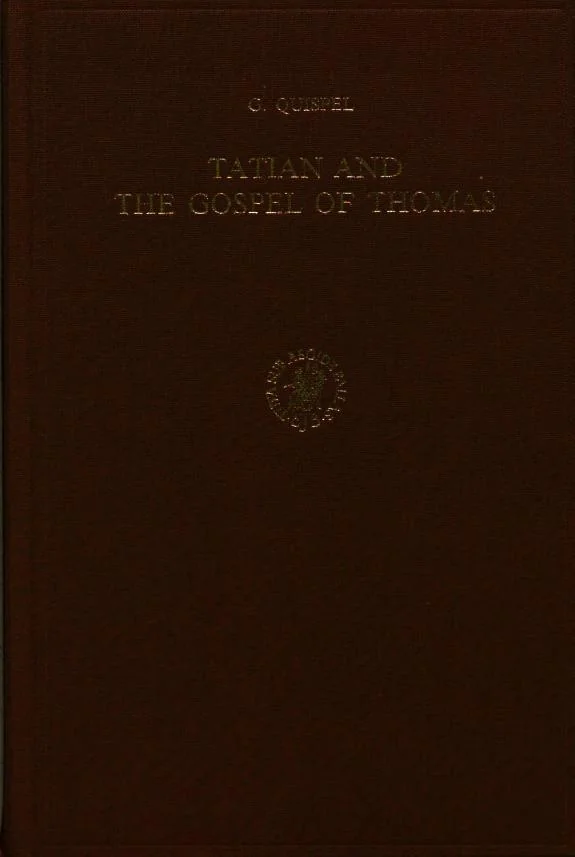
Tatian and the Gospel of Thomas
 83
83

Tatian and the Gospel of Thomas
Gilles Quispel’s "Tatian and the Gospel of Thomas" offers a compelling, albeit dense, argument for the primacy of the Gospel of Thomas as a source document. Quispel’s deep familiarity with Gnostic texts and early Christian literature is evident on every page. His meticulous comparison of Tatian's Diatessaron with the Gospel of Thomas, particularly concerning the sayings of Jesus, highlights striking textual correspondences that demand attention. The work's greatest strength lies in its scholarly rigor, presenting a case built on linguistic analysis and historical inference rather than speculative assertion. However, its primary limitation is accessibility; the highly specialized nature of the argument and the deep dive into philology may deter readers unfamiliar with Coptic and Greek patristic sources. A passage that particularly stands out is Quispel’s detailed examination of the "royal" sayings, where he reconstructs potential original formulations. Ultimately, this is a vital, if demanding, contribution to understanding the textual landscape of early Christianity.
📝 Description
83
Gilles Quispel's 1975 book examines Tatian's Diatessaron and the Gospel of Thomas.
Published in 1975, Gilles Quispel's study investigates the complex relationship between Tatian's Diatessaron and the Gospel of Thomas. Quispel, a noted scholar of Gnosticism, puts forth the idea that the Gospel of Thomas might be an older source than the canonical Gospels. He meticulously examines linguistic patterns and shared themes, suggesting a significant shift in understanding early Christian literature's development.
This work is for those deeply interested in early Christianity, Gnosticism, and the historical Jesus. It appeals to scholars, theologians, and independent researchers who value thorough, evidence-based analysis. The book is not suited for casual reading or devotional purposes; rather, it is for readers who appreciate detailed textual study and historical reasoning.
Quispel's research gained prominence following the 1945 discovery of the Nag Hammadi library, which included the Gospel of Thomas. This period saw renewed scholarly focus on Gnostic texts and their connections to early orthodox Christianity. Quispel's work engaged with contemporary discussions, including those by scholars like Elaine Pagels, about the diverse origins of Christian thought and the theological implications of Gnostic traditions.
💡 Why Read This Book?
• Gain insight into the scholarly debate surrounding the Gospel of Thomas's antiquity, learning how Quispel argues for its status as a potential source for other early Christian writings, a concept he explores by comparing it with Tatian's Diatessaron. • Understand the historical context of the 1975 publication, situated within the ongoing scholarly reassessment of Gnostic texts following the Nag Hammadi discoveries, which reshaped the understanding of early Christian diversity. • Grasp the concept of the *Logia* tradition as a hypothesized pre-canonical collection of Jesus' sayings, and how Quispel uses this theory to explain textual similarities between different early Christian documents.
⭐ Reader Reviews
Honest opinions from readers who have explored this book.
❓ Frequently Asked Questions
What is Tatian's Diatessaron?
Tatian's Diatessaron, compiled around the 2nd century CE, is an attempt to harmonize the four canonical Gospels into a single narrative. Quispel's work analyzes its relationship with the Gospel of Thomas.
What is the significance of the Nag Hammadi library?
Discovered in 1945, the Nag Hammadi library contains numerous Gnostic texts, including the Gospel of Thomas. Its find significantly impacted the study of early Christianity and Gnosticism, providing primary source material.
What does Gilles Quispel argue about the Gospel of Thomas?
Gilles Quispel, a prominent scholar of Gnosticism, argues in this work that the Gospel of Thomas may represent an older collection of Jesus' sayings (Logia) and potentially influenced other early Christian texts.
What is the Logia tradition?
The Logia tradition refers to a hypothetical collection of Jesus' sayings, potentially existing independently before the compilation of the canonical Gospels. Quispel suggests the Gospel of Thomas is a significant example of this tradition.
Is this book suitable for beginners in Gnosticism?
While foundational, the book is written for a scholarly audience. Beginners might benefit from reading introductory texts on Gnosticism and the Gospel of Thomas first before tackling Quispel's detailed philological arguments.
When was Tatian and the Gospel of Thomas first published?
The book "Tatian and the Gospel of Thomas" by Gilles Quispel was first published in 1975, a period marked by extensive study of newly discovered Gnostic texts.
🔮 Key Themes & Symbolism
The Gospel of Thomas as Source
Quispel posits that the Gospel of Thomas, a non-canonical text discovered at Nag Hammadi, might predate and influence canonical Gospels and other early Christian writings like Tatian's Diatessaron. He examines its sayings (logia) not as later interpretations but as potentially original utterances of Jesus, challenging the traditional hierarchy of Christian scripture and offering a window into alternative early Christian communities.
Tatian's Diatessaron Syncretism
The work scrutinizes Tatian's Diatessaron, a 2nd-century attempt to create a unified Gospel narrative from existing texts. Quispel investigates how Tatian might have drawn upon the distinct collection of sayings found in the Gospel of Thomas, suggesting that the Diatessaron itself is a crucial, often overlooked, witness to the circulation and authority of non-canonical Gospel traditions in the early Church.
The Logia Tradition
Central to Quispel's argument is the concept of the 'Logia' – a hypothetical early collection of Jesus' sayings. This theme explores how such a collection, possibly originating in Aramaic, could have been transmitted and adapted, forming the basis for both the Gospel of Thomas and elements found within Tatian's work, thereby informative the complex textual evolution of early Christianity.
Gnostic Influence on Early Christianity
The book engages with the broader scholarly context of Gnosticism, exploring how Gnostic ideas and texts interacted with nascent orthodox Christianity. Quispel's analysis of the Gospel of Thomas implicitly argues for the significance of Gnostic perspectives in shaping early Christian thought, moving beyond simplistic notions of heresy versus orthodoxy.
💬 Memorable Quotes
Direct passages from the work, attributed to the author.
“Tatian used the Gospel of Thomas.”
— This interpretation suggests that Tatian, in compiling his Diatessaron, incorporated material directly from the Gospel of Thomas, indicating Thomas's circulation and perceived authority in the 2nd century.
“The sayings (logia) form a distinct tradition.”
— This highlights Quispel's focus on Jesus's sayings as a primary, potentially independent, stream of tradition that underlies various early Christian texts, including the Gospel of Thomas.
“The Nag Hammadi discoveries changed everything.”
— This reflects the lasting impact of the 1945 discovery on the study of early Christianity, providing scholars like Quispel with direct access to texts previously known only through hostile accounts or fragments.
“Early Christianity was diverse.”
— This captures the implication of Quispel's work: that the range of early Christian beliefs and texts was far more varied than previously assumed, with Gnostic traditions playing a significant role.
💡 Key Ideas
Editorial paraphrase of the work's core concepts — not direct quotes.
The Gospel of Thomas is older than the canonical Gospels.
This paraphrased concept represents Quispel's core thesis: that the collection of sayings in the Gospel of Thomas may stem from an earlier tradition, potentially predating or running parallel to the sources used for Matthew, Mark, Luke, and John.
🌙 Esoteric Significance
Tradition
This work is deeply rooted in Gnostic studies and the academic exploration of early Christian heterodoxies. Quispel, a leading figure in the field, positions the Gospel of Thomas and Tatian's Diatessaron within the complex lineage of second-century Christian thought, particularly where Gnostic ideas about salvation through knowledge (gnosis) intersect with more conventional interpretations of Jesus' teachings. It departs from purely orthodox frameworks by treating these texts as potentially authoritative sources.
Symbolism
While not heavily symbolic in a ritualistic sense, the Gospel of Thomas, as analyzed by Quispel, contains potent symbolic motifs. The "hidden sayings" represent esoteric knowledge or inner truth concealed from the uninitiated. The figure of Jesus as the "knower" or revealer of divine secrets aligns with Gnostic traditions. The emphasis on finding the "kingdom of God within" points to an internalized, spiritual reality distinct from external, material concerns.
Modern Relevance
Quispel's research continues to inform contemporary discussions on the historical Jesus and the diversity of early Christianity. Modern scholars and practitioners interested in the Gnostic Gospels, alternative Christian traditions, and the search for original Jesus sayings draw upon his foundational arguments. His work is relevant to groups exploring spiritual traditions outside mainstream religion and those interested in comparative textual analysis of religious scriptures.
👥 Who Should Read This Book
• Students of Early Christianity: Those seeking to understand the textual diversity and theological debates of Christianity's formative centuries will find Quispel's analysis of the Gospel of Thomas and Tatian's Diatessaron informative. • Gnostic Studies Enthusiasts: Individuals interested in Gnosticism will appreciate Quispel's rigorous examination of a key Gnostic text and its relationship to proto-orthodox traditions. • Textual Critics and Historians: Scholars focused on the critical analysis of ancient texts and the reconstruction of historical traditions will benefit from the detailed linguistic and comparative arguments presented.
📜 Historical Context
Gilles Quispel's "Tatian and the Gospel of Thomas" arrived in 1975, a key moment in the study of early Christianity, largely catalyzed by the 1945 discovery of the Nag Hammadi library. This find, containing numerous Gnostic texts including the Gospel of Thomas, forced a significant re-evaluation of Christian origins. Quispel’s work directly engaged with this new material, challenging the established scholarly consensus that viewed Gnostic texts as mere heresies peripheral to authentic Christianity. His argument that the Gospel of Thomas might be a source document for later texts, including Tatian's Diatessaron, placed him in dialogue with scholars like Elaine Pagels, who was also exploring the theological and social implications of Gnostic writings. The reception of such work often involved debate, as it questioned the singular narrative of orthodox development favored by earlier scholarship, highlighting a vibrant, complex early Christian landscape.
📔 Journal Prompts
The concept of the Logia tradition and its potential influence on Tatian.
The Gospel of Thomas's unique perspective on Jesus's teachings.
Tatian's Diatessaron as a harmonizing effort.
The implications of the Nag Hammadi discoveries for understanding early Christian diversity.
The meaning of 'hidden sayings' in the context of esoteric knowledge.
🗂️ Glossary
Gospel of Thomas
A non-canonical collection of sayings attributed to Jesus, discovered among the Nag Hammadi texts. It presents Jesus's teachings in a format distinct from the canonical Gospels.
Tatian's Diatessaron
A 2nd-century work by Tatian that harmonized the four canonical Gospels into a single narrative document, aiming to present a unified account of Jesus's life and teachings.
Logia
Greek for 'sayings' or 'words'. In biblical scholarship, it often refers to collections of Jesus's sayings, such as the hypothetical Q source or the sayings found in the Gospel of Thomas.
Gnosticism
A diverse set of religious movements prominent in the early centuries CE, characterized by a belief in salvation through esoteric knowledge (gnosis) and often featuring a dualistic worldview.
Nag Hammadi Library
A collection of thirteen Coptic Gnostic texts discovered near the town of Nag Hammadi in Upper Egypt in 1945. These texts provided invaluable primary source material for the study of Gnosticism.
Canonical Gospels
The four Gospels accepted by mainstream Christianity as authoritative: Matthew, Mark, Luke, and John. Their compilation and acceptance occurred over the first few centuries of the Common Era.
Patristic Sources
Writings from the early Church Fathers, spanning roughly from the 1st to the 8th century CE. These texts are crucial for understanding early Christian theology, history, and biblical interpretation.
This book appears in 1 collection
🔮 Readers Also Liked
Browse all →








From the “Gospel of Thomas” Collection
View all →






More Free Sacred Texts & Gnosticism Books
View all →