Goetia
 73
73

Goetia
The 1993 publication of Goetia, attributed to Aleister Crowley and King Solomon, presents a formidable text for anyone engaging with the grimoire tradition. Its strength lies in the sheer detail of the ritualistic instructions, offering a direct portal into 17th-century ceremonial magic. The catalog of 72 spirits, each with their unique sigil and purported abilities, provides extensive material for study and practice. However, the work's limitation is its demanding nature; the ritualistic framework requires significant commitment and understanding, making it inaccessible to those without prior magical training. The detailed descriptions of the infernal hierarchy, while comprehensive, can also be overwhelming. Ultimately, this edition serves as a critical, albeit challenging, resource for dedicated occultists.
📝 Description
73
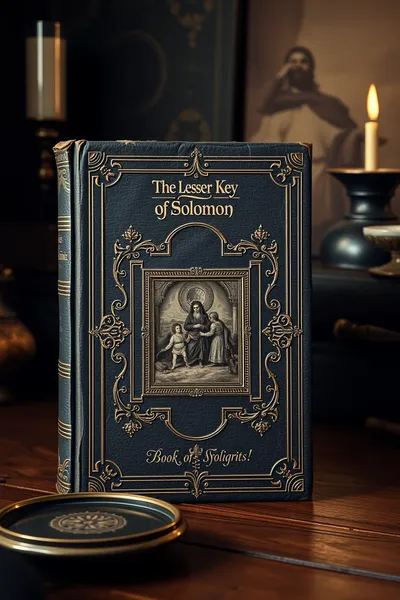
The 17th-century grimoire, The Lesser Key of Solomon, details the evocation of 72 demons.
This text, known as Goetia, describes 72 distinct entities, including their unique sigils and the ritualistic steps for their conjuration and control. It lays out the necessary preparations, protective circles, and specific incantations intended to compel these spirits to manifest and perform tasks for the magician. The work demands a thorough grasp of magical theory and practice, as the described rituals are complex and require precise execution. It details the hierarchy and nature of these spirits, emphasizing the magician's will and the use of consecrated space for safety and efficacy. Specific tools like a wand, sword, and ring are also mentioned as important elements in the ritual process.
Goetia emerges from the Solomonic tradition, a body of magical literature attributed to King Solomon. The specific compilation and publication in its current form are linked to the 17th century, a period active with occult scholarship in Europe. Its influence is apparent in later magical orders and writings, though its direct attribution to Solomon is debated by scholars.
💡 Why Read This Book?
• Learn the precise ritualistic methods for evocation, including the construction of the magic circle and the use of the lamen, as detailed in the text's instructions for commanding the 72 spirits. • Understand the specific hierarchy and purported abilities of the 72 Goetic demons, as cataloged and described within the grimoire itself. • Gain insight into the practical application of Kabbalistic and divine names in ceremonial magic, a core component of the conjurations presented in this 17th-century work.
⭐ Reader Reviews
Honest opinions from readers who have explored this book.
❓ Frequently Asked Questions
What is the origin of the Goetia grimoire?
The Goetia is a 17th-century grimoire, part of the larger 'Lesser Key of Solomon' tradition, which itself claims ancient roots attributed to King Solomon of Israel.
How many spirits are described in the Goetia?
The text systematically describes and provides sigils for 72 distinct spirits, detailing their ranks, powers, and appearances.
What are the essential components of a Goetic ritual?
Key components include the magician's protective circle, the lamen bearing the spirit's sigil, specific conjurations, and the use of divine authority.
Is the Goetia considered a historical document or a practical manual?
It functions as both. Historically, it illuminates 17th-century occult practices, while many consider it a practical manual for ceremonial magicians.
Who compiled the first published version of the Goetia?
While the tradition is older, Aleister Crowley is famously associated with its popularization and a significant edition published in 1904 as part of 'The Book of the Goetia of Solomon the King'.
What is the purpose of the sigils in the Goetia?
Each of the 72 spirits has a unique sigil, a symbolic representation used in rituals to help the magician focus, invoke, and constrain the spirit.
🔮 Key Themes & Symbolism
Spirit Evocation Rituals
The core of Goetia lies in its detailed instructions for summoning and commanding the 72 infernal spirits. It outlines precise steps, including the creation of a sacred space, the use of protective circles, the construction of the lamen (a magical breastplate), and the specific verbal formulas and divine names intended to compel obedience. The text emphasizes the magician's will and control as paramount in these complex operations.
The Hierarchy of Spirits
The grimoire systematically categorizes the 72 demons, assigning them ranks (King, Duke, Marquis, etc.) and describing their unique appearances, powers, and associated knowledge. This detailed taxonomy provides a framework for understanding the infernal realm as presented in the text, offering insights into perceived spiritual forces and their potential utility or danger.
Sigils and Divine Authority
Each of the 72 spirits is represented by a unique sigil, a symbolic seal that serves as a focal point for invocation and a means of identification and constraint. The effective use of these sigils, combined with the invocation of divine names (often from Hebrew and Latin traditions), is presented as the primary mechanism by which the magician can exert control over the spirits.
The Solomonic Magical Tradition
Goetia is a significant text within the broader corpus of Solomonic magic, literature attributed to the biblical King Solomon. This tradition posits that Solomon possessed the ability to command spirits through divine favor and secret knowledge. The grimoire thus represents a continuation of this esoteric lineage, offering methods believed to grant similar powers.
💬 Memorable Quotes
Direct passages from the work, attributed to the author.
“The Ceremonies of the Rituals...”
— This signifies the intricate, step-by-step procedures laid out for conjuring spirits, emphasizing the structured nature of the magical operations described.
“The 72 Spirits of the Goetia”
— Refers to the cataloged entities within the grimoire, each with specific attributes and sigils, forming the central focus of the book's practical instructions.
“The use of the Magical Wand and Sword”
— Highlights specific ritual tools required for directing magical energy and asserting authority during conjurations, as detailed in the text.
“The Pentacle of Solomon”
— Indicates a crucial protective amulet depicted in the text, designed to guard the magician against the malevolent influences of the invoked spirits.
“To compel them to appear with fair form...”
— Illustrates the goal of the rituals: to manifest spirits in a controlled and observable manner, ensuring they present themselves as intended by the magician.
🌙 Esoteric Significance
Tradition
Goetia firmly belongs to the Western Esoteric Tradition, specifically within the lineage of Ceremonial Magic and Solomonic magic. It builds upon Kabbalistic principles concerning divine names and angelic hierarchies, reinterpreting them through a lens of spirit evocation and control. Unlike purely devotional or contemplative paths, it emphasizes practical command and manipulation of spiritual forces, departing from solely Hermetic or Gnostic focuses.
Symbolism
Central symbols include the 72 distinct sigils, each representing a unique spirit and acting as a key for invocation. The magic circle, a geometric defense, symbolizes the magician's consecrated space and separation from the mundane world. The Pentacle of Solomon, often depicted with divine names, represents divine authority and protection, acting as a barrier against uncontrolled spiritual influence.
Modern Relevance
Contemporary occultists, particularly those within magical orders such as the Golden Dawn lineage or independent ceremonial magicians, continue to study and practice the rituals outlined in Goetia. Its influence is evident in modern grimoire compilations and discussions on spirit work. Thinkers and practitioners exploring the psychology of archetypes or the nature of consciousness also engage with its symbolic framework.
👥 Who Should Read This Book
• Advanced students of Ceremonial Magic seeking to engage with foundational grimoire texts and their detailed ritualistic instructions. • Occult historians and researchers interested in the development of demonology and grimoire literature in 17th-century Europe. • Practicing magicians focusing on spirit evocation and control, who require the specific methodologies and spirit catalog provided by this text.
📜 Historical Context
The Goetia emerged from a rich milieu of occult scholarship in 17th-century Europe, a period where figures like John Dee were actively engaged with angelic and demonic systems. This specific compilation, part of the larger 'Lesser Key of Solomon' tradition, draws heavily on earlier grimoires and Kabbalistic concepts. Its publication occurred during a time when occult societies were gaining traction, and the influence of Renaissance magic was still potent. While not directly censored, its subject matter placed it firmly within the clandestine literature of the era. Contemporaries like Elias Ashmole, collector of arcane manuscripts, demonstrate the interest in such texts among learned circles. The work represents a practical distillation of demonological lore, distinct from the more philosophical or theological approaches to the supernatural prevalent at the time.
📔 Journal Prompts
The invocation of the spirit Paimon...
The significance of the lamen for spirit containment...
Reflection on the list of 72 spirits and their attributed powers...
The construction of the protective magic circle...
The role of divine names in compelling spirits...
🗂️ Glossary
Grimoire
A textbook of magic, typically containing instructions for invoking spirits, casting spells, and performing other magical rites. Goetia is a type of grimoire.
Sigil
A symbol or emblem used in magic, often representing a spirit, deity, or concept. Each of the 72 spirits in Goetia has a unique sigil.
Lamen
A magical breastplate or amulet worn by the magician during rituals, often inscribed with symbols or sigils to provide protection or enhance authority.
Evocation
The act of calling forth a spirit or entity from its own realm into a visible manifestation or a designated space for interaction.
Conjuration
A formal invocation, often involving commanding language and the use of divine names, intended to compel a spirit to appear or perform a task.
Solomonic Magic
A body of magical literature and practice attributed to King Solomon, characterized by the use of divine names and the command of spirits.
Pentacle
A magical disk or amulet, often inscribed with symbols or names, used for protection or to invoke divine power, as described in Goetia.