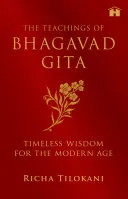
The Teachings of Bhagavad Gita
 74
74

The Teachings of Bhagavad Gita
Richa Tilokani’s rendition of the Bhagavad Gita offers a refreshingly direct approach to a text often shrouded in commentary. Its primary strength lies in its clarity, stripping away layers of tradition to present the core dialogue and its ethical implications. The author successfully conveys the urgency of Krishna’s counsel to Arjuna, particularly the concept of performing one’s duty without attachment to outcomes. However, the simplification, while beneficial for newcomers, occasionally risks flattening the profound philosophical nuances that have fueled centuries of debate. A passage that particularly stands out is the explanation of the three Gunas (Sattva, Rajas, Tamas), which Tilokani elucidates with accessible language, though perhaps sacrificing some of the subtle interplay. For those seeking an introductory understanding without academic rigor, this edition provides a valuable, unadorned entry point.
📝 Description
74
Richa Tilokani's 2021 work offers a modern voice to the ancient Bhagavad Gita dialogue.
This volume presents a contemporary interpretation of the Bhagavad Gita, a scripture central to Hinduism. Tilokani aims to distill the core philosophical and spiritual teachings for readers today. The book explains the conversation between Prince Arjuna and Lord Krishna on the battlefield, addressing fundamental questions about duty, existence, and reality.
It seeks to clarify complex theological ideas and suggest practical ways to live a more meaningful life. This edition is for individuals facing existential questions, seeking relief from modern stress, or wanting a stronger spiritual connection. It serves as an accessible entry point for those new to the Gita or Eastern philosophies. Readers interested in self-empowerment, ethical conduct, and understanding the balance between spiritual goals and daily responsibilities will find it valuable.
The Bhagavad Gita, composed between the 5th and 2nd centuries BCE as part of the Mahabharata, has shaped Indian thought for centuries. Its influence is seen in Vedanta and Yoga traditions. This 2021 edition enters a global spiritual landscape where Western audiences show increased interest in Eastern wisdom. It provides a contemporary perspective on an ancient dialogue, connecting its themes to modern life.
💡 Why Read This Book?
• Gain a foundational understanding of Dharma, the principle of righteous action, as presented in the Bhagavad Gita, enabling you to approach your daily responsibilities with greater clarity and ethical grounding. • Learn about the concept of Karma Yoga, the path of selfless action, from the teachings presented in this volume, allowing you to detach from the results of your efforts and find peace in the process. • Explore the nature of the Self (Atman) and its relationship to the Divine (Brahman) as revealed in the dialogue between Krishna and Arjuna, fostering a deeper sense of inner peace and existential understanding.
⭐ Reader Reviews
Honest opinions from readers who have explored this book.
❓ Frequently Asked Questions
What is the primary message of the Bhagavad Gita as presented in this edition?
The primary message focuses on performing one's duty (Dharma) with detachment from the results, cultivating inner peace through spiritual disciplines like devotion and knowledge, and realizing the unity of the self with the divine.
Who is Lord Krishna in the context of the Bhagavad Gita?
Lord Krishna is presented as the Supreme Being and divine charioteer who guides Prince Arjuna. He reveals profound philosophical truths about life, death, duty, and the nature of reality.
What does 'Dharma' mean according to the Bhagavad Gita?
Dharma refers to one's essential nature, duty, righteous conduct, and moral obligations. The text emphasizes living in accordance with one's Dharma as a path to spiritual growth.
How does this book address modern societal stress?
It offers ancient wisdom on managing anxiety by focusing on inner control, performing actions with equanimity, and understanding that external circumstances are often beyond direct control, while inner responses are paramount.
Is prior knowledge of Hinduism required to understand this book?
No, this edition is designed for accessibility. It explains key concepts and terminology in a straightforward manner, making it suitable for readers new to Hindu philosophy or the Bhagavad Gita.
What is the significance of the battlefield setting?
The battlefield of Kurukshetra symbolizes the internal struggles and moral dilemmas individuals face in life. It serves as a dramatic backdrop for Krishna's teachings on duty and spiritual resolve.
🔮 Key Themes & Symbolism
The Nature of Duty (Dharma)
This work emphasizes Dharma not merely as social obligation but as an intrinsic calling tied to one's true nature. It explores how fulfilling one's prescribed duties, even when difficult, is a crucial step on the spiritual path. The text differentiates between performing actions and acting in accordance with one's Dharma, highlighting the importance of intention and inner alignment over external results. This concept is central to understanding Arjuna's dilemma and Krishna's counsel.
Paths to Liberation (Moksha)
The book outlines several Yogas, or paths, for achieving Moksha, liberation from the cycle of birth and death. It presents Karma Yoga (selfless action), Bhakti Yoga (devotion), and Jnana Yoga (knowledge) as interconnected disciplines. The core idea is that through dedicated practice in any of these paths, individuals can transcend material limitations and realize their true, eternal nature, achieving a state of profound peace and union with the divine.
The Role of the Divine
Krishna's presence as the divine instructor is central. The text portrays him not just as a teacher but as the Supreme Reality, the source and sustainer of all existence. His discourse with Arjuna reveals the divine presence within all beings and the importance of recognizing this presence. This understanding fosters devotion and surrender, leading the practitioner towards a direct experience of the divine, thereby dissolving ego-centric limitations.
Consciousness and Self-Realization
A significant theme is the exploration of consciousness and the realization of the true Self (Atman). The teachings guide the reader to look beyond the transient physical body and fluctuating mental states to discover the unchanging, eternal essence within. By understanding the difference between the material world and the spiritual self, and by practicing detachment, one can achieve a state of equanimity and profound self-awareness.
💬 Memorable Quotes
Direct passages from the work, attributed to the author.
“Act with your best effort, but let go of the desire for the outcome.”
— This captures the essence of Karma Yoga. It encourages diligent action in the world without being enslaved by the anticipation or attachment to specific results, fostering inner freedom and reducing anxiety.
“The Self is not born, nor does it die; it is eternal and unchanging.”
— This statement points to the doctrine of the Atman, the true spiritual essence within each being. It asserts the soul's immortality and its distinctness from the perishable physical and mental faculties.
“One who sees inaction in action, and action in inaction, is intelligent.”
— This paradoxical statement highlights the refined understanding of Karma Yoga, where one acts with full engagement but without attachment, perceiving the divine will or cosmic order even in seemingly passive states.
“The mind is restless and difficult to restrain, but through practice and detachment, it can be controlled.”
— This acknowledges the challenge of controlling the mind, a common human experience. It offers a practical solution: consistent spiritual discipline (practice) and non-attachment to fleeting thoughts and desires.
“All forms of worship that are offered with devotion reach Me.”
— This emphasizes the inclusiveness of Bhakti Yoga. It suggests that sincere devotion, regardless of the specific form or deity worshipped, is recognized and accepted by the Supreme Being.
🌙 Esoteric Significance
Tradition
The Bhagavad Gita is a central text within the broad Vedic and Hindu traditions. Esoterically, it is often viewed through the lens of Yoga philosophy, which seeks union (Yoga) of the individual consciousness with the universal consciousness. It provides a framework for inner transformation, aligning the practitioner with cosmic principles and the divine nature inherent within all beings. Its emphasis on detachment, self-mastery, and direct experience of truth places it firmly within the lineage of wisdom traditions aiming for spiritual liberation.
Symbolism
Key symbols include the battlefield of Kurukshetra, representing the arena of life's moral and spiritual conflicts, and Arjuna's chariot, symbolizing the human body driven by the senses (horses), steered by the mind (reins), with the intellect (charioteer) guiding it, and the Self (passenger) seeking realization. Lord Krishna, as the divine charioteer, embodies the Supreme Consciousness that guides the individual soul towards liberation.
Modern Relevance
Contemporary esoteric and spiritual movements frequently draw upon the Bhagavad Gita's teachings. Thinkers and practitioners in fields like mindfulness, conscious living, and integral spirituality often reference its principles of duty, detachment, and the unity of existence. Modern interpretations of Yoga, beyond the purely physical, continue to explore its philosophical depth. The text's message of finding balance between action and inner peace remains highly relevant for those seeking meaning in a fast-paced, material world.
👥 Who Should Read This Book
• Students of comparative religion and philosophy seeking to understand a foundational text of Hinduism and its influence on Eastern thought. • Individuals grappling with existential questions about purpose, suffering, and duty who are looking for practical spiritual guidance. • Seekers of inner peace and self-mastery interested in ancient disciplines like Karma Yoga and the practice of detachment from life's outcomes.
📜 Historical Context
The Bhagavad Gita, believed to have been composed between the 5th and 2nd centuries BCE, emerged from the Vedic tradition within ancient India. It is embedded within the epic Mahabharata, a vast narrative exploring themes of dharma, duty, and conflict. Philosophically, it synthesized and elaborated upon earlier Upanishadic thought and contributed significantly to the development of Vedanta and Yoga philosophies. Its teachings became a reference for various Indian spiritual movements, influencing thinkers like Adi Shankara in the 8th century CE, who wrote influential commentaries on it. While the Gita itself faced no significant censorship, its interpretations have been diverse, sometimes leading to debates between different scholastic traditions, such as the dualistic Dvaita versus the monistic Vishishtadvaita schools of Vedanta, each drawing distinct meanings from its verses.
📔 Journal Prompts
Arjuna's dilemma on the battlefield, and your own moments of duty-bound conflict.
The concept of Dharma, and how it manifests in your daily life.
Krishna's instructions on selfless action, and their application to your aspirations.
The nature of the true Self (Atman) beyond physical and mental identification.
Practicing detachment from the fruits of your labor, as advised by Krishna.
🗂️ Glossary
Bhagavad Gita
A sacred Hindu scripture, meaning 'Song of the Lord,' forming part of the epic Mahabharata. It contains the philosophical discourse between Lord Krishna and Prince Arjuna.
Dharma
One's duty, righteousness, essential nature, or moral law. Living in accordance with one's Dharma is considered crucial for spiritual progress.
Karma
The law of cause and effect, where actions (karma) lead to consequences, shaping an individual's present and future experiences across lifetimes.
Moksha
Liberation or release from the cycle of birth, death, and rebirth (samsara). It is the ultimate spiritual goal in many Indian traditions.
Yoga
A spiritual discipline or path aimed at union with the Divine or realization of the true Self. Key forms include Karma Yoga, Bhakti Yoga, and Jnana Yoga.
Atman
The true Self, the eternal, unchanging spiritual essence within each individual, distinct from the body, mind, and ego.
Gunas
The three fundamental qualities or modes of nature (Sattva, Rajas, Tamas) that influence all beings and phenomena, affecting consciousness and action.






![L'évangile selon Thomas : [traduction et commentaire]](/img/thumb/lévangile-selon-thomas-traduction-et-commentaire-jacques-é-ménard-042100.webp)