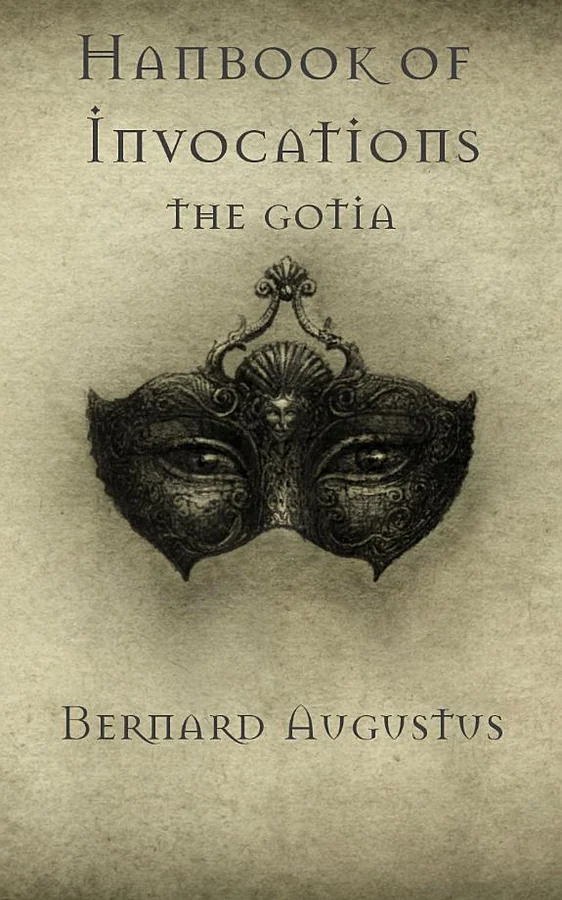
Handbook of Invocations
 71
71

Handbook of Invocations
Bernard Augustus's Handbook of Invocations offers a structured approach to a subject often shrouded in vagueness. The meticulous detail concerning the preparation of the ritual space and the specific language of invocation is commendable, providing a solid framework for practitioners. The chapter on 'Sigils of Power' is particularly effective, offering a concrete method for amplifying intent that moves beyond mere theoretical discussion. However, the work could benefit from a more extensive exploration of the ethical considerations inherent in summoning, a point only briefly touched upon. While the operational mechanics are well-defined, the psychological and energetic implications for the practitioner are less thoroughly examined. The book ultimately provides a functional toolkit for those already committed to the path of invocation.
📝 Description
71
Bernard Augustus published the Handbook of Invocations on April 29, 2012.
This handbook details practical methods for ritualistic evocation and invocation. It guides practitioners through establishing sacred space, making contact with entities, and performing specific rites. The text assumes a reader already familiar with ceremonial magic and occult theory.
It moves beyond introductory concepts to offer techniques for those seeking deeper engagement with unseen forces. The focus is on direct experience and the skillful application of ritual components. This is a resource for serious students ready to expand their practice.
Published in 2012, the Handbook of Invocations draws from a lineage of ceremonial magic, particularly the detailed ritualistic work seen in earlier 20th-century occult revivals. Its methods echo the systematic approaches of traditions like the Golden Dawn and figures such as Aleister Crowley. However, Augustus presents his own specific formulations for achieving spiritual or energetic communion through carefully prepared environments, tools, and verbal acts.
💡 Why Read This Book?
• Gain practical, step-by-step guidance for performing invocations, a core practice in many esoteric traditions, as detailed in the book's ritual blueprints. • Understand the specific preparations required for a successful invocation, including the consecration of tools and the creation of sacred space, as outlined in the text's operational sections. • Learn to effectively formulate the language and intent for summoning specific energies or entities, a skill directly transferable from the methods presented in the Handbook of Invocations.
⭐ Reader Reviews
Honest opinions from readers who have explored this book.
❓ Frequently Asked Questions
When was the Handbook of Invocations first published?
The Handbook of Invocations was first published on April 29, 2012, making it a relatively modern text within the esoteric literature canon.
What is the primary focus of the Handbook of Invocations?
The book's primary focus is on the practical techniques and methodologies for performing evocations and invocations within ceremonial magic.
Does the Handbook of Invocations require prior knowledge?
Yes, the Handbook of Invocations is best suited for individuals with foundational knowledge of occult theory and ritual practice, as it is not an introductory text.
What kind of entities or energies does the book discuss invoking?
The book provides frameworks for invoking a range of entities and energies, emphasizing the practitioner's intent and the specific ritual structures employed.
Is the Handbook of Invocations based on a specific magical tradition?
While drawing on broader principles of ceremonial magic, the Handbook of Invocations presents its own formulations and techniques, echoing but not strictly adhering to any single historical school.
What are some key components of the rituals described?
Key components include the preparation of sacred space, the use of consecrated tools, specific verbal incantations, and focused visualization techniques.
🔮 Key Themes & Symbolism
Ritual Efficacy
The work meticulously details the construction of ritual efficacy, emphasizing that successful invocation relies on precise execution. It outlines the necessity of consecrated tools, the creation of a defined sacred space, and the careful articulation of intent through specific verbal and gestural components. The book treats ritual not as symbolic theatre but as a functional mechanism designed to interact with subtle energies and intelligences.
The Nature of Invocation
Augustus posits invocation as a direct engagement, distinct from mere contemplation or study. The Handbook explores the energetic dynamics involved, framing invocation as a process of establishing resonance and communication. It provides frameworks for understanding the 'other' being invoked, whether conceived as an external intelligence or an aspect of the practitioner's own psyche.
Will and Intent
A central theme is the power of focused will and clear intent in magical operations. The book dedicates significant attention to how the practitioner's mental state and unwavering purpose are crucial for directing the forces generated during invocation. Techniques for amplifying and sustaining this focused volition are presented as fundamental to the practice.
Sacred Space and Tools
The creation and consecration of both the ritual space and the tools employed are presented as foundational elements. The Handbook explains how these elements serve to delineate the mundane from the sacred, creating a controlled environment conducive to magical work and acting as focal points for the practitioner's energy and attention.
💬 Memorable Quotes
Direct passages from the work, attributed to the author.
“The circle is not a barrier, but a crucible.”
— This statement emphasizes the active, transformative nature of the ritual space. It suggests that the consecrated area serves not merely to protect but to concentrate and transmute energies, facilitating the magical work.
“Intent, clearly defined, is the lodestone of the ritual.”
— This highlights the primacy of the practitioner's focused desire in directing the magical operation. Without a sharp, well-understood goal, the ritual's energies would lack direction and potency.
“Consecration imbues the tool with purpose.”
— This interpretation underscores the idea that ritual tools are not inert objects but become charged conduits for magical energy and intent through the act of consecration.
“The spoken word, shaped by will, bridges the void.”
— This suggests that vocalizations in ritual are powerful tools for manifesting intent and establishing contact across perceived separations between the practitioner and the invoked.
“The adept learns to see the unseen currents.”
— This points to the development of subtle perception as a key outcome of practicing ceremonial magic, enabling the practitioner to perceive energetic flows and entities.
🌙 Esoteric Significance
Tradition
The Handbook of Invocations operates within the broad framework of Western Ceremonial Magic, a tradition that syntheses elements from Hermeticism, Kabbalah, Neoplatonism, and Gnosticism. It departs from purely theoretical or Qabalistic approaches by emphasizing direct, operational engagement. The work's structured approach to ritual reflects the systematic methods developed by groups like the Golden Dawn, focusing on practical application rather than solely on esoteric philosophy.
Symbolism
Key symbols include the circle, representing a consecrated space for focused work and protection, and the wand or staff, often depicted as a tool for directing energy and commanding forces. The triangle of manifestation is also implicitly present, representing the space where the invoked entity or energy is meant to appear or coalesce, bridging the practitioner's realm and the invoked's.
Modern Relevance
Contemporary practitioners of ceremonial magic, chaos magic, and even some forms of modern witchcraft find value in the Handbook's clear operational instructions. Its emphasis on structured ritual and the precise formulation of intent appeals to modern magical thought that seeks to synthesize traditional techniques with psychological understanding and personal gnosis.
👥 Who Should Read This Book
• Aspiring ceremonial magicians seeking a structured guide to performing invocations, moving beyond theoretical study to practical application. • Experienced occult practitioners looking to refine their techniques for creating sacred space and directing magical energies with greater precision. • Students of Western Esotericism interested in the practical execution of ritual as understood within the broader ceremonial magic tradition.
📜 Historical Context
Bernard Augustus's Handbook of Invocations, published in 2012, emerged in an era marked by a resurgence of interest in practical occultism, particularly within Western Esotericism. This period saw a proliferation of texts aimed at clarifying complex magical systems, often drawing inspiration from foundational works of the late 19th and early 20th centuries, such as those by the Hermetic Order of the Golden Dawn and Aleister Crowley. While Augustus's work shares a lineage with these earlier traditions, it carves out its own space by focusing on operational clarity and structured methodology. The book's publication occurred when established academic interest in esotericism was growing, with scholars like Wouter J. Hanegraaff and Antoine Faivre actively mapping the field, though direct engagement with contemporary works like Augustus's was rare in academic circles. The Handbook's approach can be seen as a response to a broader cultural curiosity about magic that often contrasted with more theoretical or philosophical treatments of the occult.
📔 Journal Prompts
Reflect on the concept of the 'crucible' as applied to the ritual circle described in the Handbook.
Consider the specific preparations for creating sacred space outlined by Augustus.
Analyze the role of the 'lodestone of the ritual'—your defined intent—in a past or imagined magical act.
How might the idea of 'unseen currents' influence your perception of daily life?
Examine the relationship between spoken word and directed will as presented in the text.
🗂️ Glossary
Invocation
The act of calling upon a deity, spirit, or energy to manifest within oneself or in the immediate ritual space, often involving identification with the invoked.
Evocation
The act of calling forth a spirit or entity to appear in a visible form or in a defined space outside the practitioner, typically within a triangle of manifestation.
Consecration
The ritual act of dedicating an object, space, or oneself to a specific purpose, thereby imbuing it with sacredness and magical potency.
Sacred Space
A defined area, typically created through ritual means (e.g., a magic circle), set apart from the mundane world and consecrated for magical operations.
Intent
The focused will and clear purpose of the practitioner, considered a primary force in directing magical energies and ensuring the success of a ritual.
Sigil
A symbol created to represent a specific magical intention or a particular entity, often used as a focal point for concentration or as a talisman.
Ceremonial Magic
A formalized system of ritualistic magic that employs specific procedures, symbolism, and often elaborate preparations to achieve magical effects.
This book appears in 1 collection
🔮 Readers Also Liked
Browse all →






From the “Goetia” Collection
View all →



More Free Occult Philosophy Books
View all →